Dedicated to Dr John Kingsley Walsh and all the dedicated Doctors, Nurses and Staff.
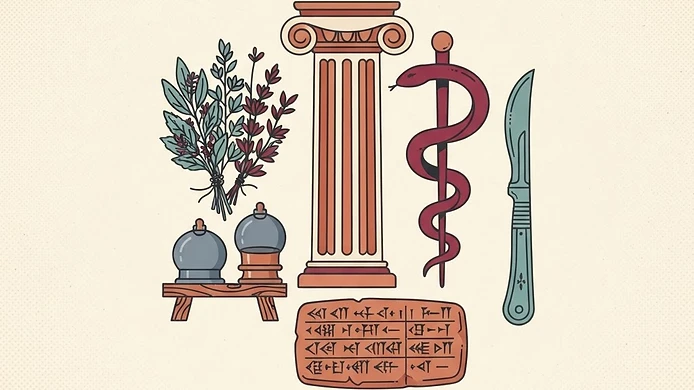
The first doctors are priests, herbalists and bone-setters. Healing is bound up with religion, yet Egyptian and Greek physicians already record diagnoses, treatments and surgical cases on papyrus and stone.
3000 CE
Trepanation — cutting a hole in the skull
Neolithic and then Egyptian surgeons drill through the skull to release pressure, treat head injury or let out 'evil humours'. Healed bone edges show many patients survived the operation.
1600 CE
The Edwin Smith papyrus
The oldest known surgical text describes 48 cases of head, neck and spine injury, each with examination, diagnosis, verdict and treatment — the first recorded evidence-based approach to trauma.
400 CE
Hippocrates and the rational patient
Greek physicians separate medicine from magic. Hippocrates insists disease has natural causes, records the patient's history, and defines professional ethics in the oath that still carries his name.
129 CE
Galen's anatomy of the body
Galen of Pergamon dissects animals and gladiatorial wounds, then builds a system of four humours and bodily 'spirits' that will dominate medicine for 1,400 years — brilliant, and often wrong.
Educational reference only — it is not medical advice. Dates for early medicine are approximate and contested between sources.