
Turkey
Republic of Türkiye
Asia
86,150,236
06:32 UTC+3
+90
.tr
Mount Ararat
5,137 m · 16,854 ft
Mediterranean Sea
0 m · 0 ft
6,215,756
Ankara · 2026
16,575,349
Istanbul · 2026
Location
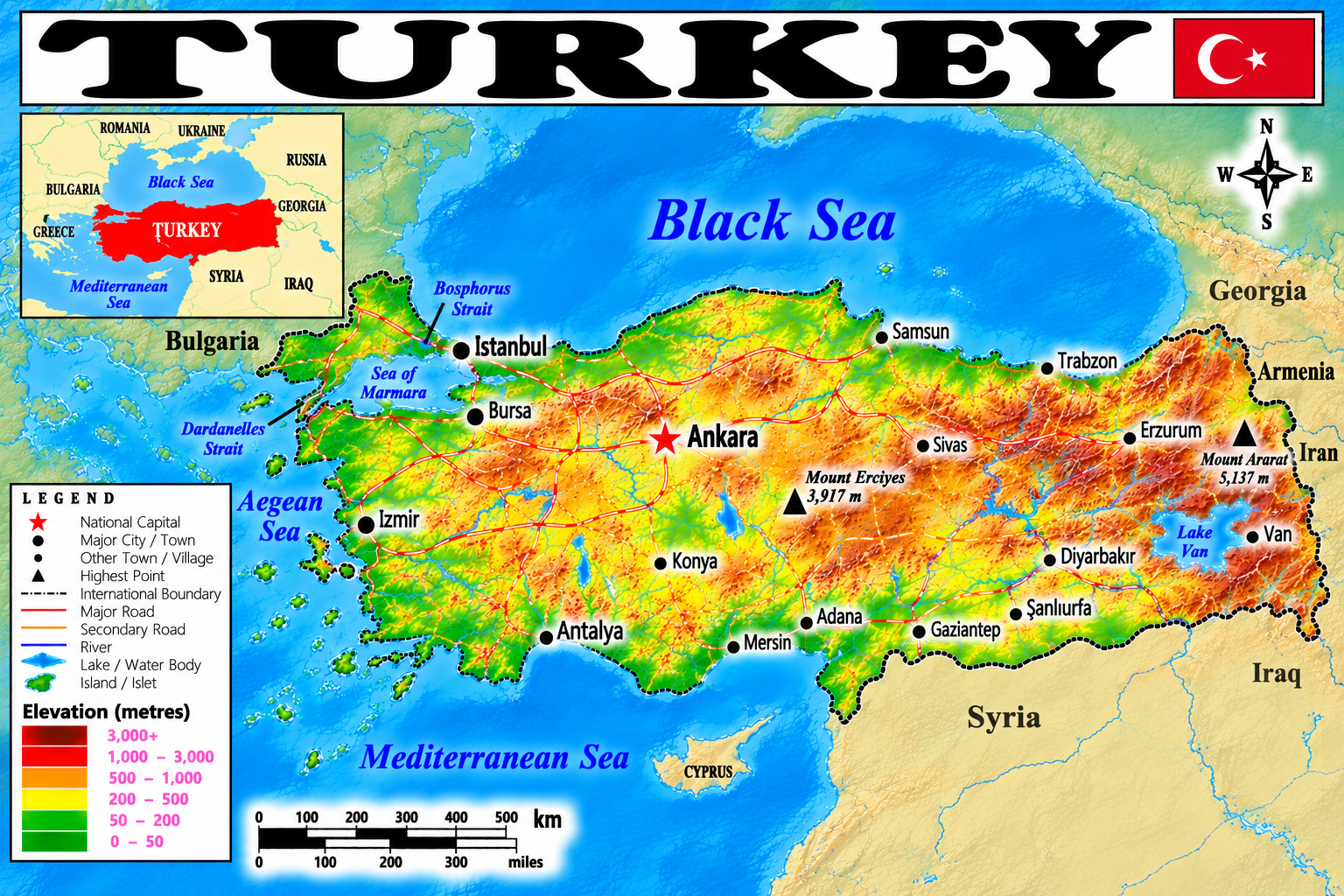
Turkey — Detailed Physical Map
The Taurus and Pontic ranges, Mount Ararat and Erciyes, the Bosporus and Dardanelles straits, Lake Van, major cities and the capital Ankara
Tourist Attractions

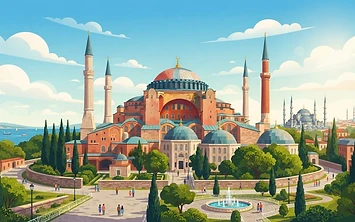
Originally built as a cathedral in the 6th century, this architectural marvel later served as a mosque and museum before returning to its role as an active mosque. It is world-renowned for its massive dome and intricate Byzantine mosaics.
The building's layered history and stunning interior architecture make it an essential stop.

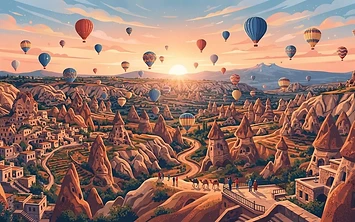
This region is famous for its unique lunar-like landscape, characterized by volcanic rock formations known as fairy chimneys and extensive underground cities. It is a premier destination for hot air ballooning at sunrise.
Viewing the surreal rock formations from a hot air balloon at dawn is an unforgettable experience.

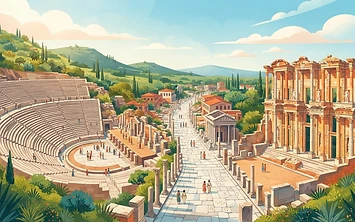
One of the best-preserved ancient Greek and Roman cities in the Mediterranean, featuring iconic structures like the Library of Celsus and a massive Great Theatre. It offers a vivid glimpse into life during the classical era.
Walking down the ancient marble streets toward the magnificent Library of Celsus is a highlight for any history lover.

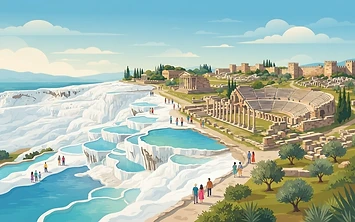
Known as the 'Cotton Castle,' this site features striking white travertine terraces formed by mineral-rich thermal waters flowing down a mountainside. Visitors can also explore the adjacent ancient ruins of Hierapolis.
The contrast of the bright white terraces against the blue thermal pools creates a breathtaking natural spectacle.


Also known as the Sultan Ahmed Mosque, this 17th-century structure is famous for its six minarets and interior walls adorned with thousands of hand-painted blue tiles. It remains an active place of worship.
The interior tilework, which gives the mosque its name, is a masterpiece of Ottoman design.

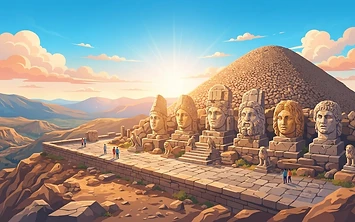
This remote mountain peak is home to the monumental stone heads and funerary sanctuary of King Antiochus I of Commagene. It is an atmospheric archaeological site that feels frozen in time.
Watching the sunrise from the summit among the colossal ancient stone statues is a truly dramatic experience.
Geography
Nature
Mount Ararat
5,137 m / 16,854 ft
29.0% of land
≈ 227,233 km² of forest
FAO / World Bank, forest area (% of land area)
Explore the Nature Atlas2,800 km1,740 mi
Rises in the Armenian Highlands and flows through Syria and Iraq before reaching Persian Gulf.
1,900 km1,181 mi
Originates in eastern Turkey and forms the eastern border of the Fertile Crescent.
1,355 km842 mi
Longest river flowing entirely within the borders of Turkey.
3,755 km²1,450 sq mi · 451 m deep
Largest lake in Turkey and the world's largest soda lake.
1,665 km²643 sq mi · 2 m deep
Second largest lake in Turkey and exceptionally salty.
656 km²253 sq mi · 10 m deep
Largest freshwater lake in Turkey located in the Lakes Region.
40 m131 ft
Falls directly into the Mediterranean Sea near Antalya.
48 m157 ft
Located in Erzurum province and ranks among the tallest falls in the country.
River lengths are whole-river figures, including any section beyond Turkey. Researched reference figures. Tap any name for where its name comes from and a Google Maps link.
Major Cities
- 1
İstanbul
15,791,5192026
MapStraddles two continents while serving as the cultural and historical heart of the nation.
- 2Capital
Ankara
5,956,9292026
MapFunctions as the national capital and the administrative center of the Turkish Republic.
- 3
İzmir
4,546,8942026
MapHosts a major port on the Aegean coast and serves as a vital hub for regional trade.
- 4
Bursa
3,315,7492026
MapServed as the first capital of the Ottoman Empire and remains famous for silk production.
- 5
Antalya
2,816,6012026
MapActs as the primary gateway to the Mediterranean Riviera, known for its pristine beaches and tourism.
- 6
Konya
2,372,3052026
MapHouses the shrine of Rumi and remains a significant center for Sufi culture and history.
- 7
Şanlıurfa
2,306,5882026
MapContains the ancient archaeological site of Gobekli Tepe, often cited as the world's oldest temple.
- 8
Adana
2,295,4192026
MapStands as a major agricultural and industrial hub located in the fertile Cukurova plain.
- 9
Gaziantep
2,242,8692026
MapCelebrated globally for its rich culinary heritage, particularly its production of baklava and pistachios.
- 10
Mersin
2,002,1102026
MapOperates the largest seaport in the country, acting as a crucial link for international maritime commerce.
- 11
Diyarbakır
1,863,3402026
MapFeatures massive historic basalt walls and serves as the cultural center of the southeastern region.
- 12
Kayseri
1,470,2632026
MapCommands a position at the base of Mount Erciyes and serves as a significant Anatolian trade center.
City populations are the latest official, UN or national-statistics estimates (2026–2026) compounded to 2026 at 0.23% a year (the nation's annual population growth rate); figures without a published update come from the open cities database (2020-era estimates) and are projected the same way.
Economy
Main exports
Turkey's leading export commodities and products.
Tap any export to learn more. Spot prices in USD only for Live Data subscribers.
Main imports
Turkey's leading import commodities and products.
Tap any import to learn more.
Military
Historical Timeline
12000 BCE
Early settlement at Gobekli Tepe
Hunter-gatherers established one of the world's oldest known monumental temple complexes in southeastern Anatolia. This site provides significant evidence of early social organization and religious practices in the region.
1650 BCE
Establishment of the Hittite Empire
The Hittites founded a major ancient empire centered in Hattusa, becoming a dominant power in the Near East. They were noted for their early use of iron and sophisticated diplomatic treaties.
330
Founding of Constantinople
Emperor Constantine the Great dedicated the city of Byzantium as the new capital of the Roman Empire, later renamed Constantinople. It served as the heart of the Byzantine Empire for over a millennium.
1071
Battle of Manzikert
The Seljuk Turks defeated the Byzantine army, opening the gates of Anatolia for Turkic settlement. This victory marked a significant turning point in the demographic and cultural history of the region.
1299
Foundation of the Ottoman Beylik
Osman I established a small principality in northwestern Anatolia, which would eventually evolve into the Ottoman Empire. This state provided the foundation for centuries of Ottoman rule across three continents.
1453
Conquest of Constantinople
Sultan Mehmed the Conqueror captured Constantinople, ending the Byzantine Empire. The city became the new capital of the Ottoman Empire, serving as a vital center of commerce and culture.
1520
Reign of Suleiman the Magnificent
Under Suleiman the Magnificent, the Ottoman Empire reached its peak in terms of political, military, and economic power. This era was marked by significant legislative reforms and artistic achievements.
1920
Opening of the Grand National Assembly
The Grand National Assembly was inaugurated in Ankara, establishing a new government during the Turkish War of Independence. This body declared itself the sole sovereign representative of the Turkish nation.
1923
Proclamation of the Republic of Turkey
Following the War of Independence, the Republic of Turkey was formally declared with Mustafa Kemal Ataturk as its first president. This led to a series of comprehensive secular and social reforms.
1952
Accession to NATO
Turkey officially joined the North Atlantic Treaty Organization, aligning itself with the Western bloc during the early Cold War. This move integrated the country into the international security architecture.
2002
Rise of the AKP to power
The Justice and Development Party (AKP) won a parliamentary majority, initiating a period of significant political and economic transformation in Turkey. This government implemented widespread infrastructure projects and policy shifts.
2023
Centennial of the Turkish Republic
Turkey celebrated its 100th anniversary as a republic, marked by large-scale national events and the inauguration of major domestic infrastructure projects. The milestone reflected on a century of statehood and modernization efforts.
2024
Turkey approves Sweden's NATO accession
Turkey officially ratified Sweden's membership into the North Atlantic Treaty Organization, marking a significant shift in regional security policy.
2024
AKP suffers major local election losses
The ruling Justice and Development Party (AKP) faced significant electoral defeats in municipal elections, with the opposition Republican People's Party (CHP) retaining control of major cities like Istanbul and Ankara.
2025
PKK declares ceasefire with Turkey
The Kurdistan Workers' Party (PKK) announced a ceasefire and a call to lay down arms, signaling a potential end to a four-decade-long armed conflict.
National Anthem
İstiklâl Marşı
Mehmet Âkif Ersoy
Osman Zeki Üngör
1921
Korkma, sönmez bu şafaklarda yüzen al sancak; Sönmeden yurdumun üstünde tüten en son ocak. O benim milletimin yıldızıdır, parlayacak; O benimdir, o benim milletimindir ancak. Çatma, kurban olayım, çehreni ey nazlı hilâl! Kahraman ırkıma bir gül! Ne bu şiddet, bu celâl? Sana olmaz dökülen kanlarımız sonra helâl. Hakkıdır, Hakk'a tapan, milletimin istiklâl.
The lyrics for the Independence March were written by the poet Mehmet Âkif Ersoy in 1921 during the Turkish War of Independence. A national contest was held by the Ministry of Education to commission a new national anthem for the emerging Republic. Out of 724 submissions, Ersoy's poem was chosen as the winner by the Grand National Assembly. Although Ersoy initially refused the prize money, he was eventually persuaded to accept and donated it to a charity for women and children. The anthem was officially adopted by the parliament on March 12, 1921. While various composers provided music in the early years, the current arrangement by Osman Zeki Üngör was officially adopted in 1930. The anthem remains a powerful symbol of Turkish nationalism and the struggle for statehood.
National Holidays
This holiday marks the first day of the Gregorian calendar year and is observed as a public holiday throughout Turkey.
This day commemorates the opening of the Grand National Assembly of Turkey in 1920 and was dedicated to the children of the world by Mustafa Kemal Atatürk.
Recognized as a public holiday, this day celebrates workers' rights and the labor movement.
This date marks the beginning of the Turkish War of Independence in 1919 when Mustafa Kemal Atatürk landed in Samsun.
This holiday honors the memory of those who lost their lives resisting the attempted military coup in 2016.
This day commemorates the decisive victory in the Battle of Dumlupınar in 1922, which effectively ended the Turkish War of Independence.
This holiday celebrates the proclamation of the Republic of Turkey in 1923, marking the transition from the Ottoman Empire to a modern secular republic.
Good News Today
Turkey's solar boom shines ahead of a UN climate summit
Turkey is expanding its renewable energy infrastructure with vast new solar panel installations in the Konya province. These efforts are being highlighted as the country prepares to host an upcoming United Nations climate summit.
Fun Facts
The True Homeland Of Tulips
While often associated with the Netherlands, tulips were actually brought to Europe from the Ottoman Empire in the 16th century. They remain a national symbol of Turkey and are widely celebrated in Istanbul's annual spring festivals.
Coffee Culture Rooted In History
Turkey introduced coffee to Europe in the 16th century after it became popular in the Ottoman courts. Turkish coffee is so culturally significant that it was inscribed on the UNESCO Intangible Cultural Heritage List in 2013.
Birthplace Of Legendary Trojan Horse
The ancient city of Troy is located in modern-day Turkey near the village of Tevfikiye. Tourists can still visit a large wooden replica of the famous Trojan Horse near the archaeological site.
Warding Off The Evil Eye
The Nazar Boncuk, a blue glass eye-shaped amulet, is found throughout Turkey as a charm to ward off negative energy. It is a deeply ingrained cultural tradition to hang these in homes, offices, and even on new cars.
Santa Claus Is Actually Turkish
Saint Nicholas, the inspiration for Santa Claus, was born in Patara and served as the Bishop of Myra, both located in modern-day Turkey. His ancient church can still be visited in the town of Demre.
A Paradise For Stray Cats
Istanbul is world-famous for its well-cared-for street cat population, which is treated with affection by local citizens. These felines are essentially considered communal pets and have free roam of neighborhoods and shops.
Home To Ancient Roman Wonders
Turkey contains more ancient Greek and Roman ruins than Greece and Italy combined. The Library of Celsus in the city of Ephesus remains one of the most stunning examples of Roman architecture worldwide.
The Historic Turkish Bath Tradition
The Hamam, or Turkish bath, evolved from Roman thermal bath customs and became a central social institution in the Ottoman Empire. These structures are known for their distinct domed architecture and marble interiors.
The Chewy Maras Ice Cream
Turkish Dondurma is famous for its unique, chewy texture and resistance to melting, which comes from the addition of mastic resin and orchid root. It is often served with elaborate, theatrical displays by the street vendors.
A Bridge Between Two Continents
Istanbul is the only city in the world that spans two different continents. The Bosphorus Strait serves as the boundary line, allowing residents to travel between Europe and Asia by boat in mere minutes.
Chuckies Trivia Quiz
Chuckies Trivia Quiz
Fifteen questions on Turkey — five easy, five medium, five hard. How far can you get?
Sports & Live Events
Language
Counting to 10
1
1
= 10 (n = 0)
World Dictionary
Discover and translate any word into all supported languages.