
Poland
Republic of Poland
Europe
37,515,582
04:48 UTC+1
+48
.pl
Rysy
2,499 m · 8,199 ft
Raczki Elblaskie
-2 m · -7 ft
1,817,270
Warsaw · 2026
3,137,205
Warsaw · 2026
Location
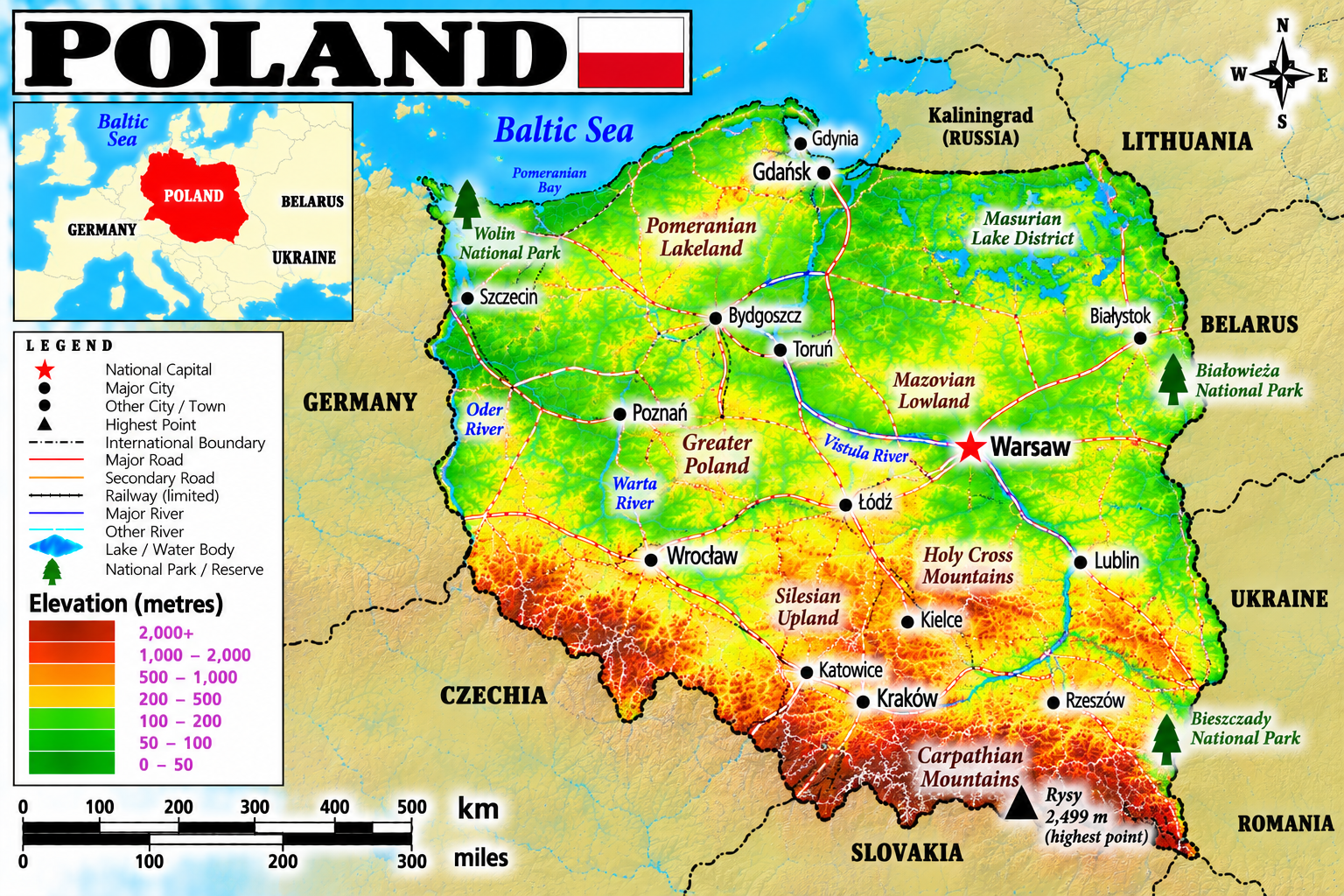
Poland — Detailed Physical Map
The Carpathian Mountains and Rysy, the Masurian Lake District, the Vistula and Oder rivers, the Baltic coast, major cities and the capital Warsaw
Tourist Attractions
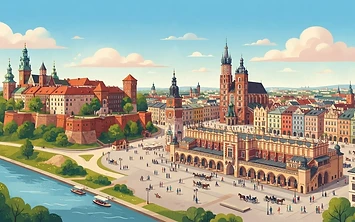
The former royal capital of Poland, this UNESCO-listed area features the medieval Main Market Square and the historic Wawel Royal Castle complex.
Explore the stunning Wawel Cathedral and the vibrant atmosphere of the Rynek Główny.
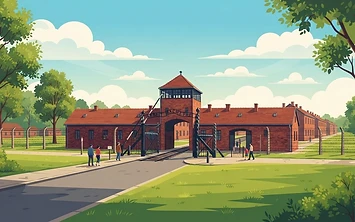
A somber memorial and museum located at the site of the former German Nazi concentration and extermination camp.
A deeply moving and essential site for understanding the history of the Holocaust.

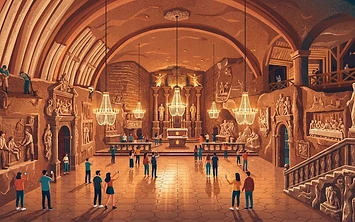
An extraordinary underground world featuring chambers, chapels, and intricate statues carved entirely out of rock salt by miners over centuries.
Marvel at the breathtaking Chapel of St. Kinga, where even the chandeliers are crafted from salt.


The largest brick castle in the world, originally built by the Teutonic Knights in the 13th century.
Walk through the massive, well-preserved fortifications of this impressive Gothic stronghold.

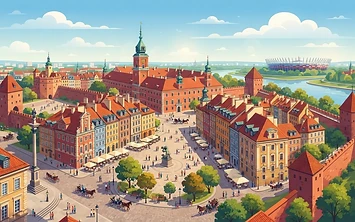
The historic heart of Poland's capital, meticulously reconstructed after World War II to reflect its original medieval and Renaissance charm.
Stroll through the colorful Market Square and admire the Royal Castle.

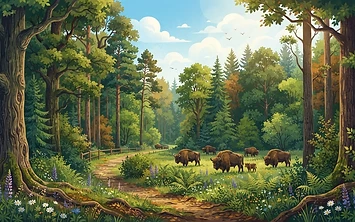
One of the last and largest remaining parts of the immense primeval forest that once stretched across the European Plain.
Spot the majestic European bison, the continent's largest land mammal, in its natural habitat.
Geography
Nature
Rysy
2,499 m / 8,199 ft
31.0% of land
≈ 96,936 km² of forest
FAO / World Bank, forest area (% of land area)
Explore the Nature Atlas1,047 km651 mi
Flows through major cities including Warsaw and Krakow before reaching the Baltic Sea.
854 km531 mi
Forms a significant portion of the border between Poland and Germany.
808 km502 mi
Major tributary of the Oder river located entirely within Poland.
114 km²44 sq mi · 23 m deep
Largest lake in Poland located in the Masurian Lake District.
103 km²40 sq mi · 44 m deep
Complex of connected basins forming the second largest lake in the country.
71 km²28 sq mi · 6 m deep
Coastal lake situated within the Slowinski National Park.
70 m230 ft
Tallest waterfall in the Polish High Tatra Mountains.
27 m89 ft
Highest waterfall located in the Polish Sudetes mountain range.
River lengths are whole-river figures, including any section beyond Poland. Researched reference figures. Tap any name for where its name comes from and a Google Maps link.
Major Cities
- 1Capital
Mazowieckie
1,844,7022026
MapServes as the capital and largest metropolis, functioning as the primary political, economic, and cultural center of Poland.
- 2
Małopolskie
806,9782026
MapHosts the historic Wawel Royal Castle and a beautifully preserved medieval core that draws millions of international visitors annually.
- 3
Dolnośląskie
664,6642026
MapFeatures a scenic collection of bridges and islands across the Oder River, reflecting a rich blend of cultural heritage.
- 4
Łódzkie
632,3392026
MapGrew rapidly as a major textile manufacturing powerhouse during the nineteenth century, earning its reputation as the Polish Manchester.
- 5
Wielkopolskie
527,9352026
MapFunctions as a major trade and exhibition hub, home to the sprawling Poznan International Fairgrounds hosting global commercial events.
- 6
Pomorskie
483,5542026
MapStands as a vital Baltic port city where the Solidarity movement began, significantly contributing to the fall of communism.
- 7
Zachodniopomorskie
379,2572026
MapActs as a prominent port on the Oder River, historically serving as a key gateway for maritime trade and commerce.
- 8
Lubelskie
322,8302026
MapServes as a significant academic and cultural hub in eastern Poland, featuring a well-preserved Old Town and historic castle.
- 9
Kujawsko-Pomorskie
317,3112026
MapKnown for its charming canal district and distinct nineteenth-century architecture along the Brda River waterways.
- 10
Podlaskie
285,8042026
MapProvides a lush green urban environment near the border, serving as the gateway to the famous Bialowieza Forest.
- 11
Śląskie
274,1422026
MapFunctions as the heart of the Upper Silesian industrial region, deeply defined by its historic coal mining and metallurgy heritage.
- 12
Śląskie
160,9042026
MapEarned the nickname Little Vienna due to its elegant architecture and long history of industrial textile production.
City populations are the latest official, UN or national-statistics estimates (2025–2026) compounded to 2026 at -1.18% a year (the nation's annual population growth rate); figures without a published update come from the open cities database (2020-era estimates) and are projected the same way.
Economy
Main exports
Poland's leading export commodities and products.
Tap any export to learn more. Spot prices in USD only for Live Data subscribers.
Main imports
Poland's leading import commodities and products.
Tap any import to learn more.
Military
Historical Timeline
8000 BCE
Early Hunter-Gatherer Settlement
Archaeological evidence indicates the earliest human settlements in the territory of modern-day Poland appeared following the retreat of the last glacial period. These Mesolithic groups established the foundation for subsequent Neolithic agricultural societies in the region.
966
Baptism of Mieszko I
Mieszko I, the first historical ruler of the Piast dynasty, accepted Christianity, marking the formal Christianization of Poland. This event aligned the nascent Polish state with Western European political and cultural traditions.
1410
Battle of Grunwald
A coalition of Poland and Lithuania decisively defeated the Teutonic Knights, curbing their eastward expansion. This victory established the Polish-Lithuanian alliance as a major power in Central and Eastern Europe.
1543
Publication of De revolutionibus orbium coelestium
Nicolaus Copernicus published his heliocentric theory, fundamentally altering the scientific understanding of the universe. This work is considered a cornerstone of the scientific revolution.
1569
Union of Lublin
The Kingdom of Poland and the Grand Duchy of Lithuania formed the Polish-Lithuanian Commonwealth, a unified federal state. It created one of the largest and most populous countries in early modern Europe.
1791
Constitution of May 3
The Commonwealth adopted the first modern written constitution in Europe, aiming to strengthen the state against foreign interference. It introduced significant political reforms and established a constitutional monarchy.
1918
Restoration of Independence
Following the conclusion of World War I, Poland regained its sovereignty after 123 years of partitions by neighboring empires. The Second Polish Republic was proclaimed with Józef Piłsudski as its leader.
1939
Invasion of Poland
Nazi Germany invaded Poland on September 1, triggering the start of World War II in Europe. The conflict resulted in immense human casualties and widespread destruction of the country's infrastructure.
1989
Round Table Agreement
Negotiations between the Communist government and the Solidarity trade union led to semi-free elections. This peaceful political transition catalyzed the collapse of communist regimes across Eastern Europe.
2004
Accession to the European Union
Poland officially joined the European Union, marking a major milestone in its economic and political integration with the West. This led to significant growth and infrastructure development aided by EU funds.
2023
2023 Parliamentary Elections
The parliamentary elections resulted in the highest voter turnout in the history of the Third Polish Republic. The outcome led to a change in government, with a new coalition led by Donald Tusk assuming power.
2025
Rafal Trzaskowski's Presidential Term Begin
Following the 2025 presidential elections, Rafal Trzaskowski assumed the office of President of the Republic of Poland. This marked a significant shift in the country's executive leadership.
National Anthem
Mazurek Dąbrowskiego
Józef Wybicki
Traditional
1927
Jeszcze Polska nie zginęła, Kiedy my żyjemy. Co nam obca przemoc wzięła, Szablą odbierzemy. Marsz, marsz, Dąbrowski, Z ziemi włoskiej do Polski. Za twoim przewodem Złączym się z narodem. Przejdziem Wisłę, przejdiem Wartę, Będziem Polakami. Dał nam przykład Bonaparte, Jak zwyciężać mamy. Marsz, marsz, Dąbrowski, Z ziemi włoskiej do Polski. Za twoim przewodem Złączym się z narodem. Jak Czarniecki do Poznania Po szwedzkim zaborze, Dla ojczyzny ratowania Wrócim się przez morze. Marsz, marsz, Dąbrowski, Z ziemi włoskiej do Polski. Za twoim przewodem Złączym się z narodem. Już tam ojciec do swej Basi Mówi zapłakany: Słuchaj jeno, pono nasi Biją w tarabany. Marsz, marsz, Dąbrowski, Z ziemi włoskiej do Polski. Za twoim przewodem Złączym się z narodem.
Mazurek Dąbrowskiego was written in 1797 by Józef Wybicki while he was in Italy with the Polish Legions under General Jan Henryk Dąbrowski. Originally titled 'Song of the Legion of Poles in Italy', it was intended to boost the morale of soldiers fighting for Polish independence after the Partitions of Poland. The melody is based on a folk mazurka whose composer remains unknown. The song gained widespread popularity throughout the 19th century as a symbol of Polish resistance and resilience during the nation's occupation. It was officially adopted as the national anthem by the Polish government in 1927. Minor linguistic adjustments were made to the lyrics over time to reflect the evolution of the Polish language, but the core text has remained largely intact since its inception.
National Holidays
A public holiday marking the first day of the year according to the Gregorian calendar.
Commemorates the proclamation of the Constitution of May 3, 1791, which was the first modern codified constitution in Europe.
A religious holiday that also coincides with Polish Armed Forces Day, honoring the victory in the 1920 Battle of Warsaw.
A solemn day dedicated to remembering the deceased, during which millions of Poles visit cemeteries to light candles on family graves.
Marks the restoration of Poland's sovereignty in 1918 after 123 years of partitions by the Russian, Prussian, and Austro-Hungarian empires.
Celebrates the birth of Jesus Christ and is one of the most important family-oriented religious holidays in Poland.
Good News Today
Qatar and Poland strengthen bilateral ties through energy, trade and cultural cooperation
Poland and Qatar are expanding their partnership across multiple sectors including energy, tourism, and trade. The collaboration aims to increase the exchange of goods and cultural initiatives to foster closer ties between the two nations.
Fun Facts
Pierogi is a Culinary Icon
Pierogi are traditional Polish dumplings that have been a staple of national cuisine since the 13th century and even have a patron saint.
Ancient Forest Home for Bison
Białowieża Forest is one of the last and largest remaining parts of the immense primeval forest that once stretched across the European Plain.
World's Largest Brick Castle
Malbork Castle, built by the Teutonic Knights in the 13th century, is officially the world's largest castle measured by land area.
Legacy of Frederic Chopin
The legendary composer Frederic Chopin was born in Poland, and his heart is interred in a pillar at the Church of the Holy Cross in Warsaw.
Scientific Contributions of Copernicus
Nicolaus Copernicus, the astronomer who placed the Sun at the center of the universe, was born and educated in Poland.
Deep Underground Salt Cathedral
The Wieliczka Salt Mine features an entire cathedral carved by miners out of salt blocks, located hundreds of meters underground.
Early Written Constitution in Europe
The Constitution of May 3, 1791, was the first constitution in Europe and the second in the world after the United States.
A Nation of Nobel Laureates
Poland has produced several Nobel Prize winners in literature, including Wisława Szymborska, Czesław Miłosz, and Olga Tokarczuk.
Heroic Bear Joined the Army
During World War II, a brown bear named Wojtek was officially enlisted as a soldier in the Polish II Corps and helped carry ammunition.
One of Oldest Universities
Jagiellonian University, founded in 1364 in Kraków, is one of the oldest operating universities in the entire world.
Chuckies Trivia Quiz
Chuckies Trivia Quiz
Fifteen questions on Poland — five easy, five medium, five hard. How far can you get?
Sports & Live Events
Language
Counting to 10
1
1
= 10 (n = 0)
World Dictionary
Discover and translate any word into all supported languages.