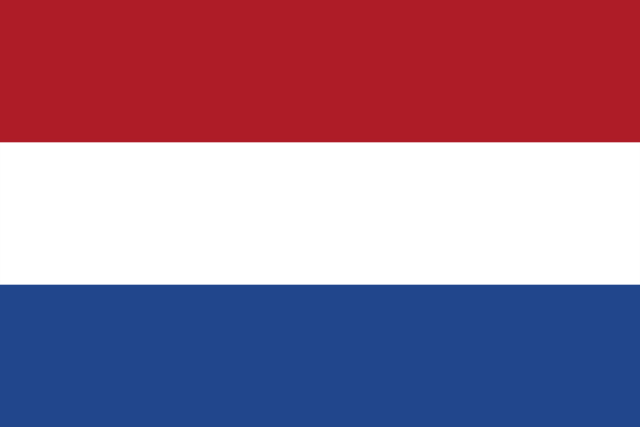
Netherlands
Europe

17,900,000
12:59 UTC+2
+31
Location
Geography
Economy
Main exports
Netherlands's leading export commodities and products.
Subscribe to Live Data for live spot prices
Live commodity prices on every nation's exports — $100 AUD/year.
Tap any export to learn more. Spot prices in USD only for Live Data subscribers.
Main imports
Netherlands's leading import commodities and products.
Tap any import to learn more.
Military
Historical Timeline
8000 BCE
Arrival of Mesolithic Hunter-Gatherers
Archaeological evidence indicates the first permanent post-glacial human settlements in the region were established by hunter-gatherer groups. These early inhabitants are considered the ancestors of the region's historical population.
1568
Start of the Eighty Years' War
The Dutch provinces began an uprising against the Spanish Habsburg rule to seek religious and political autonomy. This conflict eventually led to the de facto independence of the Northern Netherlands.
1581
Plakkaat van Verlatinghe
The States General of the Netherlands formally declared independence from Philip II of Spain. This document is considered the official birth certificate of the Dutch Republic.
1602
Establishment of the Dutch East India Company
The VOC was founded as a chartered company to monopolize colonial trade in Asia. It became one of the world's most powerful trading entities and marked the start of the Dutch Golden Age.
1648
Peace of Münster
Spain officially recognized the independence of the Dutch Republic through the signing of the Peace of Münster. This treaty concluded the Eighty Years' War.
1815
Formation of the United Kingdom of the Netherlands
Following the defeat of Napoleon, the Congress of Vienna merged the northern and southern Netherlands into a single kingdom under King William I. This unified state was later dissolved following the Belgian Revolution.
1848
Thorbecke Constitution
Johan Rudolph Thorbecke drafted a new constitution that significantly limited the power of the monarch and introduced ministerial responsibility. It remains the foundation of the modern Dutch parliamentary democracy.
1940
German Invasion during World War II
Nazi Germany invaded the Netherlands on May 10, leading to a swift surrender and five years of German occupation. This period resulted in the systematic persecution of the Jewish population and widespread destruction.
1949
Recognition of Indonesian Independence
After a period of military conflict and international pressure, the Netherlands officially transferred sovereignty to Indonesia. This marked the end of a long period of Dutch colonial rule in the region.
1957
Founding of the European Economic Community
The Netherlands was one of the six founding nations that signed the Treaty of Rome. This integration helped stabilize Western Europe and fostered significant long-term economic growth.
2002
Introduction of the Euro
The Netherlands replaced the Dutch guilder with the euro as its official currency. This transition represented a major milestone in European economic integration and monetary policy.
2024
Formation of the Schoof Cabinet
After prolonged negotiations following the 2023 elections, a new coalition government led by Dick Schoof took office. This cabinet represents a significant political shift in the Dutch governing landscape.
National Holidays
This holiday marks the first day of the year according to the Gregorian calendar.
This is the day following Easter Sunday, commemorating the resurrection of Jesus Christ.
This national holiday celebrates the birthday of King Willem-Alexander and is marked by nationwide festivities.
This day commemorates the end of the occupation by Nazi Germany during the Second World War in 1945.
This Christian holiday occurs 40 days after Easter and commemorates the bodily ascension of Jesus into heaven.
This holiday celebrates the birth of Jesus Christ, marking the beginning of a two-day national observation.
Language
Counting to 10
1
1
= 10 (n = 0)
World Dictionary
Discover and translate any word into all supported languages.
The multilingual Dictionary is a Nations Pro feature.
Upgrade to Pro