

Colombia
Republic of Colombia
South America
54,161,535
06:42 UTC-5
+57
.co
Pico Cristobal Colon
5,775 m · 18,947 ft
Pacific Ocean
0 m · 0 ft
10,957,463
Bogota · 2026
10,957,463
Bogota · 2026
Location
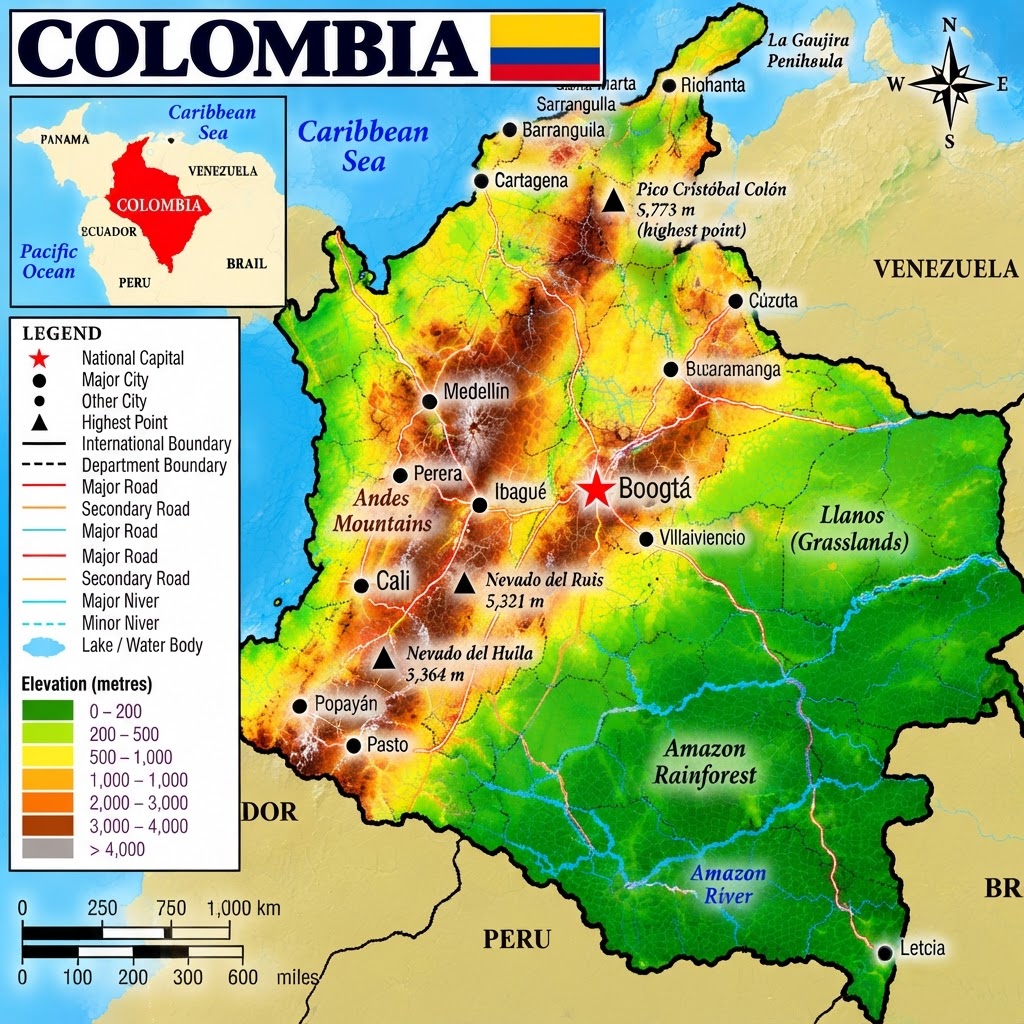
Colombia — Detailed Physical Map
Andes Mountains, Caribbean and Pacific coasts, Llanos and Amazon rainforest, departments, major cities and the capital Bogotá
Tourist Attractions
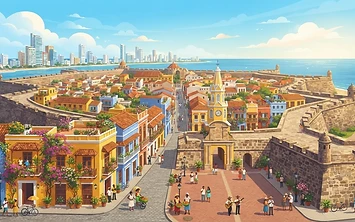
A UNESCO World Heritage site featuring 16th-century fortifications, cobblestone streets, and vibrant colonial architecture. It serves as the cultural heart of the Caribbean coast.
Wander through the colorful, bougainvillea-lined streets to experience the city's historic charm.
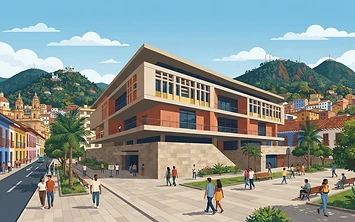
This world-renowned museum houses the largest collection of pre-Hispanic gold artifacts, showcasing the metallurgical mastery of ancient indigenous civilizations.
Marvel at over 55,000 gold pieces that offer a deep insight into Colombia's rich pre-Columbian heritage.


A stunning coastal park where dense tropical rainforest meets the Caribbean Sea, offering pristine beaches and diverse wildlife.
Relax on the beautiful, palm-fringed beaches nestled against the backdrop of the Sierra Nevada mountains.

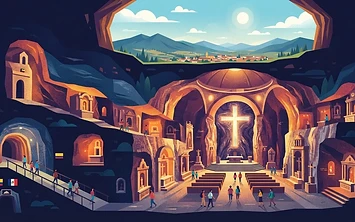
An architectural marvel built entirely underground within the tunnels of an ancient salt mine, functioning as a unique religious sanctuary.
Experience the awe-inspiring sight of a cathedral carved deep into the earth, showcasing incredible engineering and artistry.

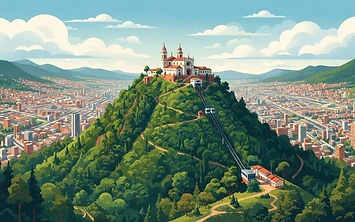
A mountain rising over 3,000 meters above sea level that offers a panoramic view of the sprawling capital city.
Take the cable car or funicular to the summit for the most spectacular sunset views over Bogotá.

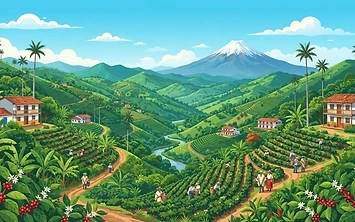
A UNESCO-recognized region of lush, green hillsides where traditional coffee farming methods have been practiced for generations.
Visit a local finca to learn about the coffee-making process and enjoy some of the world's finest specialty coffee.
Geography
Nature
Pico Cristobal Colon
5,775 m / 18,947 ft
52.9% of land
≈ 603,985 km² of forest
FAO / World Bank, forest area (% of land area)
Explore the Nature Atlas1,528 km949 mi
Primary fluvial artery of the country flowing northward through a wide valley.
1,350 km839 mi
Major tributary of the Magdalena originating in the Colombian Massif.
1,813 km1,127 mi
Forms a significant portion of the international border between Colombia and Peru.
55 km²21 sq mi · 60 m deep
Largest lake in Colombia located in the Boyaca department at high altitude.
0 km²0 sq mi · 30 m deep
Associated with the legendary El Dorado ceremony of the Muisca people.
2 km²1 sq mi · 70 m deep
Glacial lake situated within the Los Nevados National Natural Park.
157 m515 ft
Located near Bogota and known for its significant historical and cultural relevance.
400 m1,312 ft
Tallest waterfall in Colombia situated within the Purace National Natural Park.
River lengths are whole-river figures, including any section beyond Colombia. Researched reference figures. Tap any name for where its name comes from and a Google Maps link.
Major Cities
- 1Capital
Bogotá
7,945,9962026
MapServes as the political, economic, and cultural capital of Colombia, home to the historic La Candelaria district.
- 2
Cauca
4,717,8672026
MapFunctions as an important agricultural municipality in the Cauca department, primarily focused on coffee production and traditional farming.
- 3
Antioquia
2,526,7952026
MapTransforms urban landscapes through innovative public infrastructure and hosts the renowned annual Flower Festival.
- 4
Valle del Cauca
2,269,9832026
MapOperates as the world capital of salsa, boasting vibrant dance culture and significant industrial importance in southwestern Colombia.
- 5
Atlántico
1,275,8542026
MapHosts the massive Carnival of Barranquilla, a world-renowned cultural festival recognized as a UNESCO Masterpiece of Oral Heritage.
- 6
Bolívar
1,010,9952026
MapFeatures a stunning walled colonial center that is a major Caribbean tourism hub and UNESCO World Heritage site.
- 7
Huila
849,2162026
MapPlays a vital role in regional agriculture and hydrocarbon extraction located within the Huila department.
- 8
Norte de Santander
792,1802026
MapFunctions as a crucial border crossing point between Colombia and Venezuela, facilitating extensive international trade and transit.
- 9
Atlántico
733,5972026
MapServes as an essential industrial and residential hub within the Barranquilla metropolitan area.
- 10
Santander
618,5482026
MapKnown as the City of Parks, it serves as a major commercial center for the department of Santander.
- 11
Meta
588,6452026
MapActs as the gateway to the Colombian Llanos, serving as a primary trade center for the nation's cattle industry.
- 12
Risaralda
487,8202026
MapForms an integral part of the Coffee Cultural Landscape of Colombia, famous for its high-quality arabica coffee production.
City populations are the latest official, UN or national-statistics estimates (2026–2026) compounded to 2026 at 1% a year (the nation's annual population growth rate); figures without a published update come from the open cities database (2020-era estimates) and are projected the same way.
Economy
Main exports
Colombia's leading export commodities and products.
Tap any export to learn more. Spot prices in USD only for Live Data subscribers.
Main imports
Colombia's leading import commodities and products.
Tap any import to learn more.
Military
Historical Timeline
10000 BCE
Early Human Occupation
The earliest evidence of human presence in modern-day Colombia dates back to roughly 10,000 BCE, represented by the presence of Paleo-Indian hunter-gatherer groups. These groups established some of the earliest human settlements in northern South America.
1538
Foundation of Santa Fe de Bogota
Spanish conquistador Gonzalo Jimenez de Quesada founded the city of Santa Fe de Bogota, establishing it as the center of the New Kingdom of Granada. This marked the beginning of sustained Spanish colonial administration in the region.
1810
Declaration of Independence
On July 20, 1810, residents of Bogota initiated a movement against Spanish rule that eventually led to the formation of a local governing junta. This event serves as the official national independence day for Colombia.
1819
Battle of Boyaca
Simón Bolivar led a decisive victory over Spanish royalist forces at the Battle of Boyaca on August 7, 1819. The outcome secured the independence of the territory that would become Gran Colombia.
1899
The Thousand Days War
This brutal civil war between the Liberal and Conservative parties raged from 1899 to 1902 and caused widespread devastation. It resulted in a significant loss of life and contributed to the eventual secession of Panama.
1948
The Bogotazo
The assassination of populist leader Jorge Eliecer Gaitan in 1948 triggered mass riots in Bogota and ushered in La Violencia. This decade-long era of civil conflict claimed hundreds of thousands of lives across the countryside.
1957
Women Receive Suffrage
Following constitutional reforms, women were granted the right to vote and run for elected office in Colombia for the first time. This major shift in political rights was exercised during the 1957 national plebiscite.
1991
Promulgation of the New Constitution
A new national constitution was enacted, replacing the 1886 version to modernize the state and increase democratic participation. It introduced institutional mechanisms to protect human rights and recognized the country as a multiethnic society.
2016
Peace Agreement with the FARC
The Colombian government and the Revolutionary Armed Forces of Colombia signed a historic peace accord to end over 50 years of armed conflict. The agreement sought to demobilize thousands of guerrillas and integrate them into civilian life.
2022
Election of the First Progressive President
Gustavo Petro was elected as the first left-wing president in modern Colombian history, along with Francia Marquez as the first Black woman to serve as vice president. This marked a significant departure from the traditional political establishment.
2024
National Development Plan Initiatives
The government focused on the implementation of deep agrarian reforms and energy transition policies intended to shift the national economy away from dependence on hydrocarbons. These efforts faced significant legislative and societal debate regarding the pace of structural change.
2025
Ongoing Peace Negotiations
The government continued complex negotiations with various armed groups to consolidate the Total Peace policy across diverse regions of the country. These efforts represent a continued focus on addressing the remnants of internal conflict through diplomatic and state-building initiatives.
National Anthem
Himno Nacional de la República de Colombia
Rafael Núñez
Oreste Síndici
1920
¡Oh gloria inmarcesible! ¡Oh júbilo inmortal! En surcos de dolores el bien germina ya. Cesó la horrible noche la libertad sublime derrama las auroras de su invencible luz. La humanidad entera, que entre cadenas gime, comprende las palabras del que murió en la cruz.
The anthem's lyrics were written by Rafael Núñez, a president of Colombia, in 1850 to celebrate the independence of Cartagena. Oreste Síndici, an Italian opera singer and composer, set the lyrics to music in 1887. It was officially adopted as the national anthem by Law 33 on October 28, 1920. The composition was commissioned by the acting mayor of Bogota at the time, José Domingo Ospina. The anthem is traditionally performed with the chorus followed by a verse, though there are eleven stanzas in total. It holds deep cultural significance as a symbol of Colombian national identity and sovereign pride.
National Holidays
This holiday marks the beginning of the new calendar year according to the Gregorian calendar.
This date commemorates the 1810 movement for independence from Spain, marking the start of the process that led to Colombia's liberation.
This holiday celebrates the decisive victory of Simon Bolivar's army in 1819, which secured the independence of New Granada.
Known locally as Dia de la Raza, this day marks the encounter between European and American cultures and celebrates the diversity of the Colombian population.
This is a major religious and cultural holiday marking the traditional birth of Jesus Christ.
Good News Today
Shakira's foundation helps build 7 Colombian schools for 5,000 children a year
The Pies Descalzos Foundation, founded by singer Shakira, continues its impactful work in Colombia by constructing seven new schools. These facilities provide essential educational infrastructure for 5,000 children annually, supporting long-term community development.
Fun Facts
World Famous Coffee Production
Colombia is the world's third-largest producer of coffee and is famous for its mild, high-quality Arabica beans.
Most Biodiversity Per Square Meter
Colombia holds the title for the most biodiversity per square meter, possessing the highest number of bird and orchid species globally.
Birthplace Of The Cumbia Dance
Cumbia originated on Colombia's Caribbean coast as a courtship dance that blended Indigenous, African, and Spanish influences.
Source Of The Finest Emeralds
Colombia produces roughly 70 to 90 percent of the world's emeralds, prized for their deep green hue and clarity.
Tallest Palm Trees On Earth
The Cocora Valley is home to the Wax Palm, the national tree of Colombia, which can grow up to 60 meters tall.
Hot Air Balloon Capital
The town of Armenia is a premier destination for hot air ballooning, offering stunning aerial views of the coffee region.
Two Oceans One Country
Colombia is the only nation in South America that possesses coastlines on both the Pacific Ocean and the Caribbean Sea.
Constant Sunshine All Year
Because of its location near the equator, Colombia does not have traditional seasons, leading to consistent daylight hours year-round.
Subterranean Salt Cathedral Architecture
The Salt Cathedral of Zipaquirá is a Catholic church built entirely within the tunnels of a former salt mine.
Cycling Is The National Passion
Cycling is an integral part of Colombian culture, with the country producing world-class climbers who dominate global mountainous races.
Chuckies Trivia Quiz
Chuckies Trivia Quiz
Fifteen questions on Colombia — five easy, five medium, five hard. How far can you get?
Sports & Live Events
Language
Counting to 10
1
1
= 10 (n = 0)
World Dictionary
Discover and translate any word into all supported languages.