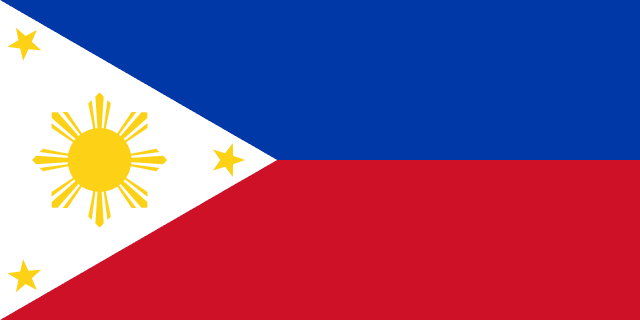

Philippines
Republic of the Philippines
Asia
118,888,670
11:47 UTC+8
+63
.ph
Mount Apo
2,954 m · 9,692 ft
Philippine Sea
0 m · 0 ft
1,922,803
Manila · 2026
14,610,347
Quezon City · 2026
Location
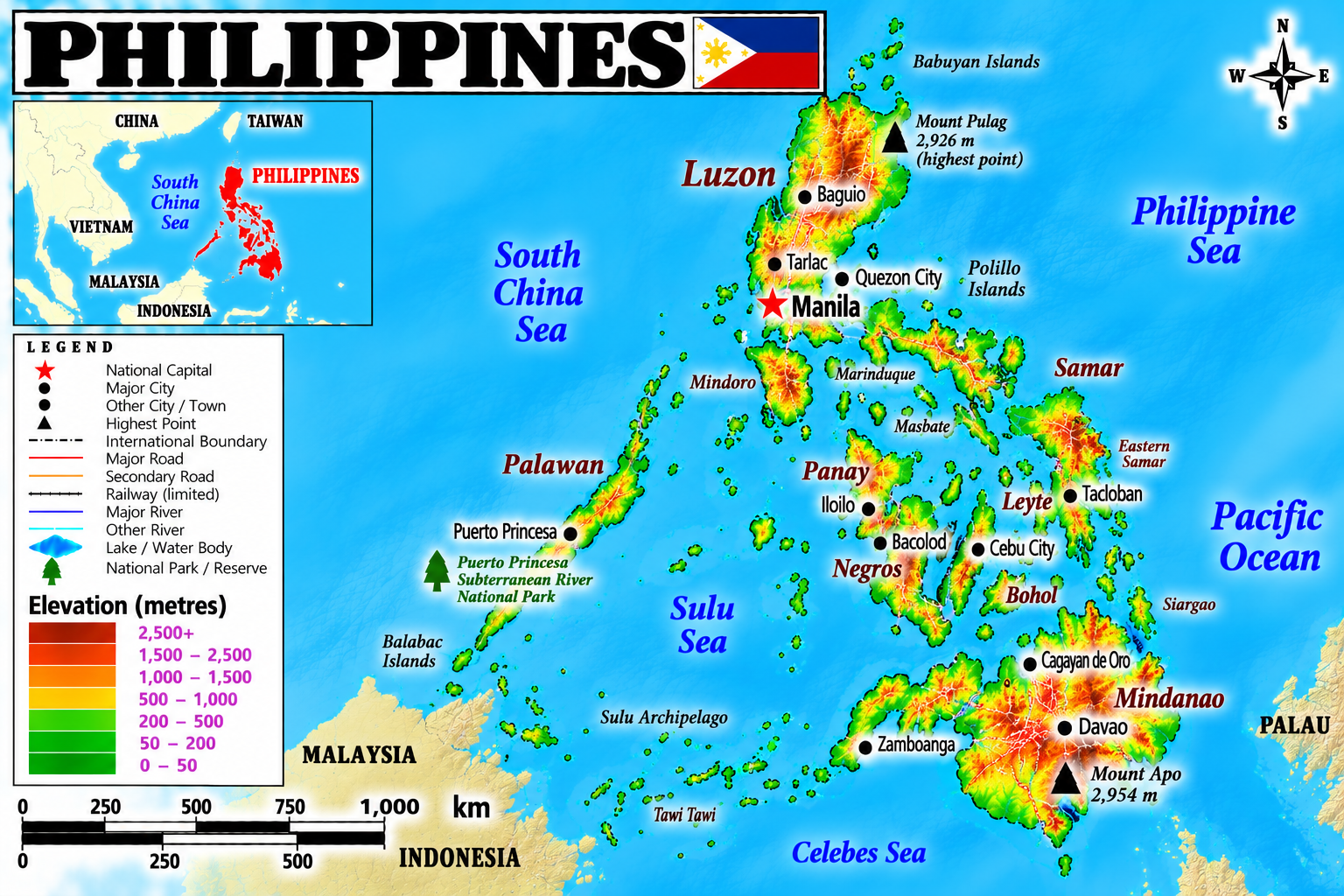
Philippines — Detailed Physical Map
Luzon, Palawan, Panay, Negros, Cebu, Bohol, Samar, Leyte and Mindanao, Mount Apo, Mount Pulag, the Sulu and Celebes seas, and the capital Manila
Tourist Attractions

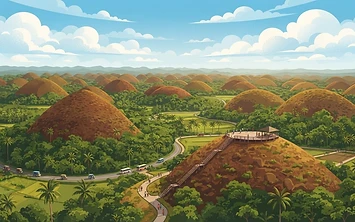
A geological wonder consisting of more than 1,200 symmetrical limestone hills that turn brown during the dry season. It is one of the most iconic and recognizable natural landmarks in the country.
Witness the hills turn a chocolate-brown color during the dry season.

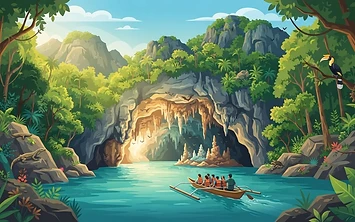
A UNESCO World Heritage Site featuring an 8.2-kilometer navigable underground river that flows through a spectacular cave system. It is renowned for its impressive limestone karst formations and diverse wildlife.
Take a guided paddle boat tour through the world's longest navigable underground river.

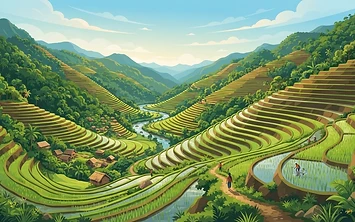
Carved into the mountainsides over 2,000 years ago by the indigenous Ifugao people, these terraces are often called the Eighth Wonder of the World. They represent a remarkable feat of ancient engineering and cultural heritage.
Marvel at the ancient, hand-carved mountain landscapes that showcase indigenous ingenuity.

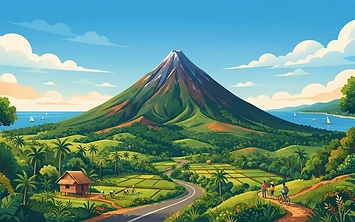
Widely celebrated as one of the most beautiful volcanoes in the world, Mayon is famous for its near-perfect cone shape. It serves as the defining symbol of the Bicol Region and is the most active volcano in the Philippines.
View the majestic, near-perfect cone shape of the volcano from the historic Cagsawa ruins.

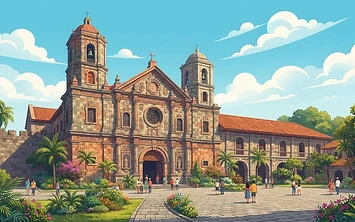
Built in 1589, this historic structure is the oldest stone church in the Philippines. It has survived numerous earthquakes and fires, standing as a testament to the country's colonial history.
Admire the exquisite carvings on the original wooden doors of this centuries-old stone church.


A unique historical landmark marked by a large cross rising from the sea, commemorating a cemetery that sank following a volcanic eruption in the late 1800s. It is a poignant and unusual site located off the coast of the Island Born of Fire.
See the iconic cross rising from the water that marks the site of the submerged cemetery.
Geography
Nature
Mount Apo
2,954 m / 9,692 ft
24.6% of land
≈ 73,800 km² of forest
FAO / World Bank, forest area (% of land area)
Explore the Nature Atlas505 km314 mi
It is the longest and largest river in the Philippines.
373 km232 mi
It is the second largest river system in the Philippines.
260 km162 mi
It flows through the Central Luzon region into Manila Bay.
911 km²352 sq mi · 2 m deep
It is the largest lake in the Philippines.
340 km²131 sq mi · 112 m deep
It is the second largest lake in the Philippines.
243 km²94 sq mi · 172 m deep
It contains the world largest island within a lake.
338 m1,109 ft
It consists of over one hundred cascades of varying heights.
98 m322 ft
It is a major source of hydroelectric power in Mindanao.
River lengths are whole-river figures, including any section beyond Philippines. Researched reference figures. Tap any name for where its name comes from and a Google Maps link.
Major Cities
- 1
Quezon
2,967,8382026
MapHousing the seat of government, it is home to the sprawling Quezon Memorial Circle and major broadcasting networks.
- 2
Davao
1,952,0632026
MapRanking as the largest city in the country by land area, it is famous for producing high-quality export bananas.
- 3Capital
Manila
1,909,4182026
MapServing as the capital of the Philippines, it features the historic Walled City of Intramuros and bustling harbor commerce.
- 4
Caloocan
1,814,6932026
MapHosting the iconic Bonifacio Monument, it serves as a densely populated industrial and residential hub within Metro Manila.
- 5
Cagayan
1,383,9832026
MapLocated in a remote area, this locality remains largely unrecognized as a significant urban center within Philippine geography.
- 6
Taguig
1,312,6512026
MapAnchored by the Bonifacio Global City district, it serves as a premier financial and lifestyle hub in the region.
- 7
Zamboanga
1,116,3762026
MapKnown as the Sardine Capital of the Philippines, it features distinct Zamboangueño culture and the colorful vinta boats.
- 8
Cebu
1,003,7052026
MapRenowned as the oldest city in the country, it serves as a major gateway and historic religious center.
- 9
Rizal
938,3762026
MapAttracting many pilgrims, it is famous for the Our Lady of Peace and Good Voyage shrine and mountain views.
- 10
Cagayan de Oro
871,9162026
MapOffering adventurous whitewater rafting activities, it serves as the primary regional trade center for Northern Mindanao.
- 11
Pasig
860,5412026
MapFeaturing the bustling Ortigas Center, it acts as a major commercial and business destination within the national capital region.
- 12
Valenzuela
842,9752026
MapFunctioning as a key manufacturing and industrial zone, it maintains significant warehouses and distribution centers for the capital region.
City populations are the latest official, UN or national-statistics estimates (2024–2026) compounded to 2026 at 1.4% a year (the nation's annual population growth rate); figures without a published update come from the open cities database (2020-era estimates) and are projected the same way.
Economy
Main exports
Philippines's leading export commodities and products.
Tap any export to learn more. Spot prices in USD only for Live Data subscribers.
Main imports
Philippines's leading import commodities and products.
Tap any import to learn more.
Military
Historical Timeline
50000 BCE
Arrival of the first inhabitants
Archaeological findings such as the Callao Man suggest that early humans arrived in the Philippine archipelago tens of thousands of years ago. These ancestors established the foundations for the diverse Indigenous groups present in the islands.
1521
Arrival of Ferdinand Magellan
Ferdinand Magellan arrived in the Philippines, marking the beginning of significant European contact with the islands. This expedition initiated the period of Spanish exploration and eventual colonial interest.
1565
Establishment of permanent Spanish settlement
Miguel López de Legazpi established the first permanent Spanish settlement in Cebu. This marked the beginning of over three centuries of Spanish colonial rule over the Philippine islands.
1898
Philippine Declaration of Independence
Filipino revolutionaries led by Emilio Aguinaldo declared independence from Spain on June 12, 1898. This event followed the successful momentum of the Philippine Revolution, although the islands were soon ceded to the United States.
1946
Granting of Philippine Independence
The United States officially recognized the Republic of the Philippines as an independent and sovereign nation on July 4, 1946. This ended the period of American colonial administration.
1972
Declaration of Martial Law
President Ferdinand Marcos placed the country under martial law, consolidating executive power and suspending civil rights. This period lasted until 1981 and fundamentally altered the nation's political trajectory.
1986
EDSA People Power Revolution
A peaceful civilian-led uprising ousted President Ferdinand Marcos after a disputed election. Corazon Aquino was installed as president, marking the restoration of democratic institutions.
2013
Super Typhoon Yolanda
One of the most powerful tropical cyclones ever recorded, Yolanda caused unprecedented destruction in the Visayas region. The disaster prompted significant international humanitarian assistance and changes in national disaster management policy.
2014
Signing of the Comprehensive Agreement on the Bangsamoro
The Philippine government and the Moro Islamic Liberation Front signed a peace agreement to end decades of conflict in Mindanao. This led to the eventual creation of the Bangsamoro Autonomous Region in Muslim Mindanao.
2016
Election of Rodrigo Duterte
Rodrigo Duterte was elected as the 16th President of the Philippines, marking the first time a politician from Mindanao held the nation's highest office. His administration focused on a controversial campaign against illegal drugs and infrastructure expansion.
2022
Election of Ferdinand Marcos Jr.
Ferdinand Marcos Jr. won the presidential election by a significant margin, representing the return of the Marcos family to the Malacañang Palace. His administration has prioritized economic recovery and shifts in foreign policy.
2025
Midterm Elections and Political Realignment
The May 2025 midterm elections saw significant shifts in legislative alliances and local governance. This event served as a major indicator of the political landscape ahead of the 2028 general elections.
National Anthem
José Palma
Julián Felipe
1898
Bayang magiliw, Perlas ng Silanganan, Alab ng puso sa Dibdib mo'y buhay. Lupang Hinirang, Duyan ka ng magiting, Sa manlulupig, Di ka pasisiil. Sa dagat at bundok, Sa simoy at sa langit mong bughaw, May dilag ang tula At awit sa paglayang minamahal. Ang kislap ng watawat mo'y Tagumpay na nagniningning, Ang bituin at araw niya, Kailan pa ma'y di magdidilim. Lupa ng araw, ng luwalhati't pagsinta, Buhay ay langit sa piling mo, Aming ligaya na 'pag may mang-aapi, Ang mamatay nang dahil sa iyo.
The anthem was composed in 1898 by Julián Felipe as a march titled 'Marcha Nacional Filipina' at the request of General Emilio Aguinaldo for the proclamation of Philippine independence. The music was originally instrumental, lacking lyrics until the 1899 publication of the Spanish poem 'Filipinas' by José Palma, which later served as the lyrical basis. The anthem officially became the national hymn under the Flag and Heraldic Code of the Philippines. Throughout the 20th century, the Spanish lyrics were gradually replaced by versions in Tagalog, eventually culminating in the standardized 'Lupang Hinirang' version in the 1960s. The song is legally required to be sung in its official Tagalog version at a 2/4 time signature. It serves as a profound symbol of Philippine nationalism and resistance against colonial rule, representing the nation's struggle for sovereignty.
National Holidays
This holiday marks the beginning of the Gregorian calendar year and is celebrated with family gatherings and festivities across the country.
Also known as Day of Valor, this holiday commemorates the fall of Bataan during World War II and honors the courage of Filipino and American soldiers.
This date commemorates the declaration of Philippine independence from Spanish colonial rule in 1898.
This holiday honors all the known and unknown heroes who fought for the country's freedom and national identity.
This day commemorates the birth anniversary of Andres Bonifacio, a key revolutionary leader and founder of the Katipunan.
A significant religious and cultural holiday marking the birth of Jesus Christ, celebrated with the longest Christmas season in the world.
Good News Today
Philippines among four countries set for first climate loss and damage fund grants
The Philippines has been selected as one of the first four nations to receive grants from an international fund designed to help developing countries recover from climate-related losses. This financial support marks a significant milestone in global efforts to assist vulnerable nations in building resilience against climate impacts.
Fun Facts
Archipelago of Thousands of Islands
The Philippines consists of 7,641 islands, though many of them remain unnamed on official government maps.
National Fruit Holds Records
The Philippine mango is officially recognized by the Guinness World Records as the sweetest fruit in the world.
Basketball is a National Obsession
Basketball was introduced by Americans in the early 1900s and has since become the most popular sport, played in every town square.
Colorful Jeepneys are Icons
The iconic Jeepneys were originally made from surplus U.S. military jeeps left over after World War II and decorated with vibrant art.
World Leader in Coconut Production
The country is consistently one of the world's top producers of coconuts, which are used in everything from culinary dishes to construction.
Smallest Volcano in the World
Taal Volcano is one of the smallest active volcanoes globally and sits inside a lake, which itself is on an island.
Longest Christmas Season Ever
The Philippines celebrates the longest Christmas season in the world, with carols starting to play in malls as early as September.
Home of the Tarsier
Bohol is home to the Philippine Tarsier, one of the smallest and oldest primates on the planet, known for having eyes larger than its brain.
Texting Capital of the World
For many years, the nation held the record for the most text messages sent daily, leading to the nickname 'Texting Capital of the World'.
Global Center of Marine Biodiversity
Located within the Coral Triangle, the Philippine archipelago contains the highest concentration of marine biodiversity per unit area in the world.
Chuckies Trivia Quiz
Chuckies Trivia Quiz
Fifteen questions on Philippines — five easy, five medium, five hard. How far can you get?
Sports & Live Events
Language
Counting to 10
1
1
= 10 (n = 0)
World Dictionary
Discover and translate any word into all supported languages.