
Burkina Faso
Africa
25,349,773
02:14 UTC+0
+226
.bf
Tena Kourou
749 m · 2,457 ft
Black Volta
125 m · 410 ft
2,722,023
Ouagadougou · 2026
2,722,023
Ouagadougou · 2026
Location
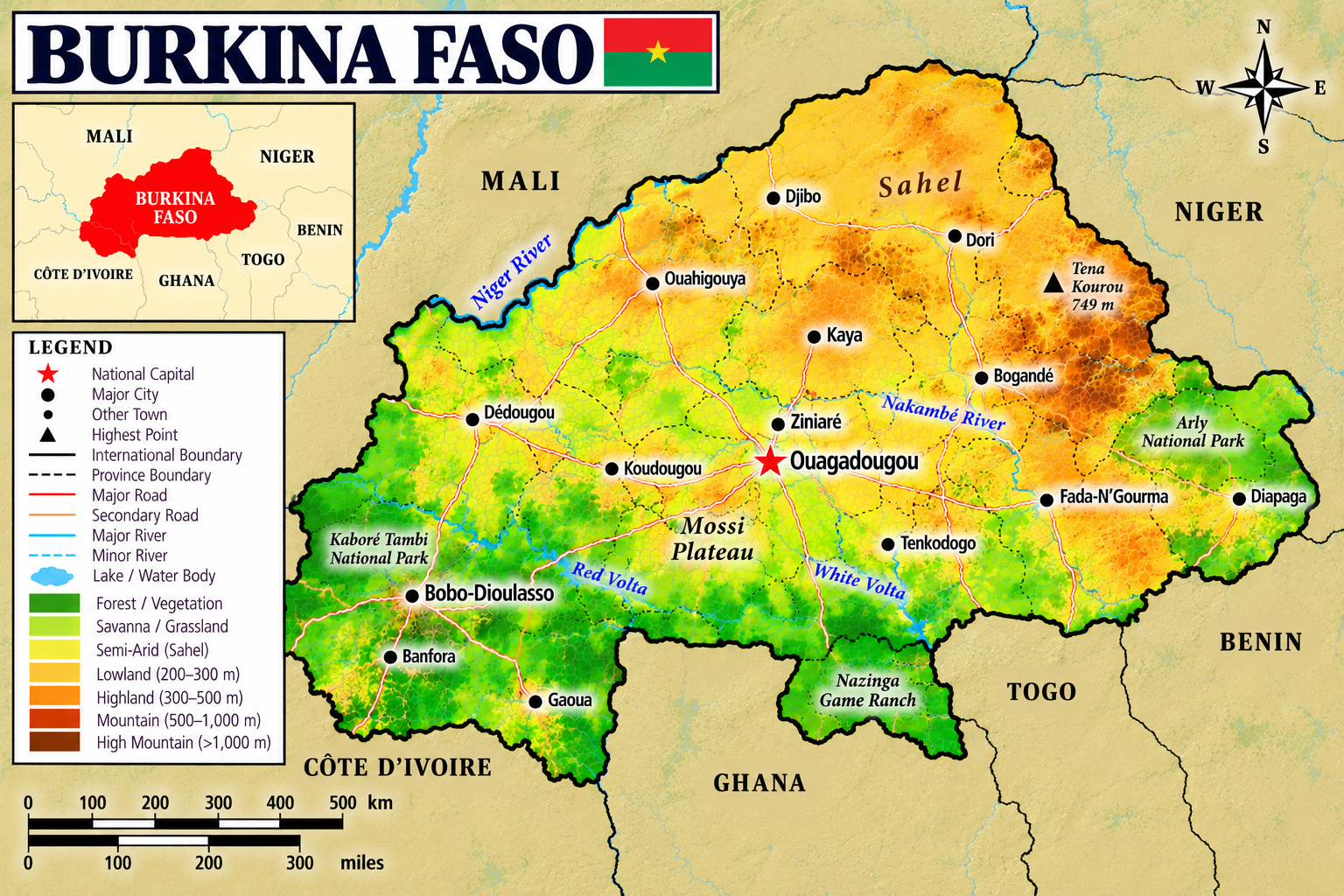
Burkina Faso — Detailed Physical Map
Sahel and Mossi Plateau terrain, Volta and Niger rivers, provinces, national parks, major towns and the capital Ouagadougou
Tourist Attractions


This impressive 19th-century mud-brick mosque is a masterpiece of Sudano-Sahelian architecture. It serves as a spiritual and cultural heart of the city, featuring distinctive wooden supports protruding from its walls.
The mosque is an architectural marvel that perfectly showcases the traditional building techniques of the region.

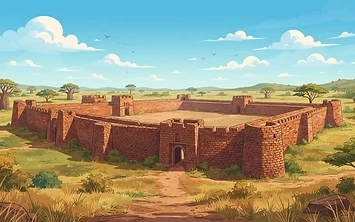
A UNESCO World Heritage site, these stone ruins are the best-preserved example of a series of fortresses that once protected the trans-Saharan gold trade. The site dates back centuries and offers a glimpse into the medieval history of the Lobi region.
It is the country's first UNESCO World Heritage site and a vital link to the region's ancient gold-trading past.

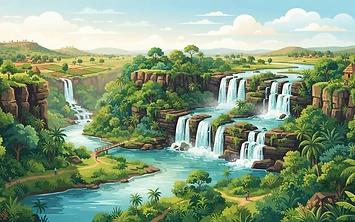
Located along the Komoé River, these scenic waterfalls are a series of cascades that provide a refreshing escape from the heat. The surrounding landscape is lush and offers beautiful views of the local countryside.
These falls are one of the most iconic natural wonders in the country, perfect for cooling off and enjoying nature.

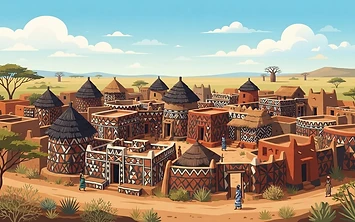
This traditional village is famous for its unique, hand-painted mud-brick houses decorated with intricate geometric patterns. The architecture is deeply tied to the social structure and traditions of the Kassena people.
The stunning, artistic exterior designs make this village a unique cultural treasure unlike anywhere else in West Africa.


An open-air museum located in the countryside, this park features a vast collection of granite sculptures carved directly into the landscape. Artists from across Africa and Europe have contributed to this unique fusion of styles.
It is a captivating outdoor gallery where nature and human artistry blend seamlessly together.

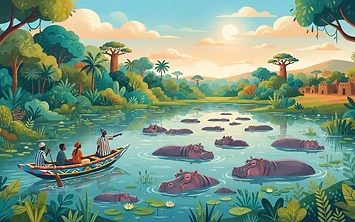
This lake is a protected wetland area that serves as a sanctuary for a significant population of hippopotamuses. Visitors can take pirogue boat trips to observe these animals in their natural habitat.
It offers a rare and peaceful opportunity to view hippos in the wild within a beautiful wetland ecosystem.
Geography
Nature
Tena Kourou
749 m / 2,457 ft
20.4% of land
≈ 55,685 km² of forest
FAO / World Bank, forest area (% of land area)
Explore the Nature Atlas1,160 km721 mi
Formerly known as the Black Volta it flows through the western part of the country.
400 km249 mi
Historically known as the Red Volta it originates in the plateau near Ouagadougou.
450 km280 mi
Known as the White Volta it flows southwards into Ghana.
26 km²10 sq mi
Located in the north central region it provides vital irrigation for local agricultural activities.
5 km²2 sq mi
This wetland is considered a sacred site and is protected for its biodiversity.
60 m197 ft
A series of cascades formed by the Comoé River near Banfora.
River lengths are whole-river figures, including any section beyond Burkina Faso. Researched reference figures. Tap any name for where its name comes from and a Google Maps link.
Major Cities
- 1Capital
Centre
3,149,5862026
MapServes as the administrative, communications, and cultural center of Burkina Faso and houses the seat of government.
- 2
Hauts-Bassins
1,154,2742026
MapFunctions as the economic capital and a primary hub for the nation's textile and agricultural industries.
- 3
Centre-Nord
282,8352026
MapKnown as the leatherworking capital of Burkina Faso and a vital transit point for regional livestock trade.
- 4
Centre-Ouest
276,3332026
MapHosts a significant cotton processing industry and is a major center for higher education in the country.
- 5
Nord
256,4472026
MapActs as the historic capital of the Yatenga Kingdom and serves as a major trade center in the north.
- 6
Est
234,0432026
MapMaintains a long-standing reputation for traditional leather craftsmanship and serves as a gateway to the eastern national parks.
- 7
Cascades
196,5062026
MapRenowned for its proximity to the stunning Karfiguela waterfalls and massive sugar cane production plantations.
- 8
Centre-Est
116,5922026
MapOperates as one of the largest commercial market towns in West Africa for imported goods and wholesale trade.
- 9
Centre-Est
114,9232026
MapRepresents the oldest kingdom of the Mossi people and acts as a major commercial center in the southeast.
- 10
Hauts-Bassins
101,6652026
MapStands as a key region for gold mining activities and agricultural production in the western part of the country.
- 11
Boucle du Mouhoun
95,6762026
MapFunctions as an important agricultural crossroads and the central hub for the country's cereal production.
- 12
Sahel
61,4802026
MapServes as a critical northern marketplace for nomadic livestock traders and local agricultural produce.
City populations are the latest official, UN or national-statistics estimates (2025–2026) compounded to 2026 at 2.6% a year (the nation's annual population growth rate); figures without a published update come from the open cities database (2020-era estimates) and are projected the same way.
Economy
Main exports
Burkina Faso's leading export commodities and products.
Tap any export to learn more. Spot prices in USD only for Live Data subscribers.
Main imports
Burkina Faso's leading import commodities and products.
Tap any import to learn more.
Military
Historical Timeline
12000 BCE
Early Human Occupation by Indigenous Groups
Archaeological evidence suggests that hunter-gatherer populations inhabited the region now known as Burkina Faso as early as the late Paleolithic period. These early inhabitants laid the foundation for subsequent migrations and the development of local cultures.
1100
Formation of the Mossi Kingdoms
The Mossi people migrated into the region and established several powerful, centralized kingdoms including Ouagadougou, Yatenga, and Fada N'gourma. These kingdoms maintained their independence and sociopolitical structure for several centuries.
1896
French Colonization of Upper Volta
The French military conquered the Kingdom of Ouagadougou, establishing colonial control over the region. The territory was eventually integrated into French West Africa as a distinct colony known as Upper Volta.
1960
Independence from France
Upper Volta gained full independence from French colonial rule on August 5, 1960. Maurice Yaméogo became the first president of the newly sovereign nation.
1983
Rise of Thomas Sankara
Captain Thomas Sankara seized power in a coup, initiating a radical socialist transformation of the country. He later renamed the nation Burkina Faso, meaning the Land of Incorruptible People, in 1984.
1987
Assassination of Thomas Sankara
Thomas Sankara was killed in a coup led by his close associate Blaise Compaoré. This event ended the revolutionary period and began a long era of rule by Compaoré.
2014
Burkinabè Uprising
Mass protests led to the ousting of long-time president Blaise Compaoré after he attempted to amend the constitution to extend his term. This marked a significant turning point in the country's democratic transition.
2015
Election of Roch Marc Christian Kaboré
Roch Marc Christian Kaboré was elected president in the first post-transition democratic election. This marked the first peaceful transfer of power between elected presidents in the nation's history.
2022
Military Coup D'état
The military, led by Paul-Henri Sandaogo Damiba, ousted President Kaboré amid growing dissatisfaction with the government's response to the Islamist insurgency. This initiated a period of military-led governance.
2022
Secondary Military Coup by Ibrahim Traoré
Captain Ibrahim Traoré led a second coup in September 2022, removing Damiba from power. Traoré subsequently assumed the role of transitional president to oversee the fight against militant groups.
2023
Formation of the Alliance of Sahel States
Burkina Faso, Mali, and Niger signed a mutual defense pact to combat regional insurgencies and assert sovereignty. This alliance signaled a significant shift in regional geopolitical alignment and security policy.
2025
Extension of Transition Period
The transitional government led by Captain Ibrahim Traoré extended the transition period by five years to prioritize national security and infrastructure development. This decision formalizes the current military-led political trajectory until further notice.
National Anthem
Une Seule Nuit
Thomas Sankara
Thomas Sankara
1984
Contre le féodalités des affameurs Sur les lèvres des peuples a jailli un cri La patrie ou la mort, nous vaincrons Debout, patriotes, la patrie nous appelle Être dignes de nos ancêtres, ne rien céder La patrie ou la mort, nous vaincrons
Une Seule Nuit was adopted in 1984 following the revolution led by Thomas Sankara. Sankara, who served as the President of Burkina Faso, personally wrote the lyrics and composed the melody for the anthem. The song replaced the previous anthem, Ditanyè, which had been in use since the country's independence from France in 1960. It was intended to reflect the revolutionary spirit and the anti-imperialist values of the new administration. The lyrics emphasize themes of patriotism, resistance against oppression, and historical consciousness. Following the coup that deposed Sankara in 1987, the government eventually reinstated the original anthem, Ditanyè, in 1997. Une Seule Nuit remains a significant cultural artifact representing the revolutionary period of Burkinabé history.
National Holidays
A public holiday marking the first day of the Gregorian calendar.
A day to celebrate the social, economic, cultural, and political achievements of women, while advocating for gender equality.
A Christian holiday observed on the day following Easter Sunday.
Also known as Workers' Day, it honors the economic and social contributions of workers.
Commemorates Burkina Faso's independence from France, gained in 1960.
Marks the establishment of the Republic of Upper Volta in 1958.
Good News Today
Qatar Charity completes 77 water projects in Burkina Faso
Qatar Charity successfully implemented 77 water infrastructure projects, including wells and storage tanks, to provide clean water to over 24,000 people. These initiatives aim to improve public health and reduce the daily burden of water collection for vulnerable communities.
Fun Facts
Home of the African Cinema
The nation hosts FESPACO, the largest and most prestigious film festival on the African continent, held biennially in Ouagadougou since 1969.
The Painted Village of Tiébélé
The village of Tiébélé is world-famous for its traditional Gurunsi architecture, where houses are intricately hand-painted with geometric patterns using natural pigments.
Sanctuary for Majestic Elephants
The Nazinga Game Ranch is a massive conservation success story, home to one of the highest concentrations of elephants in West Africa.
Delightful Local Culinary Staple
Tô is the national dish, a hearty, steamed porridge made from millet, sorghum, or maize, typically served with a savory okra or baobab leaf sauce.
A Name Rooted in Integrity
The name Burkina Faso translates to 'Land of the Upright Men,' symbolizing the dignity and honesty of its people in the local Moore and Dioula languages.
Ancient Terracotta Traditions
The mysterious ruins of Loropéni, a UNESCO World Heritage site, feature ancient stone fortress walls that have stood for at least 1,000 years.
Masters of Masked Dance
The Bwa people perform spectacular leaf-mask dances during initiation ceremonies, which are deeply rooted in their spiritual connection to nature spirits.
Sacred Baobab Tree Culture
The baobab tree is considered sacred in many communities and is used entirely; its leaves are eaten as greens, its fruit for juice, and its bark for cordage.
The Stallions of Football
The national football team is affectionately nicknamed 'Les Étalons' (The Stallions) after the legendary white horse of Princess Yennenga, the mythical mother of the Mossi people.
Unique Sound of the Kora
Burkina Faso is a hub for West African griot traditions, where musicians masterfully play the kora, a 21-string harp-lute carved from a large calabash gourd.
Chuckies Trivia Quiz
Chuckies Trivia Quiz
Fifteen questions on Burkina Faso — five easy, five medium, five hard. How far can you get?
Sports & Live Events
Language
Counting to 10
1
1
= 10 (n = 0)
World Dictionary
Discover and translate any word into all supported languages.