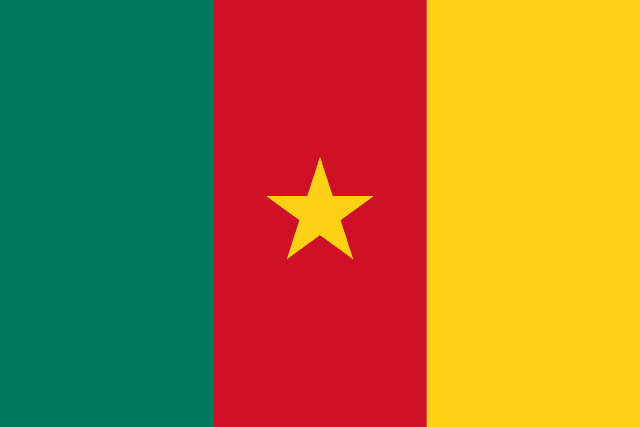

Cameroon
Republic of Cameroon
Africa
31,182,849
03:13 UTC+1
+237
.cm
Mount Cameroon
4,040 m · 13,255 ft
Atlantic Ocean
0 m · 0 ft
3,040,150
Yaounde · 2026
4,373,243
Douala · 2026
Location
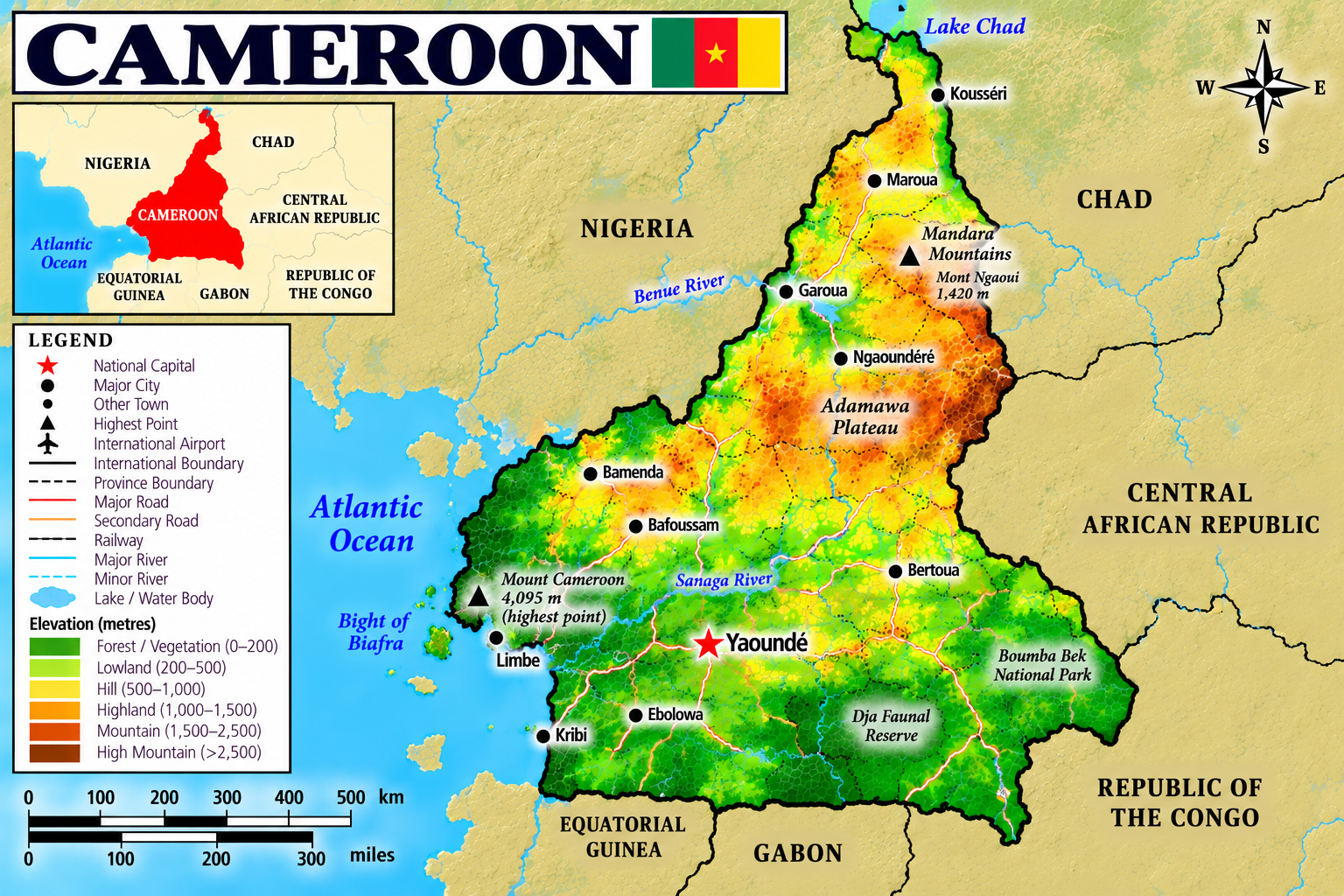
Cameroon — Detailed Physical Map
Mount Cameroon, Adamawa Plateau, Lake Chad, Sanaga and Benue rivers, provinces, major cities and the capital Yaoundé
Tourist Attractions

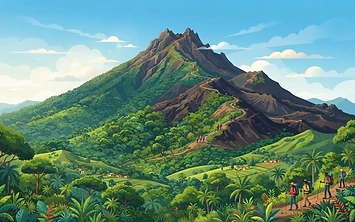
As the highest mountain in West and Central Africa, this active volcano offers diverse ecosystems ranging from montane forests to volcanic landscapes. It is a premier destination for hikers and nature enthusiasts seeking challenging treks and panoramic views.
It is the tallest peak in the region and an iconic active volcano.

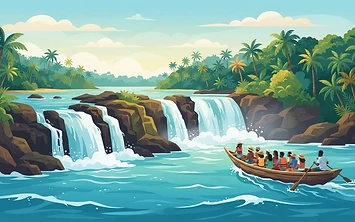
These unique waterfalls are famous for cascading directly into the Atlantic Ocean, creating a spectacular natural display. Visitors often take boat trips to view the falls from the water while enjoying the surrounding coastal scenery.
The rare sight of a waterfall flowing directly into the sea is unforgettable.

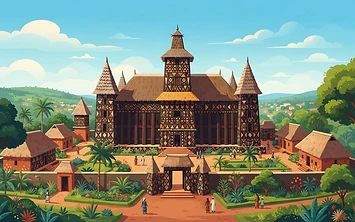
This magnificent palace serves as the seat of the Bamoun Sultan and showcases exceptional traditional African architecture. It houses a museum containing royal treasures, ancient manuscripts, and artifacts that chronicle over 600 years of the Bamoun Kingdom.
It offers a deep dive into the rich history and royal heritage of the Bamoun people.

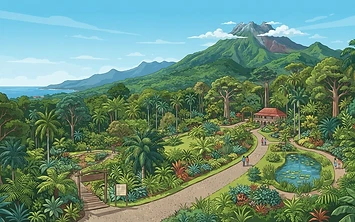
Established in 1892, this historic garden features over 1,500 plant species, including rare palms and medicinal tropical flora. It is situated near the coast, providing a lush, educational environment with stunning views of the nearby volcanic mountains.
It is a historic sanctuary of tropical biodiversity located right by the sea.

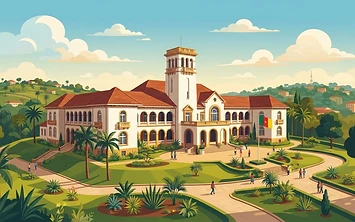
Housed in a former presidential palace, this museum provides a comprehensive look at Cameroon's national identity and cultural diversity. The collections include traditional art, ceremonial masks, and musical instruments from the country's many ethnic groups.
It is the best place to understand the cultural tapestry of Cameroon's 250+ ethnic groups.

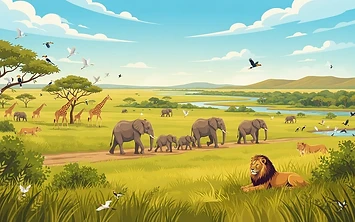
This renowned national park is one of the best places in the country to observe diverse wildlife, including elephants, giraffes, lions, and numerous bird species. It serves as a vital habitat for large mammals and offers a glimpse into the northern grasslands of Cameroon.
It is the premier destination for viewing large African mammals in their natural habitat.
Geography
Nature
Mount Cameroon
4,040 m / 13,255 ft
42.6% of land
≈ 202,538 km² of forest
FAO / World Bank, forest area (% of land area)
Explore the Nature Atlas918 km570 mi
The longest river in Cameroon flowing entirely within the national borders.
1,400 km870 mi
The primary tributary of the Niger River flowing through the northern region.
690 km429 mi
Flows through the dense tropical rainforests of the southern part of the country.
1,350 km²521 sq mi · 11 m deep
A vital source of water for the populations of four bordering nations.
40 km²15 sq mi · 24 m deep
Located near Edea and is recognized for its significant manatee population.
4 km²2 sq mi · 110 m deep
A volcanic crater lake known for having the deepest basin in the country.
15 m49 ft
Falls directly into the Atlantic Ocean near the coastal city of Kribi.
80 m262 ft
Featured as a filming location in the movie Greystoke The Legend of Tarzan.
River lengths are whole-river figures, including any section beyond Cameroon. Researched reference figures. Tap any name for where its name comes from and a Google Maps link.
Major Cities
- 1
Littoral
3,747,1382026
MapServes as the principal economic hub and largest port city of Cameroon.
- 2
- 3
North-West
432,3152026
MapActs as the capital of the Northwest Region and a major commercial trade center.
- 4
Ouest
369,4052026
MapFunctions as the primary administrative and agricultural hub for the Western Region.
- 5
Nord
359,1702026
MapStands as the major river port on the Benue River serving northern regions.
- 6
Extrême-Nord
297,9252026
MapKnown as the capital of the Far North Region, famous for its vibrant traditional craft markets.
- 7
Adamaoua
235,6002026
MapServes as the northern terminus of the Trans-Cameroon Railway and a livestock trading hub.
- 8
South-West
218,1242026
MapOperates as a vital market town for cocoa and palm oil production.
- 9
South-West
139,4182026
MapLocated on the eastern slopes of Mount Cameroon and served as the former German colonial capital.
- 10
Nord
133,1912026
MapHouses significant historical fortifications dating back to the Fulani lamidates.
- 11
South-West
126,1422026
MapFeatures a renowned botanical garden and sits at the base of Mount Cameroon.
- 12
Littoral
45,6172026
MapDistinguishes itself through extensive banana and pineapple plantations in the Littoral Region.
City populations are the latest official, UN or national-statistics estimates (2026–2026) compounded to 2026 at 2.5% a year (the nation's annual population growth rate); figures without a published update come from the open cities database (2020-era estimates) and are projected the same way.
Economy
Main exports
Cameroon's leading export commodities and products.
Tap any export to learn more. Spot prices in USD only for Live Data subscribers.
Main imports
Cameroon's leading import commodities and products.
Tap any import to learn more.
Military
Historical Timeline
10000 BCE
Initial Settlement by Hunter-Gatherer Groups
Archaeological evidence suggests that the earliest human inhabitants, ancestors of groups like the Baka people, began occupying the tropical rainforests of present-day Cameroon.
1472
Portuguese Exploration of the Wouri River
Portuguese navigator Fernão do Pó reached the Wouri River estuary, naming it Rio dos Camarões, which eventually gave the nation its name.
1884
Establishment of the German Protectorate
The Duala kings signed a treaty with German explorer Gustav Nachtigal, marking the formal beginning of German colonial rule known as Kamerun.
1919
League of Nations Mandate
Following World War I, Germany lost its African colonies, and Cameroon was divided between British and French administrative mandates.
1960
Independence of French Cameroon
The French-administered territory gained full independence as the Republic of Cameroon, with Ahmadou Ahidjo serving as the first president.
1961
Reunification of the Two Cameroons
The Southern Cameroons, formerly under British administration, voted to join the independent Republic of Cameroon to form a federal state.
1982
Accession of Paul Biya
Ahmadou Ahidjo resigned, and Paul Biya succeeded him as president, beginning a tenure that has lasted over four decades.
1996
Adoption of a New Constitution
The nation adopted a new constitution that established a decentralized unitary state and formalized the structure of the national legislature.
2008
Constitutional Amendment Removing Term Limits
The National Assembly passed an amendment to the constitution, effectively allowing President Paul Biya to seek re-election indefinitely.
2017
Escalation of the Anglophone Crisis
Tensions in the Northwest and Southwest regions escalated into an armed separatist conflict, significantly impacting national security and stability.
2024
Introduction of Major Economic Reforms
The government launched new fiscal measures aimed at stabilizing the national economy and enhancing infrastructure development across the regions.
2025
Major Parliamentary and Municipal Elections
The nation held key parliamentary and municipal elections, marking a significant moment in the ongoing political landscape of the country.
National Anthem
Ô Cameroun, Berceau de nos Ancêtres
René Djam Afane, Samuel Minkio Bamba, and Moïse Nyatte Nko'o
René Djam Afane
1957
Ô Cameroun, berceau de nos ancêtres, Va debout et jaloux de ta liberté. Comme un soleil ton drapeau fier doit être, Un symbole ardent de foi et d'unité. Que tous tes enfants du Nord au Sud, Soient unis dans le lien de la fraternité, Que le travail soit leur seule vertu, Pour bâtir dans le bonheur la prospérité. Ô Cameroun, tes terres sont sacrées, Que la paix règne enfin dans tes foyers, Que tes enfants aiment la vérité, Pour que demain soit un jour meilleur.
The anthem was originally composed in 1928 by René Djam Afane and was used as a patriotic song during the French mandate period. In 1957, shortly before the country gained independence, it was officially adopted as the national anthem. The lyrics were finalized by a committee including René Djam Afane, Samuel Minkio Bamba, and Moïse Nyatte Nko'o. In 1978, President Ahmadou Ahidjo made slight modifications to the text to remove references to the colonial past and emphasize themes of unity and peace. The anthem is written in both French and English, reflecting the bilingual nature of the country. It serves as a symbol of national identity and sovereignty for the people of Cameroon. It is performed at all official government functions and state ceremonies.
National Holidays
This day marks the beginning of the Gregorian calendar year and is observed as a public holiday throughout Cameroon.
This day commemorates the 1961 referendum where the Southern Cameroons voted to join the Republic of Cameroon, now serving to celebrate the country's youth.
Observed globally as International Workers' Day, this holiday honors the achievements of workers and the labor movement in Cameroon.
This is the most significant national holiday, commemorating the 1972 referendum that resulted in the transition from a federal state to a unitary state.
A major religious holiday in Cameroon commemorating the bodily ascension of the Virgin Mary into Heaven.
A national holiday commemorating the birth of Jesus Christ, celebrated by a large portion of the Cameroonian population.
Good News Today
Cameroon Successfully Vaccinates Over 95% of Target Children Against Measles-Rubella
A massive mid-October vaccination campaign in Cameroon successfully reached over 95% of its target of 6.2 million children to protect them against measles and rubella. This significant public health effort aims to curb the spread of the disease following a surge in cases earlier this year.
Fun Facts
The Indomitable Lions' Iconic Legacy
Cameroon's national football team holds the record for the most Africa Cup of Nations titles won by a sub-Saharan African nation. They were also the first African team to reach the quarter-finals of a FIFA World Cup in 1990.
The Chariot of the Gods
Mount Cameroon, an active volcano, is the highest peak in Central and West Africa. It is locally known as Mongo ma Ndemi, which translates to Mountain of Greatness.
Africa in Miniature Landscapes
Cameroon is often called Africa in Miniature because it contains almost every major climate and vegetation zone found on the continent. Within its borders, you can find coastlines, deserts, mountains, rainforests, and savannas.
Home of the Cross River Gorilla
Cameroon serves as the primary habitat for the Cross River gorilla, which is the rarest subspecies of gorilla in the world. These shy, endangered primates inhabit the remote forest regions along the border with Nigeria.
Diverse Culinary Traditions
The national dish, Ndolé, is a delicious stew made from bitter leaves, nuts, and either fish or meat. It represents the rich culinary fusion of the coastal and inland tribal groups.
A Linguistic Melting Pot
Cameroon is home to over 230 different native languages. This incredible linguistic diversity makes it one of the most culturally complex nations in the world.
Foumban's Ancient Artistic Royalty
The city of Foumban is famous for its royal palace and its tradition of intricate wood carving and bronze casting. It has been a center of Bamum artistic culture for centuries.
The Birthplace of Arabica
The Western Highlands of Cameroon provide the perfect volcanic soil and altitude for growing world-class Arabica coffee. The region has become a vital center for high-quality sustainable bean production.
World's Largest Frog Species
Cameroon is home to the Goliath frog, the largest frog species on Earth. These massive amphibians can grow up to 13 inches in length and weigh over seven pounds.
Traditional Secret Societies
The Grassfields region is well-known for its elaborate masquerade festivals and secret societies. These cultural groups use highly detailed, colorful masks to perform ritual dances that honor ancestral spirits.
Chuckies Trivia Quiz
Chuckies Trivia Quiz
Fifteen questions on Cameroon — five easy, five medium, five hard. How far can you get?
Sports & Live Events
Language
Counting to 10
1
1
= 10 (n = 0)
World Dictionary
Discover and translate any word into all supported languages.