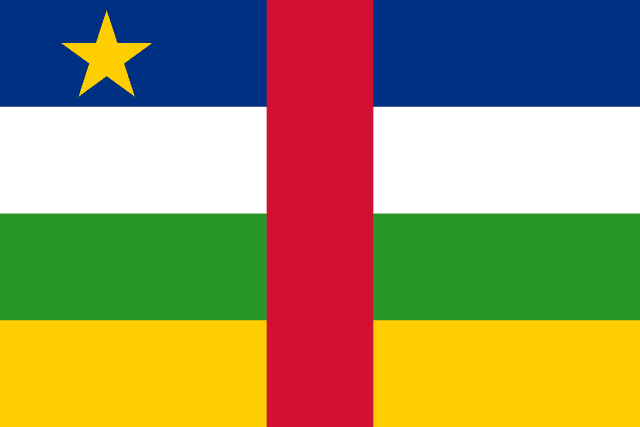

Central African Republic
Africa
6,246,274
04:49 UTC+1
+236
.cf
Mont Ngaoui
1,420 m · 4,659 ft
Oubangui River
335 m · 1,099 ft
965,937
Bangui · 2026
965,937
Bangui · 2026
Location
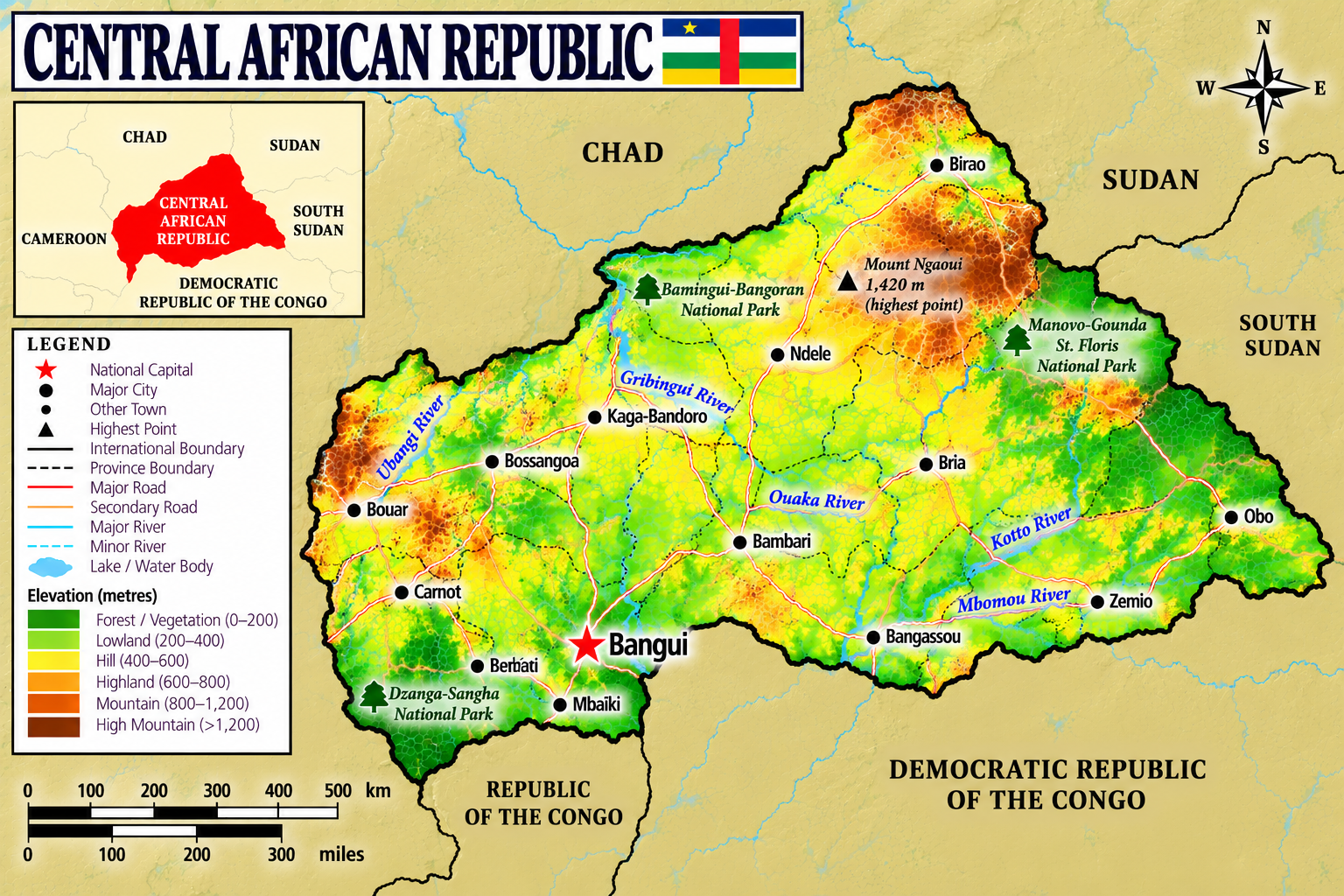
Central African Republic — Detailed Physical Map
Mount Ngaoui, Bamingui-Bangoran and Dzanga-Sangha parks, Ubangi and Ouaka rivers, prefectures, towns and the capital Bangui
Tourist Attractions
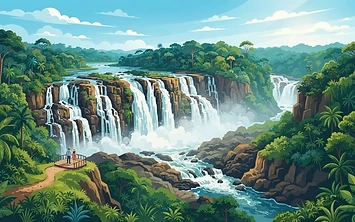
Located about 100 kilometers northwest of Bangui, these impressive waterfalls are considered the most spectacular natural attraction in the country. The falls are a popular destination for both local and international travelers seeking to experience the power of the Mbali River.
The sheer scale and beauty of the cascading water make it the country's most iconic natural landmark.
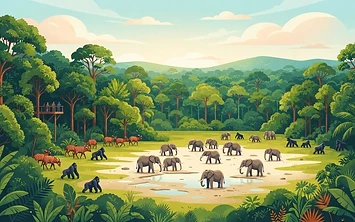
This UNESCO-recognized rainforest reserve is a sanctuary for diverse wildlife, including forest elephants, western lowland gorillas, and bongo antelopes. Visitors can observe these animals in their natural habitat, particularly at the famous Dzanga Bai forest clearing.
It offers a rare and exclusive opportunity to track gorillas and watch forest elephants gather at the clearing.

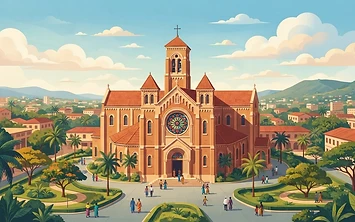
Situated in the capital city, this cathedral is a prominent historical site that reflects the influence of the French colonial era. It is known for its peaceful interior and beautiful stained glass windows.
The cathedral serves as a serene and architecturally significant landmark in the heart of the capital.

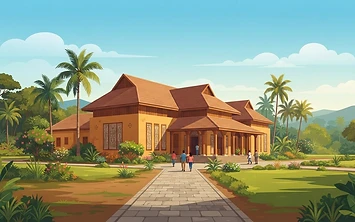
Named after the country's first prime minister, this museum preserves the cultural and historical heritage of the Central African Republic. It houses a collection of artifacts that provide insight into the nation's diverse traditions and history.
It is the premier destination for understanding the rich cultural tapestry and history of the nation.


Created to commemorate the 50th anniversary of the country's independence from France, this garden serves as both a recreational space and a symbolic monument. It is a popular gathering spot for locals and a frequent backdrop for wedding photography.
The garden provides a peaceful, commemorative space that reflects the country's journey toward independence.

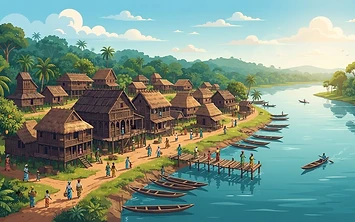
Zinga is a historic town located along the Ubangi River known for its well-preserved traditional wooden architecture. It offers visitors a glimpse into the region's past and the unique construction styles of the area.
The town is famous for its beautifully constructed, rare examples of traditional wooden houses.
Geography
Nature
Mont Ngaoui
1,420 m / 4,659 ft
35.5% of land
≈ 221,159 km² of forest
FAO / World Bank, forest area (% of land area)
Explore the Nature Atlas2,270 km1,411 mi
Forms the southern border between the Central African Republic and the Democratic Republic of Congo.
1,300 km808 mi
Serves as a major tributary of the Congo River flowing through the southwest.
600 km373 mi
Flows south to join the Ubangi River near the town of Mobaye.
1,500 km²579 sq mi · 11 m deep
A small northern portion of this basin extends into the Central African Republic.
50 m164 ft
Located on the Mbali River and provides significant hydroelectric power for the capital city.
River lengths are whole-river figures, including any section beyond Central African Republic. Researched reference figures. Tap any name for where its name comes from and a Google Maps link.
Major Cities
- 1Capital
Bangui
1,081,2592026
MapServes as the nation's capital and primary river port located along the banks of the Ubangi River.
- 2
Ombella-Mpoko
390,8022026
MapOperates as a rapidly expanding suburban center located immediately southwest of the capital city.
- 3
Ombella-Mpoko
307,0152026
MapFunctions as a rural center within the Ouham-Pendé Prefecture of the Central African Republic.
- 4
Nana-Mambéré
267,8242026
MapActs as a significant administrative and agricultural hub within the Mambéré-Kadéï Prefecture.
- 5
Mambéré-Kadéï
116,2012026
MapKnown as the country's second-largest city and a critical center for diamond mining operations.
- 6
Mambéré-Kadéï
80,1902026
MapHistorically significant for its rich diamond deposits and central position in the southwestern logging industry.
- 7
Ouham-Pendé
70,1352026
MapMaintains a vital role as a regional trade post within the mountainous northwestern highlands.
- 8
Nana-Mambéré
64,1402026
MapHosts a major military base and serves as a key transit point on the highway to Cameroon.
- 9
Ouham
62,0182026
MapHistorically serves as a primary center for cotton production and regional agricultural processing in the north.
- 10
Ouaka
58,2222026
MapFunctions as a central market town serving the surrounding agricultural regions and livestock trading routes.
- 11
Sangha-Mbaéré
54,8582026
MapLocated at the confluence of the Sangha and Mambéré rivers, serving as a hub for timber and diamond trade.
- 12
Haute-Kotto
40,3502026
MapGained prominence as a major hub for the extraction and informal trade of alluvial diamonds.
City populations are the latest official, UN or national-statistics estimates (2021–2025) compounded to 2026 at 2.3% a year (the nation's annual population growth rate); figures without a published update come from the open cities database (2020-era estimates) and are projected the same way.
Economy
Main exports
Central African Republic's leading export commodities and products.
Tap any export to learn more. Spot prices in USD only for Live Data subscribers.
Main imports
Central African Republic's leading import commodities and products.
Tap any import to learn more.
Military
Historical Timeline
8000 BCE
Early Central African Neolithic Settlement
Evidence suggests that early hunter-gatherer populations, including ancestors of the Aka and Baka peoples, inhabited the region's dense rainforests. These groups established sophisticated foraging traditions that have persisted in various forms for millennia.
1894
Establishment of Ubangi-Shari Colony
France formally established the territory of Ubangi-Shari as a colonial possession. This administrative move integrated the region into the broader French Equatorial Africa colonial apparatus.
1960
Declaration of National Independence
The Central African Republic gained full independence from France on August 13. David Dacko was installed as the nation's first president.
1965
Saint-Sylvestre Coup d'Etat
Colonel Jean-Bédel Bokassa overthrew President David Dacko in a military coup. This event marked the beginning of a long period of military-dominated governance.
1976
Proclamation of the Central African Empire
President Jean-Bédel Bokassa declared himself Emperor Bokassa I, transforming the republic into a short-lived monarchy. This regime was characterized by extreme authoritarianism and eventual international isolation.
1993
First Multi-Party Democratic Elections
Ange-Félix Patassé won the country's first democratic multi-party presidential election. This signaled an attempt to transition toward civilian governance following years of military rule.
2003
Coup d'Etat by Francois Bozizé
General François Bozizé successfully seized power in a military coup, ousting President Ange-Félix Patassé. This triggered a period of renewed political instability and civil unrest.
2013
Séléka Rebel Coalition Seizes Power
The Séléka rebel coalition captured the capital city of Bangui, forcing President François Bozizé to flee the country. The collapse of state authority led to a major humanitarian and security crisis.
2016
Election of Faustin-Archange Touadéra
Faustin-Archange Touadéra was elected president in a democratic vote aimed at restoring constitutional order. His victory was viewed as a step toward stabilizing the war-torn nation.
2019
Khartoum Peace Agreement
The government and fourteen armed groups signed a peace deal in Sudan to end years of violent conflict. Despite the agreement, sporadic violence continued to affect parts of the country.
2023
Constitutional Referendum
A national referendum was held to approve a new constitution, which removed term limits for the presidency. Supporters argued it increased sovereignty, while critics cited risks to democratic processes.
2025
2025 Presidential Election
President Faustin-Archange Touadéra successfully secured another term following the presidential election. This confirmed the ongoing political dominance of his administration amidst continued security challenges.
National Anthem
Barthélemy Boganda
Herbert Pepper
1960
Ô Centrafrique ! Ô berceau des Bantous ! Reprends soudain ton droit, ta liberté. Comprends enfin la noble vérité, Qu'il faut bâtir un monde à ton goût. Ô Centrafrique ! Ô berceau des Bantous ! Rétablis soudain ta dignité grandissante. Oh ! Souviens-toi de tes enfants vaillants, Qui, dans la peine, ont su l'unité d'abord. Ô Centrafrique ! Ô berceau des Bantous ! Toujours unis, nous marcherons ensemble, Fiers et vaillants, sur la route de l'espoir, Dans la paix et la joie, vers l'avenir meilleur. Ô Centrafrique ! Ô berceau des Bantous ! Oublions le passé, tournés vers l'horizon, La patrie nous appelle, le cœur battant, Pour ton honneur, Centrafrique, nous vivrons.
La Renaissance was written by Barthélemy Boganda, the founding father and first Prime Minister of the Central African Republic. The music was composed by Herbert Pepper, a French composer who also contributed to the national anthems of several other former French African colonies. It was officially adopted in 1960 following the nation's independence from France. The lyrics serve to emphasize national unity and the dignity of the Central African people as they move beyond their colonial past. Unlike many other anthems, the lyrics were composed specifically to foster a sense of identity among the diverse ethnic groups within the country. The anthem remains a central element of national identity, played during all major state ceremonies and patriotic events. There have been no significant changes to the lyrics since its initial adoption in 1960.
National Holidays
Commemorates the Central African Republic gaining its independence from France in 1960.
Honors the memory of Barthélemy Boganda, the founding father and first Prime Minister of the autonomous territory who died in a plane crash in 1959.
Marks the proclamation of the Central African Republic in 1958 and the establishment of its status as an autonomous state within the French Community.
Good News Today
Central African Republic sees progress in peace and local governance
The Central African Republic has made tangible progress in its peace and reconciliation efforts, with over 1,900 combatants disarmed since July 2025. Additionally, the country has successfully installed elected officials in the majority of its municipalities to support decentralization.
Fun Facts
Geographic Heart Of Africa
As the name implies, this landlocked nation is located almost exactly at the geographic center of the African continent.
Rich In Precious Diamonds
The country is home to significant alluvial diamond deposits, which play a major role in the local economy and traditional trade.
Dzanga Sangha Wildlife Haven
The Dzanga-Sangha Special Reserve is often called the 'Village of the Elephants' because it is a prime spot to observe forest elephants.
Dense Rainforest Biodiversity
The southwestern part of the country is covered by dense tropical rainforests that house rare western lowland gorillas.
Polyphonic Singing Traditions
The Aka people, native to the region, are famous for their unique and complex vocal polyphony, which is recognized by UNESCO.
Butterfly Migration Hotspot
The rainforests support an incredible variety of butterfly species that migrate through the lush jungle canopies in colorful swarms.
Oubangui River Highway
The Oubangui River serves as the primary transportation artery for the nation, connecting major interior regions through riverboats.
Diverse Tropical Hardwood Exports
The nation is known for its high-quality tropical timber, including species like Sapele and Mahogany that grow in the vast Congo Basin.
High Solar Potential Nation
Because it sits near the equator, the country receives consistent and intense sunlight year-round, offering huge potential for solar energy.
Peanut Based Culinary Culture
Many traditional dishes in the country feature a rich sauce made from crushed peanuts, locally known as 'kanda' or peanut stew.
Chuckies Trivia Quiz
Chuckies Trivia Quiz
Fifteen questions on Central African Republic — five easy, five medium, five hard. How far can you get?
Sports & Live Events
Language
Counting to 10
1
1
= 10 (n = 0)
World Dictionary
Discover and translate any word into all supported languages.