
Chad
Republic of Chad
Africa
20,227,901
03:13 UTC+1
+235
.td
Emi Koussi
3,445 m · 11,302 ft
Djourab Depression
160 m · 525 ft
1,757,370
N'Djamena · 2026
1,757,370
N'Djamena · 2026
Location
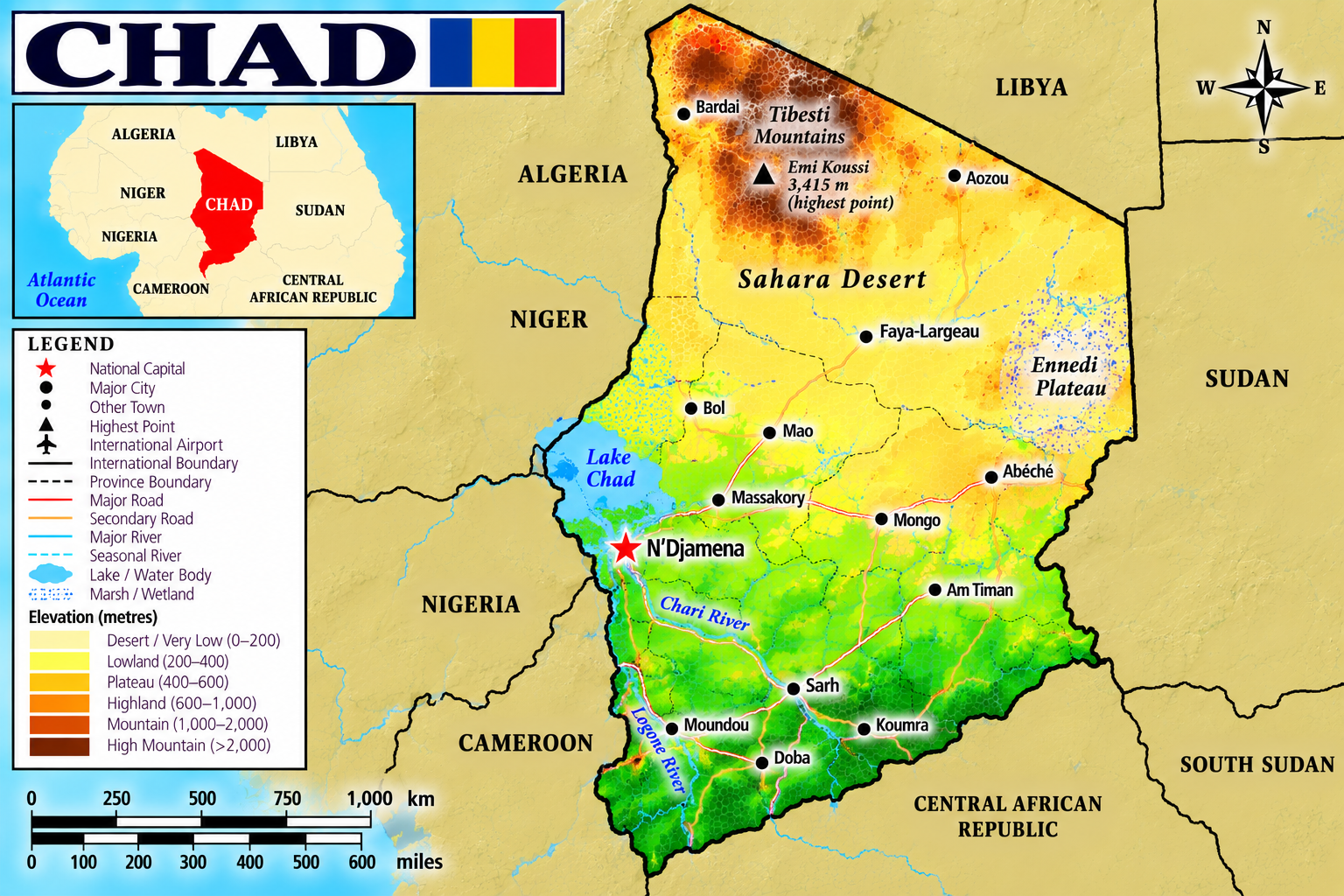
Chad — Detailed Physical Map
Sahara Desert, Tibesti Mountains, Lake Chad, Chari and Logone rivers, regions, major towns and the capital N'Djamena
Tourist Attractions

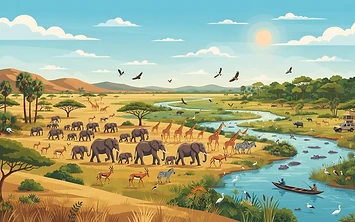
One of the most important wildlife sanctuaries in Central Africa, this park is a premier destination for viewing large herds of elephants, giraffes, and diverse bird species. It serves as a vital refuge for biodiversity in the Sahelian ecosystem.
It is widely considered the best place in Chad for a classic African safari experience.

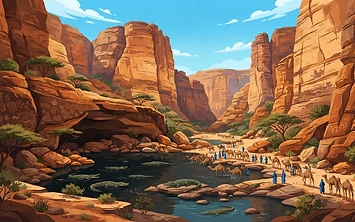
Hidden deep within the sandstone canyons of the Ennedi Massif, this ancient desert waterhole is a vital oasis for wildlife. It is famously home to one of the last surviving populations of Nile crocodiles in the Sahara.
The sight of crocodiles swimming in a remote desert canyon surrounded by towering cliffs is truly surreal.


This UNESCO World Heritage site consists of 18 interconnected lakes set within the hyper-arid Sahara Desert. The lakes are renowned for their varying chemical compositions, which create a stunning palette of blue, green, and red waters.
The vibrant, contrasting colors of the lakes against the golden desert dunes create a unique natural spectacle.

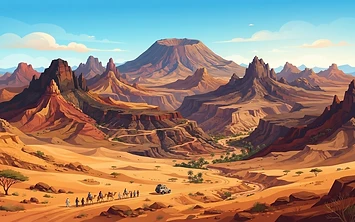
A massive volcanic mountain range that contains the highest peaks in the Sahara, including the extinct shield volcano Emi Koussi. The region is characterized by jagged peaks, deep gorges, and ancient rock art sites.
It offers some of the most challenging and rewarding trekking and mountaineering opportunities in the Sahara.

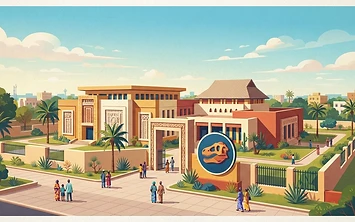
Located in the capital city, this museum houses a significant collection of archaeological and ethnographic artifacts. Its most famous exhibit is the partial skull of 'Toumaï', a 7-million-year-old hominid fossil.
Seeing the Toumaï skull provides a profound connection to the earliest origins of humanity.

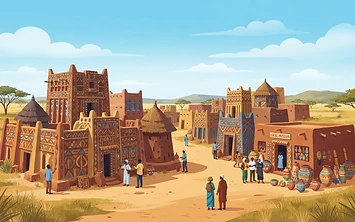
A traditional village known for its distinct architecture and its role as a center for the ancient Sao civilization. Visitors can explore the local museum and admire the intricate, colorful pottery and mud-brick structures.
It offers an accessible and authentic glimpse into the traditional culture and history of the Sao people.
Geography
Nature
Emi Koussi
3,445 m / 11,302 ft
3.3% of land
≈ 42,372 km² of forest
FAO / World Bank, forest area (% of land area)
Explore the Nature Atlas1,400 km870 mi
Provides approximately ninety percent of the water flowing into Lake Chad.
965 km600 mi
Forms a significant portion of the border between Chad and Cameroon.
1,500 km²579 sq mi · 11 m deep
Historically one of the largest freshwater bodies in the African continent.
500 km²193 sq mi · 5 m deep
Designated as a Ramsar site important for migratory waterbirds.
45 m148 ft
Located on the Mayo Kebbi River near the town of Lere.
River lengths are whole-river figures, including any section beyond Chad. Researched reference figures. Tap any name for where its name comes from and a Google Maps link.
Major Cities
- 1Capital
N’Djamena
1,992,9562026
MapServes as the capital city and the primary administrative, industrial, and economic hub of Chad.
- 2
Ouaddaï
457,1072026
MapHistorically served as the capital of the Ouaddai Empire and remains a significant cultural and commercial center.
- 3
Logone Occidental
290,4012026
MapFunctions as the nation's second-largest city and serves as a major center for cotton and oil production.
- 4
Moyen-Chari
285,2872026
MapEstablished as a former French colonial center and currently thrives as a major hub for cotton processing.
- 5
Borkou
173,3512026
MapSituated in the Sahara Desert, it serves as the administrative center for the vast Borkou region.
- 6
Batha
109,2642026
MapStrategically positioned as a trade nexus connecting northern pastoral nomadic routes with southern sedentary communities.
- 7
Mayo-Kebbi-Ouest
106,5542026
MapInhabited primarily by the Mundang people and renowned for its significant local traditional leadership and regional festivals.
- 8
Tandjilé
85,1572026
MapActs as a vital regional agricultural market located within the fertile Tandjile region of southern Chad.
- 9
Mayo-Kebbi-Est
80,2402026
MapSupports local livelihoods through intensive agriculture and fishing activities near the border with Cameroon.
- 10
Barh-El-Gazel
64,5652026
MapLocated in the northern regions, this settlement remains primarily a remote outpost serving local nomadic pastoralist communities.
- 11
Sila
60,7092026
MapHosts a large population of refugees fleeing conflict and functions as a critical center for humanitarian aid.
- 12
Tandjilé
59,8382026
MapProvides essential access to water resources and grazing lands for livestock in the arid eastern regions.
City populations are the latest official, UN or national-statistics estimates (2025–2025) compounded to 2026 at 3% a year (the nation's annual population growth rate); figures without a published update come from the open cities database (2020-era estimates) and are projected the same way.
Economy
Main exports
Chad's leading export commodities and products.
Tap any export to learn more. Spot prices in USD only for Live Data subscribers.
Main imports
Chad's leading import commodities and products.
Tap any import to learn more.
Military
Historical Timeline
7000 BCE
Arrival of Earliest Settlers in Chad
Archaeological evidence confirms that prehistoric human populations, the ancestors of modern Chadians, settled in the northern regions of the Sahara during the Neolithic subpluvial period.
800
Establishment of the Kanem Empire
The Kanem Empire was founded around Lake Chad by the Kanembu people, eventually becoming a major trans-Saharan trade power.
1396
Rise of the Bornu Empire
After internal conflicts in Kanem, the Kanemi rulers migrated west to establish the Bornu Empire, which dominated the region for centuries.
1900
French Colonial Conquest
Following the Battle of Kousséri, France established control over the region, formally incorporating it into French Equatorial Africa.
1960
Independence from France
Chad gained full independence from France on August 11, with François Tombalbaye serving as the nation's first president.
1979
Outbreak of the Chadian Civil War
The collapse of the central government led to a protracted civil war between various rebel factions and political groups.
1990
Rise of Idriss Déby to Power
Idriss Déby led a successful military rebellion to overthrow Hissène Habré, beginning a presidency that would last over three decades.
2003
Commencement of Oil Exports
Chad began exporting crude oil through a pipeline connecting the Doba oil fields to the Atlantic coast, transforming the national economy.
2021
Death of President Idriss Déby
President Idriss Déby was killed while visiting front lines, leading to the creation of a Transitional Military Council led by his son.
2022
Inclusive National Dialogue
The transitional government convened a national dialogue intended to lay the groundwork for a return to constitutional order and civilian rule.
2024
Election of Mahamat Idriss Déby
Mahamat Idriss Déby was declared the winner of the presidential election, officially transitioning from military leader to elected civilian president.
2025
Legislative and Local Elections
Chad held long-awaited parliamentary and local government elections, representing a significant milestone in the country's return to democratic governance.
National Anthem
Louis Gidrol and his students
Paul Villard
1960
Peuple tchadien, debout et à l'ouvrage ! Tu as conquis la terre et ton droit ; Ta liberté naîtra de ton courage ! Lève les yeux, l'avenir est à toi. Ô mon pays, tant de fois éprouvé ! Tes grands combats ne sont pas terminés. Ta liberté naîtra de ton courage ! Lève les yeux, l'avenir est à toi. Peuple tchadien, debout et à l'ouvrage ! Tu as conquis la terre et ton droit ; Ta liberté naîtra de ton courage ! Lève les yeux, l'avenir est à toi.
La Tchadienne was composed in 1960 by Paul Villard to mark the independence of Chad from France. The lyrics were written by Louis Gidrol with the assistance of his students at a school in Fort-Lamy, now known as N'Djamena. The song was officially adopted upon the country's independence on August 11, 1960. It was intended to serve as a call to national unity and collective effort for the newly sovereign nation. The anthem's text reflects themes of post-colonial resilience and the determination to forge a future through hard work. Despite some historical political instability in Chad, the anthem has remained the official national song since its adoption. It is played at all official state functions and ceremonies to represent the identity and sovereignty of the Chadian people.
National Holidays
This holiday marks the beginning of the new calendar year.
This date commemorates the arrival of Idriss Déby to power in 1990, marking a transition in the country's political history.
This holiday celebrates Chad's independence from France, which was officially gained on this day in 1960.
This religious holiday marks the end of Ramadan, the Islamic month of fasting.
Known as the Feast of Sacrifice, this Islamic holiday commemorates the willingness of Ibrahim to sacrifice his son as an act of obedience to God.
Good News Today
New Centre in Balimba Offers a Second Chance for Children in Difficulty
A new community centre has opened in the Moyen-Chari region to provide support and opportunities for vulnerable children. This initiative aims to offer these children a second chance through education and social integration programs.
Fun Facts
The Dead Heart of Africa
Chad is often called the Dead Heart of Africa because of its landlocked position at the very center of the continent.
Sahara's Highest Volcanic Peak
The Emi Koussi volcano in northern Chad is the highest point in the Sahara Desert, reaching an elevation of 3,415 meters.
Shrinking Lake Chad Paradox
Lake Chad is a vital freshwater source that has fluctuated wildly in size, shrinking by over 90 percent since the 1960s due to climate shifts and irrigation.
Cradle of Ancient Humanity
In 2001, paleontologists discovered the skull of Sahelanthropus tchadensis, one of the oldest known hominid species dating back seven million years.
Unique Saharan Camel Caravans
The people of the Tibesti Mountains maintain ancient salt trade routes, moving slabs of salt across the desert using traditional camel caravans.
Traditional Sudanese Cuisine Staple
A popular local dish is boule de gomme, a thick porridge made from sorghum or millet served with a spicy okra-based stew.
Zakouma National Park Wildlife Haven
Zakouma National Park is one of the most successful conservation stories in Africa, known specifically for its massive, protected herds of elephants.
Ancient Ennedi Plateau Art
The Ennedi Massif contains thousands of prehistoric rock paintings and engravings that depict long-lost giraffes, cattle, and hunters from a greener Sahara.
Diverse Multilingual Cultural Identity
With over 100 distinct ethnic groups, the country is home to incredible linguistic diversity where French and Arabic serve as the two official languages.
The Sahara's Natural Sculptures
The region of Faya-Largeau is known for having some of the most dramatic sand dune formations on Earth, created by the relentless Harmattan winds.
Chuckies Trivia Quiz
Chuckies Trivia Quiz
Fifteen questions on Chad — five easy, five medium, five hard. How far can you get?
Sports & Live Events
Language
Counting to 10
1
1
= 10 (n = 0)
World Dictionary
Discover and translate any word into all supported languages.