

Comoros
Union of the Comoros
Africa
911,819
05:13 UTC+3
+269
.km
Mount Karthala
2,360 m · 7,743 ft
Indian Ocean
0 m · 0 ft
62,616
Moroni · 2026
62,616
Moroni · 2026
Location
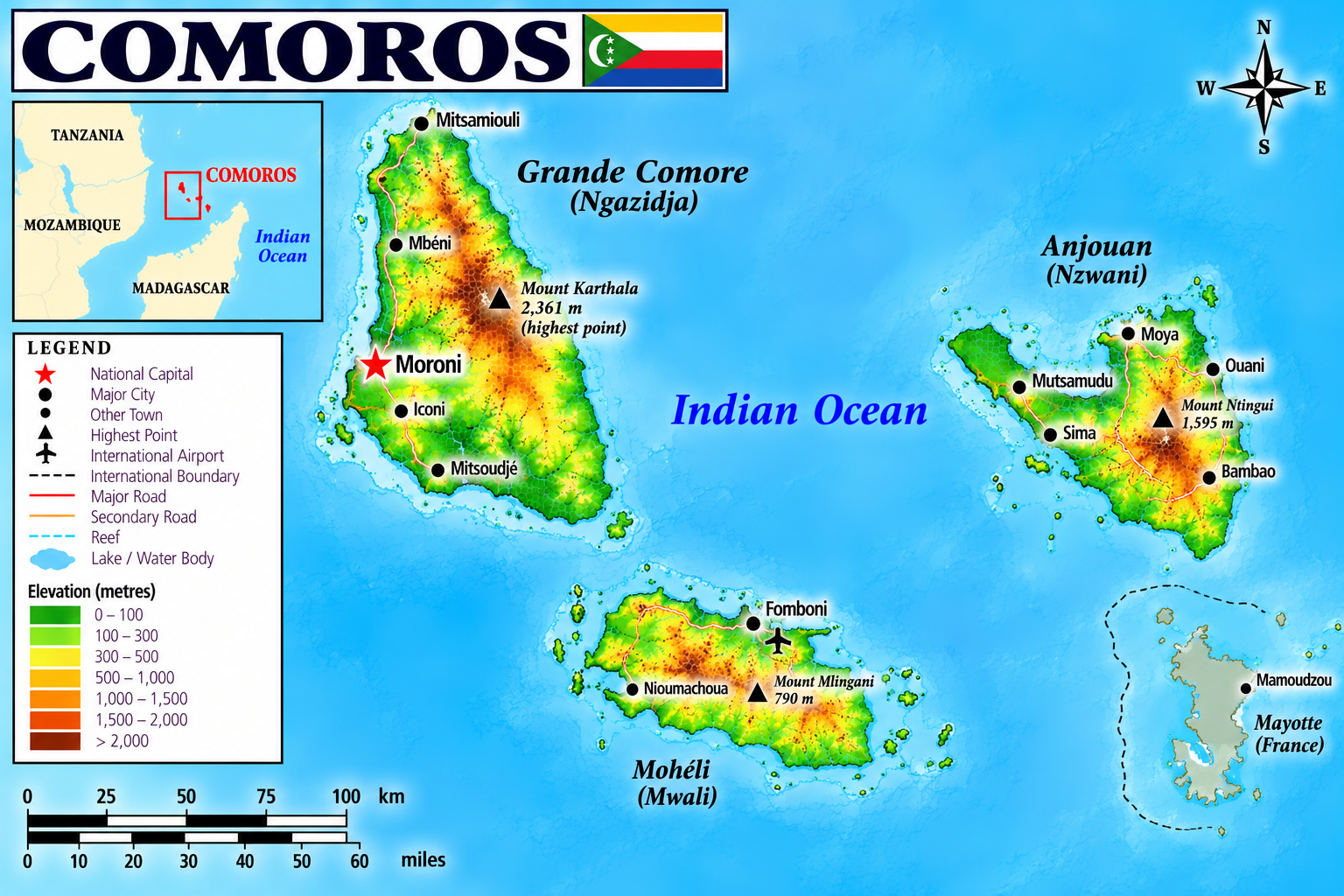
Comoros — Detailed Physical Map
Grande Comore, Mohéli and Anjouan, Mount Karthala, Moroni and the main towns across the archipelago
Tourist Attractions

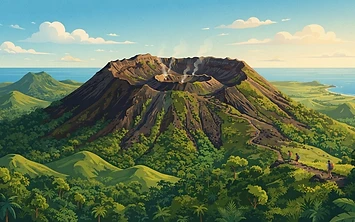
As the highest point in the Comoros, this active volcano features a massive summit caldera that offers a challenging and rewarding trek for adventurous hikers. It is a dominant natural landmark that defines the landscape of the main island.
Experience the thrill of standing on the rim of one of the world's largest active volcanic craters.

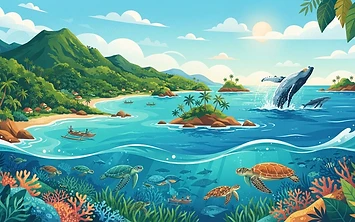
This protected marine area is the country's first national park, renowned for its rich biodiversity including coral reefs, sea turtles, and humpback whales. It serves as a vital sanctuary for marine life in the Indian Ocean.
Witness sea turtles nesting on the pristine beaches of Itsamia within the park.

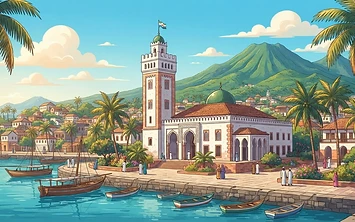
Dating back to the 15th century, this iconic mosque is one of the oldest and most significant religious structures in the Indian Ocean region. Its classic coral-stone architecture reflects the deep-rooted Islamic heritage of the archipelago.
Climb the minaret for a stunning panoramic view of the Moroni harbor and the surrounding medina.

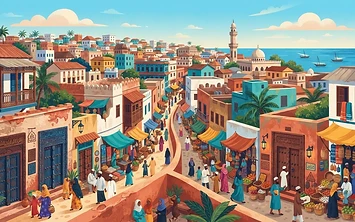
The medina is an ancient Swahili-Arab settlement characterized by a labyrinth of narrow alleys, intricately carved wooden doors, and traditional coral-stone houses. It remains a living center of local trade and social life.
Wander through the historic winding streets to discover the authentic atmosphere of a traditional Comorian town.

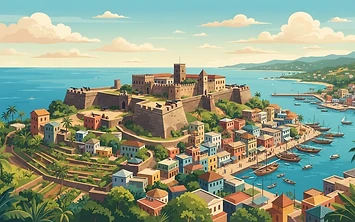
Constructed in the late 18th century to defend against pirate raids, this imposing citadel stands as a testament to the island's defensive history. It overlooks the city and harbor, providing a glimpse into the era of the Anjouan Sultanate.
Explore the historic ramparts for an unmatched view of the bustling harbor and the old town below.

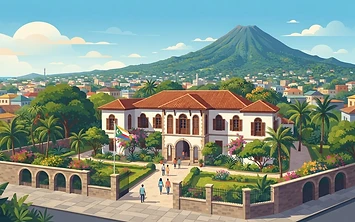
Located in the heart of the capital, this museum houses a diverse collection of artifacts detailing the natural and cultural history of the islands. Its most famous exhibit is a preserved specimen of the coelacanth, a rare deep-sea fish.
View the rare coelacanth, a prehistoric 'living fossil' discovered in the waters surrounding the islands.
Geography
Nature
Mount Karthala
2,360 m / 7,743 ft
22.0% of land
≈ 409 km² of forest
FAO / World Bank, forest area (% of land area)
Explore the Nature Atlas0 km²0 sq mi
A saltwater lake located within the crater of a dormant volcano on Grande Comore.
—
Located on Moheli, this waterfall is surrounded by lush tropical vegetation.
River lengths are whole-river figures, including any section beyond Comoros. Researched reference figures. Tap any name for where its name comes from and a Google Maps link.
Major Cities
- 1Capital
Grande Comore
90,3832026
MapServes as the national capital and largest city of the Comoros, located on the island of Grande Comore.
- 2
Anjouan
43,1592026
MapFunctions as the main port and second-largest city, featuring an ancient medina and a historical citadel.
- 3
Anjouan
27,7942026
MapHouses the primary airport serving the island of Anjouan.
- 4
Anjouan
26,5322026
MapPositioned in the mountainous terrain of Anjouan, this village is noted for its traditional Comorian rural lifestyle.
- 5
Anjouan
22,8132026
MapRepresents a traditional settlement on Anjouan known for its involvement in local spice and vanilla production.
- 6
Mohéli
22,3432026
MapActs as the administrative center and largest urban area on the island of Mohéli.
- 7
Grande Comore
21,0002026
MapLocated on Grande Comore, this settlement is primarily known for its local agricultural practices.
- 8
Anjouan
19,2962026
MapContains a historic center famous for its intricately carved doors and significant architectural heritage.
- 9
Grande Comore
10,0002026
MapSituated on Grande Comore, this region is recognized for its proximity to volcanic slopes and agricultural activity.
City populations are the latest official, UN or national-statistics estimates (2026–2026) compounded to 2026 at 2.1% a year (the nation's annual population growth rate); figures without a published update come from the open cities database (2020-era estimates) and are projected the same way.
Economy
Main exports
Comoros's leading export commodities and products.
Tap any export to learn more. Spot prices in USD only for Live Data subscribers.
Main imports
Comoros's leading import commodities and products.
Tap any import to learn more.
Military
Historical Timeline
500
Austronesian and Bantu Arrival
The first permanent settlements were established on the Comoros islands by seafaring Austronesian and Bantu-speaking peoples. These groups formed the foundation of the Comorian culture and society.
1500
Emergence of the Sultanates
The islands organized into several independent sultanates that facilitated trade in the Indian Ocean. These political entities governed the archipelago for several centuries.
1841
French Annexation of Mayotte
France established a protectorate over the island of Mayotte through a treaty signed with the local sultan. This marked the beginning of French colonial influence in the archipelago.
1912
Establishment of French Colonial Rule
France officially declared the entire Comoros archipelago a colony. The islands were placed under the administration of the Governor-General of Madagascar.
1975
Declaration of Independence
The Comoros unilaterally declared independence from France after a referendum. While three islands chose independence, Mayotte voted to remain a French territory.
1978
Establishment of Federal Islamic Republic
Following a series of political upheavals, Ahmed Abdallah returned to power and established a new constitution. This set the framework for the country's governance for the next two decades.
1999
Military Coup d'État
Colonel Azali Assoumani seized power in a military coup, overthrowing the acting president. This event significantly altered the political trajectory of the nation toward centralized military control.
2001
Adoption of a New Constitution
A new constitution was approved, creating the Union of the Comoros and granting greater autonomy to the individual islands. This aimed to resolve separatist tensions following the secessionist movement in Anjouan.
2018
Constitutional Referendum
A controversial constitutional referendum was passed, extending presidential term limits and eliminating the rotation system between islands. The change allowed President Azali Assoumani to seek further terms.
2022
Implementation of Blue Economy Policies
The government intensified its focus on the 'Emerging Comoros 2030' plan by prioritizing the Blue Economy. This strategy seeks to leverage marine resources for sustainable national development.
2024
Re-election of President Azali Assoumani
Azali Assoumani was declared the winner of the presidential election amid opposition claims of irregularities. He secured his position for another five-year term to continue his administration's policies.
2025
Expansion of Regional Integration Efforts
The Comoros formally increased its participation in regional trade and diplomatic frameworks within East Africa. This effort focused on strengthening economic ties and regional security cooperation.
National Anthem
Said Hachim Sidi
Said Hachim Sidi
1978
Udzima wa ya Masiwa Ya Komori na Maoré Ya Masiwa ya Komori Ya zindzi ya zahabuni Udzima wa ya Masiwa Ya Komori na Maoré Ya Masiwa ya Komori Ya zindzi ya zahabuni Naitso tsitsindze ho ndzima Na hantsi ya Komori Udzima wa ya Masiwa Ya Komori na Maoré Ya Masiwa ya Komori Ya zindzi ya zahabuni
Udzima wa ya Masiwa was adopted as the national anthem of Comoros following the country's independence and the subsequent political shifts in 1978. It was written and composed by Said Hachim Sidi, a Comorian musician who sought to create a melody that reflected the national identity. The lyrics emphasize the unity of the archipelago, explicitly referencing the islands of Comoros and Mayotte. The anthem serves as a symbol of national sovereignty and the cultural bonds between the various islands in the nation. It replaced the previous anthem used briefly after independence from France in 1975. The song is performed during official state ceremonies, national holidays, and major public events to foster patriotism. Despite the ongoing political complexities regarding the status of Mayotte, the anthem remains a fundamental expression of the constitutional claim of territorial integrity.
National Holidays
Celebrates the start of the new calendar year.
Commemorates the declaration of independence of the Comoros from France in 1975.
Marks the end of the fasting month of Ramadan with communal prayers and festivities.
The Feast of Sacrifice honors the willingness of Ibrahim to sacrifice his son as an act of obedience to God.
Celebrates the birth of the Islamic prophet Muhammad.
Good News Today
Comoros advances community-led marine stewardship with new fisheries agreement
A new fisheries co-management agreement signed in Chindini empowers local fishers to work alongside authorities to protect marine resources. This initiative, supported by the SIDS Restoration Flagship, aims to ensure the sustainable use of coastal ecosystems.
Fun Facts
The World's Perfume Island
Comoros is the world's leading producer of ylang-ylang, an essential oil used in high-end perfumes like Chanel No. 5.
Active Volcano Hearth
The island of Grande Comore is home to Mount Karthala, one of the largest active volcanoes in the world, which towers over the landscape.
Home To Living Fossils
The deep waters surrounding the Comoros are one of the few places on Earth where the prehistoric coelacanth fish, once thought extinct, still swims.
Extravagant Traditional Wedding Ceremonies
The 'Grand Mariage' is a significant cultural event where the groom must provide massive dowries and gifts to gain status in the community.
Global Vanilla Powerhouse
Beyond perfume, the country is a major exporter of high-quality vanilla, which is grown in the lush, volcanic soil of the islands.
Three Islands One Nation
While the archipelago has four main islands, the nation of Comoros consists of three: Grande Comore, Mohéli, and Anjouan.
Tropical Culinary Traditions
A staple of Comorian cuisine is Langouste à la Vanille, a unique dish that pairs fresh local lobster with a savory vanilla sauce.
Rare Tropical Bird Life
The Comoros Blue Vanga is a stunning, endemic bird species found only in the forests of the Grande Comore island.
Strategic Indian Ocean Location
Located at the northern end of the Mozambique Channel, these islands were once a vital stopover for spice traders traveling from the East.
Protected Marine Life Sanctuary
Mohéli, the smallest island, hosts the Comoros Marine Park, which is crucial for the conservation of sea turtles and humpback whales.
Chuckies Trivia Quiz
Chuckies Trivia Quiz
Fifteen questions on Comoros — five easy, five medium, five hard. How far can you get?
Sports & Live Events
Language
Counting to 10
1
1
= 10 (n = 0)
World Dictionary
Discover and translate any word into all supported languages.