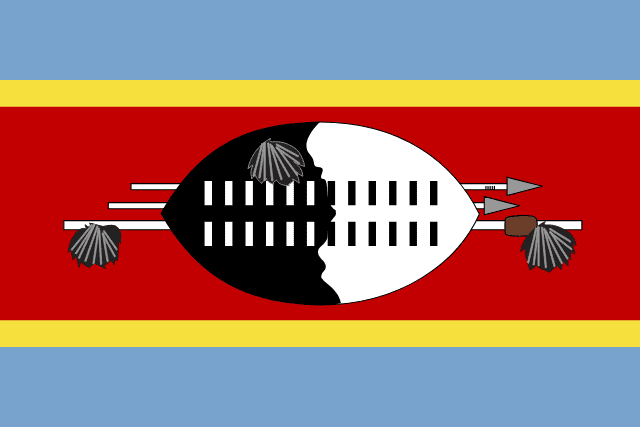
Eswatini
Africa

1,200,000
04:18 UTC+2
+268
Location
Geography
Economy
Main exports
Eswatini's leading export commodities and products.
Subscribe to Live Data for live spot prices
Live commodity prices on every nation's exports — $100 AUD/year.
Tap any export to learn more. Spot prices in USD only for Live Data subscribers.
Main imports
Eswatini's leading import commodities and products.
Tap any import to learn more.
Military
Historical Timeline
20000 BCE
Early Human Habitation by San People
Archaeological evidence indicates that the earliest inhabitants of the region were the San hunter-gatherers. Rock paintings throughout the country provide a historical record of their presence and lifestyle.
1745
Establishment of the Dlamini Dynasty
Ngwane III is recognized as the first monarch of the Dlamini dynasty, which unified various clans in the region. This period marked the consolidation of the kingdom that would eventually become Eswatini.
1840
Reign of Mswati II
Mswati II significantly expanded the kingdom's territory and consolidated its defensive capabilities against neighboring groups. His reign solidified the national identity and defined the borders of the Swazi state.
1894
South African Republic Administration
Following a series of conventions, the South African Republic took over the administration of Swaziland. This period brought the kingdom under significant Boer influence prior to the Anglo-Boer War.
1903
British Protectorate Status
After the defeat of the Boers in the Anglo-Boer War, Britain assumed control over Swaziland. It was administered as a protectorate governed by a resident commissioner.
1967
Granting of Self-Government
Britain granted Swaziland internal self-government, marking the beginning of the transition toward full sovereignty. A new constitution was established to prepare for the end of colonial rule.
1968
Independence from Britain
Swaziland gained formal independence from the United Kingdom on September 6, 1968. Sobhuza II was recognized as the King and head of state of the newly sovereign nation.
1973
King Sobhuza II Repeals Constitution
King Sobhuza II repealed the 1968 constitution and assumed supreme power over the nation. This action established a system of governance centered on the monarchy and traditional structures.
1986
Coronation of King Mswati III
Following the death of his father, Mswati III was crowned King of Eswatini. He has continued to exercise significant executive and legislative authority in the kingdom.
2018
Official Renaming to Kingdom of Eswatini
King Mswati III officially changed the country's name from Swaziland to the Kingdom of Eswatini. The change was intended to mark the 50th anniversary of independence and restore the pre-colonial name.
2021
Civil Unrest and Pro-Democracy Protests
Mass protests broke out across the country demanding democratic reforms and an end to the absolute monarchy. The government responded with a security crackdown, leading to international calls for political dialogue.
2023
National Parliamentary Elections
The country held parliamentary elections under the Tinkhundla system. These elections were the focus of significant domestic and international discourse regarding the political future of the kingdom.
National Holidays
A public holiday marking the beginning of the Gregorian calendar year.
A national holiday held to celebrate the official birthday of the reigning monarch of Eswatini.
A religious holiday observed the day after Easter Sunday, commemorating the resurrection of Jesus Christ.
An international public holiday celebrated to honor the contributions and achievements of workers.
Marks the anniversary of Eswatini gaining its independence from the United Kingdom in 1968.
Language
Counting to 10
1
1
= 10 (n = 0)
World Dictionary
Discover and translate any word into all supported languages.
The multilingual Dictionary is a Nations Pro feature.
Upgrade to Pro