
Guinea
Republic of Guinea
Africa
14,851,805
05:47 UTC+0
+224
.gn
Mount Nimba
1,752 m · 5,748 ft
Atlantic Ocean
0 m · 0 ft
2,171,535
Conakry · 2026
2,171,535
Conakry · 2026
Location
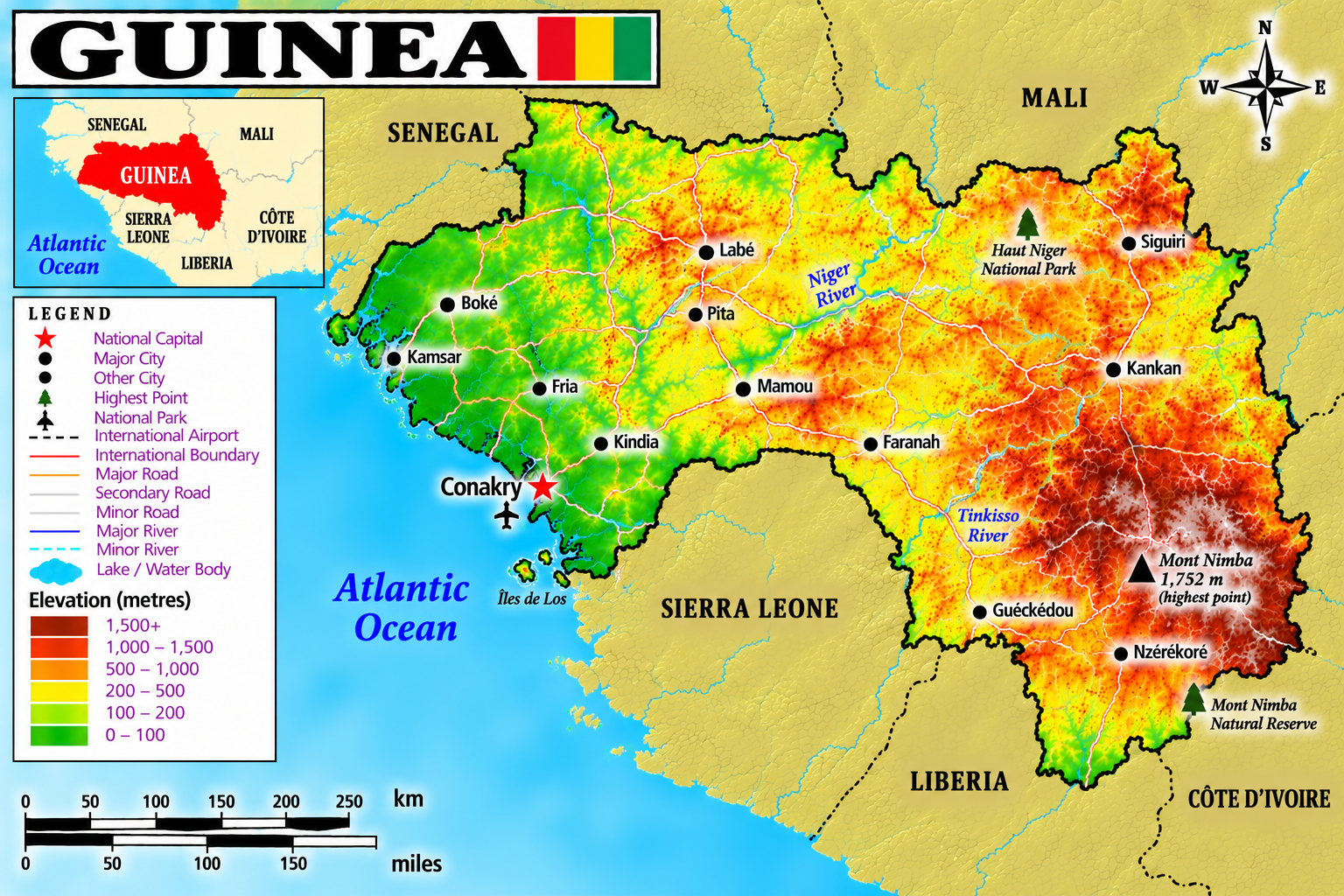
Guinea — Detailed Physical Map
The Fouta Djallon highlands, Mont Nimba, the Niger River's source, Haut Niger park, major cities and the capital Conakry
Tourist Attractions
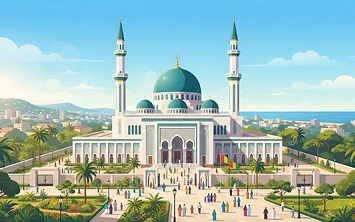
Also known as the Fayçal Mosque, this is one of the largest mosques in Sub-Saharan Africa and a prominent symbol of the country's Islamic heritage. It features impressive architecture and can accommodate over 10,000 worshippers.
Visit during the golden hour for stunning photography of its soaring minarets.
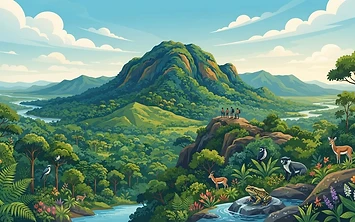
A UNESCO World Heritage Site shared with Liberia and Côte d'Ivoire, this reserve protects a unique mountain ecosystem and cloud forests. It is home to rare wildlife, including the famous viviparous toad found nowhere else on Earth.
It offers unparalleled opportunities for guided nature exploration in a spectacular mountain landscape.

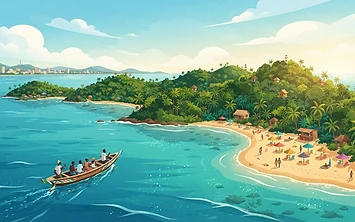
Located just off the coast of Conakry, this group of islands is known for its lush forested interiors and beautiful sandy beaches. Historically significant, the islands offer a serene escape from the bustle of the capital.
The islands provide a perfect, accessible getaway for swimming and enjoying a relaxed coastal atmosphere.

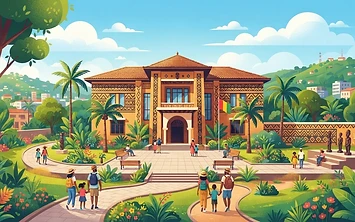
This museum serves as the premier institution for preserving Guinea's cultural history, housing extensive collections of traditional masks, sculptures, and musical instruments. It provides deep insight into the diverse ethnic groups and historical periods of the nation.
It is the best place to view the country's largest collection of traditional art and ethnographic artifacts.

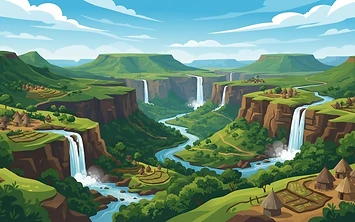
Often called the 'water tower of West Africa,' this highland region is characterized by rolling green mountains, deep gorges, and numerous waterfalls. It is the cultural heart of the Fula people and a hub for trekking and exploring traditional villages.
The region is home to spectacular natural wonders like the Kinkon and Ditinn waterfalls.

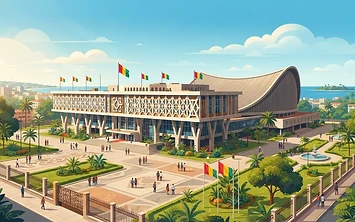
Built in the 1960s, this iconic modernist structure serves as a major conference center and cultural venue. It stands as a monumental example of post-independence architecture and remains a central site for national events.
Its unique socialist-era architecture makes it a significant landmark for those interested in Guinea's political history.
Geography
Nature
Mount Nimba
1,752 m / 5,748 ft
25.5% of land
≈ 62,694 km² of forest
FAO / World Bank, forest area (% of land area)
Explore the Nature Atlas4,180 km2,597 mi
Rises in the Guinea Highlands and flows through several West African nations.
1,086 km675 mi
Formed by the confluence of the Bafing and Bakoy rivers in Guinea.
1,120 km696 mi
Originates from the Fouta Djallon plateau before flowing into the Atlantic Ocean.
260 km²100 sq mi
Created by the completion of a major hydroelectric dam on the Konkoure River.
95 km²37 sq mi
Formed by the Garafiri Dam reservoir along the Konkoure River.
80 m262 ft
Located near Pita and features a hydroelectric power plant nearby.
100 m328 ft
One of the tallest waterfalls in the Fouta Djallon region of Guinea.
River lengths are whole-river figures, including any section beyond Guinea. Researched reference figures. Tap any name for where its name comes from and a Google Maps link.
Major Cities
- 1Capital
Conakry
3,492,5102026
MapServes as the capital city and the principal port for exports on the Atlantic Ocean.
- 2
Kankan
292,9392026
MapRemains an important historical center for Islamic learning and culture in the eastern part of the nation.
- 3
N’Zérékoré
290,4102026
MapActs as the primary commercial center for the forested region and a major hub for agricultural trade.
- 4
Kankan
232,3062026
MapHosts extensive gold mining operations that serve as a foundational element of the regional economy.
- 5
Kindia
177,1592026
MapKnown for the scenic Gbinga Falls and its role as a key agricultural processing area near the capital.
- 6
Labé
140,7012026
MapActs as the cultural and economic heart of the Fouta Djallon highlands region.
- 7
Faranah
131,7292026
MapKnown as the city of honey due to the prevalence of apiculture in the surrounding forested territory.
- 8
Boké
101,0402026
MapOperates as a vital industrial port dedicated to the shipment of bauxite mined throughout the region.
- 9
Faranah
87,9022026
MapFeatures the Niger River running through its center and serves as an important agricultural crossroads.
- 10
Mamou
84,3422026
MapFunctions as a major transit hub located at the intersection of roads connecting different regions of the country.
- 11
Boké
66,9782026
MapServes as a significant industrial hub for the extraction and export of high-quality bauxite deposits.
- 12
N’Zérékoré
53,2172026
MapHosts a large, vibrant border market that facilitates trade between Guinea, Liberia, and Sierra Leone.
City populations are the latest official, UN or national-statistics estimates (2025–2026) compounded to 2026 at 2.5% a year (the nation's annual population growth rate); figures without a published update come from the open cities database (2020-era estimates) and are projected the same way.
Economy
Main exports
Guinea's leading export commodities and products.
Tap any export to learn more. Spot prices in USD only for Live Data subscribers.
Main imports
Guinea's leading import commodities and products.
Tap any import to learn more.
Military
Historical Timeline
2000 BCE
Arrival of Earliest Settlers
Archaeological evidence suggests that early groups began to settle in the Fouta Djallon highlands around this period. These initial populations established the foundational agricultural and social structures in the region.
1235
Rise of the Mali Empire
The Battle of Kirina established the Mali Empire, which incorporated much of modern-day Guinea under the rule of Sundiata Keita. This period saw a significant expansion of trade and Islamic influence throughout the territory.
1725
Founding of the Imamate of Fouta Djallon
Fulani leaders established the Imamate of Fouta Djallon following a successful jihad against local rulers. It became one of the most powerful and structured Islamic states in the region.
1898
Defeat of Samori Ture
The capture of Samori Ture by French colonial forces marked the end of the Wassoulou Empire. This event effectively cemented French colonial control over the territory of Guinea.
1958
Independence from France
Guinea became the first French colony in Africa to vote for immediate independence in a constitutional referendum. Ahmed Sékou Touré was inaugurated as the nation's first president.
1984
Military Coup of Lansana Conté
Following the death of Sékou Touré, Colonel Lansana Conté seized power in a bloodless military coup. His administration shifted the country toward more market-oriented economic policies.
2008
Military Seizure of Power
Following the death of Lansana Conté, Captain Moussa Dadis Camara led a military coup to establish the National Council for Democracy and Development. This period was marked by significant political instability and human rights concerns.
2010
First Democratic Presidential Election
Alpha Condé was elected president in Guinea's first democratic elections since independence. The transition aimed to end decades of military rule and stabilize the national government.
2014
Ebola Virus Epidemic Outbreak
Guinea was the epicenter of a massive West African Ebola outbreak that caused thousands of deaths. The crisis severely strained the nation's fragile healthcare infrastructure and economy.
2021
Coup D'état by Mamady Doumbouya
Colonel Mamady Doumbouya led a military coup that deposed President Alpha Condé and dissolved the government. A transitional charter was subsequently implemented to oversee a return to civilian rule.
2024
Dissolution of Transitional Government
The military junta dissolved the transitional government amid growing public pressure for a return to democratic governance. The move signaled continued tension regarding the timeline for national elections.
2025
Continuation of Military Transition
The transitional authorities maintained control as international organizations continued to push for a defined roadmap toward restoring constitutional order. The administration focused on constitutional reforms and electoral preparations throughout the year.
National Anthem
Liberté
Unknown
Fodéba Keïta
1958
Peuple d'Afrique! Le Passé historique! Que les martyrs de l'indépendance Nous rappellent leurs immenses défis! S'il faut payer le prix de la liberté, Notre âme et notre cœur ne seront jamais traîtres! Ô Liberté! C'est la voix de tes droits! Que tout le monde chante cette chanson! Liberté! C'est la voix de tes droits! Que tout le monde chante cette chanson!
The national anthem of Guinea, titled Liberté, was adopted in 1958 following the country's independence from France. The music was composed by Fodéba Keïta, a prominent Guinean artist and politician who was a key figure in the country's cultural movement. The lyrics are believed to be a collaborative effort or derived from local traditions during the independence movement, often attributed to the collective spirit of the nation. It replaced the French colonial anthem and served as a crucial symbol of sovereignty and decolonization. The anthem emphasizes the importance of the historic struggle for freedom and the sacrifices made by those who fought against colonial rule. Today, it is played at all official state functions and remains a central element of Guinean national identity and pride.
National Holidays
This day marks the beginning of the civil calendar year.
An international day to celebrate the contributions and rights of workers.
Commemorates Guinea's declaration of independence from France in 1958.
A Christian holiday celebrating the birth of Jesus Christ, observed nationally.
Good News Today
Guinea validates new National School Feeding Programme for 2027-2031
The government of Guinea officially validated a new National School Feeding Programme in October 2026. This initiative aims to improve student nutrition and education outcomes through a structured, long-term operational plan.
Fun Facts
Birthplace of Mighty Rivers
Guinea is known as the Water Tower of West Africa because the Niger, Senegal, and Gambia rivers all originate in its Fouta Djallon highlands.
Traditional Nimba Headdress Art
The Baga people carve the massive Nimba mask, a shoulder-worn headdress representing the goddess of fertility and agricultural success.
Bossou Chimpanzee Tool Users
Chimpanzees in the Bossou Forest have been observed using stone hammers and anvils to crack open oil palm nuts, a behavior passed down through generations.
Global Home of Balafon
The balafon, a resonant percussion instrument similar to a xylophone, is deeply rooted in Susu culture and is recognized as a masterpiece of oral heritage.
World Class Bauxite Reserves
Guinea holds the world's largest reserves of bauxite, the primary ore used to produce aluminum, making its landscape rich in geologic resources.
Flavorful Leafy Sauces
Plasas is a staple traditional dish made from leafy greens like cassava or spinach cooked with palm oil, fish, or meat.
The Incredible Mount Nimba
Mount Nimba is a strictly protected nature reserve that spans the border and is famous for its unique flora and rare endemic species like the viviparous toad.
Intricate Weaving Traditions
The Kissi people are renowned for their traditional textile weaving techniques, creating complex patterns that often hold historical and social significance.
Tropical Fruit Abundance
Guinea is one of the continent's top producers of mangoes, which thrive in its humid coastal climate and provide a vital sweet export.
Passionate Football History
The national football team, known as the Syli Nationale, is famous for its long history of artistic play and high-energy stadium atmospheres.
Chuckies Trivia Quiz
Chuckies Trivia Quiz
Fifteen questions on Guinea — five easy, five medium, five hard. How far can you get?
Sports & Live Events
Language
Counting to 10
1
1
= 10 (n = 0)
World Dictionary
Discover and translate any word into all supported languages.