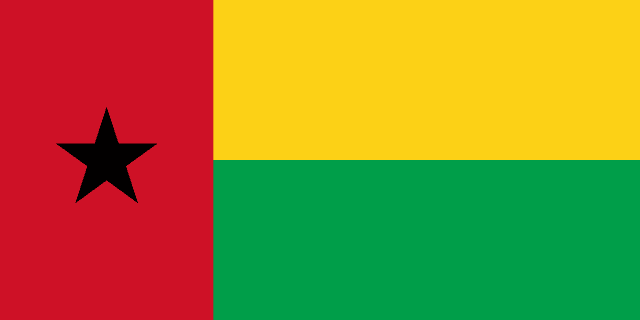

Guinea-Bissau
Republic of Guinea-Bissau
Africa
2,222,575
05:47 UTC+0
+245
.gw
Dongol Ronde
300 m · 984 ft
Atlantic Ocean
0 m · 0 ft
530,422
Bissau · 2026
530,422
Bissau · 2026
Location
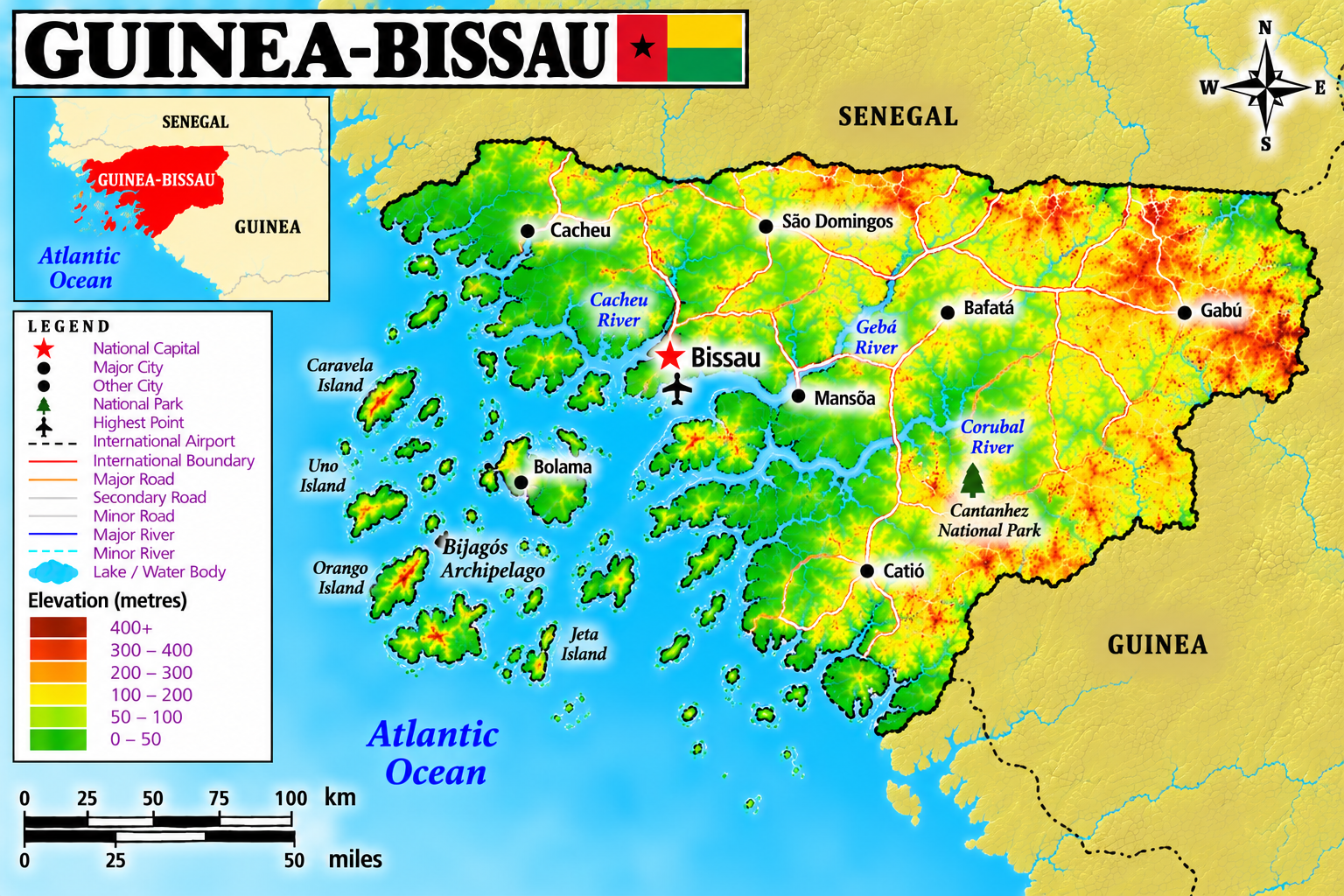
Guinea-Bissau — Detailed Physical Map
The Bijagos Archipelago, Cacheu and Geba rivers, Cantanhez National Park, major cities and the capital Bissau
Tourist Attractions

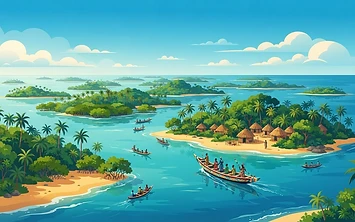
A stunning UNESCO Biosphere Reserve consisting of over 80 islands known for their pristine beaches, unique biodiversity, and traditional Bijagó culture.
It is the only place in the world where saltwater hippos swim between islands.

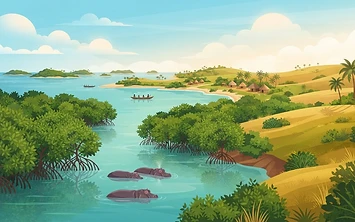
Part of the Bijagós Archipelago, this park protects diverse ecosystems including mangroves, savannahs, and the habitat of rare marine hippos.
Visitors can explore the tomb of the legendary Queen Okinka Pampa in the village of Eticoga.

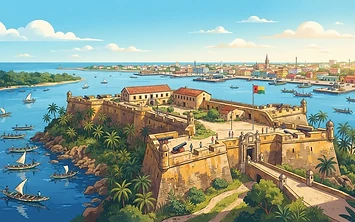
An 18th-century Portuguese fortress overlooking the Bissau harbor that serves as a significant military and historical landmark.
The fort houses the mausoleum of Amilcar Cabral, a central figure in the country's independence movement.

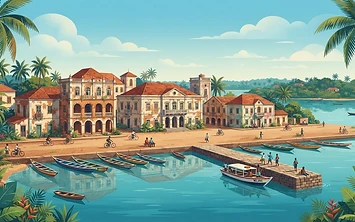
The former capital of Portuguese Guinea, this town features hauntingly beautiful colonial-era architecture and remnants of its past as a colonial administrative center.
Walking through the atmospheric, crumbling colonial ruins offers a unique glimpse into the region's history.

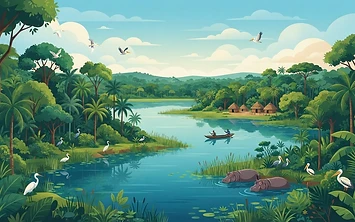
Guinea-Bissau's first protected area, this park is a vital freshwater reserve featuring large lagoons surrounded by lush forests.
It is an exceptional destination for birdwatching and observing diverse wildlife in a tranquil, untouched setting.

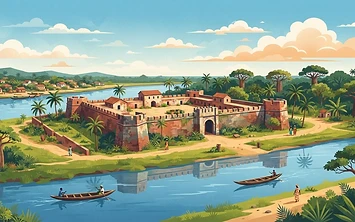
A 16th-century Portuguese trading post located on the Cacheu River, representing one of the oldest European structures in West Africa.
The site features museum exhibits detailing the history of the colonial slave trade and regional commerce.
Geography
Nature
Dongol Ronde
300 m / 984 ft
68.3% of land
≈ 24,673 km² of forest
FAO / World Bank, forest area (% of land area)
Explore the Nature Atlas560 km348 mi
Originates in Guinea and flows west into the Atlantic Ocean.
550 km342 mi
Forms a wide estuary that provides navigation access to Bissau.
250 km155 mi
Flows entirely within Guinea-Bissau and is also known as the Rio Farim.
River lengths are whole-river figures, including any section beyond Guinea-Bissau. Researched reference figures. Tap any name for where its name comes from and a Google Maps link.
Major Cities
- 1Capital
Bissau
795,5192026
MapServes as the capital, primary port, and administrative center of Guinea-Bissau.
- 2
Gabú
101,9062026
MapActs as the principal commercial center for the eastern region and an important cattle market.
- 3
Bafatá
46,2142026
MapRecognized as a central hub for peanut processing and its distinct colonial-era architectural influence.
- 4
Oio
14,8132026
MapFunctions as a key agricultural market town located along the vital northern highway corridor.
- 5
Gabú
13,8352026
MapServed as the historical site where the independence of Guinea-Bissau was declared in 1973.
- 6
Oio
13,3952026
MapFunctions as a significant river port on the Cacheu River and a historic regional trading hub.
- 7
Bolama/Bijagós
10,7692026
MapServed as the colonial capital of Portuguese Guinea until 1941 and remains famous for its unique architecture.
- 8
Cacheu
10,4902026
MapEstablished as one of the oldest European colonial settlements in West Africa and a former slave-trading post.
- 9
Bafatá
10,0612026
MapLocated strategically at a major crossroads connecting the eastern and central regions of the nation.
- 10
Quinara
8,9522026
MapHosts the country's primary deep-water port project along the Rio Grande de Buba estuary.
- 11
Biombo
6,6022026
MapKnown for its scenic beaches and proximity to the Bijagos Islands gateway.
- 12
Tombali
5,0312026
MapProvides essential access to the southern coastal areas and supports local agricultural trade activities.
City populations are the latest official, UN or national-statistics estimates (2009–2026) compounded to 2026 at 2.4% a year (the nation's annual population growth rate); figures without a published update come from the open cities database (2020-era estimates) and are projected the same way.
Economy
Main exports
Guinea-Bissau's leading export commodities and products.
Tap any export to learn more. Spot prices in USD only for Live Data subscribers.
Main imports
Guinea-Bissau's leading import commodities and products.
Tap any import to learn more.
Military
Historical Timeline
2000 BCE
Early settlement by Nalu and Banhun peoples
Archaeological evidence suggests that early groups including the Nalu and Banhun established settlements in the region during the second millennium BCE. These groups form the ancestral foundation for many of the ethnolinguistic populations in modern Guinea-Bissau.
1446
Portuguese arrival on the coast
Nuno Tristão reached the Guinea coast, marking the beginning of Portuguese exploration in the region. This contact initiated centuries of trade relations and eventual colonization.
1879
Establishment of Portuguese Guinea as a colony
The territory was formally separated from the Cape Verde colony to become a distinct Portuguese administrative entity. This solidified Portuguese colonial governance over the region.
1956
Founding of the PAIGC
Amílcar Cabral helped found the African Party for the Independence of Guinea and Cape Verde (PAIGC). The party became the primary organization seeking national liberation from Portuguese rule.
1963
Start of the War of Independence
The PAIGC launched an armed struggle against Portuguese colonial forces. The conflict lasted over a decade and significantly destabilized the colonial administration.
1973
Unilateral declaration of independence
The PAIGC unilaterally declared independence in the liberated areas of the country on September 24. This act received widespread international recognition following the Carnation Revolution in Portugal.
1974
Formal Portuguese recognition of sovereignty
Following the collapse of the Estado Novo regime in Portugal, Lisbon formally recognized Guinea-Bissau's independence. This ended centuries of Portuguese colonial presence in the territory.
1998
Outbreak of the Guinea-Bissau Civil War
A military uprising led by Ansumane Mané against President João Bernardo Vieira sparked a violent civil war. The conflict caused significant infrastructure damage and a massive displacement of the population.
2014
Return to constitutional order
General elections held in 2014 signaled the end of a two-year transitional period following a military coup. José Mário Vaz was elected president, helping to restore a degree of political stability.
2020
Umaro Sissoco Embaló assumes presidency
Following a highly contested election, Umaro Sissoco Embaló was inaugurated as the President of Guinea-Bissau. This marked a significant power shift in the nation's political landscape.
2023
Dissolution of Parliament
President Embaló dissolved the National People's Assembly citing a grave political crisis. This decision followed significant tensions between the executive and legislative branches of government.
2025
Continuation of political stabilization efforts
The government focused on navigating persistent economic challenges and administrative reforms throughout 2025. National efforts remained directed toward maintaining stability amidst ongoing political volatility.
National Anthem
Esta é a Nossa Pátria Bem Amada
Amílcar Cabral
Xiao He
1974
Sol, suor e o verde e mar, Séculos de dor e esperança: Esta é a nossa pátria bem amada. Filhos da pátria, erguei a bandeira! A luta pela paz é a nossa força. Progresso, amor e paz, Na justiça que o povo canta. Ramo da pátria, erguei-vos! O povo unido jamais será vencido! Fraternidade e progresso, Libertação em marcha.
The anthem was written by Amílcar Cabral, the founder and leader of the African Party for the Independence of Guinea and Cape Verde. The music was composed by Chinese composer Xiao He during the liberation struggle against Portuguese colonial rule. It was officially adopted in 1974 following the country's declaration of independence. The lyrics reflect the nation's historical struggle, its geographical identity, and the aspiration for freedom and social progress. Originally, the anthem was shared with Cape Verde until that nation adopted its own anthem in 1996. The composition remains a symbol of national unity and the legacy of the anti-colonial movement. It continues to be performed at all major state and formal civic functions in Guinea-Bissau.
National Holidays
Honors the Bissau-Guinean citizens who lost their lives during the Pidjiguiti massacre in 1959.
Commemorates the declaration of independence of Guinea-Bissau from Portugal in 1973.
Marks the anniversary of the 1980 coup d'état led by João Bernardo Vieira, which ousted President Luís Cabral.
Good News Today
Gambia, Senegal, Guinea-Bissau unite to end cross-border GBV and FGM/C
Communities across Guinea-Bissau, The Gambia, and Senegal have reaffirmed their commitment to ending gender-based violence and female genital mutilation. Local leaders are collaborating to protect the rights of women and girls through shared awareness and empowerment initiatives.
Fun Facts
Bijagós Archipelago Cultural Refuge
The Bijagós Archipelago consists of 88 islands where the unique Bijagó culture remains largely preserved through distinct initiation rituals and ceremonies.
Sea Turtle Conservation Haven
Poilão Island, located within the Bijagós, is one of the most important nesting sites in the world for green sea turtles.
Sacred Shark Mask Dance
The Bijagó people perform impressive shark mask dances to honor their maritime heritage and the spirits of the deep ocean.
Abundant Cashew Nut Industry
Guinea-Bissau is one of the largest producers of cashews in Africa, with the harvest driving much of the rural agricultural economy.
Colonial Legacy in Bolama
The town of Bolama served as the capital of Portuguese Guinea and remains a haunting architectural site with decaying, grand colonial-style buildings.
Caldo de Peixe Staples
The country is famous for its fresh fish stews, often prepared with locally grown okra, palm oil, and vibrant seasonal vegetables.
Unique Tidal Landscape
The coastline is dominated by intricate mangrove estuaries that change significantly with the massive tidal variations of the Atlantic Ocean.
Matrilineal Social Structure
Many communities in the Bijagós are traditionally matrilineal, meaning lineage and inheritance are traced through the mother's side of the family.
Birdwatcher Paradise Destinations
The country is a major stopover for migratory birds, particularly along the coastal lagoons that provide essential feeding grounds for shorebirds.
Gumbé Music Genre Roots
Gumbé is a traditional form of percussion-heavy music and dance that serves as a core part of the national cultural identity.
Chuckies Trivia Quiz
Chuckies Trivia Quiz
Fifteen questions on Guinea-Bissau — five easy, five medium, five hard. How far can you get?
Sports & Live Events
Language
Counting to 10
1
1
= 10 (n = 0)
World Dictionary
Discover and translate any word into all supported languages.