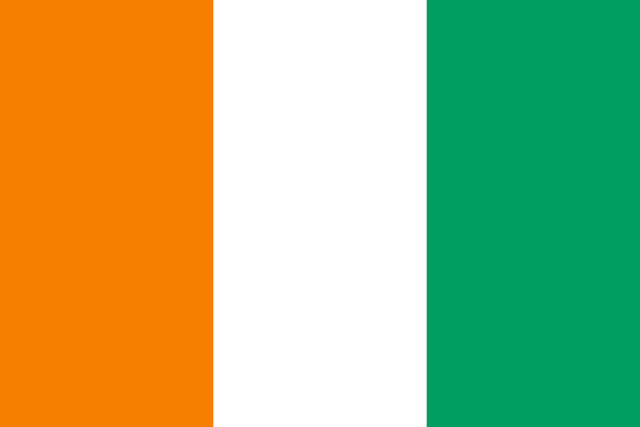

Ivory Coast
Republic of Côte d'Ivoire
Africa
31,899,615
04:22 UTC+0
+225
.ci
Mont Nimba
1,752 m · 5,748 ft
Gulf of Guinea
0 m · 0 ft
943,656
Yamoussoukro · 2026
6,514,606
Abidjan · 2026
Location
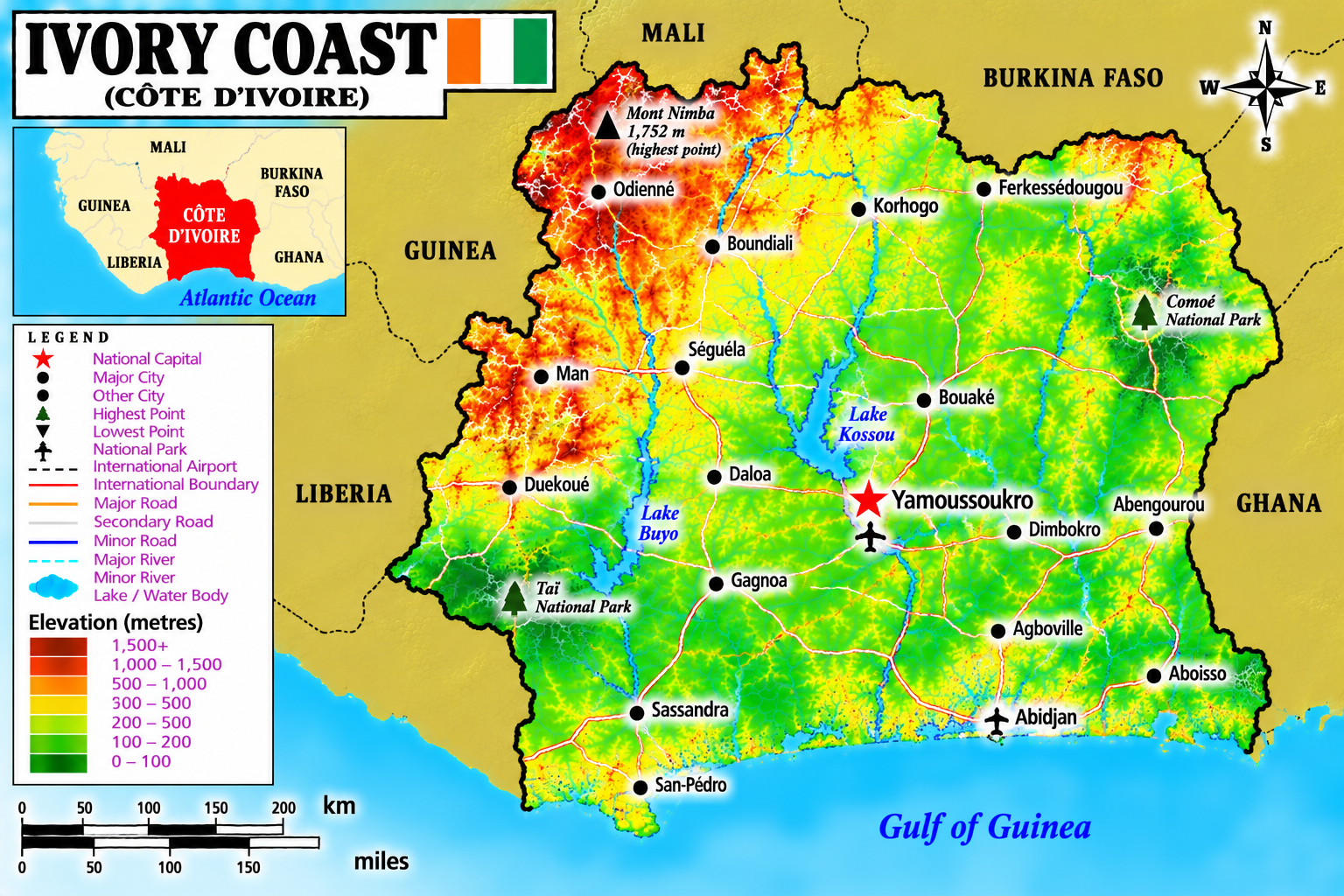
Ivory Coast — Detailed Physical Map
Mont Nimba, Lake Kossou and Lake Buyo, Tai and Comoe national parks, the Gulf of Guinea coast, major cities and the capital Yamoussoukro
Tourist Attractions

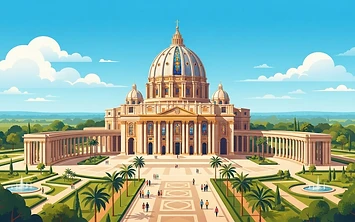
This massive basilica is one of the largest churches in the world and serves as a major national symbol of Ivory Coast. Its design is inspired by St. Peter's Basilica in Rome and features stunning stained glass and marble.
It is the most iconic and visited architectural landmark in the entire country.

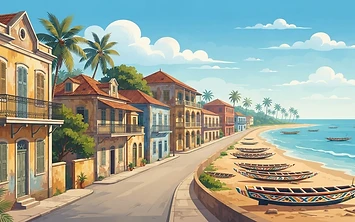
A former French colonial capital, this town is a UNESCO World Heritage site known for its well-preserved colonial-era architecture. It offers a glimpse into the country's history alongside beautiful coastal scenery.
The town's unique blend of colonial history and vibrant local culture makes it a must-visit destination.

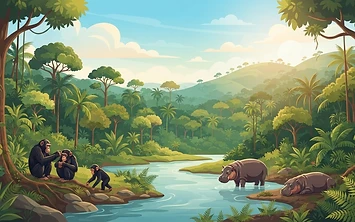
As one of the last remaining primary rainforests in West Africa, this UNESCO-listed park is a biodiversity hotspot. It is famous for its population of wild chimpanzees and pygmy hippos.
It offers an unparalleled opportunity to explore one of the most important rainforest ecosystems in Africa.

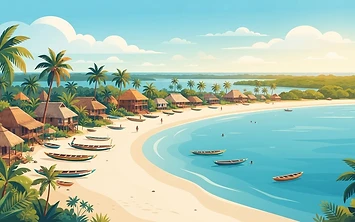
Located a short drive from Abidjan, this coastal area is famous for its tranquil, cream-hued beaches and relaxing atmosphere. It is a popular getaway for both locals and international visitors seeking a seaside escape.
The pristine, peaceful beaches provide the perfect setting for a relaxing coastal retreat.

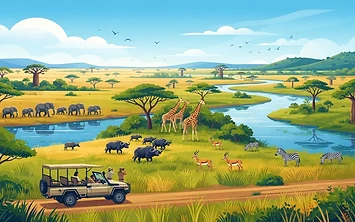
Spanning over 11,000 square kilometers, this vast UNESCO World Heritage site is one of the largest protected areas in West Africa. It is home to a diverse range of wildlife and represents the country's expansive savannah landscapes.
It is the premier destination for wildlife enthusiasts looking to experience the diverse fauna of the Ivorian savannah.

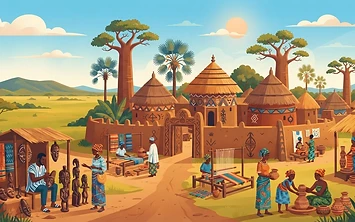
Situated in the heart of the northern savannah, this city is the historic capital of the Senufo people. It is renowned for its traditional arts, including intricate woodcarving, weaving, and pottery.
Visitors can watch master artisans at work, preserving ancient techniques that define the region's rich cultural identity.
Geography
Nature
Mont Nimba
1,752 m / 5,748 ft
32.4% of land
≈ 104,478 km² of forest
FAO / World Bank, forest area (% of land area)
Explore the Nature Atlas1,050 km652 mi
Flows through the centre of the country and empties into the Gulf of Guinea.
515 km320 mi
Forms a significant part of the border between Ivory Coast and Liberia.
650 km404 mi
Formed by the confluence of the Tieningoue and Gouro rivers.
1,855 km²716 sq mi · 50 m deep
Created by the damming of the Bandama River in 1971.
133 km²51 sq mi
Located on the Bia River and was the first hydroelectric dam in the country.
—
Located near the city of Man in a region known for its mountainous terrain.
River lengths are whole-river figures, including any section beyond Ivory Coast. Researched reference figures. Tap any name for where its name comes from and a Google Maps link.
Major Cities
- 1Capital
Abidjan
6,038,2042026
MapServes as the economic capital and largest urban center of Ivory Coast.
- 2
Abidjan
1,832,6452026
MapFunctions as a densely populated industrial and residential commune within Abidjan.
- 3
Abidjan
807,8972026
MapHosts many diplomatic missions and upscale residential areas in the capital region.
- 4
Abidjan
721,8232026
MapHouses the main international airport serving the metropolitan area of Abidjan.
- 5
Vallée du Bandama
600,9592026
MapActs as the country's primary hub for cotton textile production and trade.
- 6
Abidjan
480,9262026
MapFeatures a large industrial zone playing a critical role in local manufacturing.
- 7
Abidjan
365,2712026
MapIntegrates traditional residential neighborhoods along the northern shores of the Ebrie Lagoon.
- 8
Savanes
363,6262026
MapMaintains a historic reputation as a prominent center for traditional Ivorian arts and craftsmanship.
- 9
Sassandra-Marahoué
318,7282026
MapOperates as a major commercial center for the national cocoa trade industry.
- 10Capital
Yamoussoukro
268,5682026
MapContains the Basilica of Our Lady of Peace, one of the world's largest churches.
- 11
Gôh-Djiboua
217,2702026
MapStands as an important agricultural district focused primarily on cocoa and coffee production.
- 12
Bas-Sassandra
195,1652026
MapProvides the essential deep-water port facilities for exporting agricultural products.
City populations are the latest official, UN or national-statistics estimates (2026–2026) compounded to 2026 at 2.6% a year (the nation's annual population growth rate); figures without a published update come from the open cities database (2020-era estimates) and are projected the same way.
Economy
Main exports
Ivory Coast's leading export commodities and products.
Tap any export to learn more. Spot prices in USD only for Live Data subscribers.
Main imports
Ivory Coast's leading import commodities and products.
Tap any import to learn more.
Military
Historical Timeline
10000 BCE
Early Neolithic Settlement
Archaeological evidence suggests that hunter-gatherer populations inhabited the region of present-day Ivory Coast as early as 10,000 BCE. These early inhabitants laid the foundation for the diverse ethnic groups that later developed in the West African forest zones.
1460
Arrival of Portuguese Explorers
Portuguese navigators led by Pedro de Sintra arrived on the Ivorian coast, initiating the first European contact with the local populations. This event marked the beginning of maritime trade, particularly in ivory, which gave the country its name.
1893
Establishment of French Colony
France officially declared Ivory Coast a French colony, establishing administrative control over the territory. This period saw the systematic integration of the region into the French colonial empire.
1960
Independence from France
Ivory Coast gained its formal independence from France on August 7, 1960. Félix Houphouët-Boigny became the nation's first president, leading the country through a period of significant economic prosperity known as the Ivorian Miracle.
1993
Death of President Houphouët-Boigny
The death of founding father Félix Houphouët-Boigny ended his thirty-three-year rule and initiated a period of political instability. This transition shifted the power dynamics and led to the first constitutional crisis in the nation's post-independence history.
2002
Outbreak of the First Ivorian Civil War
A military rebellion attempted to overthrow President Laurent Gbagbo, leading to a country divided between the north and the south. The conflict caused widespread instability and prompted international intervention to maintain order.
2011
End of Post-Election Crisis
Following a disputed election, the capture of Laurent Gbagbo allowed Alassane Ouattara to consolidate power as president. This marked the formal conclusion of the second Ivorian civil war and a move toward national reconciliation.
2016
Adoption of Third Republic Constitution
A national referendum approved a new constitution that established the Third Republic of Ivory Coast. The reforms introduced the office of the Vice President and created a new Senate to enhance democratic governance.
2020
Re-election of Alassane Ouattara
President Alassane Ouattara was re-elected for a controversial third term following a boycott by major opposition parties. The election sparked protests and raised concerns regarding the country's democratic trajectory.
2023
Hosting of the African Cup of Nations
Ivory Coast successfully hosted the 2023 Africa Cup of Nations, which concluded in early 2024 with a historic victory for the national football team. The event served as a significant milestone for national unity and infrastructure development.
2024
Economic Resilience and Growth
The Ivorian government implemented ambitious structural reforms to maintain its position as one of West Africa's fastest-growing economies. Efforts focused on diversifying agricultural exports and enhancing industrial processing capacity.
2025
Presidential Election Preparation
The nation initiated the legal and electoral processes for the upcoming presidential elections scheduled for late 2025. This period focused on voter registration and efforts to maintain political stability ahead of the transition.
National Anthem
Mathieu Ekra, Joachim Bony, and Pierre Marie Coty
Pierre Marie Coty and Pierre Michel Pango
1960
Salut ô terre d'espérance! Pays de l'hospitalité. Tes légions remplies de vaillance Ont relevé ta dignité. Tes fils, chère Côte d'Ivoire, Fiers bâtisseurs de ton bonheur, Passent rassembles pour ta gloire Dans le devoir et dans l'honneur.
L'Abidjanaise was composed following the independence of Ivory Coast from France in 1960. The lyrics were collaboratively written by Mathieu Ekra, Joachim Bony, and Pierre Marie Coty, while the music was composed by Pierre Marie Coty and Pierre Michel Pango. It was officially adopted as the national anthem upon the nation's independence on August 7, 1960. The title refers to Abidjan, the former capital and largest city of the country. The anthem serves as a symbol of national unity, emphasizing themes of hope, hospitality, and the collective duty of its citizens to build the nation. Despite various political shifts in the country over the decades, L'Abidjanaise has remained the official anthem without undergoing official lyric changes.
National Holidays
A public holiday marking the first day of the Gregorian calendar year.
A Christian holiday celebrated on the Monday following Easter Sunday, commemorating the resurrection of Jesus.
An international holiday dedicated to celebrating the achievements and contributions of workers and the labor movement.
A Christian holiday marking the traditional ascension of Jesus Christ into heaven, occurring forty days after Easter.
Commemorates the nation's independence from France, which was officially gained on August 7, 1960.
A Christian holiday observed to honor all the saints of the church and to remember the deceased.
Good News Today
Ivory Coast secures major deal to protect six national parks and nature reserves
A new five-year sustainability agreement was signed at COP31 between Barry Callebaut and the Office Ivoirien des Parcs et Réserves to restore and protect critical ecosystems. The initiative aims to support cocoa-growing communities while fostering biodiversity through forest patrols and drone-based surveillance.
Fun Facts
World's Leading Cocoa Producer
Ivory Coast is the world's largest producer and exporter of cocoa beans, accounting for over 40 percent of the global supply used for chocolate production.
Largest Church In The World
The Basilica of Our Lady of Peace in Yamoussoukro holds the Guinness World Record for the largest church on Earth, even surpassing St. Peter's Basilica in Vatican City.
Origin Of Its Famous Name
The country is named after the immense ivory trade that flourished there during the 15th century when European explorers first arrived on the coast.
Flavorful National Dish Attieke
Attieke is a popular fermented cassava-based side dish that is unique to the country and served with almost every meal, much like rice or couscous.
Ancient Rainforests At Taï
Taï National Park is one of the last remaining primary rainforests in West Africa and serves as a vital sanctuary for the endangered pygmy hippopotamus.
Traditional Masked Dancing Traditions
The Dan people are world-renowned for their complex masked stilt dances, where performers balance on towering wooden poles to perform acrobatic feats during festivals.
Abidjan Is The Manhattan Of Africa
The commercial hub of Abidjan is famous for its stunning skyline and high-rise architecture, earning it the nickname the Manhattan of Africa.
The Iconic Elephants Football Team
The national football team, known as Les Éléphants, has consistently been one of the most successful squads in African football history.
The Artistic Town Of Grand-Bassam
Grand-Bassam, a former French colonial capital, is now a UNESCO World Heritage site known for its perfectly preserved 19th-century colonial architecture and vibrant arts scene.
Linguistic Diversity In One Nation
While French is the official language, the country is home to over 60 distinct indigenous ethnic groups, each with its own unique language and tribal customs.
Chuckies Trivia Quiz
Chuckies Trivia Quiz
Fifteen questions on Ivory Coast — five easy, five medium, five hard. How far can you get?
Sports & Live Events
Language
Counting to 10
1
1
= 10 (n = 0)
World Dictionary
Discover and translate any word into all supported languages.