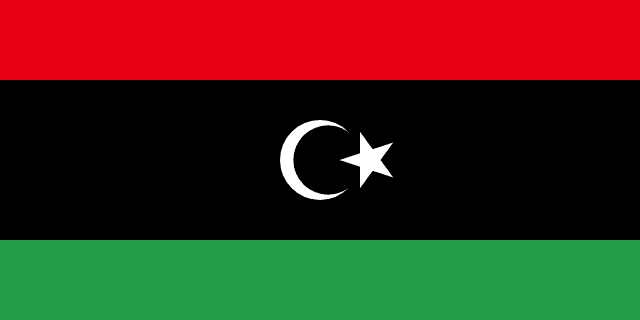
Libya
Africa

7,000,000
15:12 UTC+2
+218
Location
Geography
Economy
Main exports
Libya's leading export commodities and products.
Subscribe to Live Data for live spot prices
Live commodity prices on every nation's exports — $100 AUD/year.
Tap any export to learn more. Spot prices in USD only for Live Data subscribers.
Main imports
Libya's leading import commodities and products.
Tap any import to learn more.
Military
Historical Timeline
8000 BCE
Early Saharan Neolithic Settlements
Indigenous Berber populations inhabited the Libyan territory during the Neolithic period, leaving behind significant rock art and archaeological evidence. These early groups established nomadic and semi-sedentary lifestyles across the fertile Saharan regions.
630 BCE
Greek Foundation of Cyrene
Greek colonists established the city of Cyrene, which became a major cultural and intellectual center in North Africa. This settlement marked the beginning of intensive Hellenistic influence in the eastern part of modern-day Libya.
146 BCE
Roman Annexation of Tripolitania
Following the defeat of Carthage, the Romans extended their control over the western coastal regions of Libya. These provinces flourished as significant agricultural and trade hubs within the Roman Empire.
643
Arab Islamic Conquest
Arab forces under Amr ibn al-Aas brought Islam and the Arabic language to Libya. This event profoundly reshaped the social, cultural, and religious identity of the region.
1551
Ottoman Empire Control
The Ottoman Empire captured Tripoli, establishing control over the territory that lasted for several centuries. The region became a semi-autonomous province under the Karamanli dynasty for part of this period.
1911
Italo-Turkish War
Italy invaded Libya, leading to the end of Ottoman rule and the beginning of Italian colonization. The conflict sparked a long-term resistance movement led by figures like Omar Mukhtar.
1951
Independence of the Kingdom of Libya
Libya declared independence under King Idris, becoming the first country to achieve statehood through the United Nations. The nation was initially organized as a federal state before transitioning to a unitary monarchy.
1959
Discovery of Large Oil Reserves
The discovery of substantial petroleum deposits fundamentally transformed Libya's economy and geopolitical significance. Oil revenue became the primary engine for the country's rapid modernization and national wealth.
1969
Al-Fateh Revolution
Muammar Gaddafi led a military coup that overthrew the monarchy and established the Libyan Arab Republic. This marked the beginning of over four decades of autocratic rule characterized by shifting ideological stances.
2011
Libyan Civil War and Regime Change
An uprising against Gaddafi, supported by NATO intervention, led to the overthrow and death of the longtime leader. The event triggered a prolonged period of political instability and fragmented governance.
2020
Libyan Ceasefire Agreement
Competing political factions signed a permanent ceasefire agreement under UN mediation to end hostilities. The deal paved the way for the establishment of the Government of National Unity.
2023
Storm Daniel and Derna Floods
Catastrophic flooding caused by Storm Daniel resulted in the collapse of two dams and devastating loss of life in the city of Derna. The disaster highlighted the critical need for infrastructure reconstruction and national reconciliation.
National Holidays
Commemorates Libya's declaration of independence from Italy and Britain in 1951, marking the establishment of the United Kingdom of Libya.
Marks the beginning of the 2011 Libyan Revolution which led to the overthrow of Muammar Gaddafi's regime.
An international holiday observed in Libya to recognize the contributions and rights of the country's workers.
Celebrates the official declaration of the liberation of Libya from the Gaddafi regime following the end of the 2011 civil conflict.
Language
Counting to 10
1
1
= 10 (n = 0)
World Dictionary
Discover and translate any word into all supported languages.
The multilingual Dictionary is a Nations Pro feature.
Upgrade to Pro