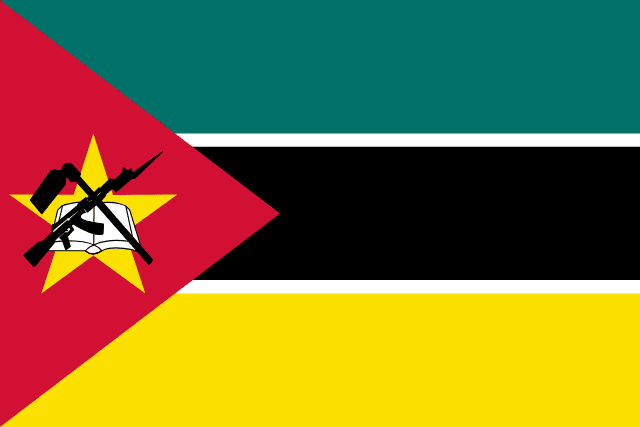

Mozambique
Republic of Mozambique
Africa
36,321,696
11:10 UTC+2
+258
.mz
Monte Binga
2,436 m · 7,992 ft
Indian Ocean
0 m · 0 ft
1,273,012
Maputo · 2026
1,273,012
Maputo · 2026
Location
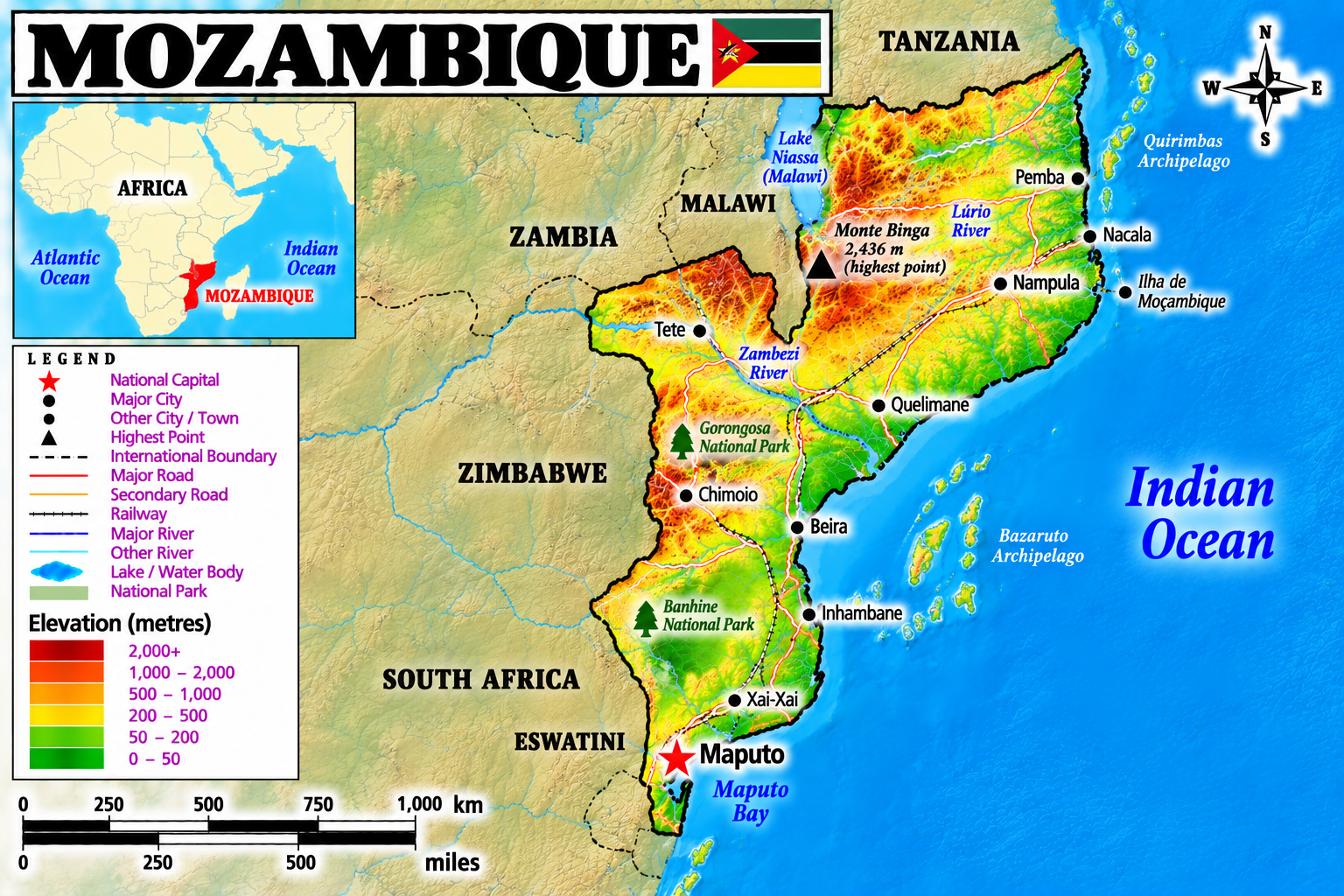
Mozambique — Detailed Physical Map
Monte Binga, Lake Malawi, the Zambezi and Lúrio rivers, Gorongosa and Banhine parks, the Indian Ocean coast, major cities and the capital Maputo
Tourist Attractions

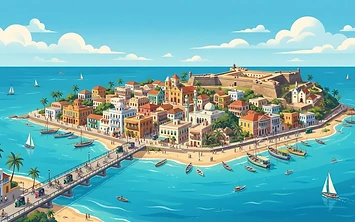
A UNESCO World Heritage site that served as the capital of Portuguese East Africa, featuring a unique blend of colonial, Arab, and African architectural influences.
Explore the massive Fort of São Sebastião, the oldest complete fort still standing in sub-Saharan Africa.

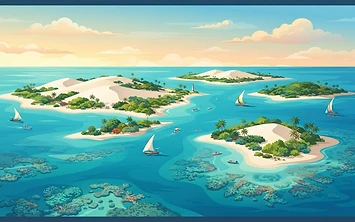
A stunning collection of five islands protected as a marine park, known for its turquoise waters, white sand dunes, and exceptional coral reefs.
It offers some of the best snorkeling and diving opportunities in the Indian Ocean.

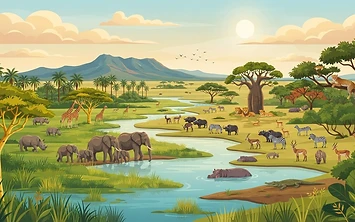
A restored wildlife haven that has become a global model for conservation, home to a diverse range of African wildlife and unique ecosystems.
Witness the remarkable recovery of biodiversity in one of Africa's most iconic safari destinations.

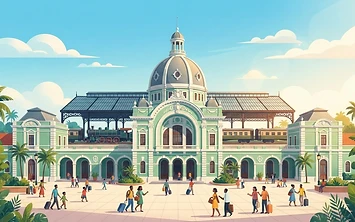
Often cited as one of the most beautiful railway stations in the world, this striking building features a grand dome and elegant colonial architecture.
Admire the intricate design often attributed to the studio of Gustave Eiffel.

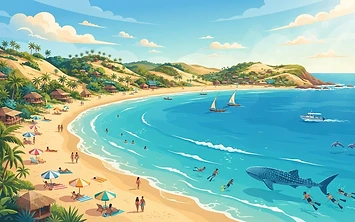
A vibrant coastal destination famous for its laid-back atmosphere and world-class marine life encounters.
It is a premier spot for ocean safaris where you can swim with whale sharks and manta rays.

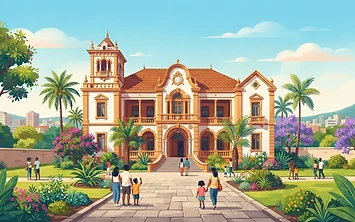
A fascinating museum housed in a beautiful building that showcases the country's rich biodiversity and cultural history.
The collection includes unique exhibits such as a famous display of elephant fetuses and diverse taxidermy.
Geography
Nature
Monte Binga
2,436 m / 7,992 ft
47.5% of land
≈ 380,755 km² of forest
FAO / World Bank, forest area (% of land area)
Explore the Nature Atlas2,574 km1,599 mi
Fourth longest river in Africa flowing into the Indian Ocean.
1,750 km1,087 mi
Second largest river in Africa that drains into the Indian Ocean.
640 km398 mi
Flows through the southern part of the country into the Indian Ocean.
29,600 km²11,429 sq mi · 706 m deep
Third largest lake in Africa by surface area.
2,739 km²1,058 sq mi · 157 m deep
Created by the massive damming of the Zambezi River.
—
Located on the Zambezi River upstream from the Cahora Bassa dam.
River lengths are whole-river figures, including any section beyond Mozambique. Researched reference figures. Tap any name for where its name comes from and a Google Maps link.
Major Cities
- 1
Maputo
1,519,7592026
MapFunctions as a major industrial hub and the country's primary gateway for international trade through its vital port facility.
- 2Capital
Maputo
1,142,7672026
MapServes as the nation's capital and largest port, featuring distinctive Mediterranean and colonial architecture along its bustling harbor.
- 3
Nampula
901,2102026
MapActs as the central economic and administrative hub for northern Mozambique, serving as a critical crossroads for regional transport.
- 4
Sofala
787,0072026
MapOperates as a crucial maritime gateway and logistics center for both Mozambique and several landlocked neighboring nations.
- 5
Manica
532,7132026
MapFunctions as a key agricultural center and commercial gateway located along the strategic transport corridor connecting to Zimbabwe.
- 6
Tete
482,0022026
MapSupports a massive mining industry driven by large coal reserves and serves as a vital bridge over the Zambezi River.
- 7
Nampula
409,7392026
MapKnown historically as Angoche, this coastal settlement was once a prominent center for trade and maritime activity.
- 8
Niassa
379,8512026
MapStands as the capital of Niassa Province, serving as a high-altitude commercial center for forestry and regional trade.
- 9
Nampula
342,1472026
MapHosts the deepest natural deep-water port on the East African coast, serving as a critical regional logistics hub.
- 10
Zambézia
307,7122026
MapPositions itself as a historical port city and center for the processing and export of agricultural commodities like copra.
- 11
Cabo Delgado
279,3972026
MapFeatures beautiful bay views and serves as a growing center for the offshore natural gas industry in northern Mozambique.
- 12
Nampula
52,4302026
MapSupports a significant regional agricultural economy, primarily focused on the cultivation of cash crops like cotton and maize.
City populations are the latest official, UN or national-statistics estimates (2026–2026) compounded to 2026 at 2.8% a year (the nation's annual population growth rate); figures without a published update come from the open cities database (2020-era estimates) and are projected the same way.
Economy
Main exports
Mozambique's leading export commodities and products.
Tap any export to learn more. Spot prices in USD only for Live Data subscribers.
Main imports
Mozambique's leading import commodities and products.
Tap any import to learn more.
Military
Historical Timeline
2000 BCE
Arrival of Bantu-speaking peoples
Bantu-speaking communities migrated into the region, bringing ironworking and agriculture that laid the foundation for modern Mozambican society.
1498
Portuguese explorer Vasco da Gama arrives
The arrival of Vasco da Gama marked the beginning of Portuguese exploration and eventual colonial influence along the Mozambican coast.
1891
Formalization of Portuguese East Africa
The Anglo-Portuguese Treaty of 1891 finalized colonial borders, cementing Portuguese administrative control over the territory of Mozambique.
1964
Start of the War of Independence
The Front for the Liberation of Mozambique (FRELIMO) initiated an armed struggle against Portuguese colonial rule to achieve national sovereignty.
1975
Independence from Portugal
Mozambique officially gained independence on June 25, 1975, with Samora Machel becoming the country's first president.
1977
Outbreak of the Mozambican Civil War
A devastating sixteen-year civil war began between the FRELIMO government and the anti-communist RENAMO resistance movement.
1992
Rome General Peace Accords
The signing of the Rome General Peace Accords officially ended the civil war, initiating a transition toward multiparty democracy.
2004
Inauguration of Armando Guebuza
Armando Guebuza succeeded Joaquim Chissano as president, marking the first peaceful transition of power within the ruling FRELIMO party.
2017
Insurgency begins in Cabo Delgado
Militant attacks began in the northern Cabo Delgado province, leading to a significant security crisis and humanitarian displacement.
2019
Cyclone Idai and Cyclone Kenneth
Mozambique was struck by two of the most powerful cyclones in its history, causing widespread devastation and humanitarian disaster.
2023
Mozambique joins UN Security Council
Mozambique began its first-ever term as a non-permanent member of the United Nations Security Council for the 2023–2024 period.
2025
Election of Daniel Chapo
Daniel Chapo was elected as the new President of Mozambique, representing a generational leadership change following the administration of Filipe Nyusi.
National Anthem
Pátria Amada
Salomão J. Manhiça
Justino Chemane
2002
Pátria amada, Moçambique, Nossa terra soberana, Que a todos dá o direito, De viver a vida sã. E nos campos e nas fábricas, Nas cidades e nos campos, O povo em seu labor, Constrói a nova vida. Pátria amada, Moçambique, Nossa terra soberana, Que a todos dá o direito, De viver a vida sã.
Pátria Amada was adopted as the national anthem of Mozambique on April 30, 2002, replacing the previous anthem, Viva, Viva a FRELIMO. The decision to replace the anthem followed a parliamentary debate regarding the removal of references to the ruling party from state symbols. A public competition was held to solicit entries for the new lyrics and music to reflect a more nationalistic and inclusive identity. The winning entry was submitted by Salomão J. Manhiça for the lyrics and Justino Chemane for the composition. The anthem emphasizes the labor of the people and the sovereign nature of the nation, marking a post-civil war shift toward unity. It remains the official song played during state functions and national observances across the country.
National Holidays
This day commemorates the death of Eduardo Mondlane, the first president of FRELIMO, who was assassinated in 1969.
This date is observed to honor Josina Machel, a Mozambican independence fighter and women's rights activist, and celebrates the role of women in the nation.
This is an international holiday celebrating the contributions and rights of laborers and the trade union movement.
This holiday marks the anniversary of Mozambique's independence from Portugal in 1975.
This day celebrates the signing of the Lusaka Accords in 1974, which paved the way for Mozambique's independence.
Officially observed as Family Day, this date coincides with Christmas and focuses on the importance of family and community cohesion.
Good News Today
UAE Foundation Launches Mobile Eye Care Program to Combat Preventable Blindness
The Mohamed bin Zayed Foundation for Humanity has introduced a mobile eye care initiative in Mozambique to provide vision screenings and cataract surgeries. This program aims to reach 15,000 beneficiaries, helping rural residents avoid long-distance travel for essential eye treatment.
Fun Facts
The Only Flag With Weapons
Mozambique is the only country in the world that features a modern assault rifle, the AK-47, on its national flag. It was included to symbolize defense and vigilance.
Bazaruto Archipelago Marine Reserve
This stunning chain of islands is a protected marine park home to the rare dugong. It is one of the few places on earth where these gentle sea cows still thrive in significant numbers.
The Famous Piri-Piri Pepper
Mozambique is the ancestral home of the piri-piri chili, a tiny but fierce pepper that has become a global culinary sensation. It is commonly used to create the signature marinade for the country's iconic grilled chicken.
Gorongosa National Park Resurrection
Once known as Africa's Eden, this park was nearly destroyed by conflict but has undergone one of the most successful wildlife restorations in history. It is now a global model for biodiversity recovery and conservation.
Ilha de Moçambique UNESCO Site
The Island of Mozambique is a UNESCO World Heritage site that served as the capital of Portuguese East Africa for centuries. It features a unique blend of Portuguese, Arab, and Indian architectural styles.
Massive Indian Ocean Coastline
The country boasts over 2,470 kilometers of coastline along the Indian Ocean. This expansive shore provides some of the most pristine and untouched white sand beaches in the Southern Hemisphere.
The Marrabenta Music Tradition
Marrabenta is a fast-paced, upbeat dance music style that originated in the capital city of Maputo. It was born in the 1930s as a fusion of traditional Mozambican rhythms and Portuguese folk music.
Iron House Architectural Marvel
Designed by the famous Gustave Eiffel, the Casa de Ferro in Maputo is a pre-fabricated iron house. It was originally intended for the governor in the late 19th century but was never occupied due to the intense local heat.
Staple Coconut Cuisine
In coastal regions, the use of fresh coconut milk in savory stews is a culinary hallmark. Dishes like 'Matapa', a traditional leafy green stew, rely on ground peanuts and coconut milk for their rich flavor.
The Niassa Lion Sanctuary
The Niassa Reserve is one of the largest protected areas in Africa and hosts a massive population of lions. It remains one of the wildest and least explored wilderness regions on the continent.
Chuckies Trivia Quiz
Chuckies Trivia Quiz
Fifteen questions on Mozambique — five easy, five medium, five hard. How far can you get?
Sports & Live Events
Language
Counting to 10
1
1
= 10 (n = 0)
World Dictionary
Discover and translate any word into all supported languages.