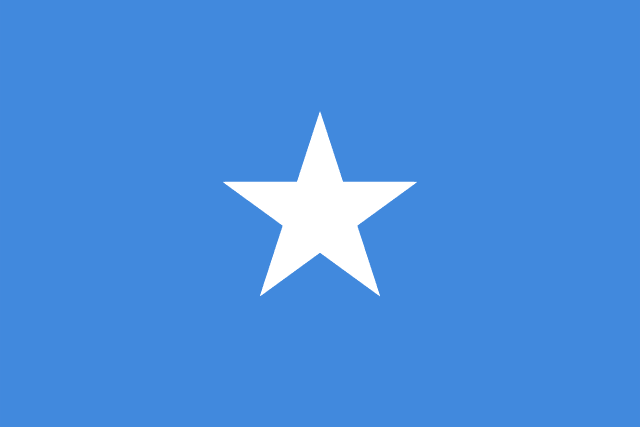

Somalia
Federal Republic of Somalia
Africa
19,273,906
12:02 UTC+3
+252
.so
Shimbiris
2,460 m · 8,071 ft
Indian Ocean
0 m · 0 ft
2,745,891
Mogadishu · 2026
2,745,891
Mogadishu · 2026
Location
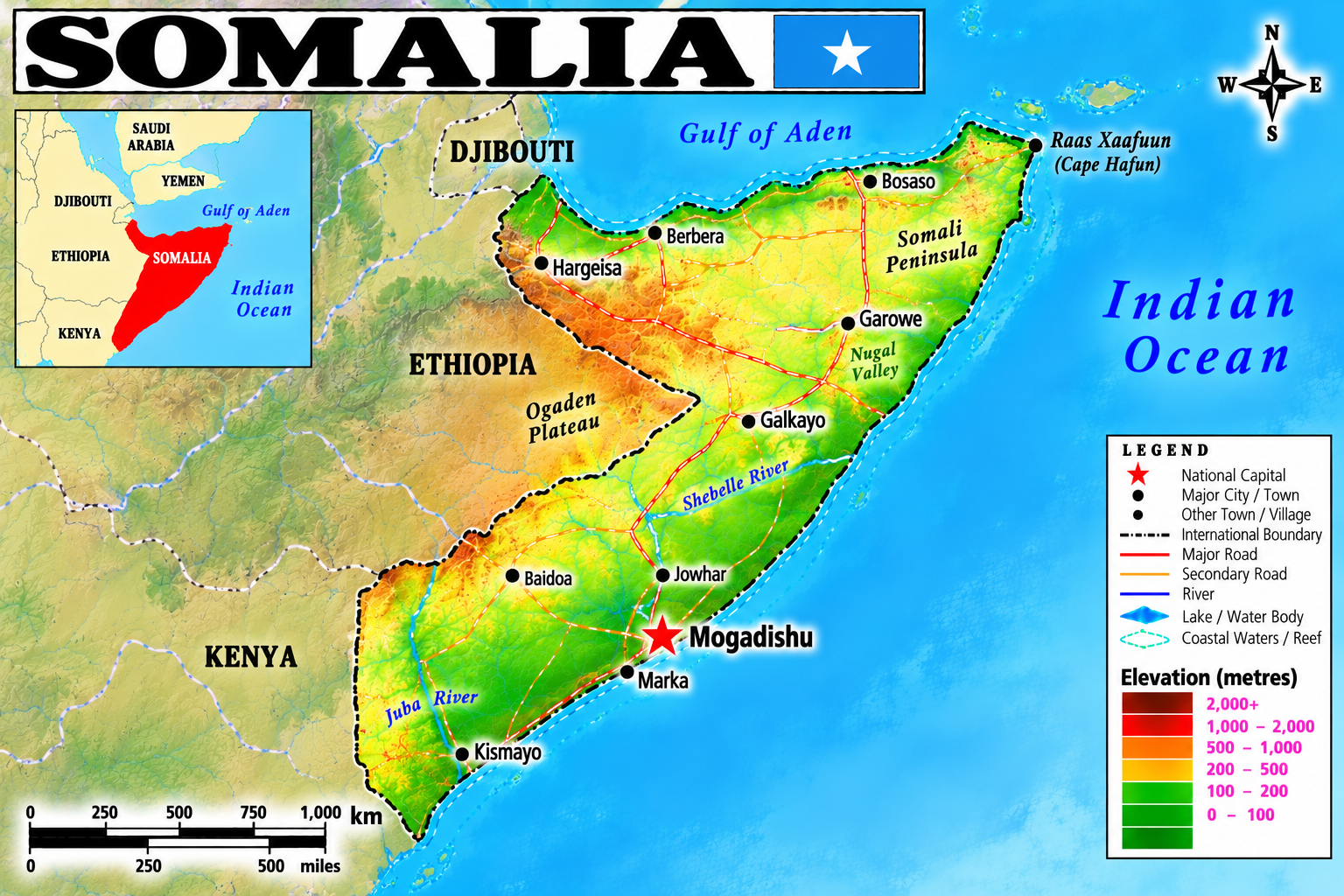
Somalia — Detailed Physical Map
The Somali Peninsula, Shebelle and Juba rivers, Ogaden Plateau edge, Nugal Valley, Cape Hafun, the Gulf of Aden and Indian Ocean coasts, major cities and the capital Mogadishu
Tourist Attractions
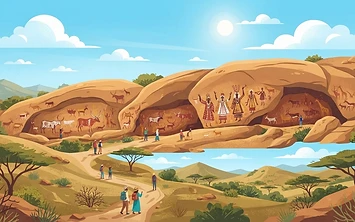
A complex of caves and rock shelters containing some of the best-preserved and most vivid Neolithic rock art in the Horn of Africa. The paintings depict cattle, humans, and wild animals, dating back thousands of years.
The site features remarkably clear and ancient cave paintings that are considered some of the most significant in the region.
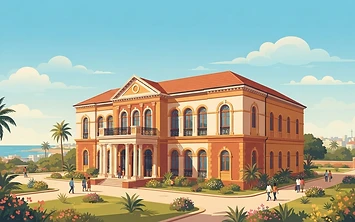
Housed in a restored colonial-era building, this institution serves as the primary repository for Somalia's cultural heritage. It exhibits a wide range of artifacts, including ancient coins, traditional textiles, and historical documents.
It offers a comprehensive look at the nation's history and cultural evolution through its diverse collection of artifacts.

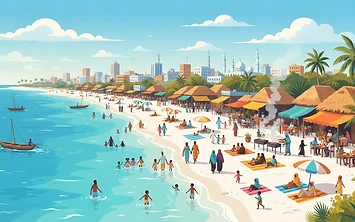
A popular and vibrant stretch of coastline along the Indian Ocean that serves as a major social hub for the capital. It is well-known for its white sands, clear waters, and local seafood restaurants.
It is the premier destination in the capital for experiencing the local seaside culture and social life.

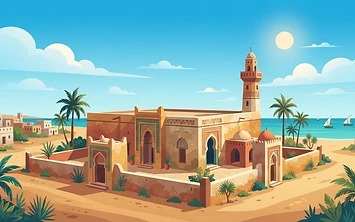
Located in the ancient port city of Zeila, this mosque is one of the oldest in Africa, dating back to the early centuries of Islam. It is historically significant for its unique architectural features and its role in the spread of the faith in the region.
It is one of the earliest surviving religious structures on the continent, reflecting deep historical roots.

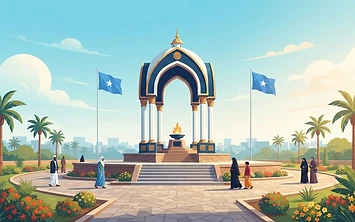
A dignified and somber memorial located in the heart of the capital dedicated to the soldiers who fought for the nation. It stands as a symbol of resilience and remembrance for the country's turbulent history.
The monument provides a quiet, contemplative space that anchors the city's complex historical narrative.

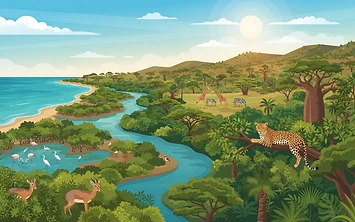
A protected coastal wilderness that encompasses a rare mix of dry forest, riverine woodland, and wetland habitats. It is home to diverse birdlife and various mammals, including leopards and dik-diks.
It is one of the few remaining areas in the country where a pristine coastal ecosystem survives in its natural state.
Geography
Nature
Shimbiris
2,460 m / 8,071 ft
9.5% of land
≈ 60,577 km² of forest
FAO / World Bank, forest area (% of land area)
Explore the Nature Atlas1,659 km1,031 mi
Formed by the confluence of the Dawa and Ganale Doria rivers in Ethiopia.
1,820 km1,131 mi
Flows through central and southern Somalia before reaching a swampy area near the coast.
—
Located within the Lag Badana National Park in the Lower Juba region.
—
Series of waterfalls located in the Golis Mountains near the town of Bosaso.
River lengths are whole-river figures, including any section beyond Somalia. Researched reference figures. Tap any name for where its name comes from and a Google Maps link.
Major Cities
- 1
- 2
Woqooyi Galbeed
1,639,7552026
MapFunctions as the major economic and political center for Somaliland.
- 3
Gedo
896,8642026
MapKnown as a significant agricultural hub located along the fertile Jubba River valley.
- 4
Galguduud
633,9462026
MapServes as a key administrative and regional hub within the Galmudug state.
- 5
Woqooyi Galbeed
567,4402026
MapHosts the most significant deep-water port facility for international trade in the region.
- 6
Nugaal
457,0392026
MapFunctions as the administrative capital and political seat for the Puntland state.
- 7
Shabeellaha Dhexe
456,5992026
MapServes as a strategic point located along the main road connecting Mogadishu and Jowhar.
- 8
Togdheer
439,3962026
MapOperates as a major livestock trading center in the northern interior of the country.
- 9
Bay
432,4692026
MapServes as an important agricultural trade center for the Bay region.
- 10
Shabeellaha Hoose
308,6032026
MapFeatures an ancient port history dating back to its role as a colonial trading outpost.
- 11
Bari
239,1502026
MapActs as the primary commercial port city for the northeastern region of the country.
- 12
Mudug
184,9102026
MapStands as a vital transit and commercial crossroads connecting northern and southern territories.
City populations are the latest official, UN or national-statistics estimates (2025–2025) compounded to 2026 at 2.9% a year (the nation's annual population growth rate); figures without a published update come from the open cities database (2020-era estimates) and are projected the same way.
Economy
Main exports
Somalia's leading export commodities and products.
Tap any export to learn more. Spot prices in USD only for Live Data subscribers.
Main imports
Somalia's leading import commodities and products.
Tap any import to learn more.
Military
Historical Timeline
9000 BCE
Earliest Inhabitants of the Horn of Africa
Evidence of early human habitation in the region dates back to the Neolithic period, with populations practicing cattle herding and hunting. These ancestors are the predecessors to the Cushitic-speaking peoples who established the foundations of Somali culture.
800
Introduction of Islam to the Horn
Islam was introduced to the Somali coast by early Muslim refugees and traders, fundamentally shaping the region's culture, legal systems, and social structure. Over subsequent centuries, it became the predominant religion of the Somali people.
1200
Rise of the Adal Sultanate
The Adal Sultanate emerged as a prominent medieval kingdom that controlled trade routes between the Somali coast and the Ethiopian interior. It became a powerful political and military force in the region.
1884
Berlin Conference and Colonization
The Scramble for Africa led to the partitioning of Somali territories between the British, French, and Italians. This era began decades of colonial rule that significantly disrupted indigenous political structures.
1960
Independence of the Somali Republic
The British Somaliland and the Trust Territory of Somaliland merged to form the independent Somali Republic. This milestone marked the end of colonial rule and the unification of the northern and southern regions.
1969
Siad Barre Seizes Power
Major General Siad Barre led a military coup d'état following the assassination of President Abdirashid Ali Shermarke. His regime instituted a policy of scientific socialism and centralized control.
1991
Collapse of the Central Government
The Somali Civil War led to the ousting of Siad Barre and the subsequent collapse of the central government. This event initiated a period of prolonged instability and state failure.
2012
Formation of the Federal Government of Somalia
The Federal Government of Somalia was established in Mogadishu, marking the end of the transitional period. It was the first permanent central government in the country since 1991.
2022
Election of President Hassan Sheikh Mohamud
Hassan Sheikh Mohamud was elected as the tenth President of Somalia by the federal parliament. This transition marked a significant peaceful change in leadership during a critical security juncture.
2024
Somalia Secures Debt Relief
The IMF and World Bank approved full debt relief for Somalia under the Heavily Indebted Poor Countries Initiative. This development marked a significant step toward economic normalization and international financial integration.
2025
Transition to Direct Universal Suffrage
The Somali government initiated key legal and constitutional reforms to prepare for the first direct national elections in over five decades. This move signifies a pivotal shift toward democratic accountability and wider citizen participation.
2500
Establishment of the Land of Punt
Ancient Egyptian records describe the Land of Punt as a major trading partner known for its frankincense, gold, and ebony. This civilization was located in the Horn of Africa and played a key role in regional commerce.
National Anthem
Soomaaliyeey toosoo
Ali Mire Awale
Yusuf Haji Adan
2012
Soomaaliyeey toosoo Toosoo isku tiirsada EE hadba kiina midigta War idinma hayaa Idinma hayaa Soomaaliyeey toosoo Toosoo isku tiirsada EE hadba kiina midigta War idinma hayaa Idinma hayaa
The anthem, commonly titled Soomaaliyeey toosoo, was composed by Yusuf Haji Adan with lyrics penned by Ali Mire Awale in 1947. Although it gained widespread popularity throughout the country as an unofficial anthem for decades, it was not formally designated as the national anthem until 2012. The song was created to inspire Somali nationalism and unity during the period of decolonization. It served as the primary anthem during the Somali Republic and the subsequent Somali Democratic Republic. Following the collapse of the central government in 1991, the anthem continued to be used by various regional and transitional authorities. It remains a powerful cultural symbol for Somalis, emphasizing the need for solidarity and collective national identity. The song is frequently performed at diplomatic, political, and cultural events across the nation.
National Holidays
This day marks the beginning of the Gregorian calendar year and is celebrated as a public holiday in Somalia.
Also known as International Workers' Day, this holiday commemorates the contributions and struggles of workers across the country.
This date commemorates the independence of the State of Somaliland from the United Kingdom in 1960.
This holiday marks the unification of the Trust Territory of Somaliland and the State of Somaliland to form the Somali Republic in 1960.
Good News Today
Republic of Korea funds school meals and nutrition for children in Somalia
The Republic of Korea contributed USD 2 million to the World Food Programme to provide school meals and malnutrition treatment for 47,500 children. This initiative supports local farmers while improving student attendance and health outcomes.
Fun Facts
Nation of Dromedary Camels
Somalia is home to the largest population of dromedary camels in the world, which are central to the nomadic pastoral lifestyle.
Ancient Laas Geel Rock Art
The Laas Geel cave complex contains some of the oldest and best-preserved rock paintings in Africa, dating back to around 5,000 to 9,000 years ago.
Rich History of Coffee Trade
While Ethiopia is the birthplace of coffee, the Somali coast acted as a primary historical hub for the trade and export of coffee beans to the Arabian Peninsula.
Longest Coastline in Mainland Africa
Somalia boasts the longest coastline on the mainland of the African continent, stretching over 3,000 kilometers along the Indian Ocean and the Gulf of Aden.
Nation of Oral Poets
Somalia is famously referred to as a 'Nation of Poets' because of the central role oral literature and intricate poetry plays in daily communication and history.
Source of Precious Frankincense
The Puntland region has been world-renowned since antiquity for producing some of the highest quality frankincense, traded by ancient Egyptians and Romans.
The Star on the Flag
The single white star on the light blue Somali flag, known as the 'Jewel of Africa,' represents the five regions where Somali people have traditionally lived.
Fusion of Culinary Traditions
Somali cuisine is a unique fusion of indigenous customs with heavy influences from Indian, Arabian, and Italian culinary techniques and spices.
Traditional Guntiino Garment
The Guntiino is a traditional garment consisting of a long piece of fabric tied over the shoulder, often worn by women in both formal and daily settings.
Historical Strategic Port Cities
Cities like Zeila and Berbera were legendary medieval trading ports that connected the African interior with the Indian Ocean trade network for centuries.
Chuckies Trivia Quiz
Chuckies Trivia Quiz
Fifteen questions on Somalia — five easy, five medium, five hard. How far can you get?
Sports & Live Events
Language
Counting to 10
1
1
= 10 (n = 0)
World Dictionary
Discover and translate any word into all supported languages.