

South Sudan
Republic of South Sudan
Africa
12,436,037
22:19 UTC+2
+211
.ss
Location
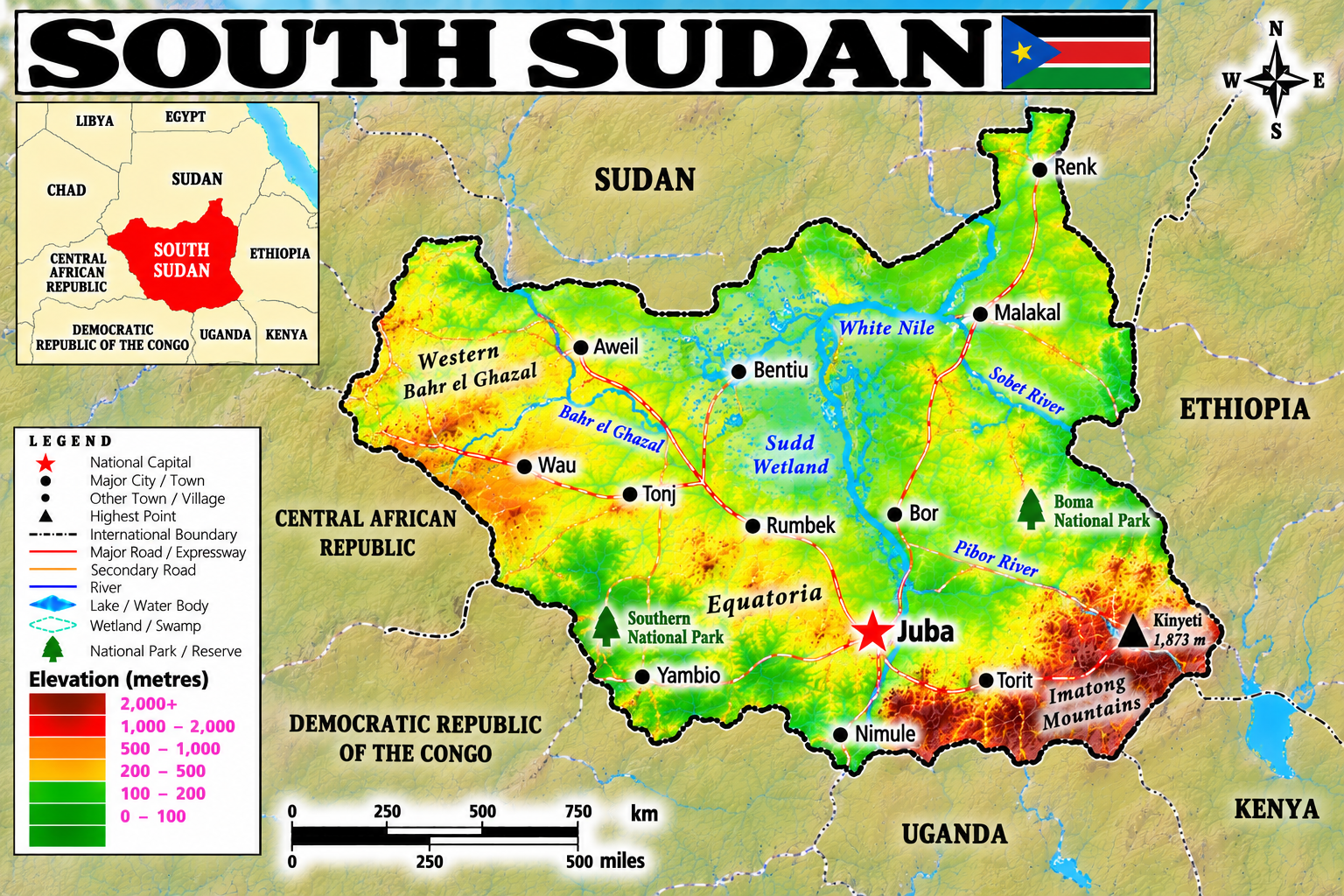
South Sudan — Detailed Physical Map
The Sudd Wetland and White Nile, Bahr el Ghazal, Imatong Mountains and Kinyeti, Boma and Southern parks, major cities and the capital Juba
Tourist Attractions
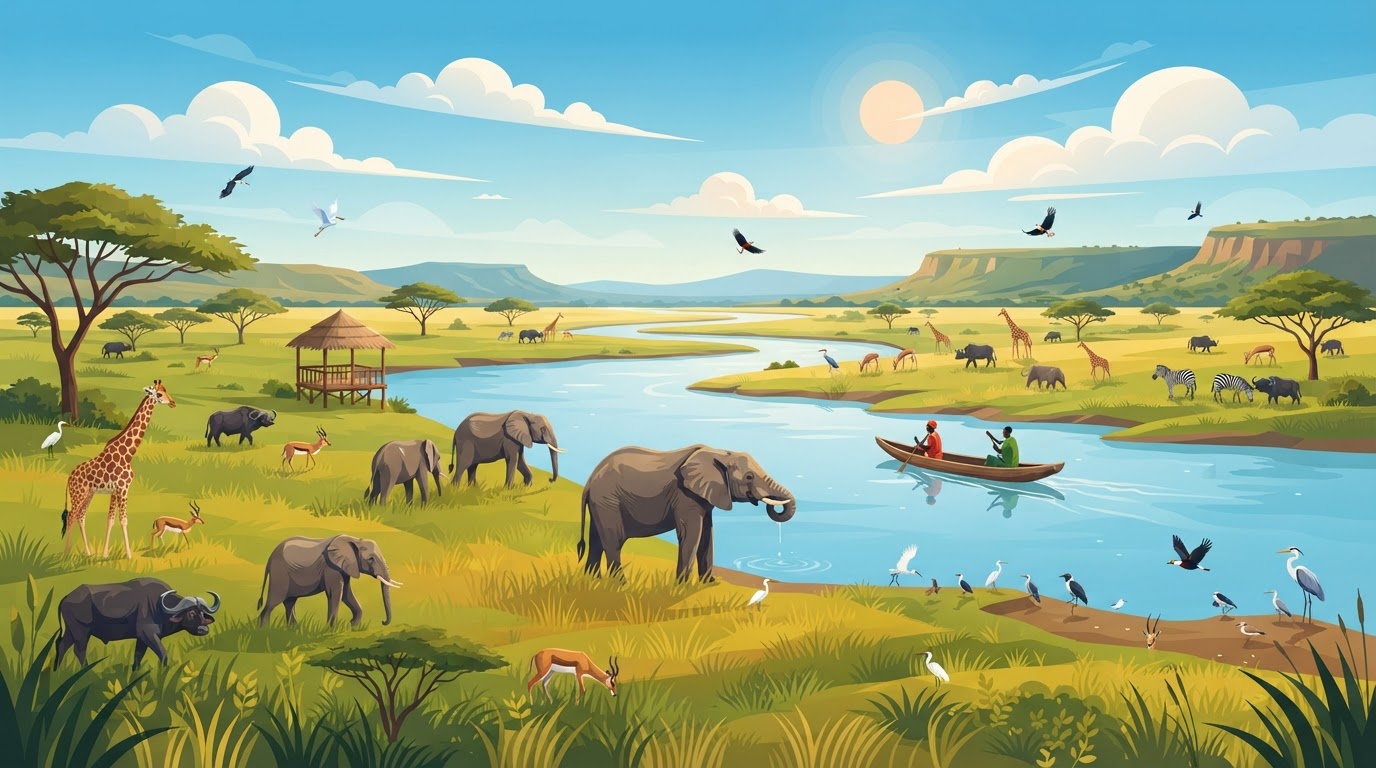
Established in 1954, this park is one of the country's most accessible protected areas, situated along the White Nile River near the Ugandan border. It is a biodiversity hotspot known for its elephant populations and birdwatching opportunities.
Visitors can take a boat to Opekoloe Island for excellent elephant sightings and view the scenic Fola Falls.
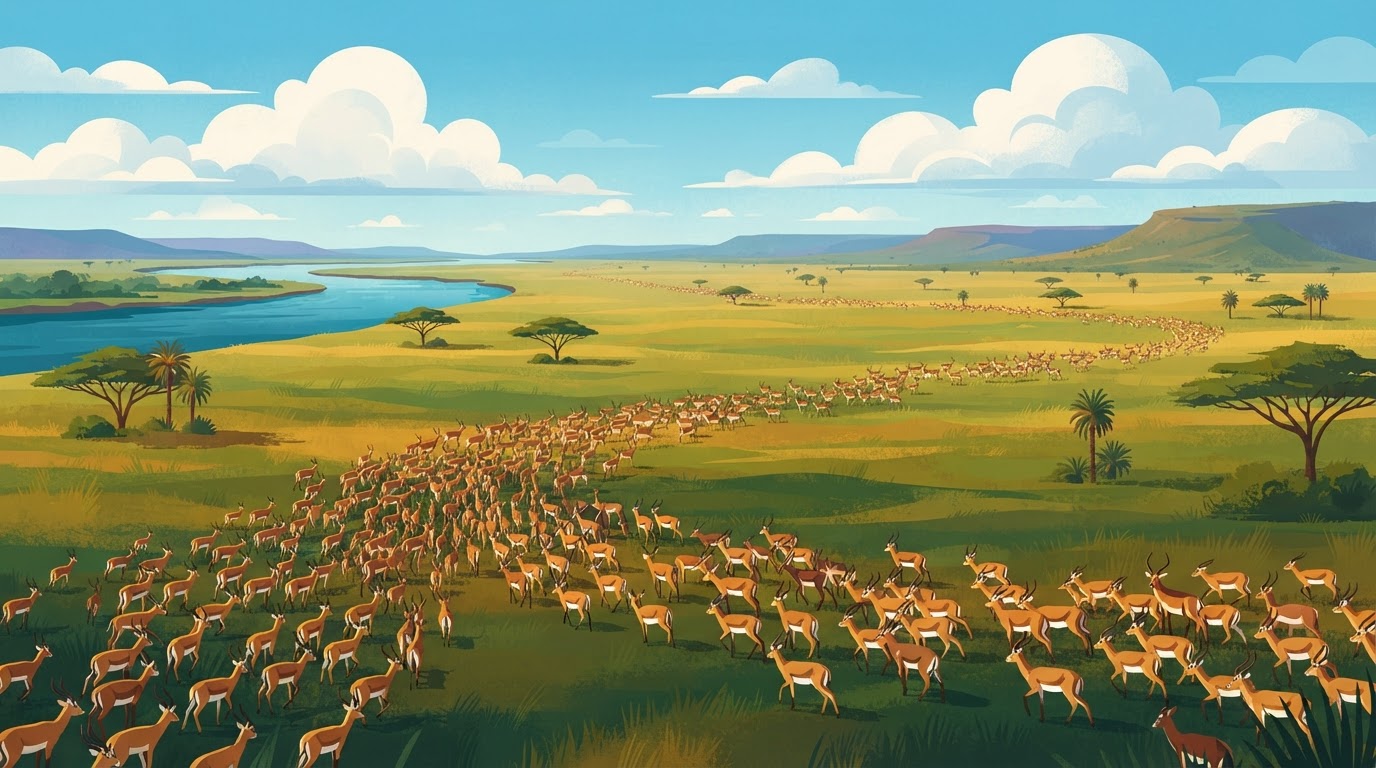
This expansive park is a natural jewel known for hosting the annual migration of white-eared kob and other antelope species. It features vast riparian grass plains that stretch eastwards from the White Nile River.
It is one of the best places to witness the breathtaking spectacle of the annual antelope migration.

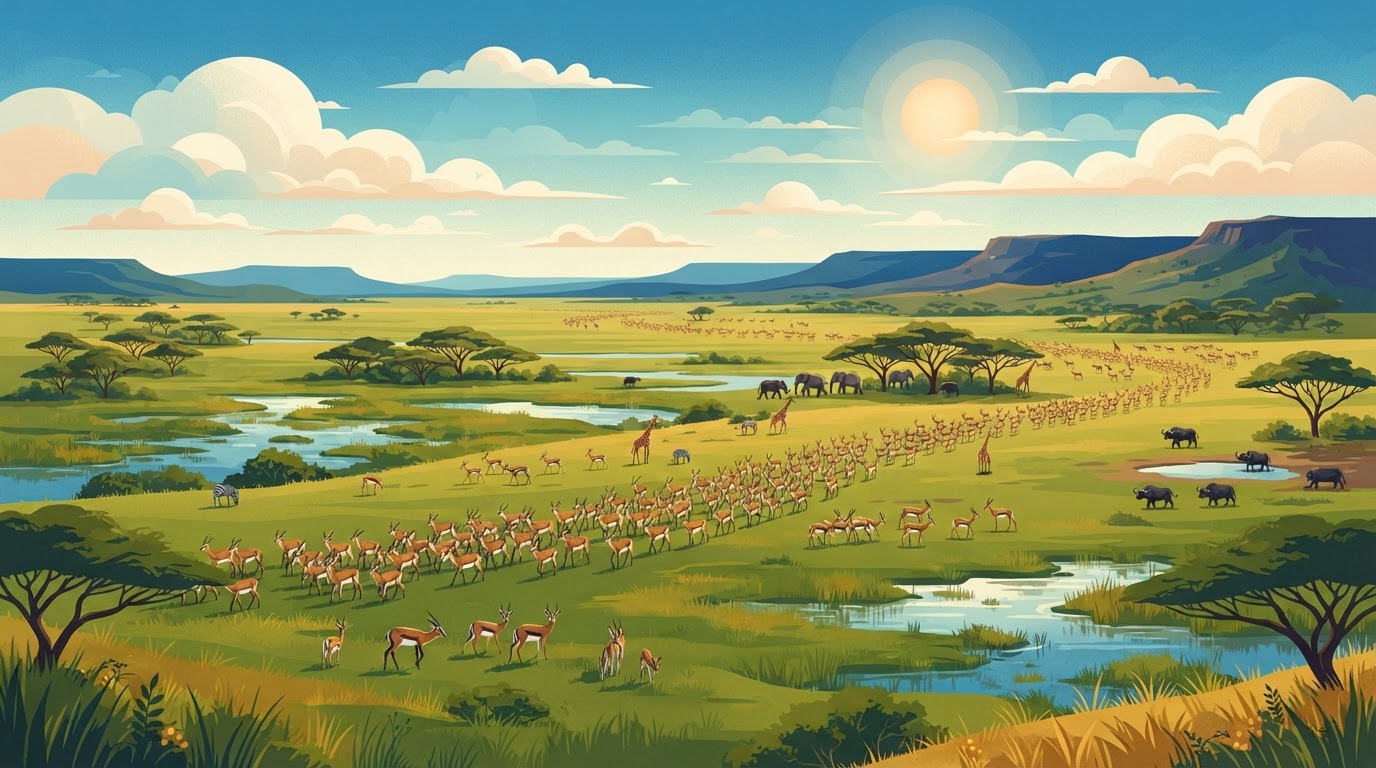
Located near the Ethiopian border, this park encompasses a diverse range of landscapes including grasslands, floodplains, and acacia bushland. It is a critical habitat that supports large-scale animal movements and migrations.
The park is famous for being a primary site for the massive migration of white-eared kob and tiang.

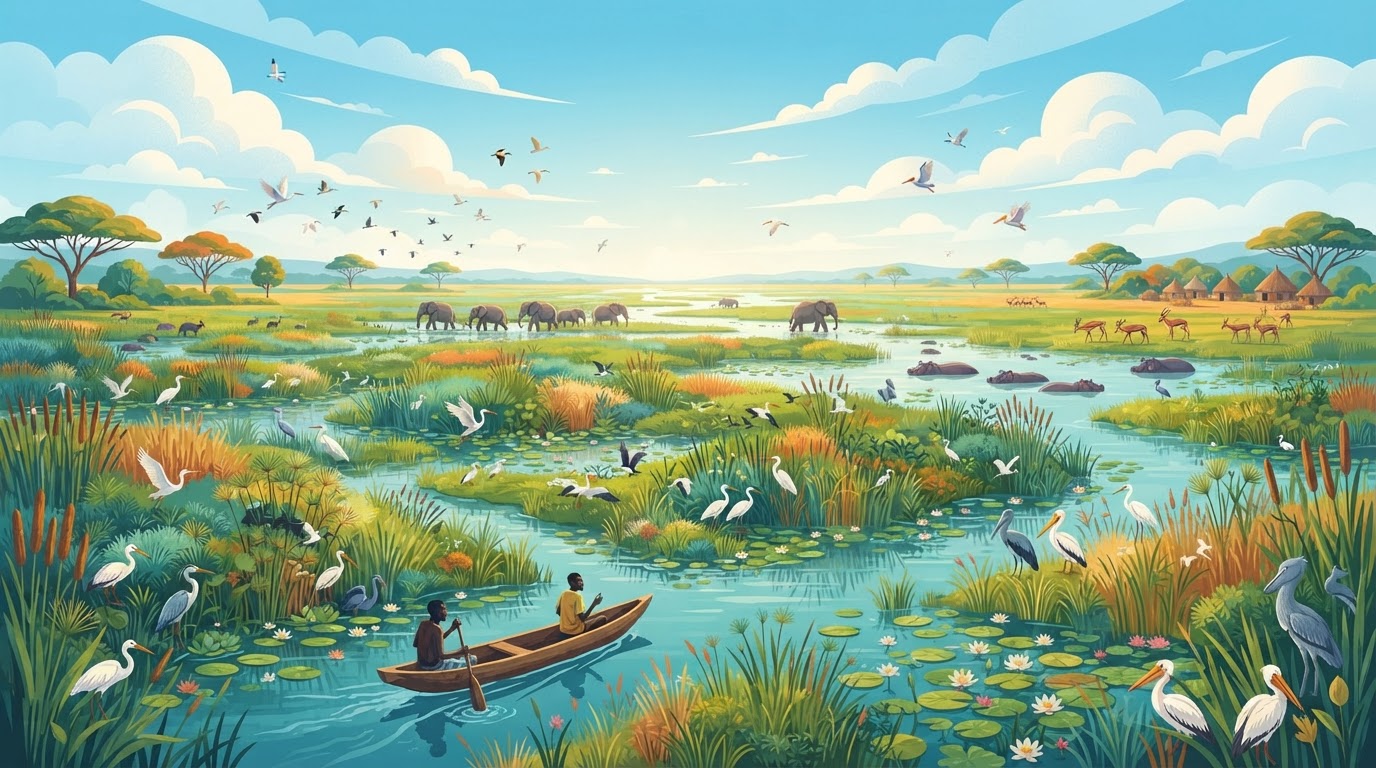
The Sudd is one of the world's largest freshwater wetlands, covering a vast area of the Nile Basin. This immense swamp is a vital ecosystem teeming with diverse bird species and aquatic life.
It is a premier destination for birdwatchers, particularly for spotting the elusive shoebill stork.

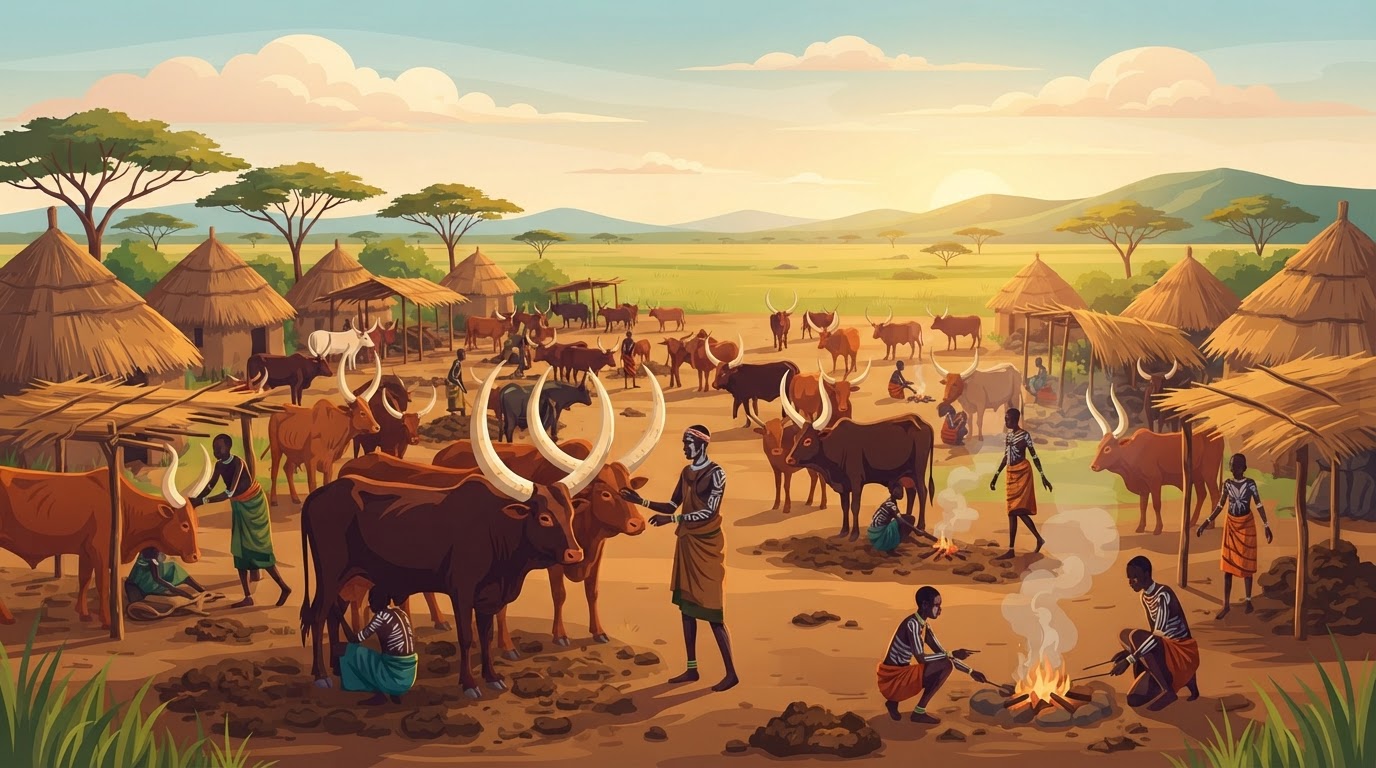
These camps offer a profound look into the traditional nomadic lifestyle of the Mundari people, who live in close harmony with their long-horned Ankole-Watusi cattle. The camps are central to the social and cultural identity of the community.
Witnessing the daily life and unique bond between the Mundari people and their massive herds is a deeply authentic cultural experience.

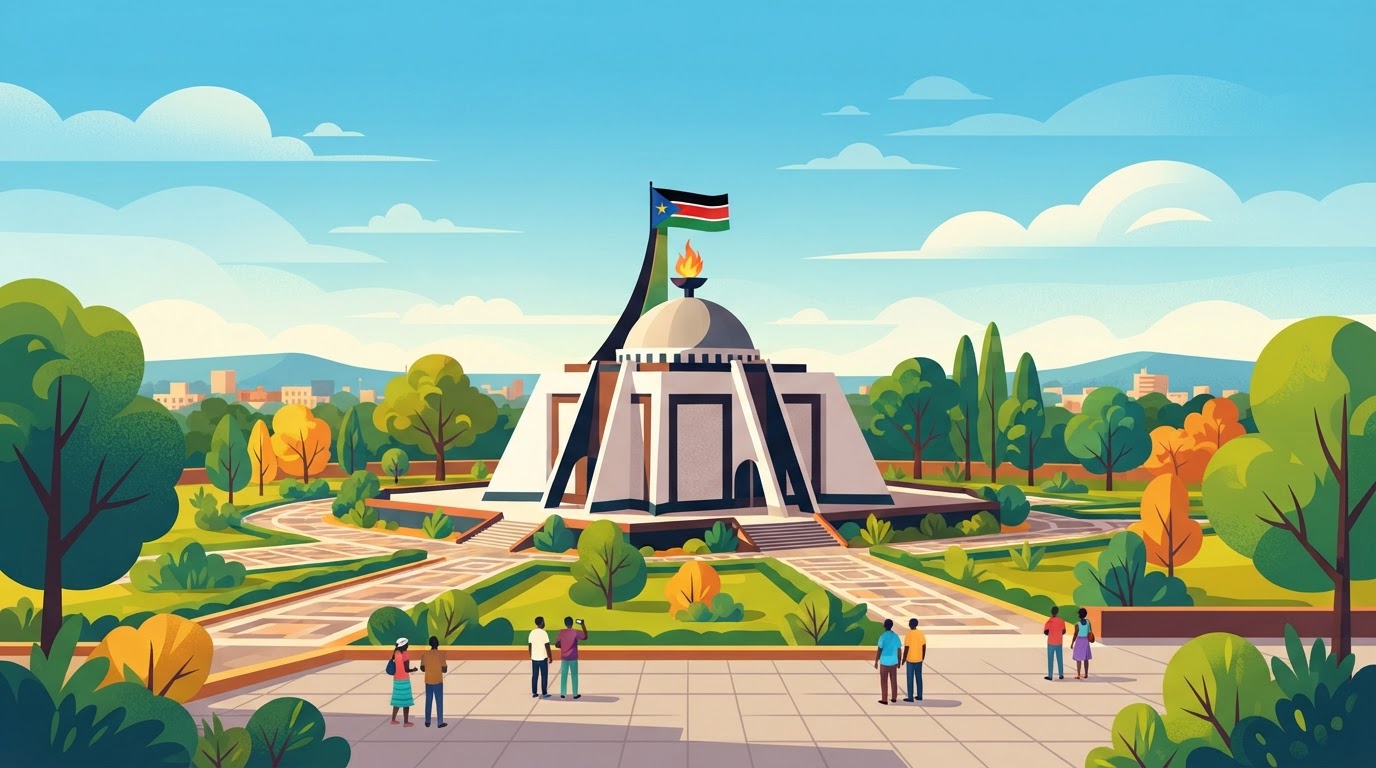
Located in the capital city, this site serves as a national memorial dedicated to the leader who headed the Sudan People's Liberation Army for over two decades. It is a significant place for understanding the modern history and nation-building of South Sudan.
It is the most important historical landmark in Juba for those interested in the country's political journey.
Geography
Nature
Mount Kinyeti
3,187 m / 10,456 ft
11.2% of land
≈ 69,411 km² of forest
FAO / World Bank, forest area (% of land area)
Explore the Nature Atlas6,650 km4,132 mi
White Nile flows through the Sudd swamp region of South Sudan.
716 km445 mi
The entire length of this river lies within South Sudan.
354 km220 mi
Formed by the confluence of the Baro and Pibor rivers.
150 km²58 sq mi
Located at the confluence of the Bahr el Jebel and Bahr el Ghazal rivers.
—
A lake situated within the Bahr el Ghazal basin.
—
Located in the Didinga Hills of Eastern Equatoria.
River lengths are whole-river figures, including any section beyond South Sudan. Researched reference figures. Tap any name for where its name comes from and a Google Maps link.
Major Cities
- 1Capital
Central Equatoria
Serves as the capital and largest city of South Sudan, positioned strategically along the banks of the White Nile.
474,1562026
Map - 2
Central Equatoria
Maintains a vital position as a commercial and transport center connecting South Sudan with neighboring Uganda and the DRC.
232,7172026
Map - 3
Central Equatoria
Acts as an important agricultural trade hub near the border with Uganda, known for its fertile surrounding highlands.
221,1182026
Map - 4
Jonglei
Functions as the capital of Jonglei State and holds deep historical significance during the Second Sudanese Civil War.
177,2142026
Map - 5
Western Bahr el Ghazal
Hosts a multicultural population and serves as a major railway terminus and economic gateway for the Bahr el Ghazal region.
143,2262026
Map - 6
Upper Nile
Stands as a key agricultural town in Northern Upper Nile, known for its large-scale mechanized grain and sesame production.
126,1332026
Map - 7
Unity
Recognized as a historic location in the oil-rich Unity State that has faced significant challenges during regional conflicts.
113,6302026
Map - 8
Upper Nile
Represents a crucial river port and commercial center for the Upper Nile region, situated along the White Nile.
113,4402026
Map - 9
Warrap
Operates as the capital of Warrap State, acting as a regional center for administration and local government services.
88,1212026
Map - 10
Warrap
Holds historical importance as a major cattle-trading center and administrative hub within the Warrap region.
56,4812026
Map - 11
Eastern Equatoria
Features a prominent historic mission station that has played a longstanding role in regional education and social development.
55,2792026
Map - 12
Eastern Equatoria
Provides essential administrative functions for the Eastern Equatoria region, supported by local subsistence farming and small-scale trade.
54,6772026
Map
City populations are the latest official, UN or national-statistics estimates (2025–2026) compounded to 2026 at 2.03% a year (the nation's annual population growth rate); figures without a published update come from the open cities database (2020-era estimates) and are projected the same way.
Economy
Main exports
South Sudan's leading export commodities and products.
Tap any export to learn more. Spot prices in USD only for Live Data subscribers.
Main imports
South Sudan's leading import commodities and products.
Tap any import to learn more.
Military
Historical Timeline
3000 BCE
Arrival of Nilotic Peoples
Nilo-Saharan ancestors began settling in the Nile Valley, laying the foundation for the ethnic composition of present-day South Sudan. These groups developed distinct pastoralist cultures that persist in the region today.
1821
Egyptian Annexation and Slave Raids
Khedive Ismail Pasha of Egypt annexed the region, initiating intensive ivory trading and the exploitation of the local population for slave labor. This period increased regional instability and intensified the divide between the north and south.
1899
Establishment of Anglo-Egyptian Sudan
Britain and Egypt established a condominium over Sudan, governing the north and south as separate entities. This administrative divide fueled long-term regional tensions regarding political identity and development.
1955
Outbreak of the First Sudanese Civil War
The Torit Mutiny marked the beginning of a protracted armed struggle for regional autonomy against the central Sudanese government. The conflict lasted until 1972 and displaced millions of people.
1972
Addis Ababa Agreement
The peace treaty granted the southern region internal self-governance and ended the first civil war. The agreement provided a decade of relative stability before fighting resumed.
1983
Formation of the SPLA/M
The Sudan People's Liberation Army and Movement was founded under John Garang to restart the armed struggle. This initiated the Second Sudanese Civil War, one of the longest and deadliest conflicts in African history.
2005
Comprehensive Peace Agreement
The signing of this treaty ended the second civil war and established a framework for southern autonomy. It mandated a future referendum on self-determination for the people of South Sudan.
2011
Independence of South Sudan
Following a successful referendum, South Sudan officially declared its independence from Sudan on July 9. Salva Kiir Mayardit became the country's first president.
2013
Outbreak of Civil War
Political rivalry between President Salva Kiir and Vice President Riek Machar triggered a major internal armed conflict. The violence decimated the national economy and resulted in a profound humanitarian crisis.
2018
Revitalized Agreement on Resolution of Conflict
The warring parties signed a power-sharing deal aimed at ending the civil war and forming a transitional government. The agreement sought to integrate opposition forces into the national army.
2020
Formation of the Transitional Unity Government
President Salva Kiir and First Vice President Riek Machar officially formed a coalition government after years of delays. This milestone was intended to transition the nation toward permanent peace and future elections.
2024
Extension of the Transitional Period
The government announced a further delay to the country's first post-independence general elections, rescheduling them for late 2026. This decision highlighted ongoing challenges in implementing the peace agreement and constitutional requirements.
2026
President Kiir conducts major cabinet reshuffle
On January 19, 2026, President Salva Kiir dismissed Interior Minister Angelina Teny and replaced her with Gen. Aleu Ayieny Aleu. The reshuffle also included the removal of the Lakes State Governor.
2026
Legislature amends peace deal for elections
In July 2026, the Transitional National Legislative Assembly voted to amend the peace accord to defer the national census and permanent constitution to the next government. This move aimed to keep the country's first post-independence general elections on schedule for December 2026.
National Anthem
A group of students and teachers from Juba University
A group of students and teachers from Juba University
2011
Oh God, we praise and glorify you, For your grace on South Sudan, Land of great abundance, Uphold us united in peace and harmony. Oh motherland, we rise raising flag with the guiding star, And sing songs of freedom with joy, For justice, liberty and prosperity shall forever more reign, Oh great patriots, let us stand up in silence and respect, Saluting our millions of martyrs whose blood cemented our national foundation, We vow to protect our nation. Oh God bless South Sudan.
South Sudan Oyee! was selected following an open competition organized by the South Sudan National Anthem Committee ahead of the country's independence. The anthem was composed by a committee of students and teachers from Juba University, representing a collective effort to define the new nation's identity. It was officially adopted on July 9, 2011, as the country gained its independence from Sudan. The title includes the word Oyee, which is a common expression of joy and celebration in many South Sudanese languages. The lyrics emphasize national unity, gratitude to God, and honor for the martyrs who died during the long struggle for liberation. Since its adoption, it has served as a central symbol of South Sudanese patriotism and remains unchanged in its official form.
National Holidays
Commemorates the signing of the 2005 agreement that ended the Second Sudanese Civil War and led to the eventual independence of South Sudan.
Marks the anniversary of the 1983 mutiny in Bor that led to the formation of the Sudan People's Liberation Army.
Celebrates the date in 2011 when South Sudan officially gained its independence from the Republic of Sudan.
Honors the memory of Dr. John Garang de Mabior and other fallen heroes who sacrificed their lives during the struggle for liberation.
A major public holiday observed to celebrate the birth of Jesus Christ, reflecting the country's predominantly Christian population.
Good News Today
South Sudan's Agriculture Ministry Hands Over Facilities in Renk and Melut
The Ministry of Agriculture and Food Security has handed over eight new agricultural facilities to local farmers to boost production and climate resilience. These facilities include infrastructure for fisheries and pesticide storage, aimed at strengthening local livelihoods and agricultural productivity.
Fun Facts
Worlds Second Largest Land Migration
Boma National Park hosts the Boma-Badingilo migration, where over a million antelope move across the plains, rivaling the famous Serengeti migration.
Youngest Nation In The World
South Sudan officially gained its independence on July 9, 2011, making it the most recently recognized sovereign state on the planet.
Ancient Nile Floodplain Agriculture
The country is home to the Sudd, one of the world's largest freshwater wetlands, which acts as a massive natural filter for the White Nile.
Extraordinarily Tall Ethnic Groups
The Dinka people, one of the largest ethnic groups in the country, are world-renowned for being among the tallest humans on average globally.
Traditional Sorghum Based Cuisine
A staple of the local diet is 'asida,' a thick, dough-like porridge made from sorghum flour, traditionally eaten by hand with savory stews.
Intricate Tribal Scarification Traditions
Many traditional cultures in South Sudan practice ritual scarification as a sign of beauty, maturity, and tribal affiliation.
Masterful Beaded Craftsmanship
South Sudanese artisans are highly skilled in creating vibrant, intricate beadwork that often signifies a person's social status, age, or marital state.
Rising Basketball Athletic Talent
Basketball has become the national sport, with a surge of South Sudanese-born athletes gaining international recognition in professional leagues worldwide.
Deep Cultural Connection To Cattle
Cattle are considered a primary form of wealth and social currency, often serving as the traditional medium for dowry payments in marriage negotiations.
Unique Nilotic Musical Heritage
Music and dance are integral to communal life, featuring rhythmic clapping and distinct vocal styles that accompany celebrations and storytelling.
Chuckies Trivia Quiz
Chuckies Trivia Quiz
Fifteen questions on South Sudan — five easy, five medium, five hard. How far can you get?
Sports & Live Events
Language
Counting to 10
1
1
= 10 (n = 0)
World Dictionary
Discover and translate any word into all supported languages.