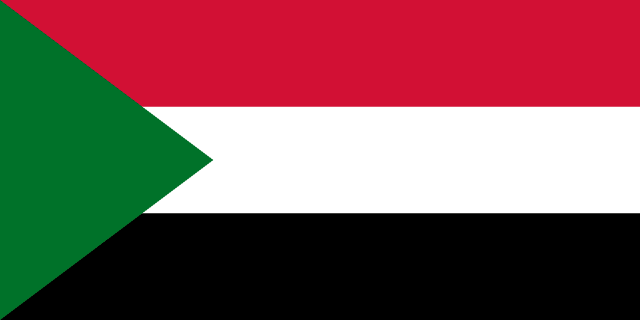

Sudan
Republic of the Sudan
Africa
53,436,112
07:14 UTC+2
+249
.sd
Deriba Caldera
3,042 m · 9,980 ft
Red Sea
0 m · 0 ft
6,365,059
Khartoum · 2026
6,365,059
Khartoum · 2026
Location
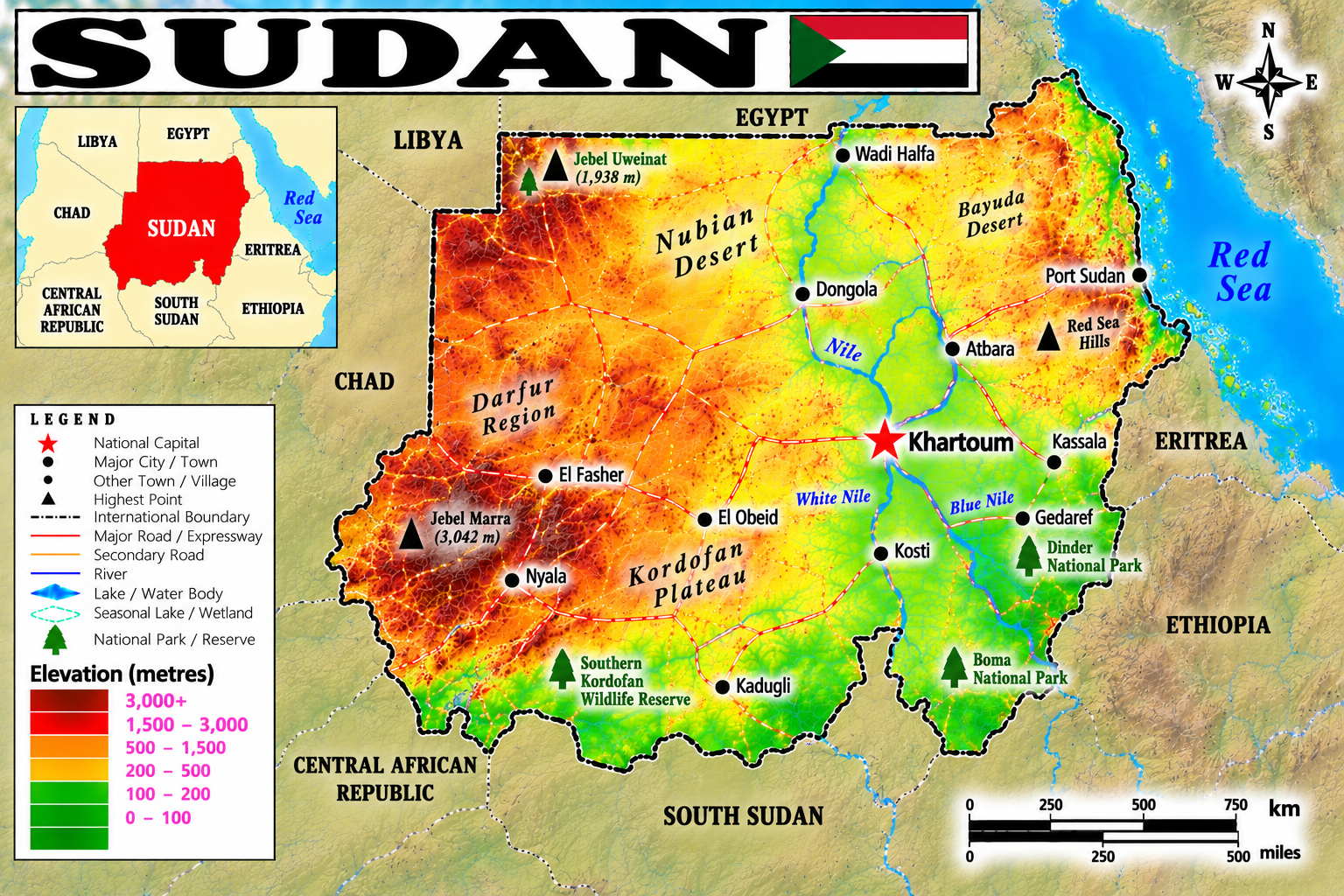
Sudan — Detailed Physical Map
The Nubian and Bayuda deserts, Darfur Region and Jebel Marra, the Nile from Wadi Halfa to Khartoum, Dinder and Boma parks, major cities and the capital Khartoum
Tourist Attractions
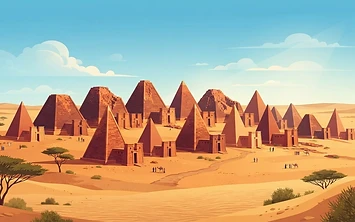
These steep-sided, brick-built pyramids were constructed by the Meroitic Pharaohs around 500 BC. They stand as a testament to the ancient Kushite civilization and are significantly less crowded than their Egyptian counterparts.
Visit just before sunset when the golden light illuminates the structures against the desert landscape.
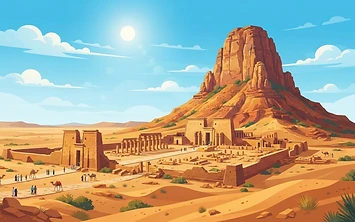
A UNESCO World Heritage site, this small mountain was considered sacred in ancient times and is home to the ruins of the Temple of Amun. It served as a major religious center for the Napatan region.
The site offers a unique combination of natural beauty and ancient archaeological ruins.

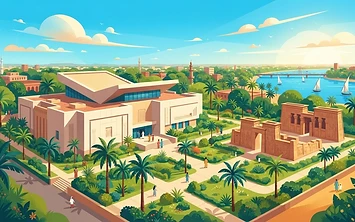
This museum houses a vast collection of artifacts spanning 6,000 years of Sudanese history, including pottery, stone tools, and post-Christian-era murals. It also features three relocated Nubian temples in its garden.
The museum provides an essential, comprehensive overview of Sudan's rich historical heritage.

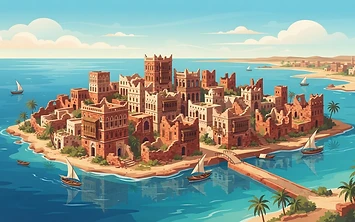
Once a major port for pilgrims traveling to Mecca, this ancient city is famous for its unique architecture constructed entirely of coral blocks. It remains a poignant reminder of the region's maritime history.
The intricate, weathered coral architecture offers a hauntingly beautiful glimpse into the past.

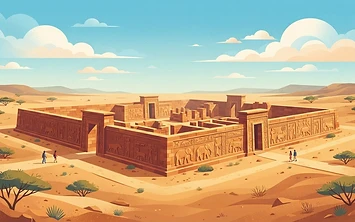
Known for its 'Great Enclosure,' this archaeological site features numerous intricate carvings of elephants. Historians believe it may have served as an elephant training center or a significant pilgrimage site.
The detailed stone carvings provide rare insight into the artistic and cultural life of the Meroitic period.

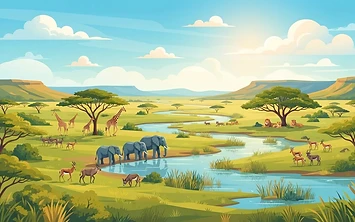
Covering over 6,000 square kilometers near the Ethiopian border, this is one of the largest national parks in Africa. It serves as a vital sanctuary for diverse species of birds and animals.
It is a premier destination for wildlife enthusiasts looking to experience Sudan's natural biodiversity.
Geography
Nature
Deriba Caldera
3,042 m / 9,980 ft
9.1% of land
≈ 169,395 km² of forest
FAO / World Bank, forest area (% of land area)
Explore the Nature Atlas6,650 km4,132 mi
Formed by the confluence of the White Nile and Blue Nile in Khartoum.
3,700 km2,299 mi
Flows north from Lake Victoria and merges with the Blue Nile at Khartoum.
1,450 km901 mi
Originates at Lake Tana in Ethiopia and flows through Sudan to join the White.
6,000 km²2,317 sq mi · 130 m deep
Forms the Sudanese portion of Lake Nasser created by the Aswan High Dam.
290 km²112 sq mi
Created by the Roseires Dam on the Blue Nile in Blue Nile State.
—
Also known as the Sabaloka Gorge, it features rapids north of Khartoum.
River lengths are whole-river figures, including any section beyond Sudan. Researched reference figures. Tap any name for where its name comes from and a Google Maps link.
Major Cities
- 1
Khartoum
2,900,4252026
MapHosted the historic battle during the Mahdist War and remains the country's largest commercial center.
- 2Capital
Khartoum
2,274,9792026
MapLocated at the confluence of the White and Blue Nile rivers, serving as the political and administrative capital of Sudan.
- 3
Khartoum
1,573,3252026
MapActs as the primary industrial heart of the national capital region, featuring extensive manufacturing and railway facilities.
- 4
South Darfur
1,212,5452026
MapServes as the capital of South Darfur and a major commercial crossroads for livestock and regional agriculture.
- 5
West Kordofan
1,135,6282026
MapFunctions as a significant trade and transit hub within the oil-rich regions of West Kordofan State.
- 6
North Kordofan
563,3542026
MapFunctions as a historical center for gum arabic production and a vital junction for trade across western Sudan.
- 7
Red Sea
530,7132026
MapOperates as the nation's principal maritime gateway on the Red Sea, handling the vast majority of international trade.
- 8
Gezira
422,2162026
MapCommands the Gezira Scheme, which is one of the world's largest irrigation projects for cotton and wheat farming.
- 9
Gedaref
406,6012026
MapProvides a massive agricultural market, particularly famous for the large-scale production of sorghum and sesame crops.
- 10
Kassala
398,5912026
MapSituated beneath the dramatic granite Taka Mountains and renowned for its vibrant fruit and vegetable markets.
- 11
East Darfur
290,4872026
MapActs as an essential administrative hub and livestock market serving the pastoralist communities of East Darfur.
- 12
White Nile
272,4812026
MapServes as a critical river port on the White Nile and a major transit point for regional transport.
City populations are the latest official, UN or national-statistics estimates (2026–2026) compounded to 2026 at 2.4% a year (the nation's annual population growth rate); figures without a published update come from the open cities database (2020-era estimates) and are projected the same way.
Economy
Main exports
Sudan's leading export commodities and products.
Tap any export to learn more. Spot prices in USD only for Live Data subscribers.
Main imports
Sudan's leading import commodities and products.
Tap any import to learn more.
Military
Historical Timeline
8000 BCE
Early Human Settlement in the Nile Valley
Archaeological evidence suggests that hunter-gatherer groups established some of the earliest permanent settlements along the Nile in present-day Sudan. These ancestral populations relied on the river for sustenance and laid the foundation for the region's later agricultural civilizations.
2500 BCE
The Rise of the Kingdom of Kerma
Kerma emerged as one of the first major states in the Middle Nile Valley, characterized by its sophisticated pottery and distinct funerary practices. It served as a powerful regional political and economic hub that challenged neighboring Egyptian influence.
744 BCE
The Kushite Conquest of Egypt
The Kingdom of Kush, centered in Napata, expanded northward under King Piye to conquer Egypt, establishing the Twenty-fifth Dynasty. This era saw the unification of the Nile Valley under Sudanese-led rule, blending Kushite and Egyptian cultural traditions.
350
Fall of the Kingdom of Meroe
The Kingdom of Meroe, known for its extensive iron production and unique script, declined due to shifts in trade routes and environmental changes. Its collapse led to the rise of several successor kingdoms, notably Nobatia, Makuria, and Alodia.
1504
Establishment of the Funj Sultanate
The Funj Sultanate, known as the Black Sultanate, was founded following the collapse of the Christian kingdoms in the region. It played a crucial role in the spread of Islam and established a centralized political structure over much of central Sudan.
1821
Turco-Egyptian Conquest of Sudan
Forces under Muhammad Ali Pasha of Egypt invaded and occupied Sudan, integrating the territory into the Ottoman-Egyptian sphere. This period introduced modern administrative systems, new trade patterns, and increased regional integration.
1881
The Mahdist Uprising
Muhammad Ahmad, declaring himself the Mahdi, led a successful religious and nationalist revolt against Egyptian and British rule. His forces captured Khartoum in 1885, establishing a sovereign Sudanese state that lasted until the Anglo-Egyptian reconquest in 1898.
1956
Independence from Britain and Egypt
Sudan achieved formal independence on January 1, 1956, ending decades of Anglo-Egyptian Condominium rule. The nation emerged as a new republic, though it immediately faced challenges regarding internal unity and governance.
2011
South Sudan Independence Referendum
Following decades of civil war, South Sudan voted overwhelmingly to secede from Sudan, formally gaining independence in July 2011. This event significantly altered Sudan's demographics, borders, and national economy due to the loss of major oil reserves.
2019
Revolution and Ousting of Omar al-Bashir
Mass civilian protests led to the removal of President Omar al-Bashir, who had ruled for three decades, by the military. This transition initiated a fragile power-sharing agreement between civilian leaders and military officials.
2023
Outbreak of the Sudan Civil War
Violent conflict erupted in April 2023 between the Sudanese Armed Forces and the paramilitary Rapid Support Forces. The war triggered a severe humanitarian crisis, leading to widespread displacement and significant destruction of national infrastructure.
2025
Persistent State of Conflict and Displacement
As of 2025, Sudan continues to grapple with the profound socio-economic and humanitarian consequences of the ongoing internal armed struggle. The conflict remains a primary barrier to political stabilization and national reconstruction efforts.
National Anthem
نحن جند الله جند الوطن
Sayed Ahmed Mohammed Salih
Ahmad Murjan
1956
نحن جند الله جند الوطن إن دعا داعي الفدى لن نُخَن نتحدى الموت عند المحن نشتري المجد بأغلى ثمن هذه الأرض لنا فليعش سوداننا علماً بين الأمم يا بني السودان هذا رمزكم يحمل العبء ويحمي أرضكم
The Sudanese national anthem was composed following the country's independence from Anglo-Egyptian rule in 1956. The lyrics were written by the poet Sayed Ahmed Mohammed Salih, while the music was composed by Ahmad Murjan. It was selected through a national competition intended to foster a sense of unity and national identity for the newly sovereign state. The anthem serves as a patriotic declaration of devotion to the land and a commitment to defending the nation's sovereignty. It has remained the official anthem since 1956, enduring through various political shifts and changes in government. The song is played at all major official, diplomatic, and military functions within Sudan.
National Holidays
Commemorates Sudan's declaration of independence from the United Kingdom and Egypt in 1956.
Marks the anniversary of the 1985 uprising that led to the removal of President Jaafar Nimeiry.
A major Islamic holiday marking the end of the month-long dawn-to-sunset fasting of Ramadan.
An Islamic festival that commemorates the willingness of Prophet Ibrahim to sacrifice his son as an act of obedience to God.
An official public holiday recognized in Sudan that celebrates the birth of Jesus Christ.
Good News Today
Sudan's childhood immunization programme shows significant recovery
New data reveals that DTP3 vaccine coverage in Sudan increased from 39 percent in 2024 to 71 percent in 2025. This recovery was achieved through the dedication of local health workers and the establishment of alternative supply routes to reach children in conflict-affected areas.
Fun Facts
More Pyramids Than Egypt
Sudan is home to over 200 ancient pyramids, more than double the number found in Egypt, built by the rulers of the ancient Kingdom of Kush.
Where Two Niles Meet
The capital city, Khartoum, is located at the unique confluence of the White Nile and the Blue Nile, which merge to form the great river flowing north.
The Oldest Nubian Culture
The Nubian civilization in northern Sudan is one of the oldest in the world, with a rich history of powerful black pharaohs who once ruled a vast empire.
The Vast Nubian Desert
The Nubian Desert is one of the driest places on Earth, characterized by its stunning, expansive sandstone plateaus and frequent sandstorms.
Ful Medames Morning Ritual
Ful Medames, a dish made of slow-cooked fava beans topped with oil and cumin, is the undisputed national breakfast eaten daily by almost all Sudanese families.
The Unique Mud-Brick Architecture
The historical city of Suakin features impressive examples of Ottoman-era architecture built entirely from coral stone, which is now a rare historical site.
The Golden Age of Music
In the mid-20th century, Sudan developed a highly distinct urban musical genre known as 'Haqibah,' characterized by complex polyrhythms and poetic lyrics.
Sanganeb Reef Marine Sanctuary
Located in the Red Sea, the Sanganeb reef is a unique isolated coral structure that attracts hammerhead sharks and provides incredible underwater biodiversity.
The Art of Kerma Pottery
Ancient artisans from the Kerma period developed a distinct style of black-topped red pottery that remains a major subject of study for archaeologists globally.
Sudanese Ginger Coffee Tradition
Sudanese coffee, often served with a hint of ginger and cloves, is a vital part of social hospitality and is prepared in special clay pots called jebena.
Chuckies Trivia Quiz
Chuckies Trivia Quiz
Fifteen questions on Sudan — five easy, five medium, five hard. How far can you get?
Sports & Live Events
Language
Counting to 10
1
1
= 10 (n = 0)
World Dictionary
Discover and translate any word into all supported languages.