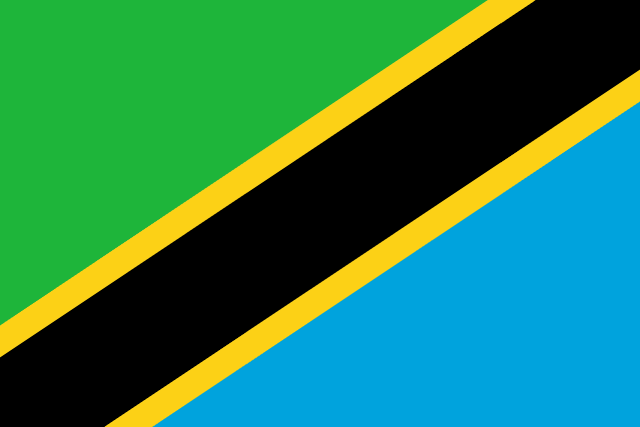
Tanzania
Africa

68,000,000
16:28 UTC+3
+255
Location
Geography
Economy
Main exports
Tanzania's leading export commodities and products.
Subscribe to Live Data for live spot prices
Live commodity prices on every nation's exports — $100 AUD/year.
Tap any export to learn more. Spot prices in USD only for Live Data subscribers.
Main imports
Tanzania's leading import commodities and products.
Tap any import to learn more.
Military
Historical Timeline
50000 BCE
Early Hunter-Gatherer Presence
Archaeological evidence suggests that early human hunter-gatherer populations, including ancestors of the Hadza and Sandawe peoples, inhabited the region tens of thousands of years ago.
1000 BCE
Bantu Migration and Iron Age Expansion
Bantu-speaking agriculturalist groups began migrating into the region, introducing iron-working techniques and sedentary farming practices that transformed local economies.
800
Development of Swahili Coast City-States
Thriving coastal trading centers emerged, facilitating long-distance commerce between African interior populations and traders from the Arabian Peninsula, Persia, and India.
1885
Berlin Conference and German Colonization
European powers partitioned East Africa, leading to the establishment of German East Africa as a colony under German colonial rule.
1919
League of Nations Mandate
Following Germany's defeat in World War I, the League of Nations transferred the territory of Tanganyika to British administration as a mandate.
1961
Independence of Tanganyika
Tanganyika gained independence from British colonial rule on December 9, with Julius Nyerere serving as the nation's first Prime Minister.
1964
Formation of the United Republic of Tanzania
Following the Zanzibar Revolution, the islands of Zanzibar and Pemba joined with Tanganyika to form the United Republic of Tanzania.
1967
The Arusha Declaration
President Julius Nyerere introduced the Ujamaa policy, which aimed to foster national self-reliance through collective agriculture and socialist economic development.
1978
Uganda-Tanzania War
Tanzania invaded Uganda to overthrow the regime of Idi Amin following border incursions, leading to a decisive Tanzanian victory.
1992
Transition to Multiparty Democracy
The Tanzanian government formally ended the one-party state system, allowing for the registration and participation of multiple political parties.
2015
John Magufuli Elected President
John Magufuli won the presidential election, launching a significant anti-corruption campaign and focusing on large-scale national infrastructure projects.
2021
Samia Suluhu Hassan Becomes President
Following the death of John Magufuli, Samia Suluhu Hassan was sworn in as the first female president in the history of Tanzania.
National Holidays
This day commemorates the 1964 revolution that overthrew the Sultan of Zanzibar and the subsequent end of centuries of Arab rule.
This holiday marks the 1964 merger between Tanganyika and Zanzibar to form the United Republic of Tanzania.
Also known as Workers' Day, this is a public holiday dedicated to honoring the contributions and rights of workers across the nation.
This day marks the founding of the Tanganyika African National Union in 1954, which played a pivotal role in the country's struggle for independence.
This day commemorates the death of Mwalimu Julius Nyerere, the founding father and first president of Tanzania.
This holiday celebrates Tanganyika's attainment of independence from British colonial rule in 1961.
Language
Counting to 10
1
1
= 10 (n = 0)
World Dictionary
Discover and translate any word into all supported languages.
The multilingual Dictionary is a Nations Pro feature.
Upgrade to Pro