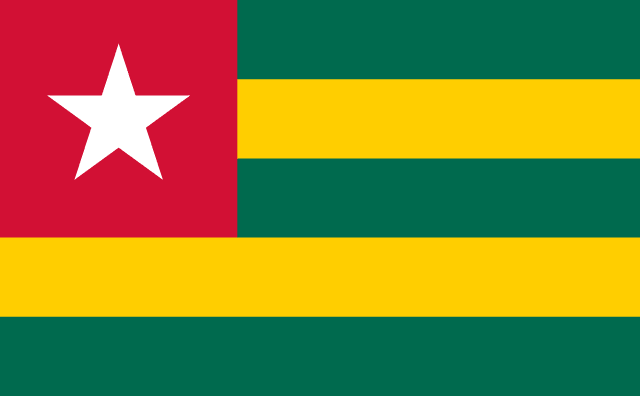
Togo
Africa

9,500,000
13:29 UTC+0
+228
Location
Geography
Economy
Main exports
Togo's leading export commodities and products.
Subscribe to Live Data for live spot prices
Live commodity prices on every nation's exports — $100 AUD/year.
Tap any export to learn more. Spot prices in USD only for Live Data subscribers.
Main imports
Togo's leading import commodities and products.
Tap any import to learn more.
Military
Historical Timeline
1000 BCE
Early Migration of Ewe and Mina Peoples
Ancestral groups began migrating into the region, establishing the foundational cultural and linguistic patterns of modern Togo. These early settlements formed the basis for the complex tribal societies that dominated the area for centuries.
1471
Arrival of Portuguese Explorers
Portuguese navigators reached the coast of modern-day Togo, marking the beginning of European contact with the region. This encounter initiated a period of increased trade and subsequent coastal exploitation.
1600
Expansion of the Slave Trade
The Togolese coast, known as the Slave Coast, became a major hub for the transatlantic slave trade. European powers established forts and trading posts to facilitate the capture and export of indigenous peoples.
1884
Establishment of German Togoland
Following the Berlin Conference, Germany declared a protectorate over the coastal region, naming it Togoland. The colonial administration expanded inland through treaties and military force to secure control over the territory.
1914
Allied Occupation During World War I
British and French forces invaded Togoland, swiftly ending German rule in the territory. The region was subsequently divided between Britain and France as mandates under the League of Nations.
1956
French Togoland Becomes an Autonomous Republic
In a referendum, the population of French Togoland voted to become an autonomous republic within the French Union. This move served as a critical step toward complete political sovereignty.
1960
Independence of the Togolese Republic
Togo officially gained its independence from France on April 27, 1960. Sylvanus Olympio was elected as the nation's first president, marking the beginning of a new sovereign era.
1967
Gnassingbé Eyadéma Seizes Power
Military officer Gnassingbé Eyadéma led a successful coup d'état, overthrowing the government and establishing a long-term authoritarian regime. This event initiated nearly four decades of rule under the Rally of the Togolese People.
1991
Transition to Multi-Party Democracy
Following widespread civil unrest and political pressure, the government legalized multi-party politics. This reform culminated in the National Conference, which aimed to dismantle the single-party system.
2005
Death of Gnassingbé Eyadéma and Succession
Following the death of long-time leader Gnassingbé Eyadéma, his son Faure Gnassingbé assumed the presidency. The transition sparked significant political controversy and constitutional debate regarding the legitimacy of the succession.
2017
Major Anti-Government Protests
Massive protests erupted across the country demanding constitutional reforms and the reinstatement of presidential term limits. The government responded with security crackdowns, leading to heightened regional and international scrutiny.
2024
Adoption of New Constitution
The National Assembly adopted a new constitution that transitions Togo from a presidential to a parliamentary system. This reform changes how the president is elected and alters the structure of the executive branch.
National Holidays
Celebrates the start of the new calendar year.
Marks Togo's independence from French colonial rule in 1960.
An international holiday dedicated to celebrating the achievements and contributions of workers.
A Christian holiday commemorating the birth of Jesus Christ.
Language
Counting to 10
1
1
= 10 (n = 0)
World Dictionary
Discover and translate any word into all supported languages.
The multilingual Dictionary is a Nations Pro feature.
Upgrade to Pro