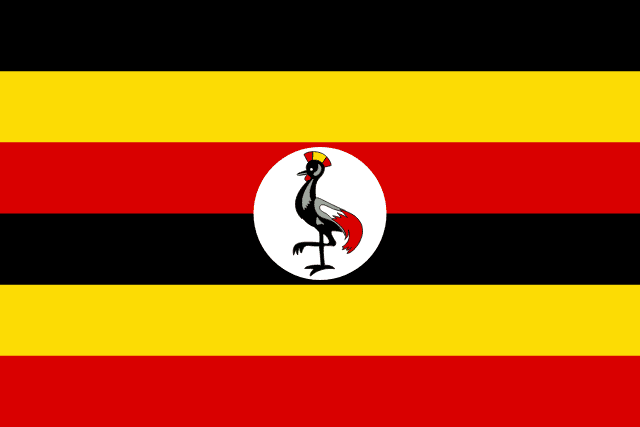

Uganda
Republic of Uganda
Africa
53,704,942
22:24 UTC+3
+256
.ug
Margherita Peak
5,109 m · 16,762 ft
Lake Albert
621 m · 2,037 ft
1,867,206
Kampala · 2026
1,867,206
Kampala · 2026
Location
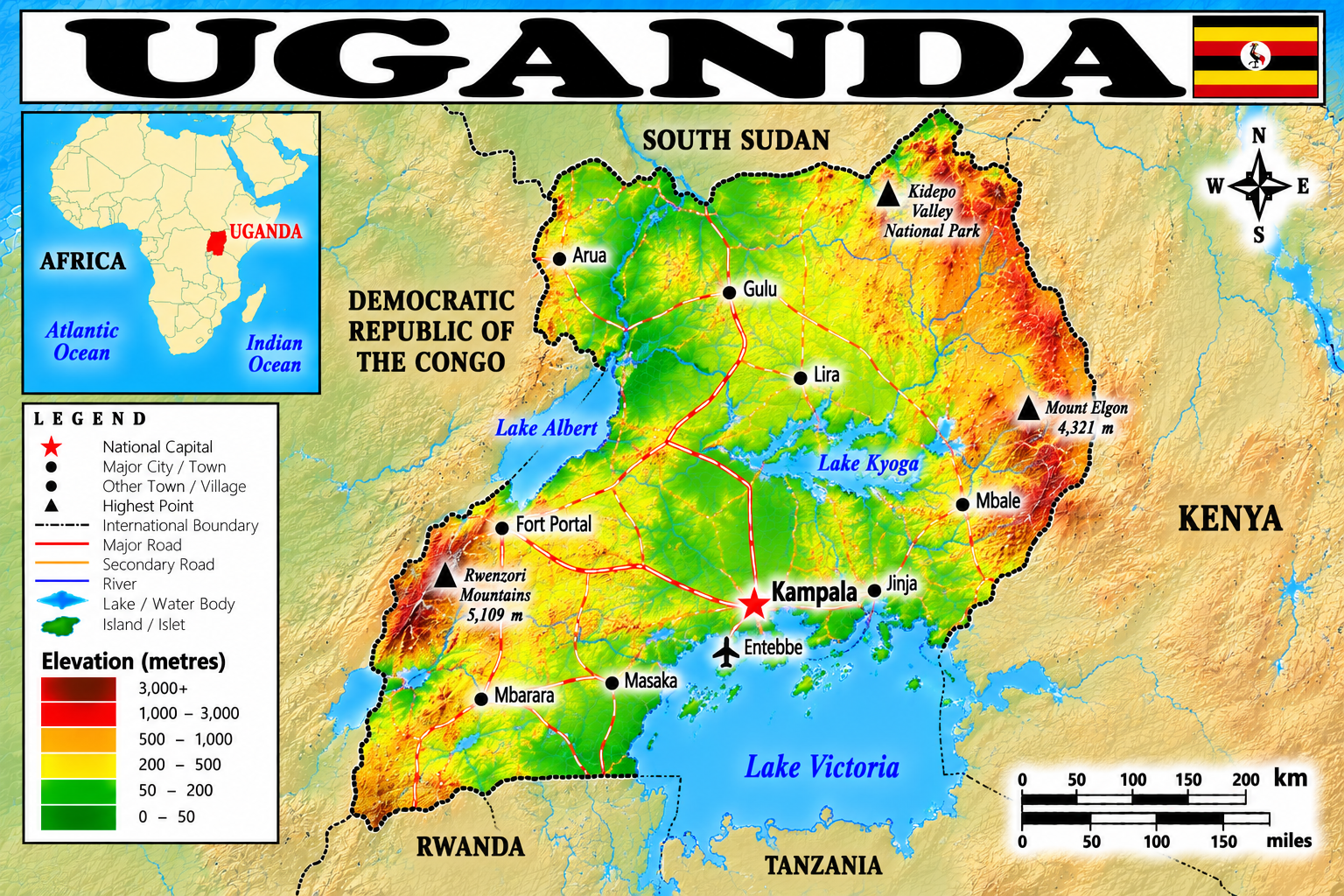
Uganda — Detailed Physical Map
Lake Victoria and Kyoga, the Rwenzori Mountains, Mount Elgon, Kidepo Valley park, major cities and the capital Kampala
Tourist Attractions
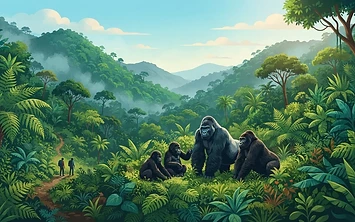
A UNESCO World Heritage site, this dense rainforest is home to nearly half of the world's remaining mountain gorilla population.
It offers the world's most iconic and intimate mountain gorilla trekking experience.

This park is famous for the dramatic Murchison Falls, where the Nile River forces its way through a narrow seven-meter gap to create a powerful waterfall.
Witness the raw power of the Nile as it plunges into the gorge below.

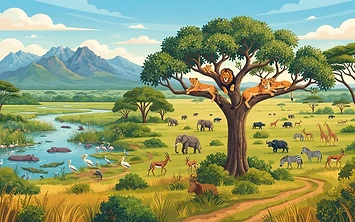
Renowned for its diverse ecosystems, this park features savanna, wetlands, and forests that support a wide array of wildlife, including the famous tree-climbing lions.
Take a boat cruise along the Kazinga Channel to see hippos, elephants, and abundant birdlife at the water's edge.

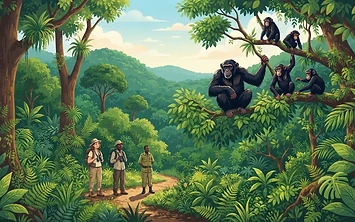
Known as the primate capital of the world, this lush forest contains the highest concentration of chimpanzees in Uganda.
Embark on a guided trek to observe wild chimpanzees in their natural forest canopy.

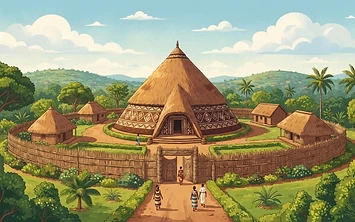
A UNESCO World Heritage site, these tombs serve as the burial grounds for four Kabakas (kings) of the Buganda Kingdom.
Explore the traditional architectural mastery of the Muzibu Azaala Mpanga, the main tomb building.

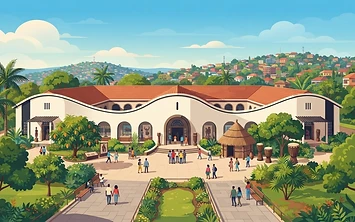
Established in 1908, this is the oldest museum in East Africa, housing extensive collections of cultural, archaeological, and natural history artifacts.
View the fascinating collection of traditional musical instruments and historical ethnographic exhibits.
Geography
Nature
Margherita Peak
5,109 m / 16,762 ft
12.0% of land
≈ 28,925 km² of forest
FAO / World Bank, forest area (% of land area)
Explore the Nature Atlas6,650 km4,132 mi
Flows from Lake Victoria towards the Mediterranean Sea.
400 km249 mi
Forms part of the border between Uganda and Tanzania.
220 km137 mi
Connects Lake George to Lake Victoria via a large swamp.
68,800 km²26,564 sq mi · 84 m deep
Largest tropical lake in the world by surface area.
5,300 km²2,046 sq mi · 58 m deep
Located in the western branch of the East African Rift.
1,720 km²664 sq mi · 6 m deep
Large shallow lake system fed by the Victoria Nile.
43 m141 ft
Water forces its way through a seven meter wide gap.
100 m328 ft
Series of three waterfalls located on the slopes of Mount Elgon.
River lengths are whole-river figures, including any section beyond Uganda. Researched reference figures. Tap any name for where its name comes from and a Google Maps link.
Major Cities
- 1Capital
Kampala
2,665,9402026
MapServes as the bustling capital city and primary commercial hub of Uganda.
- 2
Wakiso
643,6392026
MapFunctions as a rapidly growing residential suburb located within the Wakiso District.
- 3
Arua
469,1862026
MapActs as the principal commercial and administrative gateway to the West Nile sub-region.
- 4
Mbale
395,7912026
MapLies at the base of Mount Elgon and functions as a major agricultural trade center.
- 5
Mbarara
346,1052026
MapKnown as the land of milk and honey, serving as a primary dairy production hub.
- 6
Gulu
344,9482026
MapFunctions as the largest urban center and primary commercial hub in Northern Uganda.
- 7
Lira
323,8282026
MapServes as a prominent regional market town for agricultural trade in the Lango sub-region.
- 8
Wakiso
251,0292026
MapMaintains a significant residential role as a growing urban center near the capital.
- 9
Hoima
202,4342026
MapGained prominence as the primary administrative center for the country's emerging oil and gas industry.
- 10
Mukono
195,6962026
MapDevelops as a critical industrial and educational center situated along the Kampala-Jinja highway.
- 11
Tororo
181,2052026
MapFeatures the prominent Tororo Rock and remains a vital regional transport and industrial junction.
- 12
Buikwe
59,8372026
MapHosts the Bujagali Hydroelectric Power Station along the banks of the Victoria Nile.
City populations are the latest official, UN or national-statistics estimates (2024–2025) compounded to 2026 at 3.2% a year (the nation's annual population growth rate); figures without a published update come from the open cities database (2020-era estimates) and are projected the same way.
Economy
Main exports
Uganda's leading export commodities and products.
Tap any export to learn more. Spot prices in USD only for Live Data subscribers.
Main imports
Uganda's leading import commodities and products.
Tap any import to learn more.
Military
Historical Timeline
2000 BCE
Arrival of Bantu-speaking peoples
Bantu-speaking agriculturalists began migrating into the region, displacing or assimilating the earlier hunter-gatherer populations. This migration laid the foundation for the sedentary farming cultures that would later evolve into complex kingdoms.
1300
Founding of the Kingdom of Buganda
The Buganda Kingdom was established in the central region of present-day Uganda. It eventually became the most powerful and influential state in the interlacustrine region.
1894
Establishment of the Uganda Protectorate
The British government declared Uganda a protectorate following treaties signed between colonial agents and local rulers. This formalized British control over the territory for the next several decades.
1962
Independence from British rule
Uganda gained its independence on October 9, with Milton Obote serving as the first executive Prime Minister. The new nation adopted a parliamentary system with the Kabaka of Buganda as the ceremonial President.
1971
Military coup by Idi Amin
General Idi Amin seized power in a military coup while Milton Obote was attending a summit in Singapore. This marked the beginning of an era characterized by human rights abuses and economic collapse.
1979
Fall of Idi Amin
A combined force of the Tanzania People's Defence Force and Ugandan exiles overthrew the regime of Idi Amin. This intervention led to the temporary restoration of civilian rule.
1986
National Resistance Movement comes to power
Yoweri Museveni and the National Resistance Army captured Kampala, ending years of civil war and instability. Museveni was subsequently sworn in as President, initiating a long period of political transition.
2005
Return to multiparty politics
Uganda held a national referendum in which the electorate voted to shift from a no-party system to a multiparty political system. This constitutional amendment allowed for the registration and operation of opposition political parties.
2018
Introduction of the Social Media Tax
The government implemented a controversial tax on the use of social media platforms as a means to increase domestic revenue. The measure sparked significant national debate regarding digital access and freedom of expression.
2021
Presidential election amid global pandemic
President Yoweri Museveni was declared the winner of the presidential election, securing his sixth term in office. The election was marked by heightened security measures and restrictions due to the COVID-19 pandemic.
2023
Enactment of the Anti-Homosexuality Act
The government passed stringent legislation criminalizing homosexual acts, which drew widespread condemnation from international human rights organizations and several foreign governments. The law reflects ongoing debates regarding social values and legal frameworks in the country.
2025
Implementation of the Parish Development Model
The government ramped up the Parish Development Model, a major flagship socio-economic program designed to transition subsistence farmers into the cash economy. The initiative serves as a core pillar of national development strategy through 2025.
National Anthem
George Wilberforce Kakoma
George Wilberforce Kakoma
1962
Oh Uganda! may God uphold thee, We lay our future in thy hand. United, free, for liberty Together we'll always stand. Oh Uganda! the land of freedom, Our love and labour we give, And with neighbours all At our country's call In peace and friendship we'll live. Oh Uganda! the land that feeds us, By sun and fertile soil grown, For our own dear land, We shall always stand, The pearl of Africa's Crown.
The national anthem of Uganda was selected through a competition organized by the government shortly before the country gained independence from Britain. George Wilberforce Kakoma, a Ugandan music teacher and composer, submitted his composition and lyrics, which were officially adopted in October 1962. His entry was chosen from among many submissions because it was found to be the most solemn, original, and emotionally resonant. The anthem is intentionally short to ensure it is easy to learn and quick to perform during formal state functions. Since its adoption, the anthem has remained unchanged and stands as a central symbol of Ugandan national identity. It reflects the nation's agricultural wealth, its desire for unity, and its reputation as the Pearl of Africa. It serves as a unifying patriotic song played during all major national holidays, military ceremonies, and international events.
National Holidays
Commemorates the day in 1986 when the National Resistance Movement took control of Kampala, ending the bush war.
A public holiday dedicated to celebrating the social, economic, and political achievements of women in Uganda.
Celebrated to recognize the contributions and rights of workers across the nation.
Honors the group of Christian converts who were executed between 1885 and 1887 on the orders of Kabaka Mwanga II.
Marks the anniversary of Uganda gaining its formal independence from the United Kingdom in 1962.
A nationally observed religious holiday celebrating the birth of Jesus Christ.
Good News Today
Uganda study backs shorter TB treatment for children
A study conducted by Médecins Sans Frontières and Epicentre found that a four-month tuberculosis treatment regimen is as effective as the standard six-month course for children. This shorter treatment can be successfully implemented in routine healthcare settings, reducing the burden on families and improving access to care.
Fun Facts
Home to half the world's mountain gorillas
Uganda is one of the only three countries in the world where you can visit mountain gorillas in their natural habitat, hosting about half of the global population in Bwindi Impenetrable National Park.
Equatorial climate with surprising cool temperatures
Despite sitting directly on the equator, much of Uganda remains cool year-round because of its high altitude, earning it the nickname the Pearl of Africa.
A premier destination for birdwatchers
With over 1,000 recorded bird species, Uganda is considered one of the richest countries in the world for birdlife, including the rare and prehistoric-looking shoebill stork.
Source of the mighty Nile River
Jinja is officially recognized as the source of the Nile, where the waters of Lake Victoria begin their long journey north to the Mediterranean Sea.
The beloved street food Rolex
The Rolex, a popular street food, is not a watch but a delicious rolled chapati stuffed with a fried egg, cabbage, and tomatoes.
Home to the ancient Bwindi Forest
Bwindi Impenetrable Forest is one of the most biologically diverse areas on Earth, with parts of the ecosystem dating back over 25,000 years.
One of the youngest populations globally
Uganda has one of the youngest median ages in the world, with over 75 percent of its population under the age of 30.
Rare tree-climbing lions in Ishasha
The southern sector of Queen Elizabeth National Park is famous for a unique pride of lions that habitually climb and lounge in large fig trees.
Heavy consumer of green matooke
Matooke, a variety of green banana, is the national staple food and is traditionally steamed in banana leaves to create a soft, mashed delicacy.
The snow-capped Rwenzori Mountains
Known as the Mountains of the Moon, the Rwenzori range contains glaciers and snow-capped peaks despite being located only a few miles from the equator.
Chuckies Trivia Quiz
Chuckies Trivia Quiz
Fifteen questions on Uganda — five easy, five medium, five hard. How far can you get?
Sports & Live Events
Language
Counting to 10
1
1
= 10 (n = 0)
World Dictionary
Discover and translate any word into all supported languages.