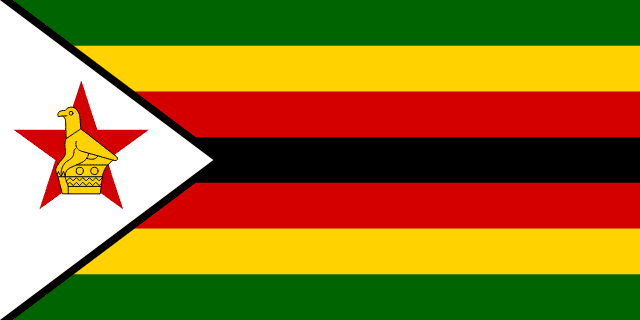
Zimbabwe
Africa

17,000,000
13:40 UTC+2
+263
Location
Geography
Economy
Main exports
Zimbabwe's leading export commodities and products.
Subscribe to Live Data for live spot prices
Live commodity prices on every nation's exports — $100 AUD/year.
Tap any export to learn more. Spot prices in USD only for Live Data subscribers.
Main imports
Zimbabwe's leading import commodities and products.
Tap any import to learn more.
Military
Historical Timeline
10000 BCE
Early Human Occupation
The San people were the earliest known inhabitants of the region, leaving behind a rich legacy of rock art in areas like the Matobo Hills. These hunter-gatherer communities established the first human presence in what is now modern-day Zimbabwe.
1000
Rise of the Kingdom of Zimbabwe
The Shona-speaking ancestors began building the massive stone structures of Great Zimbabwe, which became a powerful center for trade in gold and ivory. The site served as the capital of a prosperous medieval kingdom that dominated the region for centuries.
1450
Establishment of the Kingdom of Mutapa
Following the decline of Great Zimbabwe, the Kingdom of Mutapa emerged under the leadership of Nyatsimba Mutota. The state expanded its influence across northern Zimbabwe and parts of Mozambique, controlling vital regional trade routes.
1837
Ndebele Settlement
The Ndebele people, led by Mzilikazi, migrated into western Zimbabwe after fleeing the Zulu Kingdom in South Africa. They established the Mthwakazi Kingdom, which exerted significant political and military influence over the region.
1890
Pioneer Column Arrival
The British South Africa Company, led by Cecil Rhodes, sent the Pioneer Column to occupy Mashonaland. This event marked the beginning of colonial administration and the systematic erosion of local sovereignty.
1896
First Chimurenga
The Ndebele and Shona people launched an organized uprising against the British South Africa Company to protest land seizure and taxation. Although the rebellion was suppressed by 1897, it became a foundational symbol of the struggle for independence.
1965
Unilateral Declaration of Independence
The white minority government led by Ian Smith declared independence from Britain to maintain minority rule. The international community rejected the declaration, leading to a period of global isolation and sanctions.
1972
Second Chimurenga
Nationalist forces initiated a full-scale armed guerrilla war against the Rhodesian government to achieve majority rule. This protracted conflict ultimately forced the minority government to the negotiating table.
1980
Independence of Zimbabwe
Zimbabwe officially gained independence from Britain following the Lancaster House Agreement, with Robert Mugabe becoming the first Prime Minister. The country adopted a new constitution and established a multi-racial democratic framework.
2000
Land Reform Programme
The government launched an intensive land redistribution program that saw the seizure of white-owned commercial farms. The process significantly altered the national economy and led to a period of hyperinflation and international sanctions.
2017
Resignation of Robert Mugabe
Following a military-led transition, Robert Mugabe resigned as president after 37 years in power. This pivotal change led to the inauguration of Emmerson Mnangagwa as the new president of Zimbabwe.
2023
General Elections
Zimbabwe held harmonized general elections in August 2023 to elect the president and members of parliament. President Emmerson Mnangagwa was declared the winner of the presidential contest, securing a second term in office.
National Holidays
Commemorates the attainment of independence from the United Kingdom in 1980. It marks the end of colonial rule and the birth of the Republic of Zimbabwe.
A public holiday dedicated to honoring the contributions of the workforce and the labor movement to the country's development. It is observed internationally as International Workers' Day.
Celebrates the founding of the Organization of African Unity in 1963. It serves to acknowledge the progress of African countries and the pursuit of unity across the continent.
Honors the people who died fighting for the liberation of Zimbabwe during the liberation struggle. It is a time for national reflection and paying tribute to fallen soldiers.
Celebrates the role of the Zimbabwe Defence Forces in protecting the country's sovereignty and territorial integrity. It follows Heroes' Day to highlight the military's history and ongoing service.
Commemorates the signing of the Unity Accord in 1987, which merged the country's two main political parties, ZANU and ZAPU. It is intended to promote national peace and reconciliation.
Language
Counting to 10
1
1
= 10 (n = 0)
World Dictionary
Discover and translate any word into all supported languages.
The multilingual Dictionary is a Nations Pro feature.
Upgrade to Pro