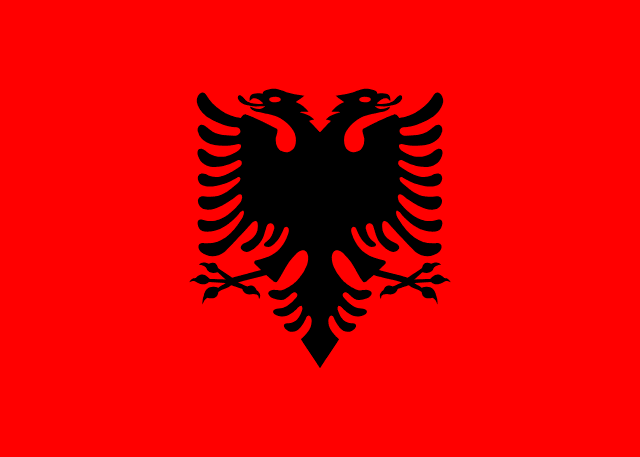
Albania
Europe

2,400,000
17:27 UTC+2
+355
Location
Geography
Economy
Main exports
Albania's leading export commodities and products.
Subscribe to Live Data for live spot prices
Live commodity prices on every nation's exports — $100 AUD/year.
Tap any export to learn more. Spot prices in USD only for Live Data subscribers.
Main imports
Albania's leading import commodities and products.
Tap any import to learn more.
Military
Historical Timeline
3000 BCE
Arrival of Proto-Indo-Europeans and Paleo-Balkan Tribes
Ancestral Paleo-Balkan tribes, including the Illyrians, established permanent settlements in the region during the Bronze Age. These groups formed the foundational ethnic and cultural basis for the modern Albanian population.
168 BCE
Roman Conquest of Illyria
The Roman Republic defeated the Illyrian Kingdom, leading to the full integration of the territory into the Roman Empire. This period introduced significant infrastructure, including the Via Egnatia, which connected the Adriatic coast to the East.
1444
League of Lezhë Formation
Gjergj Kastrioti Skanderbeg unified Albanian noblemen to form a military alliance against the expansionist Ottoman Empire. This historic union marks a significant moment of Albanian resistance and national identity.
1479
Fall of Shkodër to the Ottomans
The surrender of the fortress of Shkodër to the Ottoman Empire marked the end of sustained Albanian resistance led by Skanderbeg. This event solidified Ottoman dominance over Albania for the next four centuries.
1912
Declaration of Albanian Independence
Ismail Qemali proclaimed the independence of Albania in Vlorë following the Balkan Wars. This event established the modern sovereign state of Albania.
1928
Formation of the Albanian Kingdom
Ahmet Zogu was crowned King Zog I, transforming the republic into a constitutional monarchy. This period focused on centralizing state authority and modernizing the nation's administration.
1944
Liberation and Communist Takeover
Following the expulsion of Nazi German forces, the Communist Party of Albania took full control of the government. This initiated decades of isolationist communist rule under Enver Hoxha.
1991
Collapse of the Communist Regime
Mass protests and economic instability led to the fall of the communist government and the end of the one-party state. This transition paved the way for the establishment of a multi-party parliamentary democracy.
1997
The Albanian Civil Unrest
The collapse of widespread pyramid schemes triggered a period of violent national civil unrest and social turmoil. International peacekeeping forces were deployed to help restore order and stabilize the country.
2009
Accession to NATO
Albania officially became a full member of the North Atlantic Treaty Organization. This move significantly strengthened the country's security and its integration into Western political structures.
2020
Formal Opening of EU Accession Negotiations
The European Council authorized the formal opening of negotiations for Albania's membership in the European Union. This process represents a critical stage in the country's efforts toward economic and judicial reform.
2024
Continued Progress in EU Integration
Albania continued to advance through the European Union screening process while maintaining its role as a stable regional partner. The government focused on implementing further judicial and anti-corruption reforms.
National Holidays
These days mark the beginning of the calendar year and are celebrated nationwide with public festivities and family gatherings.
This holiday marks the beginning of the Persian New Year and is celebrated as the Day of Spring, symbolizing rebirth and renewal.
This international holiday commemorates the historical struggles and gains of workers and the labor movement.
Also known as Flag Day, this holiday commemorates the Albanian Declaration of Independence from the Ottoman Empire in 1912.
This date marks the anniversary of the liberation of Albania from Nazi German occupation at the end of World War II in 1944.
Language
Counting to 10
1
1
= 10 (n = 0)
World Dictionary
Discover and translate any word into all supported languages.
The multilingual Dictionary is a Nations Pro feature.
Upgrade to Pro