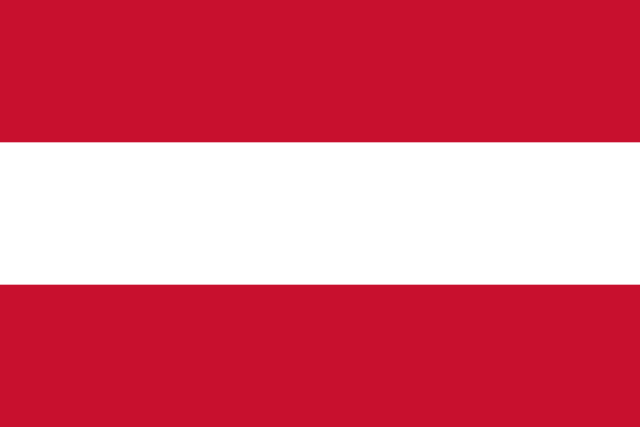
Austria
Europe

9,150,000
20:33 UTC+2
+43
Location
Geography
Economy
Main exports
Austria's leading export commodities and products.
Subscribe to Live Data for live spot prices
Live commodity prices on every nation's exports — $100 AUD/year.
Tap any export to learn more. Spot prices in USD only for Live Data subscribers.
Main imports
Austria's leading import commodities and products.
Tap any import to learn more.
Military
Historical Timeline
30000 BCE
Early Upper Paleolithic Occupation
Evidence suggests human habitation in the Austrian territory, notably at the Willendorf site where the Venus of Willendorf was discovered. These early groups represent some of the first prehistoric cultures in the Danube region.
400 BCE
Arrival of the Celts
Celtic tribes established the Kingdom of Noricum, a structured political entity in the Eastern Alps. The region became known for its advanced iron production and trade networks.
976
Founding of the Margraviate of Austria
Emperor Otto II granted the territory, known as Ostarrîchi, to Leopold I of the House of Babenberg. This event marks the first historical mention of the name Austria.
1278
Rise of the Habsburg Dynasty
Rudolf I defeated Ottokar II of Bohemia at the Battle on the Marchfeld, establishing Habsburg rule over the Austrian lands. This dynasty would govern the region for over six centuries.
1529
First Siege of Vienna
Forces of the Ottoman Empire led by Suleiman the Magnificent besieged Vienna. The successful defense marked the limits of Ottoman expansion into Central Europe.
1740
Accession of Maria Theresa
Maria Theresa ascended to the throne, initiating a period of significant administrative, educational, and military reforms. Her reign modernized the Habsburg state and centralized royal authority.
1867
Creation of Austria-Hungary
The Austro-Hungarian Compromise transformed the Austrian Empire into a dual monarchy. This restructured the state to grant Hungary equal status within the empire.
1918
Dissolution of the Austro-Hungarian Empire
Following defeat in World War I, the Habsburg monarchy collapsed and the Republic of German-Austria was proclaimed. This signaled the end of the imperial era and the birth of a republican system.
1938
The Anschluss with Nazi Germany
Austria was annexed by Nazi Germany, resulting in the loss of sovereign independence until the end of World War II. The event led to the systemic persecution of minorities and involvement in the war.
1955
Austrian State Treaty and Neutrality
The Austrian State Treaty restored the country as a sovereign and democratic state, ending the Allied occupation. Shortly thereafter, Austria declared its permanent neutrality.
1995
Accession to the European Union
Austria officially joined the European Union after a successful national referendum. This shifted the country toward greater economic and political integration with European neighbors.
2024
2024 National Council Elections
Austria held national elections that resulted in a significant shift in the parliamentary landscape, reflecting changing voter priorities. The aftermath led to extensive coalition formation negotiations among major political parties.
National Holidays
This holiday marks the beginning of the civil calendar year according to the Gregorian calendar.
This moveable holiday follows Easter Sunday and is a traditional Christian observance marking the resurrection of Jesus.
Also known as May Day, this day commemorates the social and economic achievements of the international labour movement.
Observed 40 days after Easter, this day commemorates the Christian belief in the bodily ascension of Jesus into heaven.
This day commemorates the 1955 declaration of Austria's perpetual neutrality following the departure of occupying forces.
Language
Counting to 10
1
1
= 10 (n = 0)
World Dictionary
Discover and translate any word into all supported languages.
The multilingual Dictionary is a Nations Pro feature.
Upgrade to Pro