

Belgium
Kingdom of Belgium
Europe
12,021,959
03:14 UTC+1
+32
.be
Signal de Botrange
694 m · 2,277 ft
Yser River
0 m · 0 ft
192,280
Brussels · 2026
2,536,030
Brussels · 2026
Location
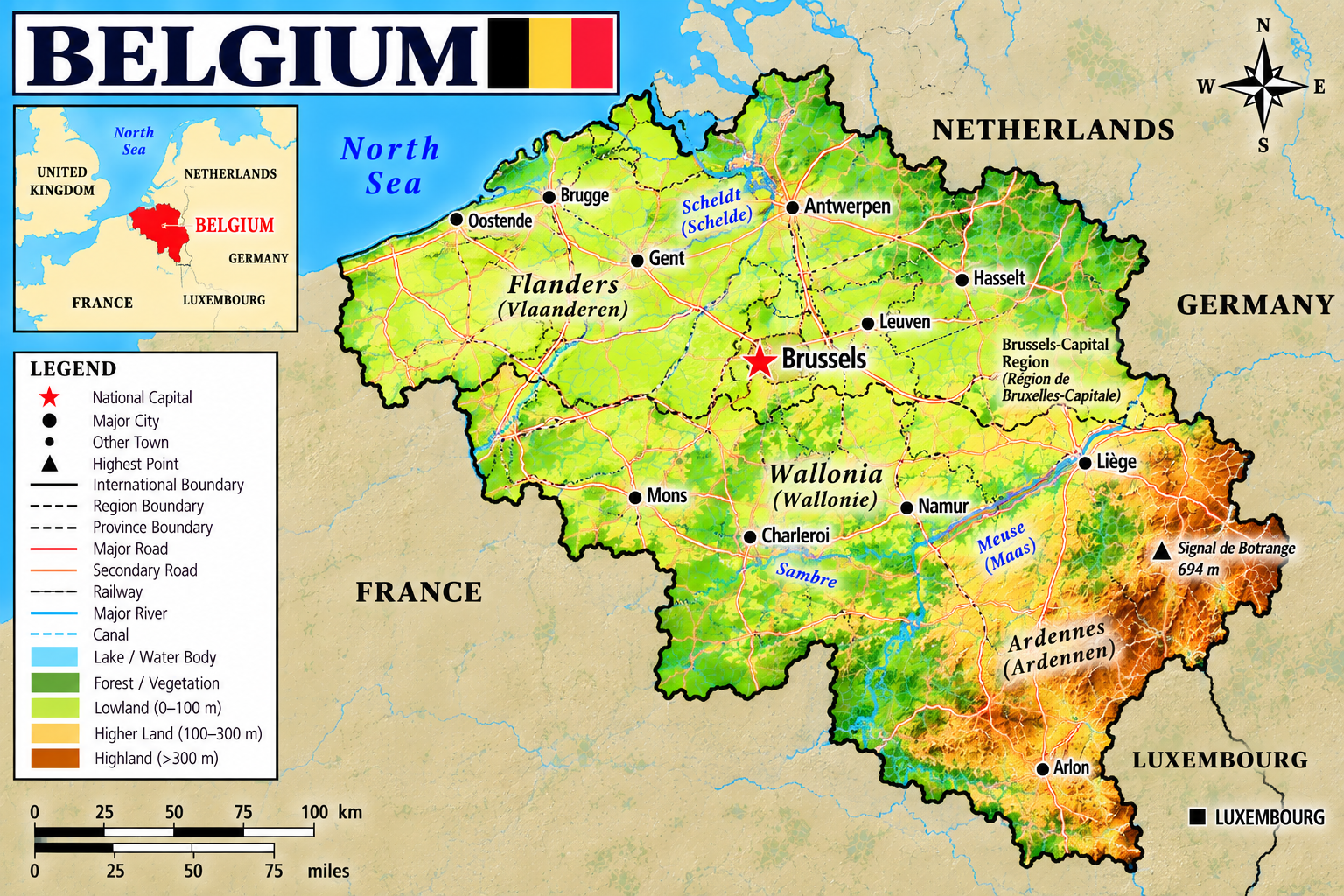
Belgium — Detailed Physical Map
Flanders, Wallonia and the Ardennes, rivers, regions, major cities and the capital Brussels
Tourist Attractions

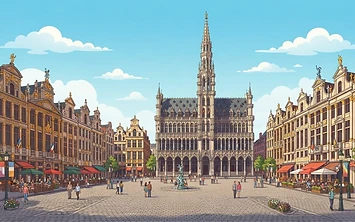
This central square is the city's main landmark, famous for its ornate 17th-century guildhalls and the stunning Town Hall.
It is widely considered one of the most beautiful squares in the world.

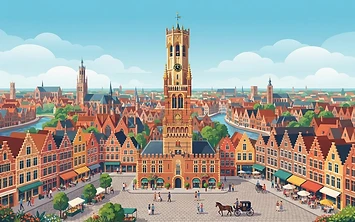
A medieval bell tower located in the heart of the city that offers a panoramic view of the historic center.
Climb the 366 steps to the top for a magnificent perspective of the city's red rooftops and canals.

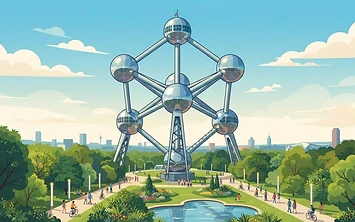
Originally built for the 1958 World's Fair, this unique structure represents an iron crystal magnified 165 billion times.
It offers an astounding ride through its interior spheres and provides one of the best views of Brussels.

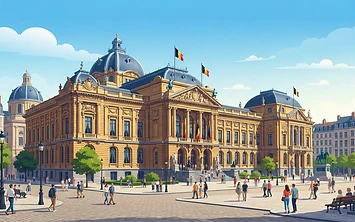
A massive museum complex that houses an extensive collection of art, including works by Old Masters and surrealist René Magritte.
It is a treasure trove of art covering centuries of European creative history.

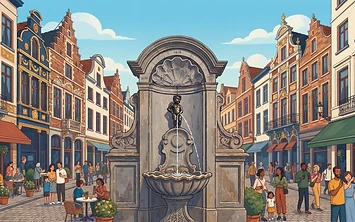
A small, iconic bronze fountain sculpture depicting a boy urinating into the basin, which has become a symbol of the city.
The statue is frequently dressed in elaborate costumes, making every visit unique.

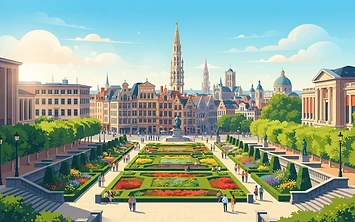
A historic site and urban complex featuring a beautiful terraced garden located between the city's central station and the royal district.
The garden offers a perfect panoramic view of the historic downtown area.
Geography
Nature
Signal de Botrange
694 m / 2,277 ft
22.6% of land
≈ 6,899 km² of forest
FAO / World Bank, forest area (% of land area)
Explore the Nature Atlas925 km575 mi
Rises in the Langres plateau of France and flows through several European nations.
350 km217 mi
Provides vital maritime access to the port of Antwerp before reaching the North Sea.
78 km48 mi
Flows entirely through Belgium and France before emptying into the North Sea at Nieuwpoort.
0 km²0 sq mi
Located on the border between the Brussels-Capital Region and Walloon Brabant.
1 km²0 sq mi · 54 m deep
Created by the construction of a dam on the Warche river in 1928.
6 km²2 sq mi
Forms part of a complex of artificial lakes in the Wallonia region.
15 m49 ft
Represents the tallest natural waterfall located within the country of Belgium.
River lengths are whole-river figures, including any section beyond Belgium. Researched reference figures. Tap any name for where its name comes from and a Google Maps link.
Major Cities
- 1Capital
Brussels-Capital Region
1,255,8342026
MapServes as the administrative center of the European Union and the capital of Belgium.
- 2
Flanders
565,6152026
MapFunctions as a major global hub for the diamond trade and home to one of Europe's largest seaports.
- 3
Flanders
274,0422026
MapFeatures a stunning medieval city center and the world-renowned Adoration of the Mystic Lamb altarpiece.
- 4
Wallonia
206,9002026
MapRepresents the heart of Belgium's historic industrial coal mining and steel manufacturing region.
- 5
Wallonia
197,2952026
MapActs as a prominent cultural and economic center along the Meuse River in the French-speaking Walloon region.
- 6
Brussels-Capital Region
130,3782026
MapHosts a prestigious football club and serves as a major urban residential district within the Brussels Capital Region.
- 7
Flanders
120,6692026
MapPreserves a perfectly intact medieval cityscape known as the Venice of the North due to its canal network.
- 8
Wallonia
115,7972026
MapStands as the capital of Wallonia, dominated by its historic hilltop citadel overlooking the river confluence.
- 9
Flanders
105,5722026
MapHouses one of the world's oldest and most prestigious universities alongside the historic St. Peter's Church.
- 10
Flanders
100,3542026
MapIncludes a unique residential garden city neighborhood designed with distinctive architectural styles during the early twentieth century.
- 11
Wallonia
97,3522026
MapDistinguishes itself through its historic belfry and as a frequent host of traditional folklore festivals like the Doudou.
- 12
Flanders
93,1432026
MapCelebrates an annual UNESCO-recognized carnival that has been a central part of local identity for centuries.
City populations are the latest official, UN or national-statistics estimates (2026–2026) compounded to 2026 at 0.4% a year (the nation's annual population growth rate); figures without a published update come from the open cities database (2020-era estimates) and are projected the same way.
Economy
Main exports
Belgium's leading export commodities and products.
Tap any export to learn more. Spot prices in USD only for Live Data subscribers.
Main imports
Belgium's leading import commodities and products.
Tap any import to learn more.
Military
Historical Timeline
8000 BCE
Arrival of Mesolithic Hunter-Gatherers
The first human settlements in the territory of present-day Belgium appeared during the Mesolithic period following the retreat of the last glacial ice sheets. These nomadic groups established early camps along the river valleys.
57 BCE
Roman Conquest of the Belgae
Julius Caesar led a military campaign against the various tribes known as the Belgae. This event marked the integration of the region into the Roman Empire as the province of Gallia Belgica.
843
Treaty of Verdun
The partition of the Carolingian Empire under the Treaty of Verdun divided the region between the kingdoms of West and Middle Francia. This decision laid the long-term foundations for the borders between France and the Holy Roman Empire.
1568
Start of the Eighty Years' War
The Low Countries launched a revolt against Spanish Habsburg rule, driven by religious tensions and high taxation. This conflict eventually led to the independence of the Northern Netherlands and the continued control of the Southern Netherlands by Spain.
1830
Belgian Revolution and Independence
A successful uprising against the United Kingdom of the Netherlands resulted in the establishment of an independent Belgian state. A constitutional monarchy was subsequently formed under Leopold I in 1831.
1885
Formation of the Congo Free State
King Leopold II was granted international recognition as the personal owner of the Congo Free State at the Berlin Conference. This led to decades of brutal colonial exploitation in Central Africa.
1914
German Invasion of Belgium
The German violation of Belgian neutrality during World War I triggered a British declaration of war against Germany. Much of the country suffered under military occupation for the duration of the conflict.
1957
Founding of the European Economic Community
Belgium was one of the six founding members of the European Economic Community, signed into existence by the Treaty of Rome. This marked a shift toward European integration and eventual development of the European Union.
1993
Transition to a Federal State
Constitutional reforms transformed Belgium into a federal state composed of regions and linguistic communities. This structure was designed to balance the political power between the Dutch-speaking Flanders and French-speaking Wallonia.
2011
Record Government Formation
Belgium set a world record by operating without a fully functional federal government for 541 days. The impasse was resolved with the formation of the Di Rupo government.
2024
June Federal and Regional Elections
Belgium held complex federal, regional, and European elections that resulted in a fragmented political landscape. The outcome necessitated lengthy negotiations to form a new coalition government.
2025
Formation of the De Wever Government
After record-breaking negotiations following the 2024 elections, Bart De Wever was sworn in as Prime Minister. This government marks a significant shift in coalition composition and federal reform efforts.
National Anthem
La Brabançonne
Louis Dechez (Jenneval)
François Van Campenhout
1860
Ô Belgique, ô mère chérie, À toi nos cœurs, à toi nos bras ! À toi notre sang, ô Patrie ! Nous le jurons tous, tu vivras ! Tu vivras toujours grande et belle Et ton invincible unité Aura pour devise immortelle : Le Roi, la Loi, la Liberté ! Ô Belgique, ô mère chérie, À toi nos cœurs, à toi nos bras ! À toi notre sang, ô Patrie ! Nous le jurons tous, tu vivras ! Tu vivras toujours grande et belle Et ton invincible unité Aura pour devise immortelle : Le Roi, la Loi, la Liberté !
La Brabançonne was written in 1830 by a young actor named Louis Dechez, known as Jenneval, during the Belgian Revolution. According to legend, he wrote the lyrics in a Brussels café called 'Aigle d'Or' in September 1830. The music was composed shortly after by actor and singer François Van Campenhout. The original lyrics were heavily anti-Dutch and focused on the struggle for independence. The version currently in use was officially adopted in 1860 after being softened to improve diplomatic relations with the Netherlands. Today, it remains a symbol of Belgian unity and is performed in the country's three official languages: French, Dutch, and German.
National Holidays
This day marks the beginning of the new calendar year and is an official public holiday throughout Belgium.
This holiday follows Easter Sunday and marks the day after the resurrection of Jesus in the Christian tradition.
This day commemorates the social and economic achievements of the international labor movement and workers' rights.
Observed 40 days after Easter, this Christian holiday celebrates the ascension of Jesus Christ into heaven.
Also known as Pentecost Monday, this day commemorates the descent of the Holy Spirit upon the Apostles.
This day commemorates the oath taken by Leopold I in 1831 to uphold the Belgian Constitution, marking the beginning of the independent Kingdom of Belgium.
This day celebrates the Catholic belief in the bodily taking up of the Virgin Mary into heaven at the end of her earthly life.
A Christian festival dedicated to honoring all the saints and martyrs, widely observed in Belgium with visits to cemeteries.
This day commemorates the formal end of hostilities in the First World War and honors the soldiers who served and died.
This holiday celebrates the birth of Jesus Christ and is a major public holiday centered on family gatherings and traditions.
Good News Today
Belgium secures impressive 4-1 victory over Italy in Nations League
The Belgian national football team recently achieved a significant 4-1 win against Italy. This strong performance has earned the team a spot in the UEFA Nations League quarterfinals.
Fun Facts
Massive Global Chocolate Production Hub
Belgium produces over 220,000 tons of chocolate every year and hosts one of the world's largest chocolate factories in Wieze.
Fries Are A Culinary Masterpiece
Despite being called French fries, they are a proud Belgian invention traditionally double-fried in beef tallow for extra flavor.
Country With Most Castles
Belgium boasts the highest density of castles per square kilometer of any country in the world.
World Heritage Status For Beer
Belgian beer culture was officially recognized by UNESCO as Intangible Cultural Heritage of Humanity in 2016.
Home To Saxophone Inventor
Adolphe Sax, the inventor of the saxophone, was born in the Belgian town of Dinant in 1814.
Global Diamond Trading Capital
The city of Antwerp handles approximately 80 percent of the world's rough diamonds, making it the global epicenter for the gemstone trade.
Oldest Railway Network In Europe
Belgium opened its first railway line in 1835, which was the first passenger rail system established on the European continent.
Pioneers Of The Comic Book
Belgium has the highest number of comic book creators per capita, famous for giving the world Tintin and The Smurfs.
Small Town Famous For Pianos
The town of Puurs is home to the world-renowned Maene piano factory, which crafts bespoke instruments for international concert halls.
Visible Highways From Outer Space
Belgium's extensive highway lighting system is so bright that it is one of the few man-made structures visible from space at night.
Chuckies Trivia Quiz
Chuckies Trivia Quiz
Fifteen questions on Belgium — five easy, five medium, five hard. How far can you get?
Sports & Live Events
Language
Counting to 10
1
1
= 10 (n = 0)
World Dictionary
Discover and translate any word into all supported languages.