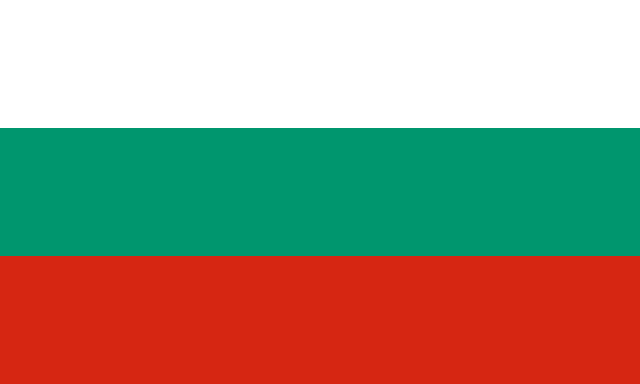

Bulgaria
Republic of Bulgaria
Europe
6,371,469
06:49 UTC+2
+359
.bg
Musala
2,925 m · 9,596 ft
Black Sea
0 m · 0 ft
1,180,153
Sofia · 2026
1,180,153
Sofia · 2026
Location
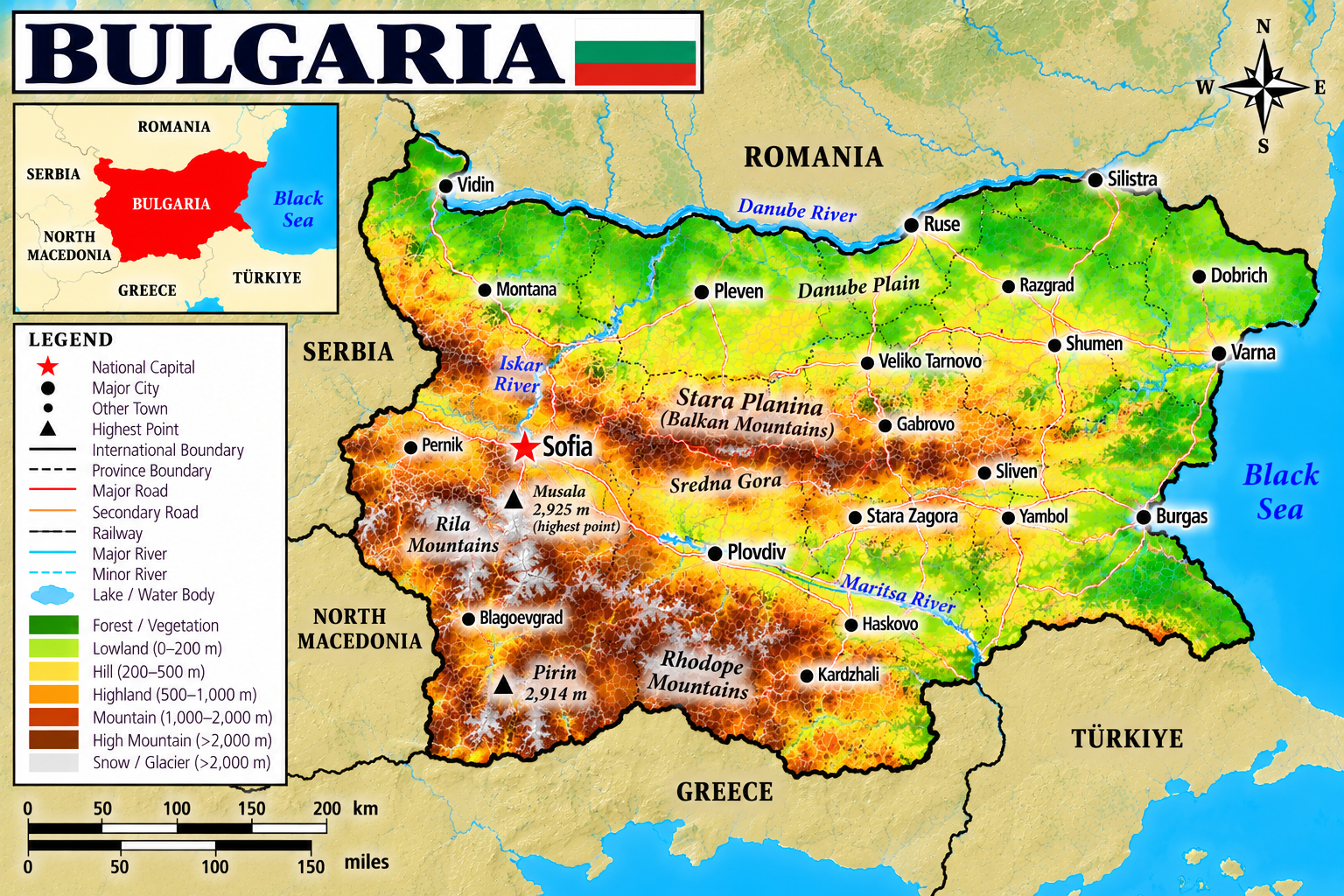
Bulgaria — Detailed Physical Map
Stara Planina, Rila, Pirin and Rhodope mountains, Danube and Maritsa rivers, provinces, major cities and the capital Sofia
Tourist Attractions
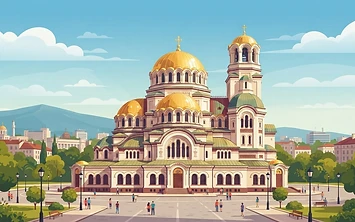
This iconic Bulgarian Orthodox cathedral is one of the largest in the world and serves as a symbol of the capital city. Its striking gold-plated domes and neo-Byzantine architecture make it a central feature of Sofia's skyline.
The cathedral's massive, shimmering gold-plated dome is visible from across the city.
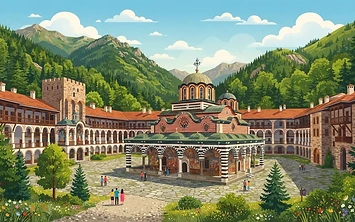
Founded in the 10th century, this UNESCO World Heritage site is a masterpiece of the Bulgarian National Revival period. It is renowned for its intricate architecture and vibrant, colorful frescoes.
The interior of the main church is completely covered in stunning, historic frescoes painted by Zahari Zograf.

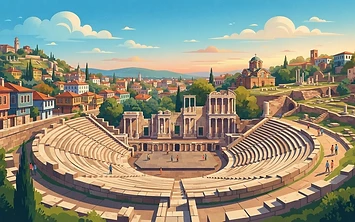
One of the best-preserved ancient Roman theatres in the world, this site is still used today for performances and cultural events. It offers a glimpse into the deep history of Plovdiv, one of Europe's oldest cities.
The theatre provides a rare, authentic connection to antiquity with its well-preserved marble seating and stage.


As Bulgaria's most popular seaside destination, this resort area features eight kilometers of golden sand along the Black Sea. It is a hub for summer tourism, offering both relaxation and a vibrant nightlife scene.
The expansive, soft sandy beaches slope gently into the clear waters of the Black Sea.

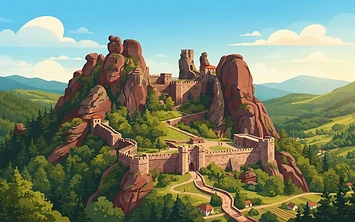
This historic fortress is uniquely integrated into the dramatic, naturally occurring rock formations of the Balkan Mountains. The site has served as a defensive stronghold since Roman times.
The combination of ancient stone walls and towering, bizarrely shaped natural rock pillars creates a surreal landscape.

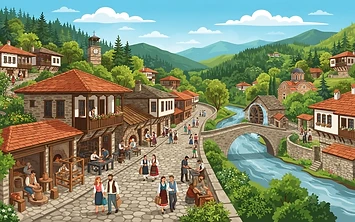
This open-air museum showcases the traditional lifestyle, architecture, and crafts of the 19th-century Bulgarian National Revival period. Visitors can watch artisans practice ancient techniques in a reconstructed village setting.
The museum features functioning water-powered workshops that demonstrate traditional Bulgarian craftsmanship.
Geography
Nature
Musala
2,925 m / 9,596 ft
36.1% of land
≈ 40,027 km² of forest
FAO / World Bank, forest area (% of land area)
Explore the Nature Atlas2,850 km1,771 mi
Forms much of the northern border of Bulgaria before reaching the Black Sea.
480 km298 mi
Rises in the Rila mountains and flows through the Thracian Plain.
368 km229 mi
Longest river flowing entirely within the borders of Bulgaria.
28 km²11 sq mi · 1 m deep
Largest natural lake in Bulgaria located near the Black Sea coast.
1 km²0 sq mi · 15 m deep
Located near the Magura Cave and is the largest inland lake in Bulgaria.
6 km²2 sq mi · 3 m deep
Freshwater biosphere reserve on the Via Pontica bird migration route.
125 m408 ft
Highest waterfall in the Balkan Peninsula situated in the Central Balkan National Park.
70 m230 ft
Located in the Rila mountains and attracts many hikers during the summer.
River lengths are whole-river figures, including any section beyond Bulgaria. Researched reference figures. Tap any name for where its name comes from and a Google Maps link.
Major Cities
- 1Capital
Sofia-Grad
1,205,8332026
MapServes as the capital of Bulgaria and houses the iconic Alexander Nevsky Cathedral.
- 2
Plovdiv
327,6032026
MapStands as one of Europe's oldest continuously inhabited cities, featuring a remarkably preserved Roman amphitheater.
- 3
Varna
316,7492026
MapActs as the country's maritime capital and a major Black Sea tourist hub.
- 4
Burgas
187,8512026
MapFunctions as a vital industrial center and the largest port along the Bulgarian Black Sea coast.
- 5
Stara Zagora
118,3752026
MapHosts significant Neolithic dwellings and serves as a key industrial and agricultural hub.
- 6
Ruse
116,6492026
MapDisplays elegant neo-baroque architecture and serves as a major port on the Danube River.
- 7
Pleven
85,5562026
MapCommemorates the historic Siege of Plevna through the massive Panorama museum complex.
- 8
Sliven
76,2092026
MapKnown historically as the City of a Hundred Voivodes and a center for textile manufacturing.
- 9
Dobrich
66,3262026
MapFunctions as the primary economic and cultural center of the fertile Dobrudzha agricultural region.
- 10
Shumen
64,2292026
MapContains the impressive Shumen Fortress and the massive Monument to 1300 Years of Bulgaria.
- 11
Pernik
63,8872026
MapMaintained a long history as a center for coal mining and hosts the annual Surva masquerade festival.
- 12
Pazardzhik
51,7272026
MapFeatures the historic Church of the Holy Mother of God with its famous wood-carved iconostasis.
City populations are the latest official, UN or national-statistics estimates (2026–2026) compounded to 2026 at -0.7% a year (the nation's annual population growth rate); figures without a published update come from the open cities database (2020-era estimates) and are projected the same way.
Economy
Main exports
Bulgaria's leading export commodities and products.
Tap any export to learn more. Spot prices in USD only for Live Data subscribers.
Main imports
Bulgaria's leading import commodities and products.
Tap any import to learn more.
Military
Historical Timeline
45000 BCE
Early Upper Paleolithic human presence
Archaeological findings in the Bacho Kiro cave confirm the presence of early Homo sapiens in the region. These populations represent some of the earliest modern human settlements in Europe.
681
Foundation of the First Bulgarian Empire
Khan Asparuh led the Bulgars across the Danube and established the First Bulgarian Empire after defeating Byzantine forces. The Byzantine Empire officially recognized the new state through a peace treaty.
864
Christianization of Bulgaria
Knyaz Boris I adopted Eastern Orthodox Christianity as the state religion to unify the Slavs and Bulgars. This move integrated Bulgaria into the Byzantine cultural and religious sphere.
893
Golden Age of Old Bulgarian literature
Under Tsar Simeon I, the Cyrillic alphabet was popularized and the Preslav and Ohrid literary schools flourished. This period established Bulgaria as a center of Slavic culture and literacy.
1185
Establishment of the Second Bulgarian Empire
The brothers Asen and Peter led a successful uprising against Byzantine rule. This resulted in the restoration of Bulgarian statehood based in Tarnovo.
1396
Ottoman conquest of Bulgaria
The fall of the Vidin fortress marked the end of the Second Bulgarian Empire. The Bulgarian lands remained under Ottoman administrative control for nearly five centuries.
1878
Treaty of San Stefano and Liberation
Following the Russo-Turkish War, the Treaty of San Stefano recognized Bulgaria as an autonomous principality. This event effectively ended Ottoman rule and sparked the process of national revival.
1908
Proclamation of Independence
Prince Ferdinand declared Bulgaria a fully independent kingdom in the old capital of Veliko Tarnovo. This finalized the country's sovereignty from the Ottoman Empire.
1946
Establishment of the People's Republic
Following the end of World War II and a national referendum, the monarchy was abolished. Bulgaria transitioned into a socialist state aligned with the Soviet bloc.
1989
Fall of the socialist regime
The ousting of long-time leader Todor Zhivkov in November initiated democratic reforms and a transition to a multi-party system. This paved the way for the adoption of a new constitution in 1991.
2007
Accession to the European Union
Bulgaria officially joined the European Union on January 1st. This milestone significantly integrated the nation into European economic and political structures.
2023
Formation of the Denkov-Gabriel government
A breakthrough power-sharing agreement between the two largest parliamentary blocs established a rotating government. This move aimed to resolve a prolonged period of political instability and gridlock.
2024
Partial accession to the Schengen area
On March 31, 2024, Bulgaria officially joined the Schengen area with the lifting of controls at internal air and maritime borders.
2025
Full accession to the Schengen area
Bulgaria completed its full accession to the Schengen area on January 1, 2025, with the removal of land border restrictions.
2025
European Commission approves revised recovery plan
In September 2025, the European Commission approved Bulgaria's amended National Recovery and Resilience Plan, which reduced the number of milestones and payments.
National Anthem
Mila Rodino
Tsvetan Radoslavov
Tsvetan Radoslavov
1964
Mila Rodino, ti si zemen ray, tvoyta hubavost, tvoyta hubavost e ray, rodna nepobezhda, tila hubava, tiya sa, tiya sa, nashite rodni mesta. Padat poydite, tvoyte sinove, za tya da umrat, za tya da ziveyat, chudesna zemya, ti si zemen ray, tvoyta hubavost, tvoyta hubavost e ray.
The anthem Mila Rodino was written and composed by Tsvetan Radoslavov in 1885 while he was traveling back home to Bulgaria to participate in the Serbo-Bulgarian War. The text was inspired by the beauty of the Bulgarian landscape and the sacrifices of the people. It was officially adopted as the national anthem of Bulgaria in 1964, replacing the previous anthem Shumi Maritsa. Over the years, the lyrics underwent several modifications to align with changing political contexts, particularly in the 1990s following the fall of the communist regime. Today, the anthem serves as a symbol of national pride and cultural heritage. It is traditionally played during state ceremonies, national holidays, and major sporting events.
National Holidays
Commemorates the signing of the Treaty of San Stefano in 1878, which marked the end of Ottoman rule in Bulgaria and the restoration of the Bulgarian state.
The most significant religious holiday in the Bulgarian Orthodox tradition, celebrating the resurrection of Jesus Christ.
A traditional holiday honoring Saint George, which is also celebrated as the Day of Bravery and the official holiday of the Bulgarian Armed Forces.
Celebrates the creators of the Glagolitic alphabet and the cultural contribution of Bulgarian education, literature, and Slavic literacy.
Marks the 1885 unification of the Principality of Bulgaria and the autonomous province of Eastern Rumelia.
Commemorates the declaration of Bulgaria's full independence from the Ottoman Empire in 1908, transforming the country into a Kingdom.
Good News Today
Bulgaria proposes complete ban on gambling advertising to protect vulnerable groups
The Bulgarian government has approved amendments to the Gambling Act aimed at preventing addiction by banning the advertising of gambling games. This initiative seeks to protect vulnerable populations while allowing limited sponsorship for sports, culture, and healthcare.
Fun Facts
World's Largest Rose Oil Supplier
Bulgaria produces approximately 70 percent of the world's rose oil, harvested from the famous Rose Valley near Kazanlak.
Cyrillic Alphabet Origins
The Cyrillic alphabet was developed in the Bulgarian Empire during the 9th century by the students of Saints Cyril and Methodius.
Oldest Gold Treasure Ever
The Varna Necropolis contains the oldest processed gold in the world, dating back to more than 6,000 years ago.
Shopska Salad National Staple
The famous Shopska salad, made with cucumbers, tomatoes, and siren cheese, was invented in the 1950s as a culinary branding exercise.
Probiotic Yogurt Heritage
Bulgaria is legendary for its unique bacteria strain, Lactobacillus bulgaricus, which is essential for making their world-renowned thick yogurt.
Balkan Mountain Range Name
The entire Balkan Peninsula derives its name from the Balkan mountain range that runs through the center of Bulgaria.
Deep Musical Folklore Tradition
Bulgarian folk music is known for its complex rhythms and the unique, haunting polyphonic singing that was featured on the Voyager Golden Record.
Plovdiv Ancient Living City
Plovdiv is one of the oldest continuously inhabited cities in Europe, with history stretching back over 8,000 years.
Mineral Spring Spa Capital
Bulgaria has hundreds of natural mineral springs, and the city of Sofia was actually built on the site of ancient Roman thermal baths.
Weightlifting Sporting Powerhouse
Bulgaria has a historically elite Olympic weightlifting program, producing numerous gold medalists and world-record holders.
Chuckies Trivia Quiz
Chuckies Trivia Quiz
Fifteen questions on Bulgaria — five easy, five medium, five hard. How far can you get?
Sports & Live Events
Language
Counting to 10
1
1
= 10 (n = 0)
World Dictionary
Discover and translate any word into all supported languages.