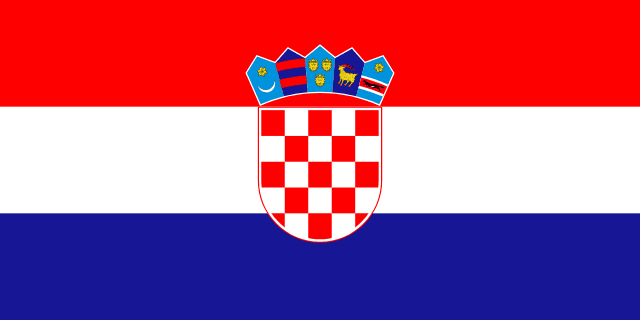

Croatia
Republic of Croatia
Europe
3,811,766
03:14 UTC+1
+385
.hr
Dinara
1,831 m · 6,007 ft
Adriatic Sea
0 m · 0 ft
771,843
Zagreb · 2026
1,105,270
Zagreb · 2026
Location
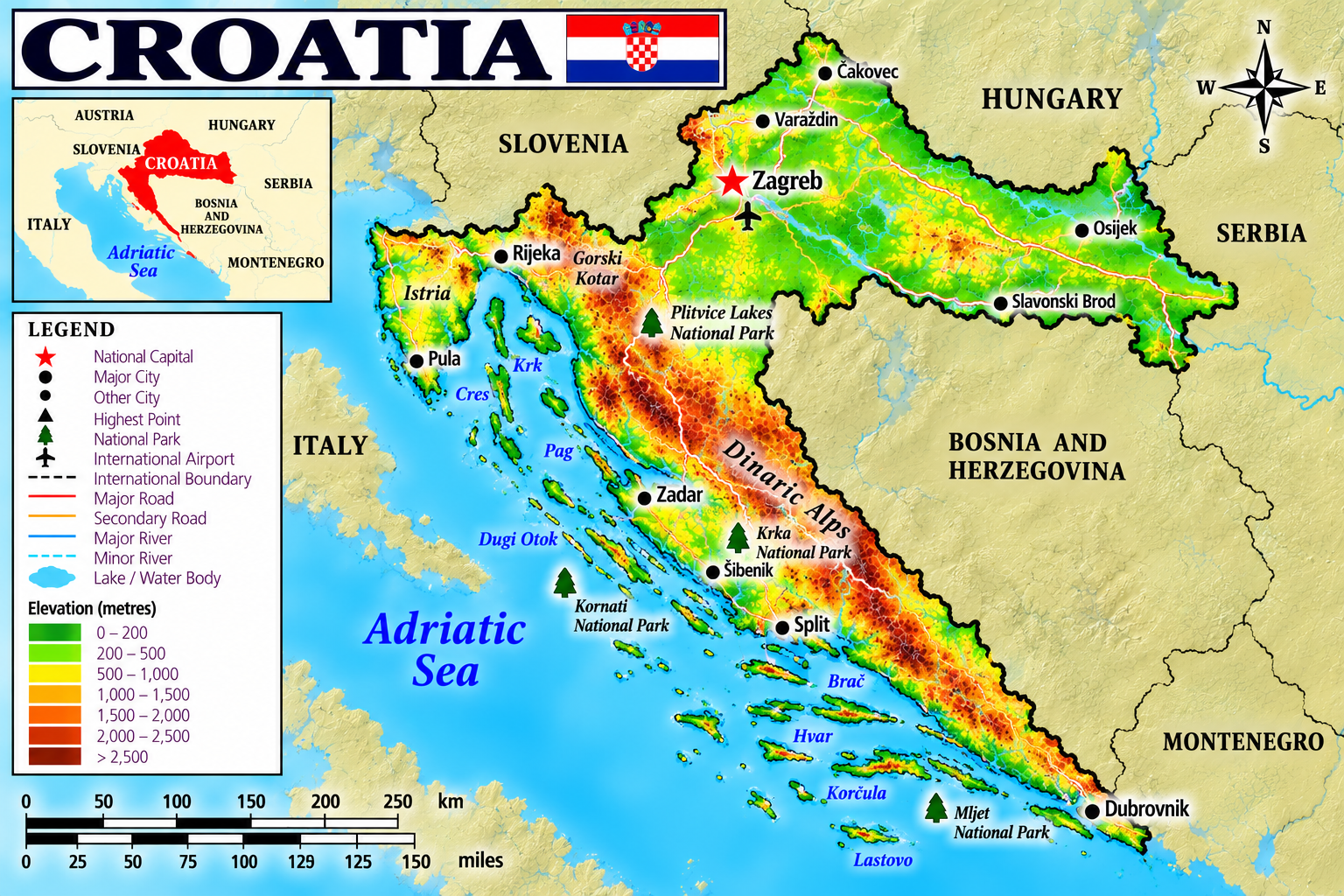
Croatia — Detailed Physical Map
Dinaric Alps, Adriatic islands, Istria and Plitvice Lakes park, major cities and the capital Zagreb
Tourist Attractions

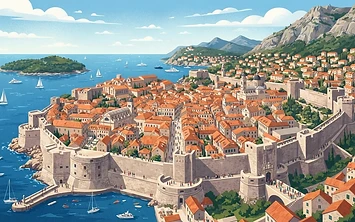
These massive stone fortifications encircle the historic Old Town and have protected the city for centuries. They offer a unique perspective on the city's architecture and the surrounding Adriatic Sea.
Walking the full circuit of the walls provides the most iconic panoramic views of the terracotta rooftops and the coastline.

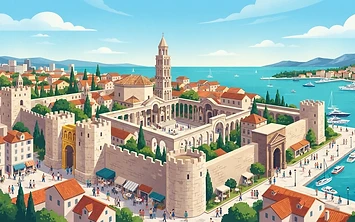
This sprawling UNESCO World Heritage site was built as a retirement residence for the Roman Emperor Diocletian in the 4th century. Today, it serves as the vibrant heart of Split, with shops, homes, and cafes integrated directly into the ancient ruins.
The Peristyle square is the central hub where you can experience the seamless blend of ancient Roman history and modern daily life.

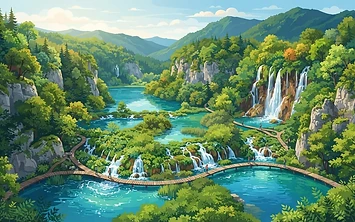
This world-renowned national park features a chain of 16 terraced lakes joined by spectacular waterfalls that extend into a limestone canyon. The water is famous for its vivid colors, ranging from azure to green and grey.
The wooden boardwalks allow visitors to walk directly over and around the cascading waterfalls and crystal-clear lakes.

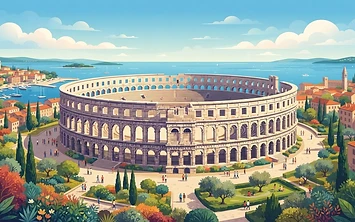
This remarkably well-preserved Roman amphitheater is one of the few remaining structures of its kind in the world. It was constructed in the 1st century and remains a stunning example of ancient engineering.
It is one of the best-preserved Roman arenas globally and still hosts concerts and film festivals within its ancient walls.

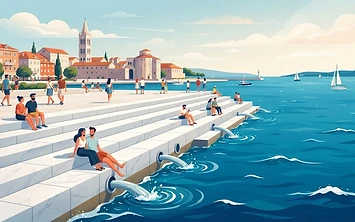
The Sea Organ is an architectural sound art object located on the Zadar waterfront that plays music through sea waves. It consists of a series of tubes located underneath a set of large marble steps.
Listening to the haunting, melodic tones created by the movement of the Adriatic tide is a unique sensory experience.

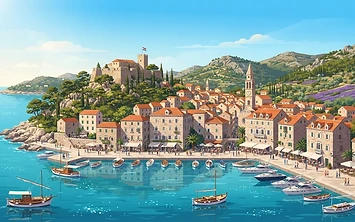
Hvar is a popular island destination known for its rich history, lavender fields, and vibrant Mediterranean atmosphere. It features a mix of historic Venetian-era architecture and beautiful coastal scenery.
The island offers a perfect blend of historic exploration in Hvar Town and relaxation on its pristine Adriatic beaches.
Geography
Nature
Dinara
1,831 m / 6,007 ft
34.7% of land
≈ 19,638 km² of forest
FAO / World Bank, forest area (% of land area)
Explore the Nature Atlas945 km587 mi
Flows through Croatia forming the border with Bosnia and Herzegovina.
749 km465 mi
Forms a significant portion of the northern border with Hungary.
296 km184 mi
Originates in the Gorski Kotar region and joins the Sava at Sisak.
30 km²12 sq mi · 4 m deep
Largest natural lake in Croatia located near the Adriatic coast.
1 km²0 sq mi · 37 m deep
Highest of the sixteen interconnected Plitvice Lakes.
15 km²6 sq mi · 64 m deep
Artificial reservoir created by a dam on the Cetina River.
78 m256 ft
Tallest waterfall within the Plitvice Lakes National Park.
46 m151 ft
Largest and most famous waterfall system on the Krka River.
River lengths are whole-river figures, including any section beyond Croatia. Researched reference figures. Tap any name for where its name comes from and a Google Maps link.
Major Cities
- 1Capital
Zagreb, Grad
755,9382026
MapServes as the political, economic, and cultural capital of Croatia, known for its historic Gornji Grad district.
- 2
Splitsko-Dalmatinska Županija
152,4722026
MapFeatures the magnificent Diocletian's Palace, a vast Roman ruin that forms the heart of the modern city center.
- 3
Primorsko-Goranska Županija
98,9142026
MapFunctions as the largest seaport in Croatia, playing a vital role in national trade and maritime history.
- 4
Osječko-Baranjska Županija
90,9332026
MapActs as the cultural and economic hub of the Slavonia region, recognized for its prominent Tvrđa baroque fortress.
- 5
Zadarska Županija
68,7302026
MapHouses unique architectural sound installations like the Sea Organ and features ancient Roman and medieval ruins.
- 6
Zagrebačka Županija
59,8892026
MapHosts the Franjo Tuđman Airport, serving as the primary international gateway to the capital city of Zagreb.
- 7
Zagreb, Grad
54,9372026
MapOperates as a highly populated suburban district of Zagreb, characterized by significant residential and industrial growth.
- 8
Istarska Županija
49,7822026
MapBoasts one of the best-preserved Roman amphitheaters in the world, serving as a primary cultural landmark.
- 9
Karlovačka Županija
46,4882026
MapPlanned as a Renaissance star-shaped city, it is renowned for its four distinct rivers flowing through the region.
- 10
Brodsko-Posavska Županija
45,8242026
MapPositioned along the Sava River, this city is famous for its 18th-century Brod Fortress.
- 11
Šibensko-Kninska Županija
40,8472026
MapContains the UNESCO-listed Cathedral of Saint James, a unique architectural masterpiece built entirely of stone.
- 12
Splitsko-Dalmatinska Županija
37,3652026
MapForms part of the historic Kastela region, famous for its line of coastal stone fortresses and traditional vineyards.
City populations are the latest official, UN or national-statistics estimates (2025–2026) compounded to 2026 at -0.68% a year (the nation's annual population growth rate); figures without a published update come from the open cities database (2020-era estimates) and are projected the same way.
Economy
Main exports
Croatia's leading export commodities and products.
Tap any export to learn more. Spot prices in USD only for Live Data subscribers.
Main imports
Croatia's leading import commodities and products.
Tap any import to learn more.
Military
Historical Timeline
6000 BCE
Neolithic Starčevo Culture Settlement
The Starčevo culture represents one of the earliest farming communities in the region, marking the transition to settled agricultural life. These Neolithic settlers established some of the first permanent villages across the Pannonian Basin.
925
Coronation of King Tomislav
Tomislav was crowned the first King of Croatia, unifying the Duchies of Pannonia and Dalmatia. This event marked the establishment of the first sovereign Croatian kingdom.
1102
Pacta Conventa Union
Croatia entered into a personal union with the Kingdom of Hungary through the Pacta Conventa agreement. This treaty preserved Croatia's internal autonomy while sharing a monarch with Hungary.
1527
Cetin Assembly Election of Ferdinand I
The Croatian nobility elected Ferdinand I of the House of Habsburg as King of Croatia at the Parliament in Cetin. This decision sought protection against the expanding Ottoman Empire.
1918
Dissolution of Austria-Hungary
Following World War I, the Croatian Parliament declared independence from Austria-Hungary. Croatia subsequently joined the State of Slovenes, Croats, and Serbs, which later became part of Yugoslavia.
1945
Formation of the Socialist Republic
Following World War II, Croatia became a constituent republic within the Socialist Federal Republic of Yugoslavia. This period saw major industrialization and the implementation of a socialist political system.
1991
Declaration of Independence
Croatia declared its independence from Yugoslavia, triggering the Croatian War of Independence. This move marked the beginning of the transition to a sovereign parliamentary democracy.
2013
Accession to the European Union
Croatia officially became the 28th member state of the European Union on July 1. This milestone integrated the nation into the European economic and political framework.
2020
Election of Zoran Milanović
Zoran Milanović was inaugurated as the fifth President of Croatia following a victory in the 2019-2020 presidential elections. His term oversaw significant challenges including the response to the COVID-19 pandemic and earthquake recovery.
2023
Adoption of the Euro and Schengen Entry
Croatia officially joined both the Eurozone and the Schengen Area on January 1. This integration marked the final major step in its economic and structural alignment with the European Union.
2024
2024 Parliamentary Elections
General elections were held to determine the composition of the Croatian Parliament. The result led to the formation of a new governing coalition led by the Croatian Democratic Union.
2025
2025 Presidential Election
Croatia held its presidential election to determine the head of state for the upcoming five-year term. This democratic exercise confirmed the nation's commitment to its established political institutions and constitutional processes.
National Anthem
Lijepa naša domovino
Antun Mihanović
Josip Runjanin
1972
Lijepa naša domovino, Oj junačka zemljo mila, Stare slave djedovino, Da bi vazda sretna bila! Mila kano si nam slavna, Mila si nam ti jedina, Mila kuda si nam ravna, Mila kuda si planina! Teci Dravo, Savo teci, Nit' ti Dunav silu gubi, Sinje more svijetu reci, Da svoj narod Hrvat ljubi! Dok mu njive sunce grije, Dok mu hrašće bura vije, Dok mu mrtve grobak krije, Dok mu živo srce bije!
The poem 'Horvatska domovina' was written by Antun Mihanović and first published in 1835. The music was composed by Josip Runjanin around 1846, likely inspired by the contemporary Italian opera style. The song gained widespread popularity during the 19th century as a symbol of Croatian national identity. It was officially adopted as the anthem of the Socialist Republic of Croatia in 1972. Following Croatia's independence from Yugoslavia, the anthem was formally confirmed in the 1990 Constitution. The lyrics used today are essentially the original text by Mihanović with minor adjustments in punctuation and spelling. It remains a central element of Croatian statehood, played at all major ceremonial and sporting events.
National Holidays
This holiday marks the beginning of the Gregorian calendar year.
This day commemorates the constitution of the first modern multiparty Croatian Parliament in 1990.
This holiday celebrates the victory in Operation Storm during the Croatian War of Independence in 1995.
This is a significant religious holiday commemorating the belief that the Virgin Mary was assumed into heaven.
Good News Today
Croatia Opens €2.8 Million Hyperbaric Medicine Center for Veterans and Other Patients
Croatia has opened a new hyperbaric medicine facility in Petrinja to provide specialized oxygen therapy for veterans and patients with chronic medical conditions. The center is part of a broader investment in healthcare infrastructure designed to improve local access to advanced medical treatments.
Fun Facts
Birthplace of the Necktie
The modern necktie originates from the 17th-century Croatian mercenaries who wore distinctive scarves around their necks. The French soldiers adopted the style and called it a 'cravate'.
Home of the Dalmatian
The spotted dog breed known as the Dalmatian originates from the coastal region of Dalmatia. They were originally used as guard dogs and to accompany carriages.
The Sea Organ
In the city of Zadar, there is a massive 'Sea Organ' built into the stone steps of the pier. The waves push air through underwater pipes to create beautiful, random musical chords.
The Real King's Landing
The walled city of Dubrovnik is so perfectly preserved that it was chosen as the primary filming location for King's Landing in the television series Game of Thrones.
Plitvice's Cascading Lakes
Plitvice Lakes National Park consists of 16 terraced lakes joined by waterfalls that extend into a limestone canyon. The mineral composition of the water causes the color to shift from turquoise to grey.
The World's Smallest City
The town of Hum is officially recognized as the smallest city in the world. It has a population of fewer than 30 residents and maintains medieval town walls.
The Pen Inventor
Slavoljub Penkala, a Croatian inventor, patented the first mechanical pencil in 1906. He also invented the world's first solid-ink fountain pen, which we now know as the ballpoint.
Thousands of Islands
Croatia is home to over 1,200 islands, islets, and reefs dotting the Adriatic Sea. However, only about 50 of these islands are permanently inhabited.
A Palace for Living
Diocletian's Palace in Split is not a museum, but a living part of the city. Modern residents live, work, and shop within the original ancient Roman stone walls.
Ancient Olive Trees
On the island of Pag, there is a grove of olive trees that are over 1,000 years old. These ancient trees are still harvested for their high-quality olive oil today.
Chuckies Trivia Quiz
Chuckies Trivia Quiz
Fifteen questions on Croatia — five easy, five medium, five hard. How far can you get?
Sports & Live Events
Language
Counting to 10
1
1
= 10 (n = 0)
World Dictionary
Discover and translate any word into all supported languages.