

Finland
Republic of Finland
Europe
5,621,739
22:18 UTC+2
+358
.fi
Location
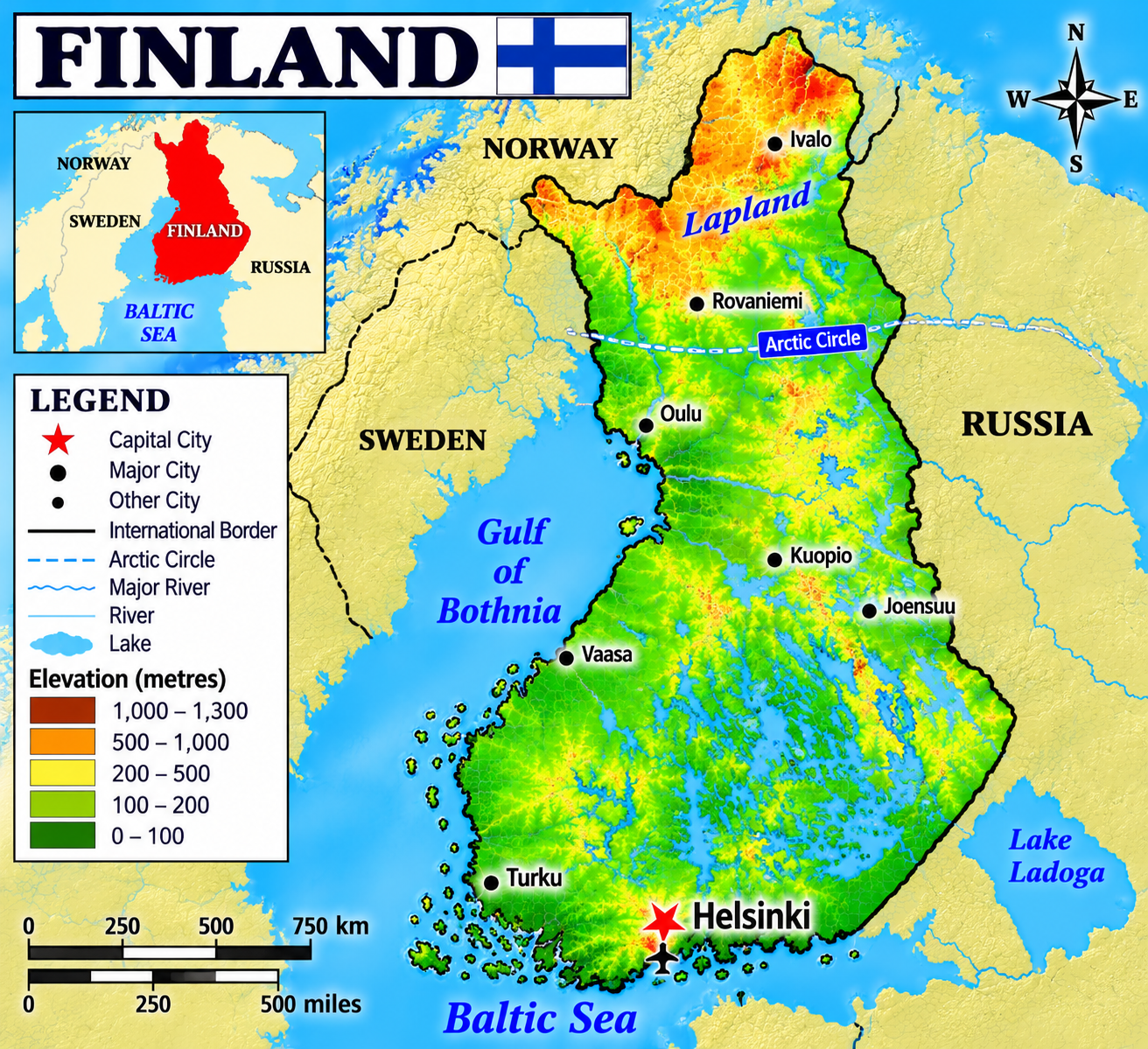
Finland — Detailed Physical Map
Lapland and the Arctic Circle, Lake Saimaa's maze of lakes, the Baltic coast, major cities and the capital Helsinki
Tourist Attractions
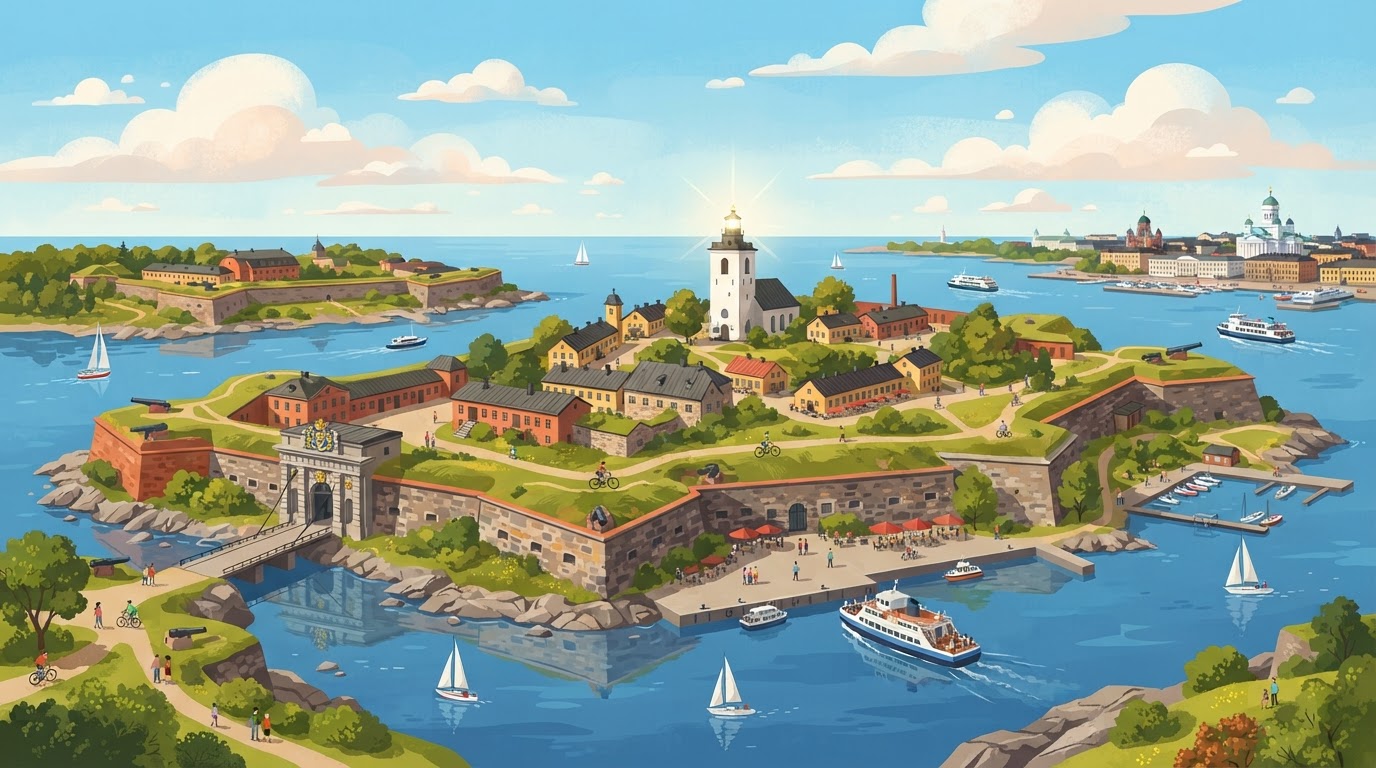
A UNESCO World Heritage site built in the 18th century, this maritime fortress spans six islands and offers a peaceful retreat with historic fortifications, museums, and cafes.
It is a must-visit destination that perfectly blends military history with scenic island beauty just a short ferry ride from the city center.
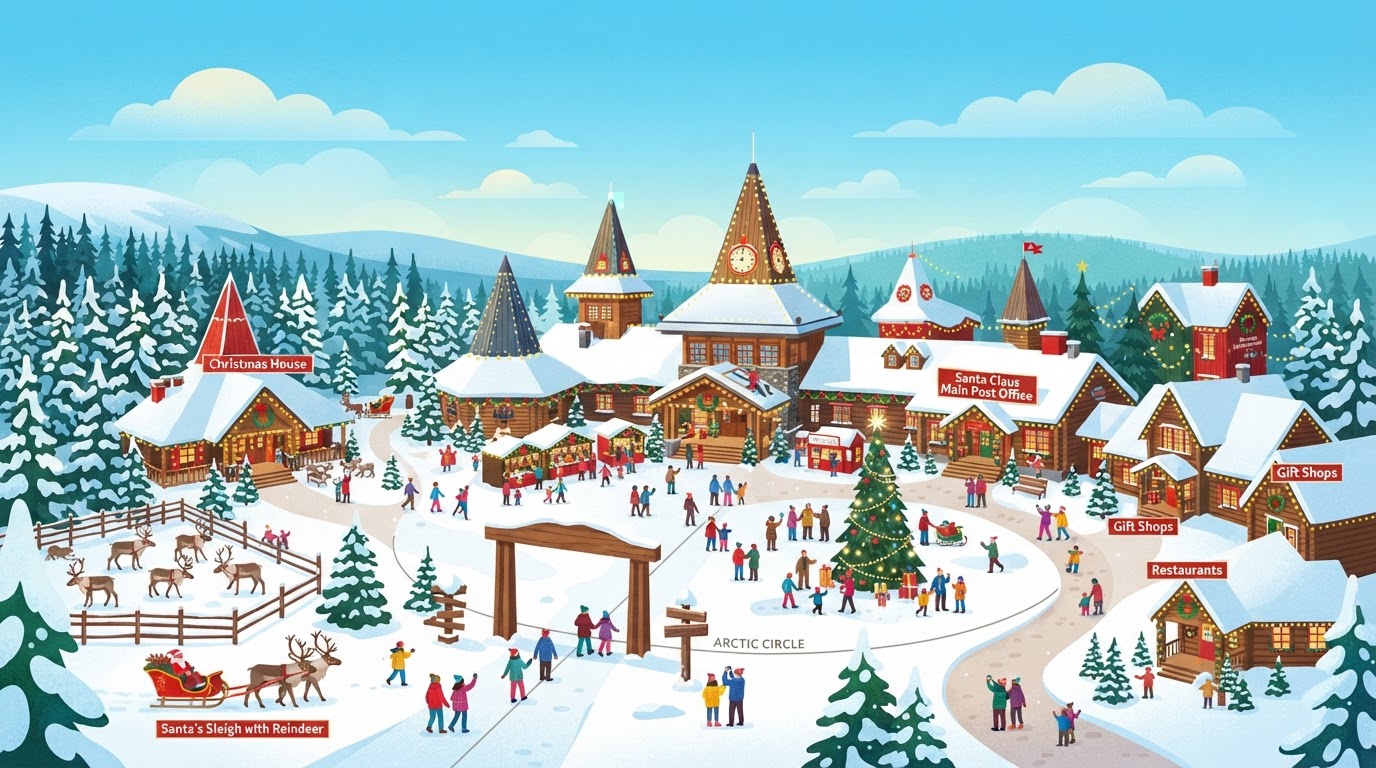
Located in the heart of Lapland, this festive destination allows visitors to cross the Arctic Circle and meet Santa Claus in his official hometown.
It is the ultimate Christmas-themed experience where you can officially cross the Arctic Circle line.

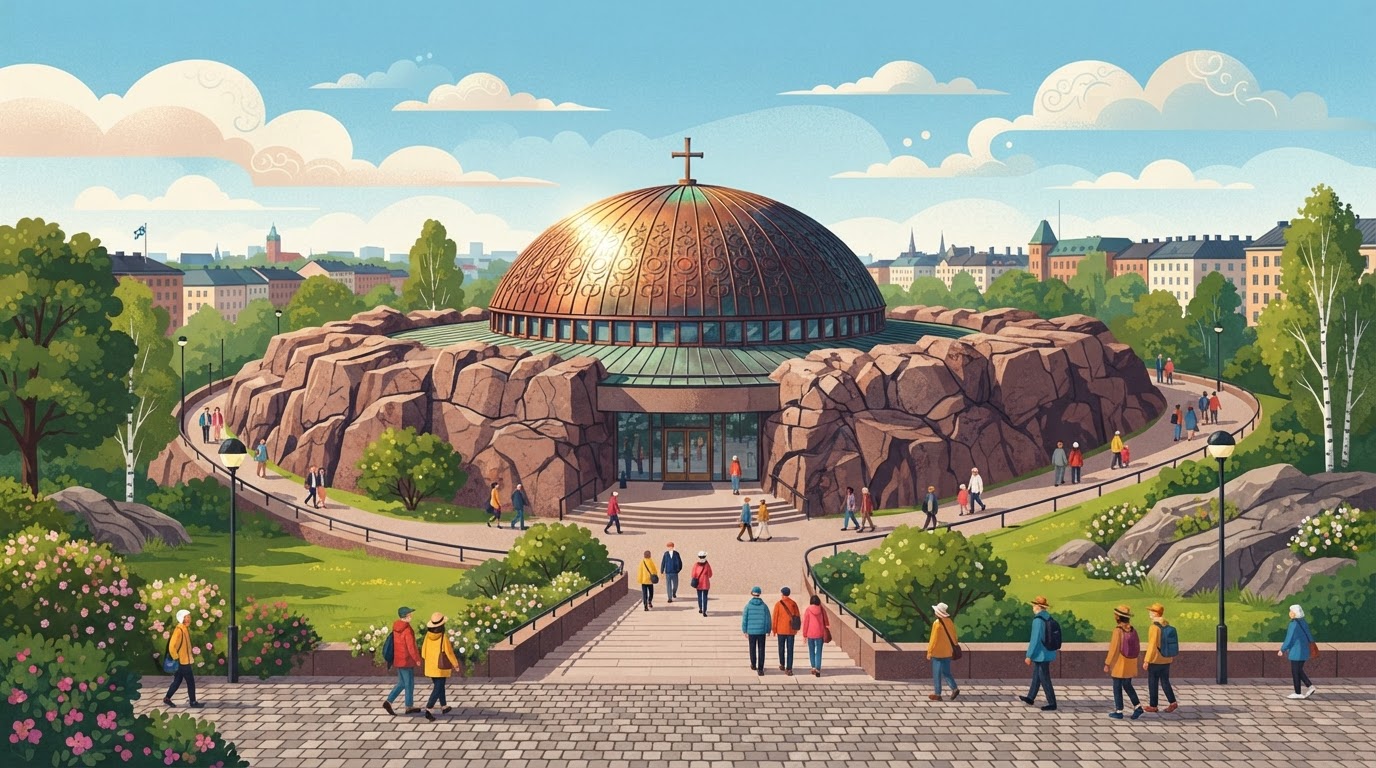
Also known as the Rock Church, this unique architectural landmark is excavated directly into solid granite rock and topped with a copper dome.
The church is world-renowned for its stunning natural light and exceptional acoustic properties.

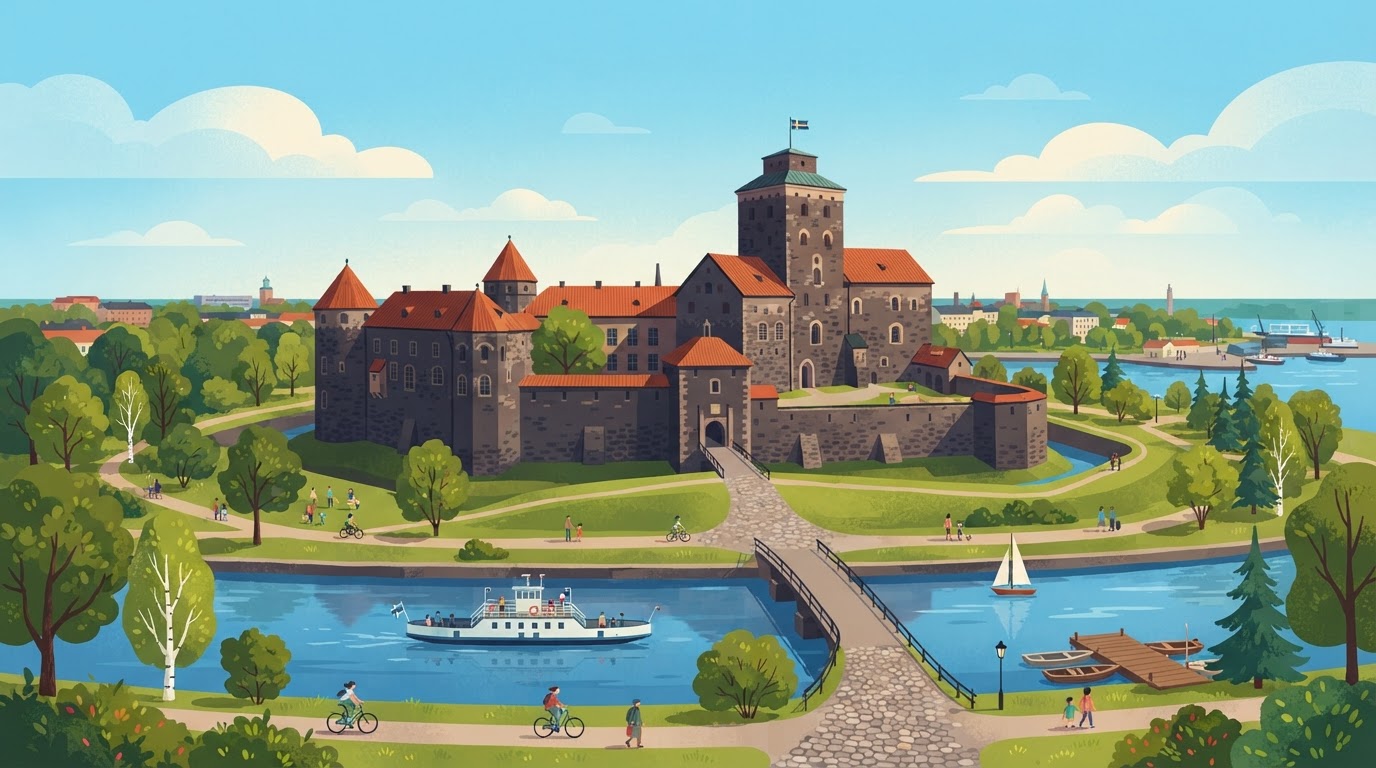
Dating back to the 13th century, this medieval fortress is one of Finland's most significant historical landmarks and serves as a museum detailing the country's connection to the Baltic region.
Explore the castle's ancient stone halls to gain a deep understanding of Finland's medieval history.

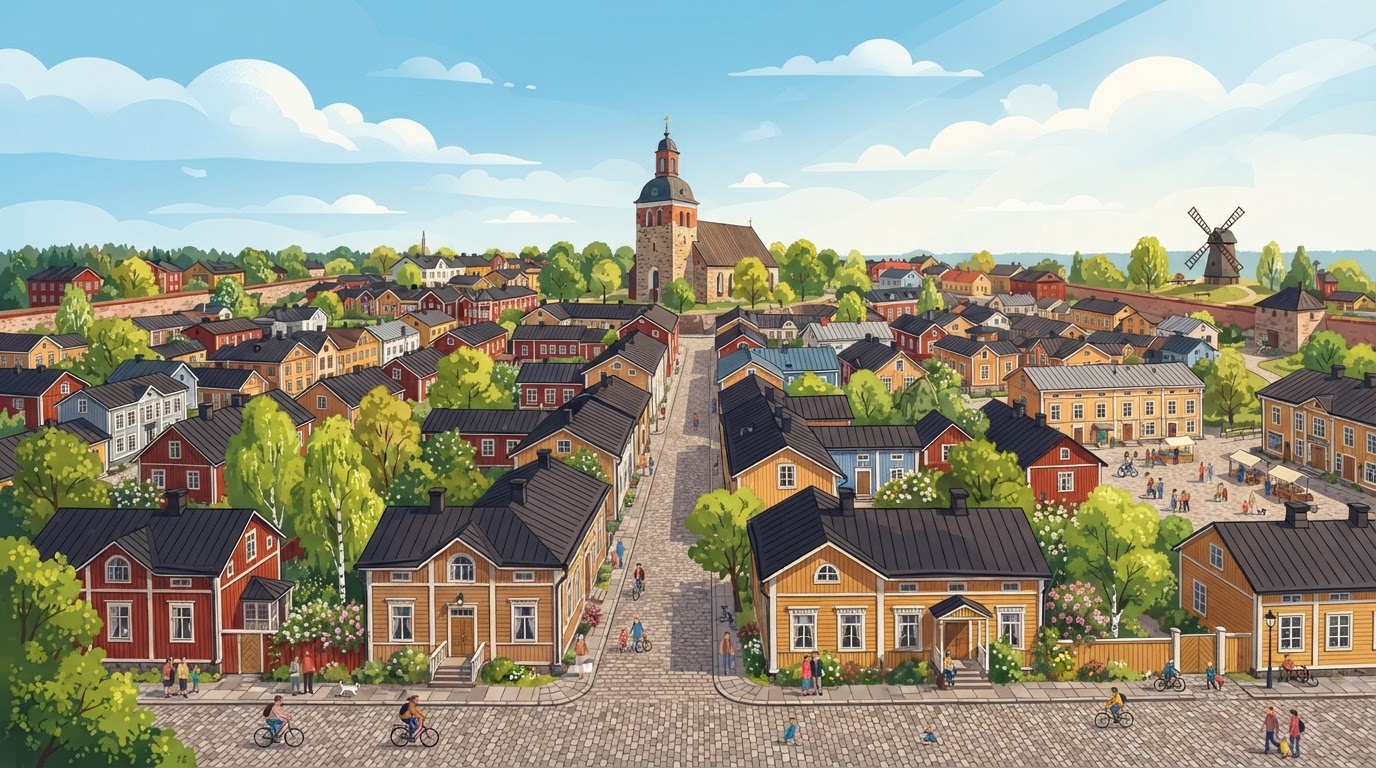
A UNESCO World Heritage site, Old Rauma is one of the largest and best-preserved wooden town centers in the Nordic countries.
Walking through its narrow, winding streets feels like stepping back in time to see how Finnish towns looked centuries ago.

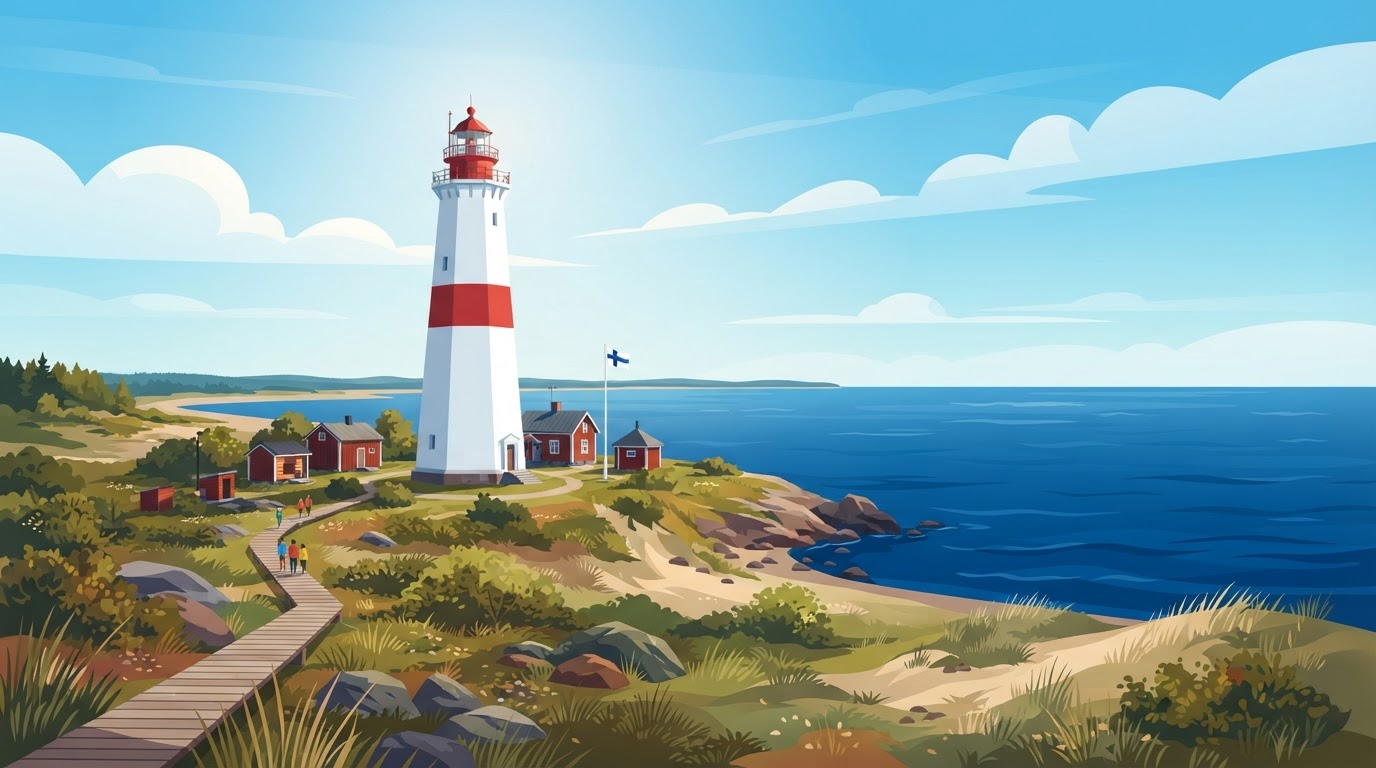
Built in 1871, this iconic white lighthouse stands on the western tip of Hailuoto Island and has served as a vital marine navigational aid for over 150 years.
It is a striking symbol of Finland's maritime heritage and one of the most photographed landmarks on the coast.
Geography
Nature
Halti
1,324 m / 4,344 ft
73.7% of land
≈ 249,441 km² of forest
FAO / World Bank, forest area (% of land area)
Explore the Nature Atlas550 km342 mi
Finland's longest river originates near the Russian border and flows into the Gulf of Bothnia.
522 km324 mi
Forms part of the border between Finland and Sweden and remains largely undammed.
107 km66 mi
Flows from Lake Oulujaervi into the Gulf of Bothnia near the city of Oulu.
4,400 km²1,699 sq mi · 85 m deep
Largest lake in Finland and home to the endangered Saimaa ringed seal.
1,080 km²417 sq mi · 95 m deep
Provides fresh drinking water to the Helsinki metropolitan area through a long tunnel.
1,040 km²402 sq mi · 92 m deep
Located in Lapland and contains over three thousand islands within its waters.
24 m79 ft
Considered one of the highest natural waterfalls in the country located in Puolanka.
115 m377 ft
Located in the Malla Strict Nature Reserve and drops in several stages.
River lengths are whole-river figures, including any section beyond Finland. Researched reference figures. Tap any name for where its name comes from and a Google Maps link.
Major Cities
- 1Capital
Uusimaa
Serves as the political, educational, and financial center of Finland and hosts the iconic white-domed Helsinki Cathedral.
696,3742026
Map - 2
Pirkanmaa
Functions as a major industrial hub historically known for its textile manufacturing and proximity to two large scenic lakes.
353,0002026
Map - 3
Uusimaa
Houses a major technology hub featuring Aalto University and the headquarters of several prominent global software and engineering companies.
334,9532026
Map - 4
Uusimaa
Operates as the primary gateway to the nation by hosting Helsinki Airport, the busiest international airport in Finland.
258,5852026
Map - 5
Pohjois-Pohjanmaa
Recognized as a leading global technology hub in Northern Finland with a strong focus on information and communications technology.
220,7422026
Map - 6
Varsinais-Suomi
Stands as the oldest city in Finland and formerly served as the nation's capital until eighteen twelve.
211,5122026
Map - 7
Keski-Suomi
Features extensive architectural works by Alvar Aalto and maintains a strong reputation as a center for education and research.
152,0512026
Map - 8
Pohjois-Savo
Famed for its scenic Puijo Tower and traditional regional delicacies such as kalakukko fish pasties.
128,2992026
Map - 9
Päijät-Häme
Renowned for its world-class winter sports facilities and hosting numerous international ski jumping competitions.
121,9052026
Map - 10
Satakunta
Hosts the internationally acclaimed annual Pori Jazz festival and maintains a historic industrial legacy in forestry and metalwork.
83,0122026
Map - 11
Pohjois-Karjala
Located near the Russian border, this city functions as a major center for forestry research and wood-based industry.
79,5022026
Map - 12
Kymenlaakso
Developed as a significant railway junction and transportation hub linking major domestic routes across southeastern Finland.
76,9152026
Map
City populations are the latest official, UN or national-statistics estimates (2026–2026) compounded to 2026 at -0.03% a year (the nation's annual population growth rate); figures without a published update come from the open cities database (2020-era estimates) and are projected the same way.
Economy
Main exports
Finland's leading export commodities and products.
Tap any export to learn more. Spot prices in USD only for Live Data subscribers.
Main imports
Finland's leading import commodities and products.
Tap any import to learn more.
Military
Historical Timeline
8500 BCE
First Settlers in Finland
After the retreat of the continental ice sheet, the first human settlers arrived in the coastal regions of Finland. These early hunter-gatherer groups established the foundation for the region's continuous human habitation.
1155
The First Swedish Crusade
Tradition holds that King Eric IX of Sweden led an expedition to Finland, marking the beginning of Swedish influence and the introduction of Roman Catholicism. This event initiated centuries of integration into the Swedish realm.
1809
Finland Becomes a Grand Duchy
Following the Finnish War, Sweden ceded Finland to the Russian Empire at the Treaty of Fredrikshamn. Finland became an autonomous Grand Duchy with the Russian Tsar as its Grand Duke.
1906
Establishment of Universal Suffrage
Finland became the first country in the world to grant all adult citizens the right to vote and run for office in parliamentary elections. This reform included full political rights for women.
1917
Declaration of Independence
On December 6, the Parliament of Finland approved the declaration of independence from Russia. This act followed the collapse of the Russian Empire due to the Bolshevik Revolution.
1939
The Winter War Begins
The Soviet Union launched an invasion of Finland, leading to a brutal winter conflict. Finland successfully defended its sovereignty, though it was forced to cede territory in the Moscow Peace Treaty.
1952
Helsinki Hosts the Summer Olympics
Finland hosted the Summer Olympic Games in Helsinki, signaling the nation's post-war recovery and international integration. It remains a significant milestone in Finnish sports history.
1995
Accession to the European Union
Finland formally joined the European Union after a national referendum. This marked a major geopolitical shift toward deeper European political and economic integration.
2000
Tarja Halonen Elected First Female President
Tarja Halonen was elected as the first female President of Finland. Her election marked a historic milestone for gender equality in Finnish national leadership.
2019
Sanna Marin Becomes Prime Minister
Sanna Marin was appointed Prime Minister at age 34, becoming the youngest person to hold the office in Finnish history. She led a coalition government composed entirely of female-led parties.
2023
Finland Joins the NATO Alliance
Finland officially became the 31st member of the North Atlantic Treaty Organization on April 4. This ended decades of military non-alignment following the Russian invasion of Ukraine.
2024
Alexander Stubb Inaugurated as President
Alexander Stubb was inaugurated as the 13th President of Finland following the 2024 presidential election. His inauguration marked the formal transition of the presidency in a new geopolitical era.
National Anthem
Maamme
Johan Ludvig Runeberg
Fredrik Pacius
1848
Oi maamme, Suomi, synnyinmaa, soi, sana kultainen! Ei laaksoa, ei kukkulaa, ei vettä rantaa rakkaampaa kuin kotimaa tää pohjoinen, maa kallis isien. Sun kukoistukses kuorestaan kerrankin puhkeaa; viel' lempemme saa nousemaan sun toivos, riemus loistossaan, ja kerran laulus, synnyinmaa, korkeemman kaiun saa.
The national anthem of Finland, 'Maamme', was written in Swedish by the poet Johan Ludvig Runeberg under the title 'Vårt land' in 1846. It was set to music by the German-born composer Fredrik Pacius and first performed on May 13, 1848, at a spring festival in Helsinki. Although Finland has never officially declared 'Maamme' as its national anthem by law, it has been widely accepted as such since the 19th century. The lyrics were originally written in Swedish and were later translated into Finnish by Paavo Cajander in 1867. The anthem has remained fundamentally the same since its creation, symbolizing the rise of Finnish national consciousness. Its performance is a standard feature of national holidays, sporting events, and formal state ceremonies in Finland.
National Holidays
This holiday marks the beginning of the new calendar year according to the Gregorian calendar.
A Christian holiday that commemorates the visit of the three wise men to the infant Jesus.
A major Christian festival celebrating the resurrection of Jesus Christ, marked by public holidays on Good Friday and Easter Monday.
A day celebrating both the arrival of spring and International Workers' Day with traditional festivities and student celebrations.
This day commemorates Finland's declaration of independence from the Russian Empire in 1917.
A religious and cultural celebration marking the birth of Jesus Christ, observed as a major public holiday.
Good News Today
Finland Approves Tesla Assisted Driving Technology for Local Roads
Finland has granted temporary approval for Tesla's Assisted Driving system to be used on its national roads. This development follows technical modifications made by the manufacturer to meet safety standards.
Fun Facts
World's Highest Coffee Consumption
Finland consistently ranks as the world's leading consumer of coffee per capita, with the average Finn drinking about 12 kilograms of coffee annually.
The World's Happiest Country
Finland has been ranked as the happiest country in the world by the United Nations World Happiness Report for several consecutive years.
Country of a Thousand Lakes
Finland is officially home to 188,000 lakes, earning it the nickname the Land of a Thousand Lakes.
Cleanest Tap Water Globally
The tap water in Finland is so pure that it is cleaner than most bottled water sold in stores worldwide.
Sauna Culture is Everywhere
There are over three million saunas in Finland, which is nearly one for every two people in the entire nation.
Official Home of Santa Claus
Rovaniemi in Finnish Lapland is officially recognized as the hometown of Santa Claus, featuring a dedicated village open year-round.
Birthplace of Mobile Innovation
Finland is the historic birthplace of Nokia, which revolutionized global telecommunications and popularized the mobile phone in the 1990s.
Unique Quirky Sporting Competitions
The country hosts eccentric annual events such as the World Wife Carrying Championship and the Air Guitar World Championships.
Spectacular Northern Lights Displays
In the northern region of Lapland, the Aurora Borealis is visible on approximately 200 nights every year.
Famous Maternity Baby Boxes
The Finnish government provides every expectant mother with a cardboard box filled with baby supplies, which has served as a safe sleeping space for infants since 1938.
Chuckies Trivia Quiz
Chuckies Trivia Quiz
Fifteen questions on Finland — five easy, five medium, five hard. How far can you get?
Sports & Live Events
Language
Counting to 10
1
1
= 10 (n = 0)
World Dictionary
Discover and translate any word into all supported languages.