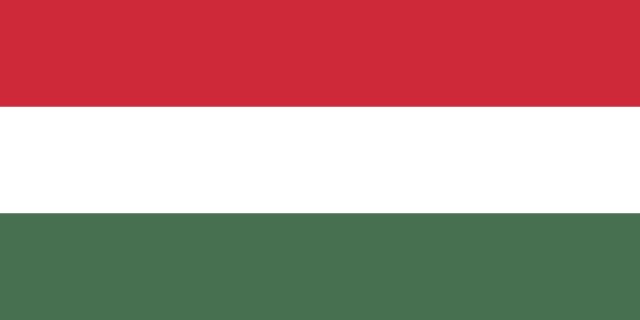

Hungary
Europe
9,475,031
23:41 UTC+1
+36
.hu
Kekes
1,014 m · 3,327 ft
Tisza River
78 m · 256 ft
1,687,917
Budapest · 2026
1,687,917
Budapest · 2026
Location
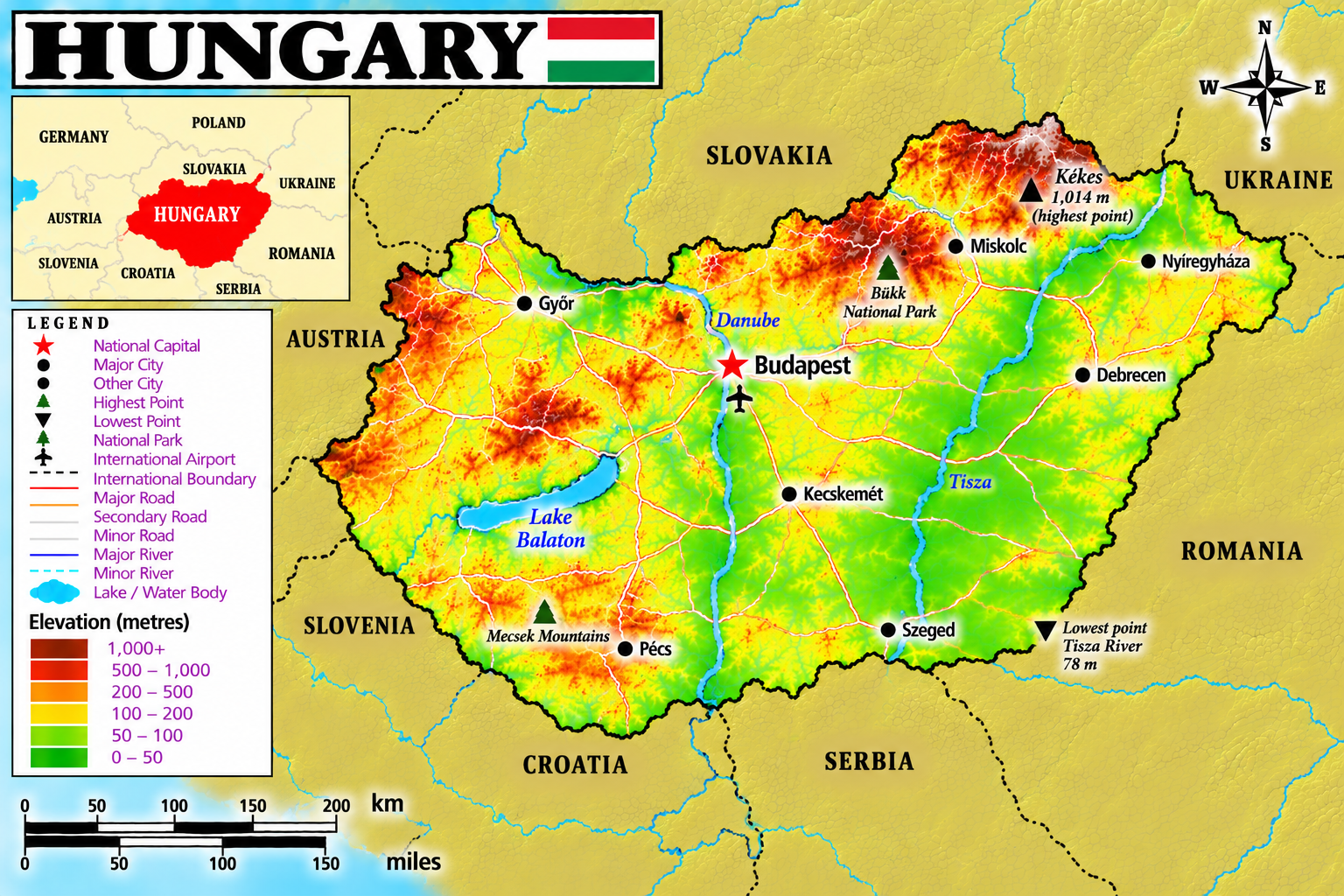
Hungary — Detailed Physical Map
Lake Balaton, the Danube and Tisza rivers, Bükk National Park, Kékes, major cities and the capital Budapest
Tourist Attractions

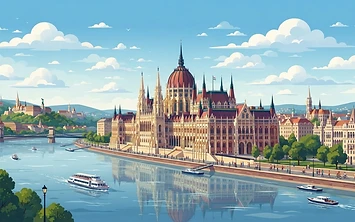
This magnificent neo-Gothic structure serves as the seat of the National Assembly and is a defining feature of the Budapest skyline along the Danube River.
The building is particularly breathtaking when illuminated at night.

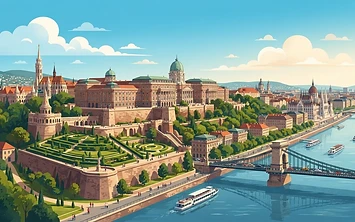
A sprawling historical palace complex dating back to the 13th century, it houses the Hungarian National Gallery and the Budapest History Museum.
Explore the vast labyrinth of caves and tunnels located beneath the castle grounds.

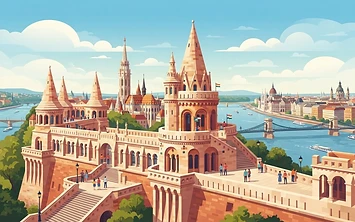
A neo-Romanesque terrace featuring seven stone towers that represent the seven Magyar tribes that founded Hungary.
It offers arguably the best panoramic views of the Parliament and the Danube River.

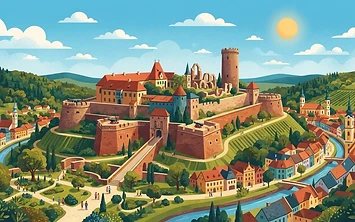
A legendary fortress known for its successful defense against the Ottoman Empire, now housing exhibitions on medieval history.
Visitors can explore the authentic maze of underground tunnels and dungeons.

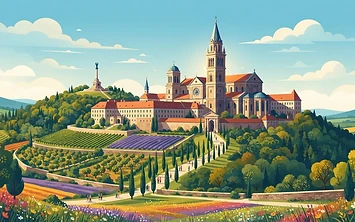
Founded in 996, this UNESCO World Heritage site is one of the oldest and most significant Benedictine monasteries in Hungary.
The abbey is situated on the scenic Mount of Saint Martin and remains an active, functioning monastery.

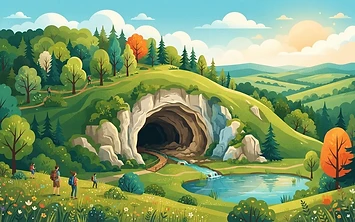
This protected area is famous for its extensive system of over 1,200 caves, including the spectacular Baradla cave system.
It is a UNESCO World Heritage site renowned for its unparalleled underground geological beauty.
Geography
Nature
Kekes
1,014 m / 3,327 ft
22.5% of land
≈ 20,931 km² of forest
FAO / World Bank, forest area (% of land area)
Explore the Nature Atlas2,850 km1,771 mi
Rises in the Black Forest of Germany and flows through ten different countries.
962 km598 mi
Forms a major part of the Pannonian Basin ecosystem after rising in Ukraine.
724 km450 mi
Flows along the border between Hungary and Croatia for a significant stretch.
592 km²229 sq mi · 12 m deep
Largest lake in Central Europe and a major tourism destination.
315 km²122 sq mi · 2 m deep
Located on the border with Austria and designated a UNESCO World Heritage site.
26 km²10 sq mi · 3 m deep
Third largest lake in Hungary and known for its warm shallow water.
17 m56 ft
Located in the Szalajka Valley and famous for its distinct limestone terrace formations.
10 m33 ft
Considered the highest natural waterfall in Hungary within the Matra mountains.
River lengths are whole-river figures, including any section beyond Hungary. Researched reference figures. Tap any name for where its name comes from and a Google Maps link.
Major Cities
- 1Capital
Budapest
1,685,1652026
MapServes as the political, cultural, and commercial hub of Hungary, famous for the historic Parliament building along the Danube.
- 2
Hajdú-Bihar
202,8932026
MapFunctions as the country's second-largest city and remains the historical center of Hungarian Calvinism.
- 3
Csongrád-Csanád
156,7802026
MapRenowned for its production of high-quality paprika and the impressive Votive Church dominating the city square.
- 4
Borsod-Abaúj-Zemplén
139,4652026
MapDeveloped as a significant center for heavy industry and sits near the unique cave bath in Tapolca.
- 5
Baranya
139,4392026
MapFeatures a rich cultural heritage, including the early Christian necropolis recognized as a UNESCO World Heritage site.
- 6
Győr-Moson-Sopron
129,9702026
MapHosts a major automotive manufacturing center and preserves a beautifully restored baroque city center.
- 7
Szabolcs-Szatmár-Bereg
114,4072026
MapHouses the popular Sosto Zoo, which remains one of the largest and most significant wildlife parks in the country.
- 8
Bács-Kiskun
108,8292026
MapActs as the center of the Great Hungarian Plain, famous for its production of fruit brandy called palinka.
- 9
Fejér
95,3062026
MapServed as the medieval capital of Hungary where many kings were crowned and buried.
- 10
Vas
76,4992026
MapClaims the title of the oldest city in Hungary, originally established as Savaria during the Roman Empire.
- 11
Somogy
58,1502026
MapServes as the administrative center of Somogy County, celebrated for its well-preserved nineteenth-century architecture.
- 12
Veszprém
54,8572026
MapStands as a historical religious center, often referred to as the city of queens due to its royal past.
City populations are the latest official, UN or national-statistics estimates (2026–2026) compounded to 2026 at -0.3% a year (the nation's annual population growth rate); figures without a published update come from the open cities database (2020-era estimates) and are projected the same way.
Economy
Main exports
Hungary's leading export commodities and products.
Tap any export to learn more. Spot prices in USD only for Live Data subscribers.
Main imports
Hungary's leading import commodities and products.
Tap any import to learn more.
Military
Historical Timeline
6000 BCE
Neolithic Settlement by Early European Farmers
The first permanent agricultural societies settled in the Carpathian Basin, representing the earliest known inhabitants of the region. These populations laid the foundational sedentary culture in the Pannonian Plain.
895
Magyar Conquest of the Carpathian Basin
The Hungarian tribes led by Árpád crossed the Carpathian Mountains to settle the Pannonian Plain. This event established the Hungarian people in the territory they have inhabited ever since.
1000
Coronation of King Saint Stephen I
Stephen I was crowned as the first King of Hungary, transitioning the nation into a Christian kingdom. This consolidation laid the institutional foundations for the Hungarian state.
1222
The Golden Bull of 1222
King Andrew II issued the Golden Bull, one of the earliest constitutional documents in Europe. It defined the rights of the nobility and limited the power of the monarchy.
1526
Battle of Mohács
The Ottoman Empire decisively defeated the Hungarian army, leading to the death of King Louis II. This triggered the partition of Hungary and 150 years of Ottoman occupation.
1867
Establishment of the Austro-Hungarian Empire
The Austro-Hungarian Compromise created the Dual Monarchy, granting Hungary significant autonomy within the empire. This ushered in a period of rapid industrialization and cultural growth.
1918
Dissolution of Austria-Hungary
Following World War I, the empire collapsed, leading to the formal declaration of the Hungarian Republic. This resulted in the 1920 Treaty of Trianon, which reduced Hungary's territory by two-thirds.
1956
Hungarian Revolution against Soviet Rule
A nationwide revolt against the government and its Soviet-imposed policies was crushed by Soviet tanks. This event became a symbol of resistance against communist authoritarianism in the Eastern Bloc.
1989
Democratic Transition and Fall of Communism
Hungary underwent a peaceful transition to a parliamentary democracy and opened its borders to the West. This marked the end of four decades of one-party communist rule.
2004
Accession to the European Union
Hungary officially joined the European Union, formalizing its political and economic integration with Western Europe. This milestone brought significant changes to the nation's legal and economic systems.
2022
Election of Hungary's First Female President
Katalin Novák was elected by the National Assembly as the first female President of Hungary. Her term marked a historic first in the country's executive leadership.
2024
Hungary Assumes Council of the European Union Presidency
Hungary took over the rotating presidency of the Council of the European Union for the second half of 2024. During this period, the nation focused on administrative and policy coordination among member states.
National Anthem
Himnusz
Ferenc Kölcsey
Ferenc Erkel
1844
Isten, áld meg a magyart Jó kedvvel, bőséggel Nyújts feléje védő kart Ha küzd ellenséggel Balsors akit régen tép Hozz rá víg esztendőt Megbűnhődte már e nép A múltat s jövendőt!
The poem was written by the poet Ferenc Kölcsey in 1823 in Szatmárcseke and was subtitled 'From the stormy centuries of the Hungarian people'. A competition for a musical setting was held in 1844, which was won by the composer and conductor Ferenc Erkel. The piece was first performed in a theatrical setting at the National Theatre in Budapest in 1844. Although it served as a national symbol for over a century, it was only officially codified into law by the 1989 Constitution of Hungary. During the socialist era, the government attempted to commission a new, more communist-friendly anthem, but the request was ignored by composer Zoltán Kodály, who famously stated the original was sufficient. The anthem remains a profound symbol of Hungarian identity, often performed at state events, national holidays, and major sporting occasions.
National Holidays
This day commemorates the outbreak of the 1848 Hungarian Revolution and War of Independence against the Habsburg monarchy. It is a symbol of Hungarian national identity and the fight for democratic freedoms.
This is Hungary's principal state holiday, marking the foundation of the Hungarian state and the canonization of Saint Stephen, the country's first king. It celebrates the continuity of the Hungarian nation and its Christian heritage.
This holiday commemorates the start of the 1956 Hungarian Revolution against the Soviet-backed communist regime. It honors the bravery of those who fought for national sovereignty and democratic reform.
Good News Today
Volunteers build 'beaver dams' to restore wetlands and combat drought
Hundreds of volunteers in Hungary are working together to build small, man-made dams across streams to retain rainwater and restore local wetlands. This grassroots movement aims to improve water management and landscape resilience in the face of climate change.
Fun Facts
Capital of Thermal Spas
Budapest sits on a network of over 100 geothermal springs, earning it the official title 'City of Spas' with more thermal baths than any other capital.
Home of the Rubik's Cube
The world-famous Rubik's Cube was invented in 1974 by Hungarian architect Erno Rubik to help his students understand 3D objects.
Masters of Horseback Archery
The ancient Magyars were legendary nomadic warriors known for their skill in firing arrows accurately while riding horses at high speeds.
Tokaj Wine Gold Mine
The Tokaj region produces a world-famous dessert wine that King Louis XIV of France once famously declared 'the wine of kings, the king of wines'.
The Iconic Biro Pen
László Bíró, a Hungarian journalist, invented the modern ballpoint pen after noticing how newspaper ink dried quickly and didn't smear.
A Language Like No Other
Hungarian is part of the Uralic language family, meaning it is completely unrelated to its neighboring Slavic and Germanic tongues.
Oldest Subway in Europe
The Budapest Metro Line 1 is the oldest underground electric railway line in continental Europe, opening to the public in 1896.
Paprika Obsession Defined
Hungary is the world’s leading producer of high-quality paprika, which is categorized into eight distinct grades of flavor and color.
Iron Components for Eiffel
The iron used in the construction of the Eiffel Tower was partially sourced from Hungarian smelting plants during the 19th century.
Vitamin C Breakthrough Discovery
Hungarian scientist Albert Szent-Györgyi won the Nobel Prize for discovering Vitamin C, which he isolated for the first time from Hungarian paprika.
Chuckies Trivia Quiz
Chuckies Trivia Quiz
Fifteen questions on Hungary — five easy, five medium, five hard. How far can you get?
Sports & Live Events
Language
Counting to 10
1
1
= 10 (n = 0)
World Dictionary
Discover and translate any word into all supported languages.