

Iceland
Europe
398,893
00:02 UTC+0
+354
.is
Hvannadalshnukur
2,110 m · 6,923 ft
Atlantic Ocean
0 m · 0 ft
236,607
Reykjavik · 2026
236,607
Reykjavik · 2026
Location
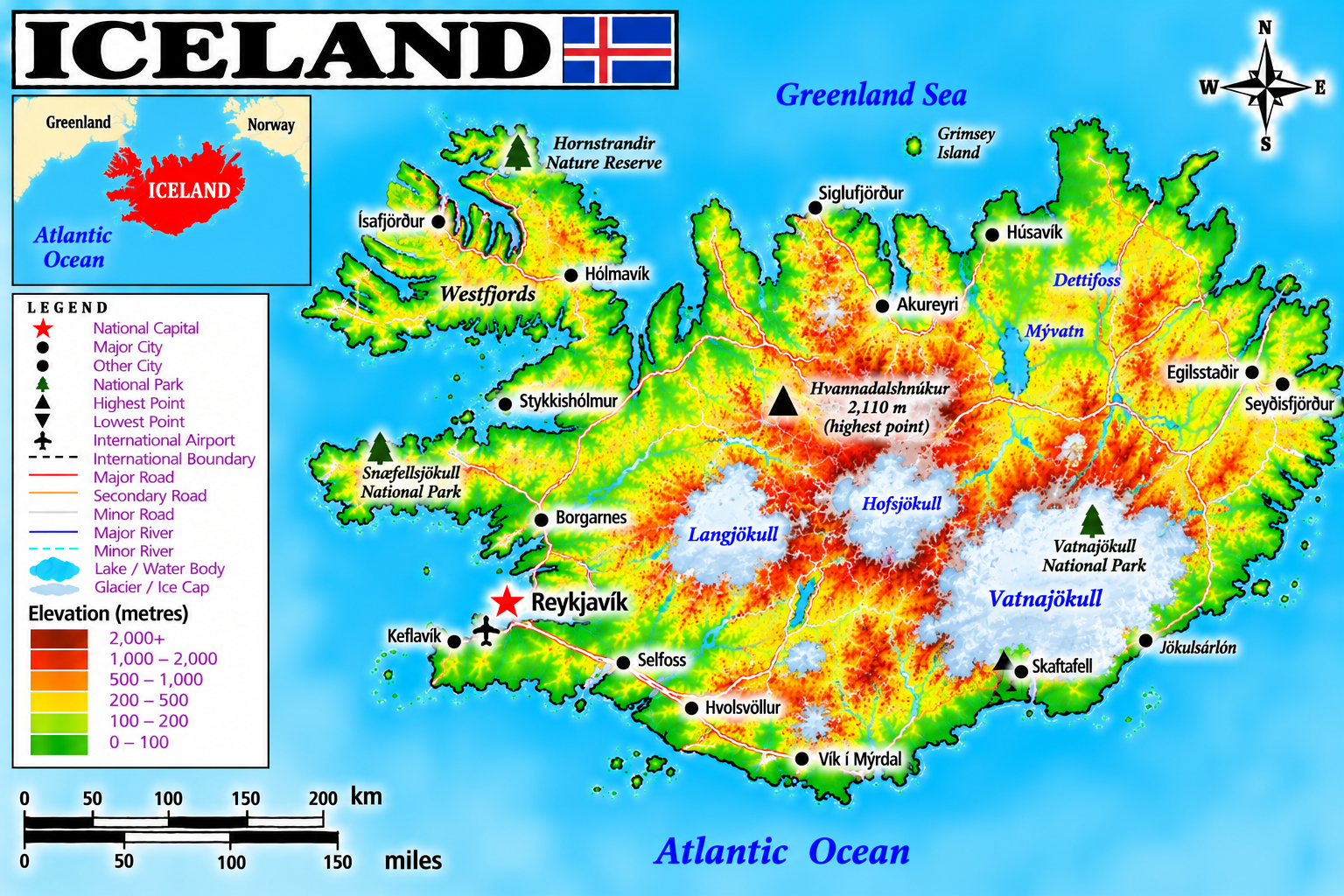
Iceland — Detailed Physical Map
Reykjanes, Langjökull and Vatnajökull glaciers, Westfjords, Dettifoss and Mývatn, major towns and the capital Reykjavík
Tourist Attractions
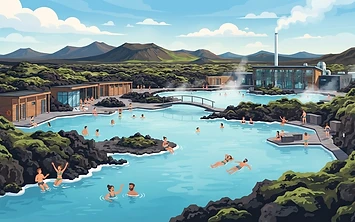
A world-famous geothermal spa set in a rugged lava field, known for its milky-blue, mineral-rich waters. It is a premier destination for relaxation and rejuvenation.
Soaking in the warm, silica-rich waters surrounded by dramatic volcanic scenery is an iconic Icelandic experience.
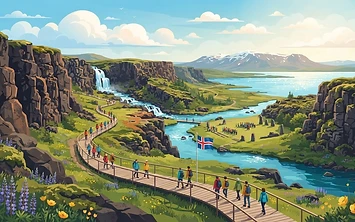
A UNESCO World Heritage site where the North American and Eurasian tectonic plates drift apart. It also served as the historic meeting place of Iceland's Althing, the world's oldest parliament.
Walking through the Almannagjá gorge allows you to stand between two continents.

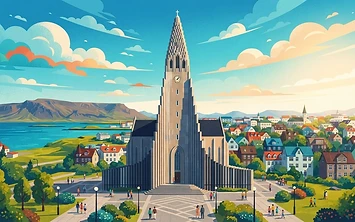
This towering Lutheran church is one of Iceland's most recognizable landmarks, designed to resemble the basalt lava flows found throughout the country. It stands as a prominent feature of the Reykjavík skyline.
The observation deck offers a stunning 360-degree panoramic view of the colorful rooftops of Reykjavík.

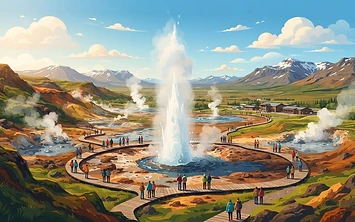
A geothermal field home to the famous Strokkur geyser, which reliably erupts every few minutes, shooting boiling water high into the air. It is a cornerstone of the classic Golden Circle route.
Watching the powerful eruption of Strokkur is a thrilling display of Iceland's raw volcanic energy.

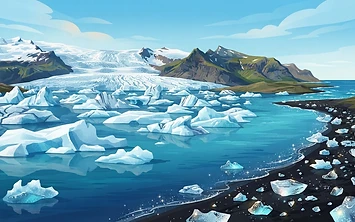
A breathtaking lagoon filled with massive icebergs that have broken off from the Breiðamerkurjökull glacier. The ice floats serenely toward the ocean, often washing up on the nearby black sand beach.
Seeing the brilliant blue icebergs drifting toward the sea is a surreal and unforgettable sight.

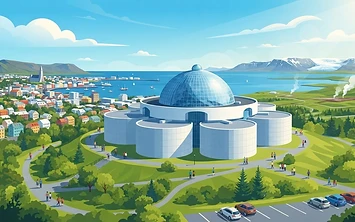
Built atop six massive geothermal water tanks, this museum features immersive exhibits on Iceland's natural wonders, including a real indoor ice cave and a planetarium.
The indoor ice cave provides a safe and accessible way to experience the structure of a glacier year-round.
Geography
Nature
Hvannadalshnukur
2,110 m / 6,923 ft
0.5% of land
≈ 515 km² of forest
FAO / World Bank, forest area (% of land area)
Explore the Nature Atlas230 km143 mi
Rises from the Hofsjokull glacier and flows into the Atlantic Ocean.
206 km128 mi
Forms the spectacular Dettifoss waterfall in northern Iceland.
25 km16 mi
Carries the largest water volume of any river in the country.
84 km²32 sq mi · 114 m deep
Located within the rift valley of the Mid-Atlantic Ridge.
37 km²14 sq mi · 4 m deep
Created by a large basaltic lava eruption thousands of years ago.
53 km²20 sq mi · 112 m deep
Legend claims a giant worm monster lives in its depths.
32 m105 ft
Plunges into a deep crevice in the Hvita river canyon.
44 m144 ft
Considered the most powerful waterfall in Europe by water volume.
River lengths are whole-river figures, including any section beyond Iceland. Researched reference figures. Tap any name for where its name comes from and a Google Maps link.
Major Cities
- 1Capital
Reykjavík
138,7532026
MapServes as the vibrant capital and largest cultural hub of Iceland, featuring the iconic Hallgrimskirkja church.
- 2
Kópavogur
40,2282026
MapHosts the prominent Smaralind shopping center and offers expansive views over the surrounding capital region.
- 3
Hafnarfjörður
32,3982026
MapBuilt among ancient lava fields, this town is widely celebrated for its rich folklore regarding local hidden people.
- 4
Reykjanesbær
22,6462026
MapFunctions as the primary gateway to the nation through its international airport located on the Reykjanes Peninsula.
- 5
Akureyri
20,4012026
MapActs as the unofficial capital of Northern Iceland, renowned for its botanical gardens and proximity to ski slopes.
- 6
Garðabær
17,7552026
MapProvides an affluent residential setting known for its beautiful coastal trails and extensive public parklands.
- 7
Sveitarfélagið Árborg
10,6042026
MapOperates as a vital agricultural and service center for the fertile farming regions of Southern Iceland.
- 8
Skagafjörður
2,8812026
MapMaintains a long history of fishing and food processing within the stunning Skagafjordur bay area.
- 9
Ísafjarðarbær
2,8142026
MapStands as the primary trade and fishing port nestled amidst the dramatic peaks of the remote Westfjords.
- 10
Sveitarfélagið Hornafjörður
2,5662026
MapServes as the gateway to Vatnajokull National Park and is famous for its thriving langoustine industry.
- 11
Múlaþing
2,5052026
MapFunctions as the largest service and transportation hub serving the scenic eastern part of the country.
- 12
Borgarbyggð
2,1082026
MapConnects western routes via a major bridge and offers historical insights into the famed Settlement Center.
City populations are the latest official, UN or national-statistics estimates (2025–2026) compounded to 2026 at 1.2% a year (the nation's annual population growth rate); figures without a published update come from the open cities database (2020-era estimates) and are projected the same way.
Economy
Main exports
Iceland's leading export commodities and products.
Tap any export to learn more. Spot prices in USD only for Live Data subscribers.
Main imports
Iceland's leading import commodities and products.
Tap any import to learn more.
Military
Historical Timeline
874
Norse Settlement of Iceland
Ingólfur Arnarson becomes the first permanent Norse settler in Iceland, marking the beginning of the Age of Settlement.
930
Establishment of the Althing
The Althing, one of the world's oldest parliamentary institutions, is established at Þingvellir, creating a central legislative body for the Icelandic commonwealth.
1000
Adoption of Christianity
The Althing officially adopts Christianity as the national religion to prevent civil unrest and potential conflict with Norway.
1262
The Old Covenant
Icelanders sign the Old Covenant with the Norwegian crown, ending the autonomy of the Icelandic Commonwealth and bringing the island under Norwegian rule.
1550
Reformation in Iceland
The Danish crown enforces the Protestant Reformation, resulting in the execution of the last Catholic bishop and the transition of Church property to the state.
1918
Act of Union
Iceland gains sovereignty as an independent kingdom in a personal union with Denmark, remaining under the Danish monarch until 1944.
1944
Founding of the Republic
Iceland formally ends its union with Denmark and declares itself an independent republic, with Sveinn Björnsson serving as the first president.
1980
Election of Vigdís Finnbogadóttir
Vigdís Finnbogadóttir is elected president, becoming the first woman in the world to be democratically elected as a head of state.
2008
Icelandic Financial Crisis
A severe systemic banking collapse leads to a deep economic recession and the eventual nationalization of the country's three largest banks.
2017
Katrín Jakobsdóttir Becomes Prime Minister
Katrín Jakobsdóttir forms a coalition government, becoming the second woman to serve as Iceland's Prime Minister.
2024
Election of Halla Tómasdóttir
Halla Tómasdóttir is elected as the President of Iceland, succeeding Guðni Th. Jóhannesson.
2025
Parliamentary Elections
Iceland holds general elections for the Althing, resulting in a new legislative session and shifts in the ruling government coalition.
National Anthem
Lofsöngur
Matthías Jochumsson
Sveinbjörn Sveinbjörnsson
1944
Ó, guð vors lands! Ó, lands vors guð! Vér lifum sem ein þjóð í þúsund ár, sem eilífðar smáblóm með titrandi tár, sem átt hefur sín ævintýr og þúsund ár. Ó, guð vors lands! Ó, lands vors guð! Vér lifum sem ein þjóð í þúsund ár, með sólskinsfótum og brosandi tár, með vonir og minningar í þúsund ár.
Lofsöngur was composed in 1874 to commemorate the one-thousandth anniversary of the first settlement of Iceland. The lyrics were written by the poet Matthías Jochumsson while he was living in Edinburgh, Scotland. The music was composed by Sveinbjörn Sveinbjörnsson, who was also residing in Edinburgh at the time. Although it was popular for decades, it was not officially recognized as the national anthem until Iceland became a republic in 1944. The anthem serves as a spiritual and patriotic tribute to the resilience of the Icelandic people throughout their history. It replaced older, unofficial hymns and remains the definitive musical expression of Icelandic national identity. The verses are frequently performed at state ceremonies and national celebrations.
National Holidays
This day marks the beginning of the new calendar year and is observed as a public holiday.
This Christian holiday commemorates the Maundy and the Last Supper of Jesus Christ with the Apostles.
This day commemorates the crucifixion of Jesus Christ and his death at Calvary.
This holiday follows Easter Sunday and celebrates the resurrection of Jesus Christ.
This is a unique Icelandic public holiday that celebrates the arrival of the first day of summer according to the old Nordic calendar.
This day commemorates Iceland's independence from Denmark in 1944 and the founding of the Republic of Iceland.
Good News Today
Iceland's central bank maintains interest rates at 8%
Iceland's central bank, Sedlabanki, unanimously decided to hold its key interest rate at 8% during its latest meeting. This decision reflects a cooling economy as policymakers monitor price pressures.
Fun Facts
Highest Per Capita Book Publishers
Icelanders are incredibly literary, with one in ten people publishing a book in their lifetime. During Christmas, the 'Jolabokaflod' tradition involves giving books as gifts and spending the evening reading.
100 Percent Renewable Energy
Nearly all of Iceland's electricity and heating is generated from renewable sources, specifically geothermal and hydroelectric power. It is one of the only countries in the world to reach this milestone.
Smallest Nation to Qualify
In 2016, Iceland became the smallest nation by population to ever qualify for the UEFA European Championship. Their unexpected success captured the hearts of football fans globally.
Land of Midnight Sun
Due to its high latitude, Iceland experiences nearly 24 hours of daylight during the summer solstice. Conversely, in winter, the sun barely rises, offering spectacular views of the Aurora Borealis.
World's Oldest Parliament
The Althing, established in 930 AD at Þingvellir, is widely considered the world's oldest surviving parliament. It was held outdoors in a dramatic rift valley between tectonic plates.
Active Volcanic Land
Iceland is one of the most volcanically active places on Earth, with a volcanic eruption occurring on average every four to five years. The island is literally being pulled apart by the Mid-Atlantic Ridge.
Historical Beer Prohibition
Beer was actually illegal in Iceland until March 1, 1989. To this day, the anniversary of the end of the prohibition is celebrated annually as 'Beer Day' in many pubs across the country.
Community Pool Culture
Almost every town in Iceland has a public geothermal swimming pool. These pools are the primary community hubs where locals go to socialize and relax, regardless of the freezing outdoor temperature.
Genetic Genealogical Treasure
Due to the country's small, isolated population, Icelanders have some of the most well-documented family trees in history. Many citizens can trace their ancestry back to the original Viking settlers.
Belief in Hidden People
A portion of the Icelandic population maintains a traditional belief in 'Huldufólk' or hidden people, such as elves. Construction projects have occasionally been altered to avoid disturbing rock formations where these beings are said to reside.
Chuckies Trivia Quiz
Chuckies Trivia Quiz
Fifteen questions on Iceland — five easy, five medium, five hard. How far can you get?
Sports & Live Events
Language
Counting to 10
1
1
= 10 (n = 0)
World Dictionary
Discover and translate any word into all supported languages.