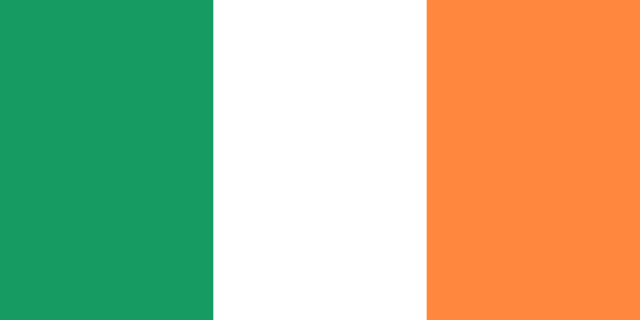

Ireland
Europe
5,379,138
04:22 UTC+0
+353
.ie
Carrauntoohil
1,041 m · 3,415 ft
Atlantic Ocean
0 m · 0 ft
605,643
Dublin · 2026
1,440,521
Dublin · 2026
Location
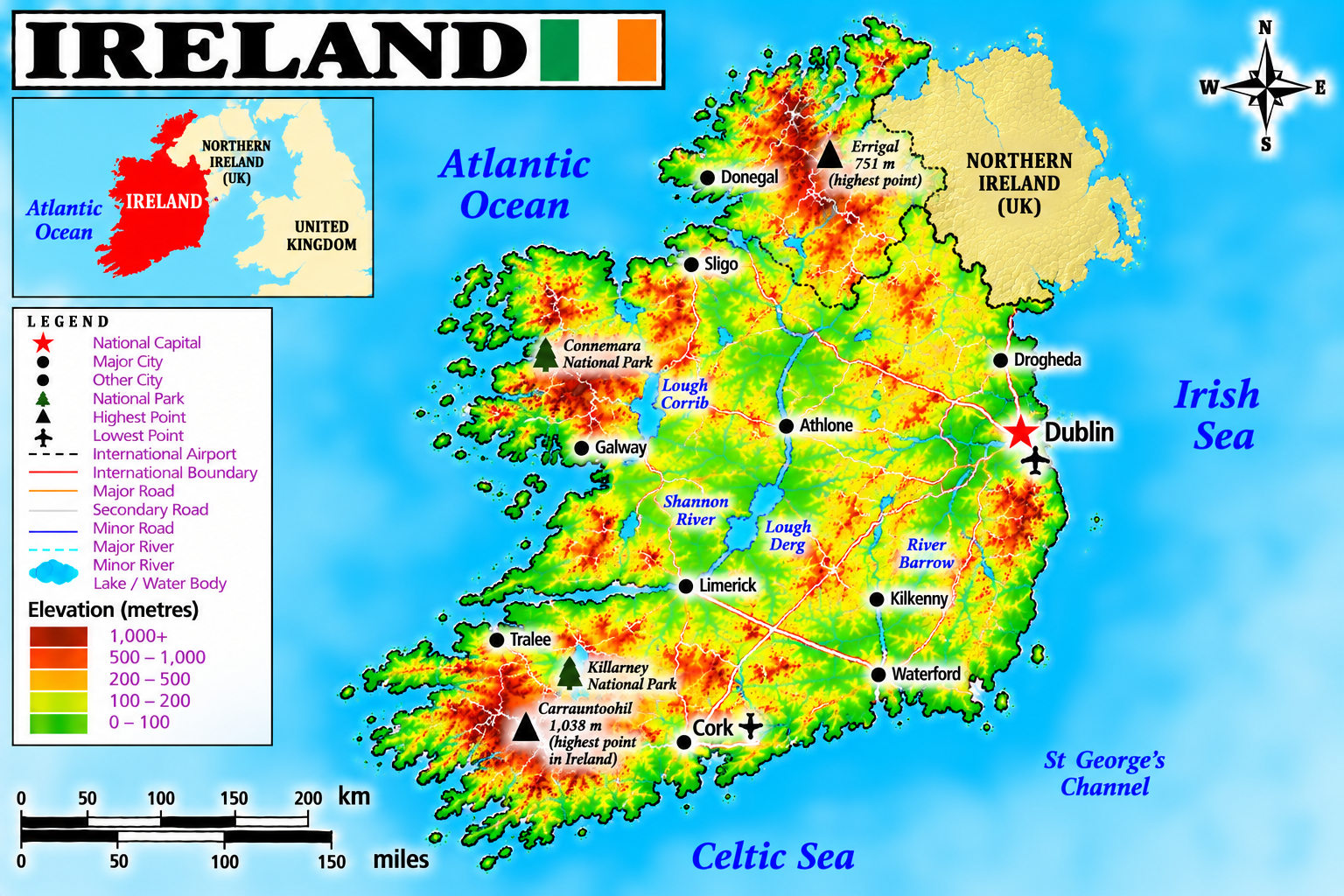
Ireland — Detailed Physical Map
The Shannon and Barrow rivers, Carrauntoohil, Connemara and Killarney parks, the Atlantic coast, major cities and the capital Dublin
Tourist Attractions

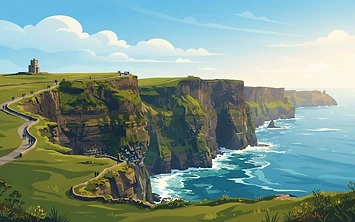
These iconic, rugged cliffs rise 214 metres above the Atlantic Ocean, offering some of the most dramatic coastal scenery in Ireland.
The breathtaking panoramic views of the Atlantic coastline are an unforgettable sight.

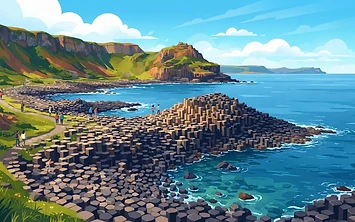
A UNESCO World Heritage site consisting of approximately 40,000 interlocking basalt columns formed by ancient volcanic activity.
Walking across the unique, hexagonal stone steps is a surreal experience steeped in local legend.

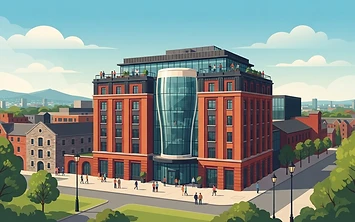
Located at the historic St. James's Gate Brewery, this multimedia experience tells the story of Ireland's most famous stout.
Enjoy a pint with a 360-degree view of Dublin from the top-floor Gravity Bar.

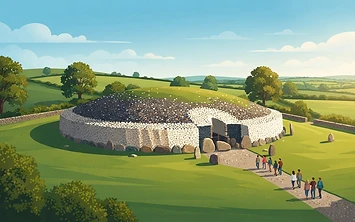
A prehistoric passage tomb dating back over 5,000 years, making it older than both Stonehenge and the Great Pyramids of Giza.
The site is world-renowned for its precise alignment with the winter solstice sunrise.

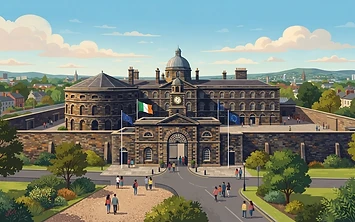
A former prison turned museum that provides a profound look into Ireland's struggle for independence and the history of its political prisoners.
The guided tours offer a deeply moving and educational perspective on key events in Irish history.

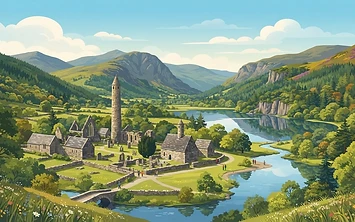
A serene 6th-century monastic settlement founded by St. Kevin, nestled within the scenic Wicklow Mountains.
The site features a remarkably well-preserved round tower and ancient stone churches set against a backdrop of two beautiful lakes.
Geography
Nature
Carrauntoohil
1,041 m / 3,415 ft
11.4% of land
≈ 8,011 km² of forest
FAO / World Bank, forest area (% of land area)
Explore the Nature Atlas360 km224 mi
Rises in County Cavan and flows through several large lakes towards the Atlantic Ocean.
192 km119 mi
Forms one of the Three Sisters rivers alongside the Nore and the Suir.
185 km115 mi
Flows through Tipperary and Waterford before entering the sea at Waterford Harbour.
176 km²68 sq mi · 49 m deep
Largest lake in the Republic of Ireland and located in County Galway.
118 km²46 sq mi · 36 m deep
Situated on the River Shannon between counties Tipperary Galway and Clare.
83 km²32 sq mi · 58 m deep
Connected to Lough Corrib by an underground stream through limestone caves.
121 m397 ft
Located near Enniskerry in County Wicklow and is the highest in Ireland.
20 m66 ft
Situated in Killarney National Park and flows from the Owinnacree River.
River lengths are whole-river figures, including any section beyond Ireland. Researched reference figures. Tap any name for where its name comes from and a Google Maps link.
Major Cities
- 1Capital
Dublin
1,312,4302026
MapServes as the capital of Ireland and serves as a major hub for technology, finance, and cultural tourism.
- 2
Cork
230,9942026
MapFunctions as a significant commercial and university city known for its vibrant culinary scene and historic harbor.
- 3
Limerick
106,2722026
MapPositions itself on the River Shannon with a history spanning from Viking settlements to medieval castles.
- 4
Galway
86,7072026
MapCelebrates a rich cultural heritage as the gateway to Connemara and a renowned center for arts and festivals.
- 5
South Dublin
83,6582026
MapActs as the administrative headquarters for South Dublin County and features a large regional hospital and shopping center.
- 6
Waterford
62,4192026
MapProduces world-famous crystal glass products and maintains a history dating back to Viking foundation in 914.
- 7
South Dublin
62,1742026
MapPreserves historic sites like Lucan House while functioning as a major residential suburb west of Dublin.
- 8
South Dublin
49,7282026
MapFeatures a well-preserved ninth-century round tower that remains a prominent landmark in the area.
- 9
Louth
45,8542026
MapStands as one of Ireland's oldest towns, located on the River Boyne near significant ancient passage tombs.
- 10
Louth
44,7912026
MapRepresents the historic fort associated with the legendary warrior Cú Chulainn in County Louth.
- 11
Fingal
42,2982026
MapMaintains the medieval Swords Castle and serves as the primary administrative center for County Fingal.
- 12
Dublin
34,2862026
MapHosts the large industrial estates and residential areas serving the northwestern suburbs of Dublin.
City populations are the latest official, UN or national-statistics estimates (2022–2022) compounded to 2026 at 0.96% a year (the nation's annual population growth rate); figures without a published update come from the open cities database (2020-era estimates) and are projected the same way.
Economy
Main exports
Ireland's leading export commodities and products.
Tap any export to learn more. Spot prices in USD only for Live Data subscribers.
Main imports
Ireland's leading import commodities and products.
Tap any import to learn more.
Military
Historical Timeline
8000 BCE
Arrival of the Mesolithic Settlers
Archaeological evidence confirms that the first human inhabitants arrived in Ireland following the end of the last glacial period. These hunter-gatherer communities established the earliest known settlements along the island's coasts and rivers.
432
Saint Patrick and the Spread of Christianity
Saint Patrick began his mission to bring Christianity to Ireland, leading to the gradual conversion of the population. This shift transformed Irish society, literacy, and cultural practices for centuries to come.
1169
The Anglo-Norman Invasion
Norman mercenaries arrived in Ireland at the invitation of a displaced king, initiating a long period of English involvement in Irish affairs. This event began the centuries-long process of Anglo-Norman consolidation and eventual colonization.
1607
Flight of the Earls
The departure of the Gaelic lords of Ulster for mainland Europe marked the end of the traditional Gaelic order in Ireland. This allowed for the Plantation of Ulster, a state-sponsored colonization that fundamentally reshaped the region's demographics.
1845
The Great Famine
A devastating potato blight triggered mass starvation and widespread emigration, resulting in a million deaths and a long-term population decline. The event fundamentally altered Irish social, economic, and political dynamics.
1916
The Easter Rising
Armed Irish republicans launched a rebellion against British rule in Dublin during Easter week. While militarily defeated, the uprising served as a catalyst for the Irish independence movement.
1922
Establishment of the Irish Free State
Following the Anglo-Irish Treaty, the Irish Free State was established as a self-governing dominion within the British Empire. This marked the birth of modern Irish statehood after years of conflict.
1949
Declaration of the Republic of Ireland
The Republic of Ireland Act formally declared the state a republic and severed all remaining constitutional ties with the British monarchy. This finalized the transition to full sovereignty.
1990
Election of Mary Robinson as President
Mary Robinson became the first woman elected to the presidency of Ireland, marking a significant shift in national social and political attitudes. Her tenure redefined the ceremonial role of the office.
1998
The Good Friday Agreement
The signing of the Good Friday Agreement largely ended the period of conflict known as the Troubles in Northern Ireland. It established a framework for power-sharing and cross-border cooperation.
2015
Same-Sex Marriage Referendum
Ireland became the first country in the world to legalize same-sex marriage through a popular national vote. This reflected a major shift in Irish societal values and civil rights.
2024
Simon Harris Becomes Taoiseach
Simon Harris was elected as the Taoiseach by Dáil Éireann, becoming the youngest person to hold the office in the history of the state. He succeeded Leo Varadkar following his unexpected resignation.
National Anthem
Amhrán na bhFiann
Liam Ó Rinn
Patrick Heeney and Peadar Kearney
1926
Sinne Fianna Fáil / Atá faoi gheall ag Éirinn / Buíon dár slua / Thar toinn do ráinig chughainn / Faoi mhóid bheith saor / Sean-tír ár sinsir feasta / Ní fhágfar faoin tíorán ná faoin tráill / Anocht a théimid sa bhearna bhaoil / Le gean ar Ghaeil chun báis nó saoil / Le gunna scréach faoi lámhach na bpiléar / Seo libh canaig amhrán na bhfiann.
The Soldier's Song, or Amhrán na bhFiann, was written in 1907 by Peadar Kearney and Patrick Heeney. The lyrics were originally written in English, with the Irish translation later produced by Liam Ó Rinn. It gained widespread popularity during the 1916 Easter Rising and became the de facto national anthem of the Irish Free State. In 1926, it was officially adopted by the Irish government as the national anthem, replacing God Save the King. While the anthem consists of three verses and a chorus, only the chorus is officially performed at public and state ceremonies. It remains a powerful symbol of Irish nationalism and historical struggle for sovereignty.
National Holidays
This public holiday marks the beginning of the new calendar year according to the Gregorian calendar.
This day commemorates Saint Patrick, the primary patron saint of Ireland, and celebrates Irish culture and heritage worldwide.
Observed on the day after Easter Sunday, this holiday holds religious significance and marks the start of the post-Easter period.
This holiday functions as a spring bank holiday, marking the traditional start of the summer season in Ireland.
This holiday provides a mid-year break and serves as a public holiday throughout the country.
This public holiday marks the height of summer and is a widely observed break for workers and students.
This holiday acts as a public break and typically aligns with the end of the harvest season and the lead-up to winter.
This public holiday commemorates the birth of Jesus Christ and is widely celebrated across the nation.
This day honors Saint Stephen, the first Christian martyr, and is traditionally observed as a public holiday following Christmas.
Good News Today
Turtle returns to sea after 22 years recovering in Irish aquarium
After two decades of care at Dingle Oceanworld Aquarium, a loggerhead turtle rescued in 2004 has been released back into the wild. The turtle was finally deemed healthy enough to return to its natural habitat after a long recovery process.
Fun Facts
St. Patrick Was Not Irish
According to tradition, St. Patrick, the patron saint of Ireland, was actually captured and brought to Ireland as a slave from Roman Britain.
No Snakes in the Wild
Due to its geographical isolation following the last glacial period, Ireland is naturally devoid of any native snake species.
Thousands of Historical Castles
Ireland is dotted with over 30,000 castles and castle ruins, ranging from simple medieval towers to expansive fortified estates.
Tradition of Uilleann Pipes
The Uilleann pipes are the national bagpipe of Ireland, characterized by a sweet tone and the use of bellows rather than a mouth-blown bag.
The Wild Atlantic Way
Ireland hosts the longest defined coastal driving route in the world, stretching over 2,500 kilometers along its rugged western edge.
The Guinness World Record
Guinness, the world-famous stout, originated in Dublin in 1759, and its founder signed a lease for the brewery for 9,000 years.
Land of Saints and Scholars
During the early Middle Ages, Irish monasteries were the primary centers of literacy and manuscript preservation in Western Europe.
The Book of Kells
Housed in Trinity College Dublin, this illuminated manuscript contains the four Gospels of the New Testament and is a masterpiece of Insular art.
Gaelic Football Popularity
Gaelic football is the most attended sport in Ireland, played on a grass pitch with an H-shaped goalpost and a round ball.
World's Greenest Landscape
Ireland's high levels of annual rainfall result in an exceptionally lush, green countryside that has earned it the nickname the Emerald Isle.
Chuckies Trivia Quiz
Chuckies Trivia Quiz
Fifteen questions on Ireland — five easy, five medium, five hard. How far can you get?
Sports & Live Events
Language
Counting to 10
1
1
= 10 (n = 0)
World Dictionary
Discover and translate any word into all supported languages.