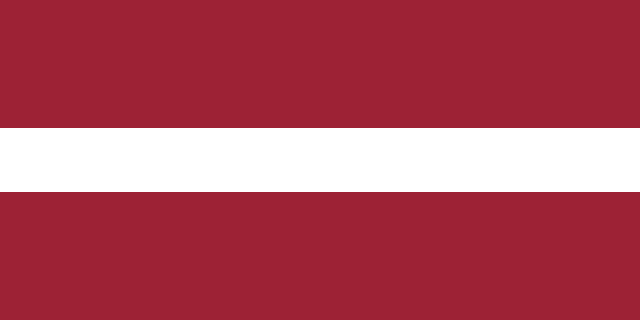

Latvia
Republic of Latvia
Europe
1,827,492
14:58 UTC+2
+371
.lv
Gaizinkalns
312 m · 1,024 ft
Baltic Sea
0 m · 0 ft
588,667
Riga · 2026
588,667
Riga · 2026
Location
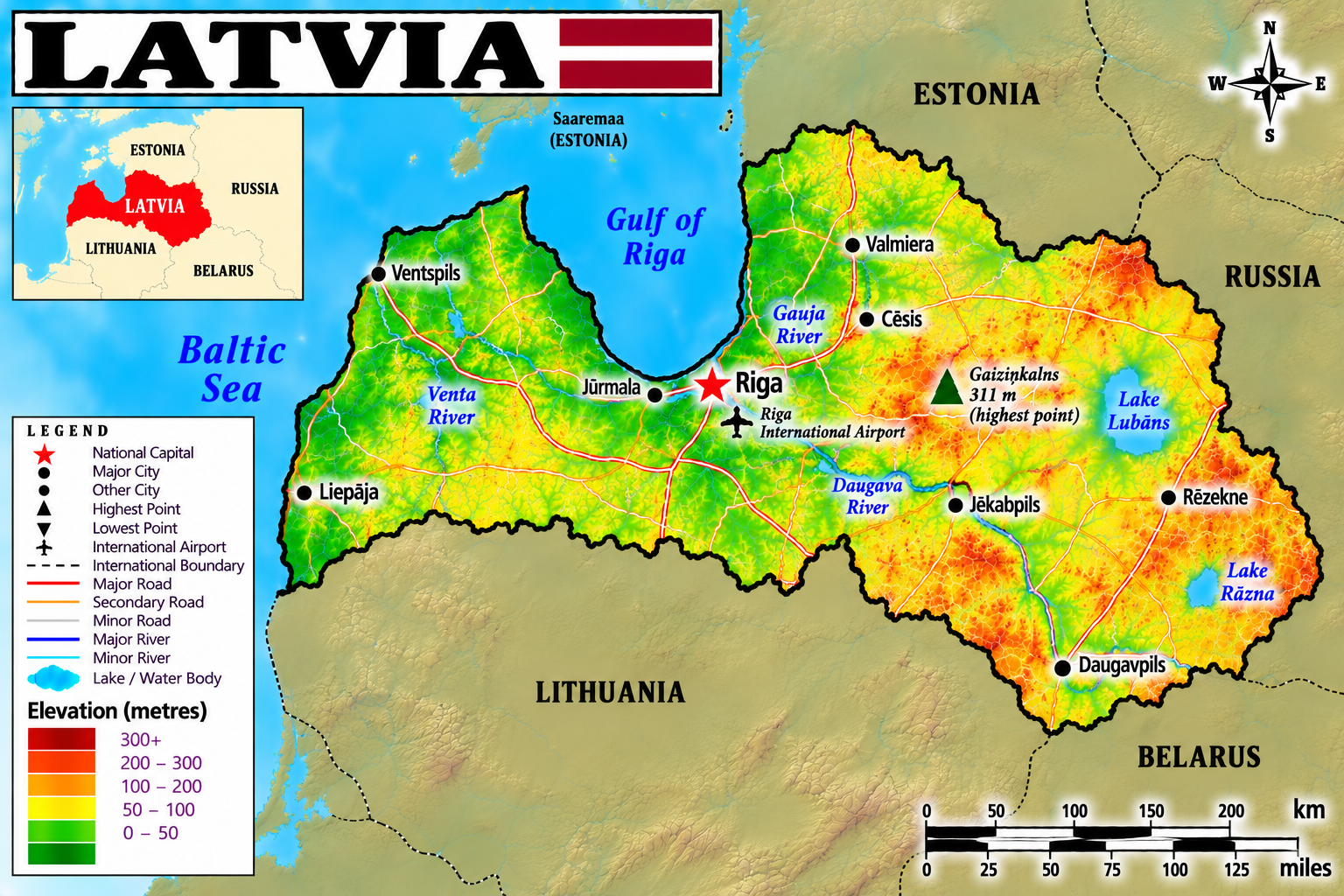
Latvia — Detailed Physical Map
The Gulf of Riga, Daugava and Gauja rivers, Gaizinkalns, Lake Lubans and Lake Razna, major cities and the capital Riga
Tourist Attractions
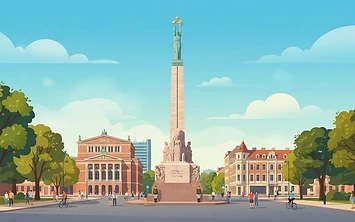
Standing on Riga's main street, this iconic monument is a symbol of Latvian independence and national unity. It features a woman holding three stars that represent the country's historical regions.
It is the most significant national symbol of Latvia and can be seen from afar.
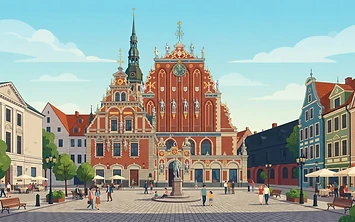
Located in the heart of the Old Town, this stunning building was originally built in the 14th century for the Brotherhood of Blackheads. It is a masterpiece of architecture and a centerpiece of Riga's historic square.
The ornate facade is one of the most photographed and recognizable landmarks in the capital.

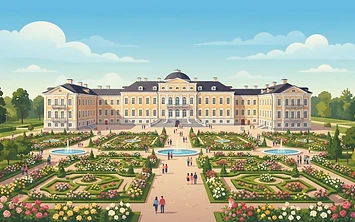
Often called the 'Baltic Versailles,' this 18th-century Baroque and Rococo masterpiece was designed by the architect Francesco Rastrelli. It features lavishly decorated state rooms and an expansive, beautifully restored rose garden.
The palace offers a rare glimpse into the opulent lifestyle of the Dukes of Courland.

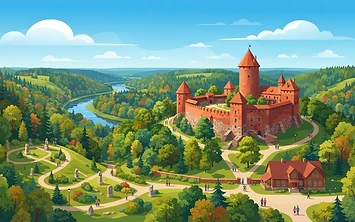
This expansive site near the Gauja River features a well-preserved medieval red-brick castle and the Folk Song Garden. It is a place where history, nature, and Latvian poetic traditions converge.
Climbing the castle tower provides breathtaking panoramic views of the Gauja River Valley.

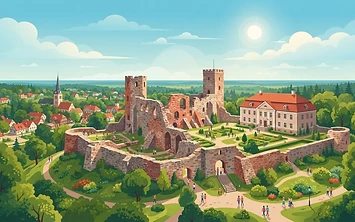
Founded over 800 years ago, these impressive medieval ruins offer a deep dive into the history of the Livonian Brothers of the Sword and the Teutonic Order. The site includes both the ancient stone ruins and a newer manor house museum.
Visitors can explore the dark, atmospheric castle ruins using traditional lanterns.

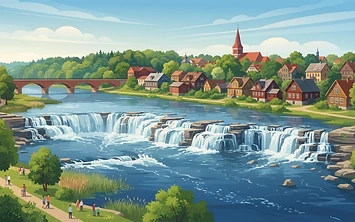
Located on the Venta River, this natural wonder is famously known as the widest waterfall in Europe. The zigzagging ribbon of water creates a picturesque scene framed by the town's historic wooden architecture.
It is an impressive natural sight, especially during the spring when fish can be seen jumping over the falls.
Geography
Nature
Gaizinkalns
312 m / 1,024 ft
53.0% of land
≈ 34,216 km² of forest
FAO / World Bank, forest area (% of land area)
Explore the Nature Atlas1,020 km634 mi
Originates in the Valdai Hills of Russia and flows into the Gulf of Riga.
452 km281 mi
Flows entirely within the borders of Latvia.
346 km215 mi
Its drainage basin covers parts of both Lithuania and Latvia.
81 km²31 sq mi · 4 m deep
Largest lake by surface area in the country.
58 km²22 sq mi · 17 m deep
Known for its sandy beaches and status as the largest lake by volume.
40 km²15 sq mi · 4 m deep
Rich in legends and folklore associated with the national epic Lāčplēsis.
2 m7 ft
Widest waterfall in Europe.
1 m3 ft
Located on the Abava River and features a prominent horseshoe shape.
River lengths are whole-river figures, including any section beyond Latvia. Researched reference figures. Tap any name for where its name comes from and a Google Maps link.
Major Cities
- 1Capital
Rīga
588,9112026
MapLatvia's capital serves as the country's economic and cultural hub, renowned for its extensive collection of Art Nouveau architecture.
- 2
Augšdaugava
77,4862026
MapLatvia's second-largest city is historically significant for its massive 19th-century fortress and diverse multi-ethnic cultural heritage.
- 3
Liepāja
66,7462026
MapCoastal city known as a major ice-free port and a center for wind energy production and rock music.
- 4
Jelgava
54,4082026
MapFormer capital of the Duchy of Courland, home to the baroque-style Jelgava Palace designed by Bartolomeo Rastrelli.
- 5
Jūrmala
52,9262026
MapResort town famous for its long sandy beaches, wooden art nouveau villas, and mineral water spas.
- 6
Ventspils
32,4792026
MapMajor transit and cargo port town celebrated for its well-maintained flower displays and numerous colorful cow statues.
- 7
Rēzekne
25,9782026
MapKnown as the heart of the Latgale region, this city features the modern Gors concert hall and local cultural heritage.
- 8
Valmiera
22,7462026
MapIndustrial and educational center of the Vidzeme region, recognized for its strong sports culture and long-standing professional theater.
- 9
Ogre
22,4992026
MapFormer popular Soviet-era spa destination located at the confluence of the Ogre and Daugava rivers.
- 10
Jēkabpils
20,6852026
MapStrategic town located on both banks of the Daugava river, serving as an important regional trade and transportation hub.
- 11
Salaspils
17,8552026
MapSite of the infamous former Nazi concentration camp, now marked by a somber and monumental memorial park.
- 12
Mārupe
17,0582026
MapRapidly growing suburb of Riga that serves as a modern residential area adjacent to the international airport.
City populations are the latest official, UN or national-statistics estimates (2026–2026) compounded to 2026 at -0.8% a year (the nation's annual population growth rate); figures without a published update come from the open cities database (2020-era estimates) and are projected the same way.
Economy
Main exports
Latvia's leading export commodities and products.
Tap any export to learn more. Spot prices in USD only for Live Data subscribers.
Main imports
Latvia's leading import commodities and products.
Tap any import to learn more.
Military
Historical Timeline
9000 BCE
Arrival of the Kunda Culture
Following the retreat of the glaciers, the earliest hunter-gatherer tribes settled in the territory of present-day Latvia. These groups established the Kunda culture, marking the beginning of human habitation in the region.
1201
Founding of Riga
Bishop Albert of Riga founded the city of Riga, which quickly became a major center for the Livonian Crusade and trade in the Baltic region. The city later joined the Hanseatic League and flourished as a key commercial hub.
1561
Creation of the Duchy of Courland and Semigallia
Following the collapse of the Livonian Order, the Duchy of Courland and Semigallia was established as a vassal state of the Polish-Lithuanian Commonwealth. It eventually grew into a significant maritime power with colonies in Africa and the Caribbean.
1918
Declaration of Independence
On November 18, 1918, the People's Council of Latvia proclaimed independence after the collapse of the Russian Empire. This led to the Latvian War of Independence, which concluded with a victory against Soviet forces.
1940
Soviet Occupation
Under the terms of the Molotov-Ribbentrop Pact, the Soviet Union occupied and annexed Latvia in June 1940. This marked the beginning of a period characterized by mass deportations and forced political alignment.
1991
Restoration of Independence
Latvia formally restored its independence from the Soviet Union on August 21, 1991, following the collapse of the central Soviet government. This action initiated a transition to a democratic parliamentary republic and a market economy.
1999
Election of Vaira Vīķe-Freiberga
Vaira Vīķe-Freiberga was elected by the Saeima to serve as the President of Latvia, becoming the first woman to hold the office. Her leadership was instrumental in the country's integration into Western alliances.
2004
Accession to NATO and European Union
Latvia officially joined both NATO and the European Union, formalizing its integration into European security and economic structures. This represented a key milestone in re-establishing its geopolitical alignment with the West.
2014
Adoption of the Euro
Latvia officially adopted the euro as its national currency, replacing the lats. This transition marked the final step in the country's economic integration into the Eurozone.
2022
National Security and Defense Laws
In response to regional security concerns, the Saeima passed significant legislation to reintroduce compulsory military service. This defense policy shift aimed to bolster the nation's combat readiness and deterrence capabilities.
2023
Election of Edgars Rinkēvičs
The Saeima elected Edgars Rinkēvičs as the President of Latvia. He became the first openly gay head of state in a European Union member country.
2025
Implementation of the Unified Education Law
Latvia completed the full transition of the national school curriculum to the Latvian language, phasing out Russian-language education in public schools. This major policy change was aimed at strengthening national identity and social cohesion.
National Anthem
Dievs, svētī Latviju!
Kārlis Baumanis
Kārlis Baumanis
1920
Dievs, svētī Latviju, Mūs' dārgo tēviju, Svētī jel Latviju, Ak, svētī jel to! Kur latvju meitas zied, Kur latvju dēli dzied, Laid mums tur laimē diet, Mūs' Latvijā!
The anthem was written in 1873 by Kārlis Baumanis, a schoolteacher and member of the Young Latvians movement. Originally intended as a patriotic song, it was performed at the first National Song Festival in Riga in 1873. The lyrics initially used the word 'Baltics' instead of 'Latvia' to avoid censorship by the Russian Empire authorities. Following Latvia's declaration of independence in 1918, the song was officially adopted as the state anthem in 1920. During the period of Soviet occupation from 1940 to 1990, the anthem was officially banned and replaced by the anthem of the Latvian Soviet Socialist Republic. It was reinstated as the national anthem upon the restoration of Latvian independence in 1990. Today, it serves as a powerful symbol of national unity, identity, and the struggle for sovereignty.
National Holidays
This day marks the beginning of the new calendar year and is observed as a public holiday throughout Latvia.
This Christian holiday commemorates the crucifixion of Jesus Christ and his death at Calvary.
This holiday celebrates the resurrection of Jesus Christ from the dead as described in the New Testament.
This day marks the anniversary of the first meeting of the Constituent Assembly of Latvia in 1920 and is also celebrated as International Workers' Day.
This date commemorates the adoption of the Declaration on the Restoration of Independence of the Republic of Latvia in 1990.
Known as Jani, this traditional festival celebrates the summer solstice with folk music, bonfires, and traditional foods.
This day marks the anniversary of the proclamation of the Republic of Latvia in 1918.
This holiday celebrates the birth of Jesus Christ and is widely observed as a festive family gathering.
Good News Today
Latvia crowned Unity EURO Cup 2026 Champions
Latvia secured their second Unity EURO Cup title by defeating the Republic of Ireland in a final match held in Italy. The tournament, organized by UEFA and UNHCR, celebrates social inclusion by uniting refugees and host community players through football.
Fun Facts
Forest Covered National Landscape
Latvia is one of the greenest countries in Europe, with over half of its land area covered by dense, pristine forests.
Land of Singing People
Latvia hosts the massive Latvian Song and Dance Festival, where tens of thousands of singers perform together in an enormous outdoor choir.
Birthplace of Iconic Fashion
The denim jeans as we know them were co-invented by Latvian-born tailor Jacob W. Davis, who added copper rivets to strengthen trousers in 1871.
Turaida Castle Legend
The 13th-century Turaida Castle is associated with the famous legend of the Rose of Turaida, a symbol of eternal love and sacrifice.
Oldest Brewing Traditions
Latvians have been brewing beer for centuries, and the country boasts a unique style of farmhouse ale that is still made using traditional yeast strains.
Rundāle Palace Baroque Masterpiece
Often called the Versailles of the Baltics, the Rundāle Palace features a stunning collection of ornate rooms and massive rose gardens.
Midsummer Solstice Celebration
The Jāņi festival is a profound ancient tradition where locals celebrate the summer solstice by lighting bonfires and staying up all night to watch the sunrise.
Winter Sport Bobsleigh Powerhouse
Despite its flat terrain, Latvia is a world-class powerhouse in professional bobsleigh and luge competitions.
National Library Architecture
The National Library of Latvia, known as the Castle of Light, was designed to resemble a mountain rising out of the Daugava River.
Rich Folklore and Mythology
Latvian folk traditions are deeply connected to nature, with thousands of 'dainas'—short, poetic folk songs—that have been passed down through generations.
Chuckies Trivia Quiz
Chuckies Trivia Quiz
Fifteen questions on Latvia — five easy, five medium, five hard. How far can you get?
Sports & Live Events
Language
Counting to 10
1
1
= 10 (n = 0)
World Dictionary
Discover and translate any word into all supported languages.