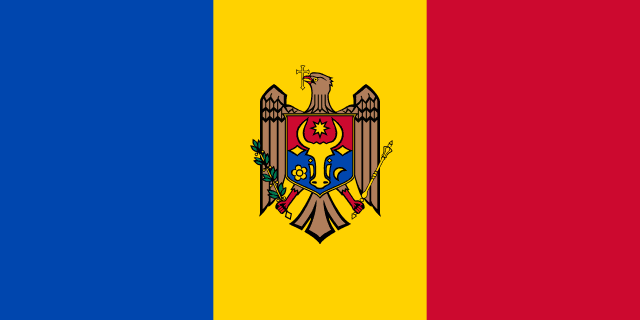

Moldova
Republic of Moldova
Europe
2,939,511
07:47 UTC+2
+373
.md
Dealul Balanesti
430 m · 1,411 ft
Dniester River
2 m · 7 ft
653,114
Chisinau · 2026
653,114
Chisinau · 2026
Location
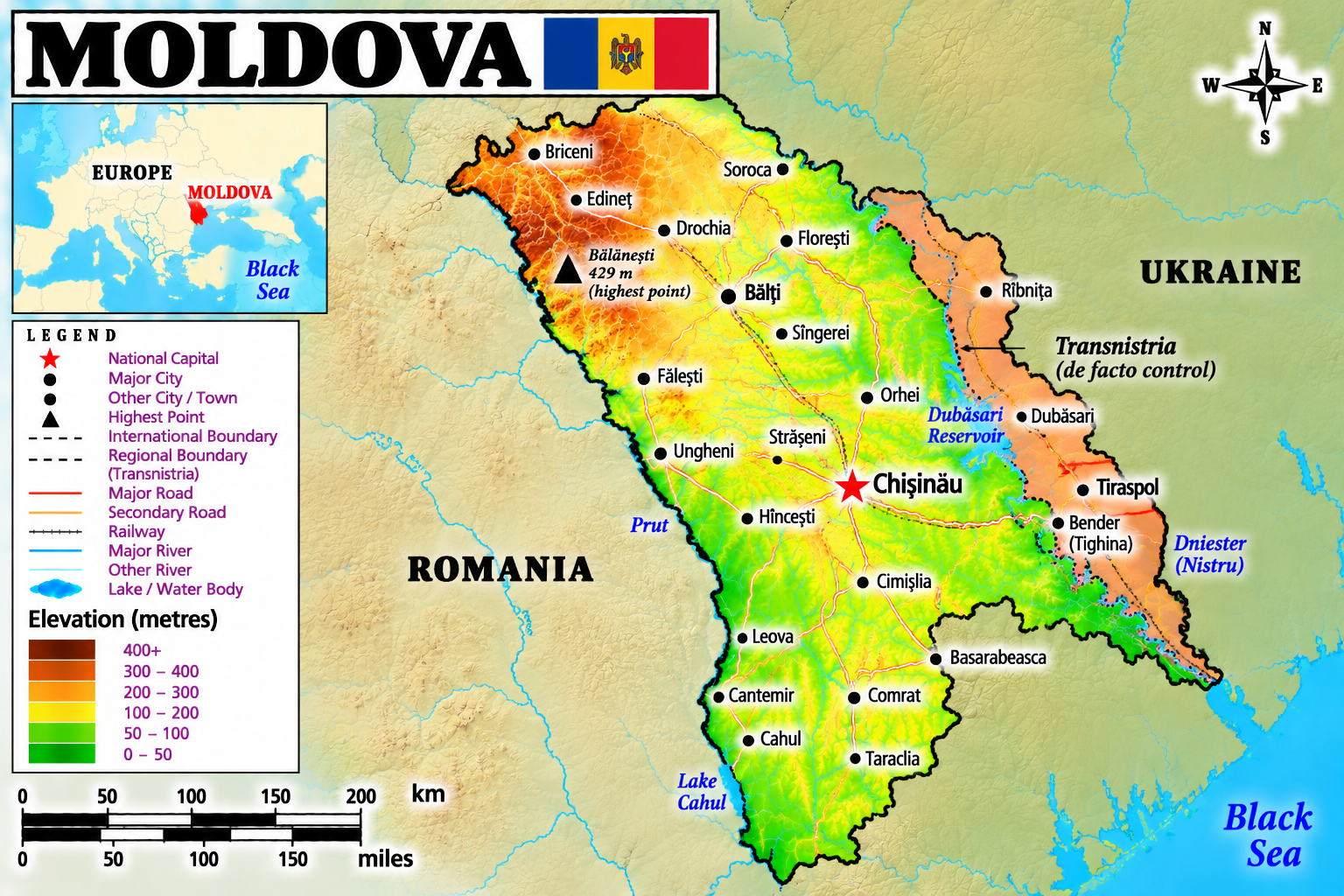
Moldova — Detailed Physical Map
The Dniester and Prut rivers, Bălănești hill, Transnistria, Bălți and Orhei, major cities and the capital Chișinău
Tourist Attractions

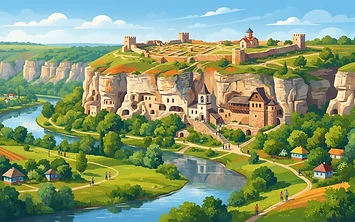
An archaeological complex featuring ancient cave monasteries and ruins carved into limestone cliffs above the Răut River. It has been inhabited since the 13th century and remains a site of deep spiritual and historical significance.
The dramatic landscape of the cave monastery overlooking the river bend is the most iconic view in Moldova.

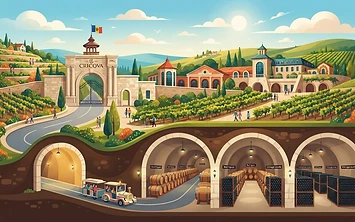
A world-famous underground wine city featuring an extensive network of tunnels that house a massive collection of vintage wines. It is one of the largest and most unique wine cellars in the world.
Exploring the vast, subterranean streets of this wine city by car is an unforgettable experience.

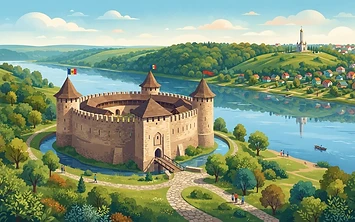
A well-preserved 16th-century stone fortress built by Petru Rareș on the banks of the Dniester River. Its unique circular design and defensive towers played a crucial role in the region's military history.
It is one of the best-preserved medieval fortifications in the country, offering a direct link to Moldova's defensive past.

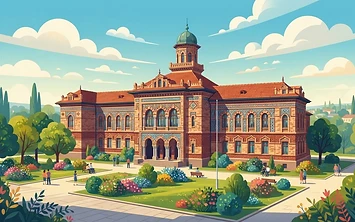
The oldest public museum in Moldova, housed in an impressive building with distinct oriental architectural influences. It showcases extensive collections related to the country's natural history and traditional culture.
The museum's unique architecture and its onsite vivarium make it a top cultural destination in the capital.

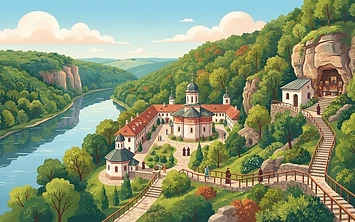
A sacred Orthodox site set in a forested gorge along the Dniester River, known for its peaceful atmosphere and religious heritage. A walking trail leads visitors to a natural rock formation believed to be the footprint of the Virgin Mary.
The combination of the serene monastery and the nearby cascading waterfalls creates a beautiful natural and spiritual retreat.

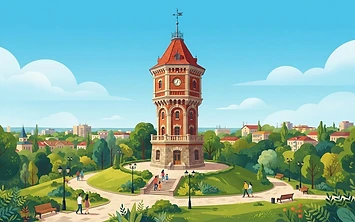
Also known as the Water Tower, this 19th-century architectural landmark serves as a museum dedicated to the history of the capital. It is a striking example of the city's industrial and architectural heritage.
The tower provides a stunning 360-degree panoramic view of Chișinău's rooftops from its observation level.
Geography
Nature
Dealul Balanesti
430 m / 1,411 ft
11.6% of land
≈ 3,926 km² of forest
FAO / World Bank, forest area (% of land area)
Explore the Nature Atlas1,362 km846 mi
Originates in the Carpathian Mountains and forms a significant portion of the border.
953 km592 mi
Serves as the natural western border separating the country from Romania.
286 km178 mi
Flows entirely within the country before joining the Dniester.
9 km²3 sq mi · 2 m deep
Located in the Prut River floodplain and is a protected nature reserve.
1 km²0 sq mi
Situated near the Prut River, it is part of the Lower Prut wetlands.
10 m33 ft
Located within the Saharna Monastery complex area.
16 m52 ft
Found in the rocky gorge of the Tipova canyon.
River lengths are whole-river figures, including any section beyond Moldova. Researched reference figures. Tap any name for where its name comes from and a Google Maps link.
Major Cities
- 1Capital
Chişinău
551,7192026
MapServes as the capital and primary administrative, economic, and cultural center of Moldova.
- 2
Stînga Nistrului
126,4882026
MapFunctions as the capital and administrative seat of the breakaway Transnistria region.
- 3
Bălţi
88,4972026
MapActs as the major industrial and transport hub in the northern region of the country.
- 4
Bender
84,6502026
MapFeatures a historic medieval fortress built by the Ottoman Empire on the Dniester River.
- 5
Stînga Nistrului
41,9042026
MapHosts one of the largest industrial complexes in the region, focusing on steel production.
- 6
Stînga Nistrului
26,8632026
MapLocated near a strategically significant hydroelectric power station on the Dniester River.
- 7
Ungheni
25,7422026
MapConnects Moldova to Romania via a major international rail bridge over the Prut River.
- 8
Orhei
22,6252026
MapProximity to the Orheiul Vechi cave monastery site makes it a significant cultural landmark.
- 9
Cahul
21,3062026
MapRenowned for its natural thermal springs and wellness spa facilities located in the south.
- 10
Soroca
21,1102026
MapFamous for a well-preserved fifteenth-century stone fortress built by Stefan cel Mare.
- 11
Găgăuzia
19,0372026
MapServes as the capital and administrative center of the autonomous region of Gagauzia.
- 12
Stînga Nistrului
13,0562026
MapFunctions as an agricultural center located in the southern part of the Transnistria region.
City populations are the latest official, UN or national-statistics estimates (2024–2026) compounded to 2026 at -1.36% a year (the nation's annual population growth rate); figures without a published update come from the open cities database (2020-era estimates) and are projected the same way.
Economy
Main exports
Moldova's leading export commodities and products.
Tap any export to learn more. Spot prices in USD only for Live Data subscribers.
Main imports
Moldova's leading import commodities and products.
Tap any import to learn more.
Military
Historical Timeline
30000 BCE
Early Upper Paleolithic Occupation
Evidence of early human presence in the Dniester region dates back to the Upper Paleolithic period with nomadic groups establishing seasonal camps. These early inhabitants shaped the region's cultural foundations long before the formation of formal states.
1359
Founding of the Principality of Moldavia
Bogdan I led a successful revolt against Hungarian rule, establishing the independent Principality of Moldavia. This act solidified the region's identity as a distinct political entity in Eastern Europe.
1457
Reign of Stephen the Great
Stephen the Great ascended to the throne, beginning a long reign marked by the strengthening of the state and military defense against the Ottoman Empire. He is considered the most significant national hero and a symbol of Moldavian resistance.
1812
Annexation of Bessarabia by Russia
Following the Russo-Turkish War, the Ottoman Empire ceded the eastern part of Moldavia, known as Bessarabia, to the Russian Empire. This event split the historic Moldavian territory and significantly altered its political and demographic landscape.
1917
Establishment of the Moldavian Democratic Republic
Amid the collapse of the Russian Empire, Sfatul Țării was formed as a representative assembly to govern Bessarabia. It eventually declared the territory an autonomous and later independent republic.
1918
Union with Romania
The Sfatul Țării voted for the unification of Bessarabia with the Kingdom of Romania, ending a period of intense political instability. This union lasted until the onset of World War II.
1940
Soviet Occupation of Bessarabia
Following the Molotov-Ribbentrop Pact, the Soviet Union issued an ultimatum to Romania and annexed Bessarabia. The territory was subsequently reorganized into the Moldavian Soviet Socialist Republic.
1991
Independence from the Soviet Union
Moldova declared its independence on August 27, 1991, following the dissolution of the Soviet Union. This marked the birth of the modern sovereign state.
2020
Election of First Female President
Maia Sandu was elected as the first female president in Moldova's history. Her victory signaled a strong public commitment to European integration and anti-corruption reforms.
2022
Granting of EU Candidate Status
The European Council officially granted Moldova the status of a candidate country for European Union membership. This marked a major geopolitical shift toward Western European institutions.
2024
Presidential Re-election and Constitutional Referendum
Maia Sandu secured a second term as president in a runoff election, concurrently with a national referendum that narrowly favored enshrining EU membership in the constitution. These results confirmed the country's strategic pivot toward European integration.
2025
Legislative Elections and Government Formation
General parliamentary elections were held to determine the composition of the legislature and the future direction of the governing coalition. These elections remained a critical test for the stability of Moldova's democratic institutions.
National Anthem
Limba noastră
Alexei Mateevici
Alexandru Cristea
1994
Limba noastră-i o comoară În adâncuri înfundată Un șirag de piatră rară Pe moșie revărsată. Limba noastră-i foc ce arde Într-un neam ce fără veste S-a trezit din somn de moarte Ca viteazul din poveste. Limba noastră-i frunză verde Zbuciumul din codrii vechi Nistrul lin ce-n valuri pierde Ai luceferilor veghi. Limba noastră-i limbă sfântă Limba vechilor cazanii Care o ascultă și o cântă Pe la vatra lor țăranii.
The lyrics for 'Limba noastră' were written by the Bessarabian poet Alexei Mateevici in 1917 during the wave of national revival that preceded the union of Bessarabia with Romania. The music was composed by Alexandru Cristea in the mid-1930s, reflecting a deep appreciation for the Romanian language and cultural identity in the region. Following Moldova's independence from the Soviet Union, the song was officially adopted as the national anthem on July 22, 1994. It replaced the previous anthem, 'Deșteaptă-te, române!', which Moldova had shared with Romania. The anthem emphasizes the preservation and importance of the Romanian language as the core of Moldovan national consciousness. It is performed on official state occasions and symbolizes the country's unique cultural heritage and historical resilience.
National Holidays
This day marks the beginning of the new calendar year and is celebrated nationwide as a public holiday.
This day commemorates the social, economic, cultural, and political achievements of women and is widely celebrated across Moldova.
This date commemorates the victory of the Allied forces over Nazi Germany in World War II.
This holiday marks the adoption of the Declaration of Independence of the Republic of Moldova from the Soviet Union in 1991.
Also known as Limba Noastra, this day celebrates the Romanian language and its role in Moldovan culture and national identity.
Good News Today
Moldova advances toward EU membership with new accession cluster negotiations
EU ambassadors have approved the screening letters for Moldova to open two final accession clusters, marking a significant milestone in the country's integration process. This progress follows a positive assessment from the European Commission, recognizing the country's successful implementation of key reforms.
Fun Facts
World's Largest Underground Wine Cellar
The Mileştii Mici winery features over 200 kilometers of tunnels, housing the world's largest collection of wine with nearly two million bottles.
Traditional Mărțișor Spring Festival
Every March 1st, people celebrate spring by wearing small red and white woven pins called Mărțișor to symbolize vitality and purity.
Orheiul Vechi Cave Monastery
This historical complex features a 13th-century Orthodox monastery carved directly into a limestone cliff overlooking the Răut River.
Official State Bird Symbol
The golden eagle is the national emblem of Moldova, representing the country's ancient heritage and strength.
Mămăligă Is National Comfort Food
Mămăligă, a dense cornmeal porridge, is a staple dish historically served as a substitute for bread in rural Moldovan households.
Unique Narrow Gauge Railway Heritage
Moldova retains a specific track gauge inherited from the Russian Empire, making it a transit junction for trains between Eastern and Western Europe.
Exceptional Wildflower Honey Production
Due to its diverse flora, Moldova is a top producer of high-quality organic linden and acacia honey exported across Europe.
Rich Traditional Folk Music Roots
The 'Cobza,' a short-necked string instrument, is essential to traditional Moldovan folk music and remains a symbol of national identity.
Codru Forest Nature Reserve
The Codru Scientific Reserve is the oldest nature reserve in the country, preserving hundreds of species of rare flora and ancient oak forests.
Ancient Cucuteni-Trypillian Civilization Sites
Moldova sits on the territory of the prehistoric Cucuteni-Trypillian culture, known for creating some of the world's most sophisticated painted ceramics.
Chuckies Trivia Quiz
Chuckies Trivia Quiz
Fifteen questions on Moldova — five easy, five medium, five hard. How far can you get?
Sports & Live Events
Language
Counting to 10
1
1
= 10 (n = 0)
World Dictionary
Discover and translate any word into all supported languages.