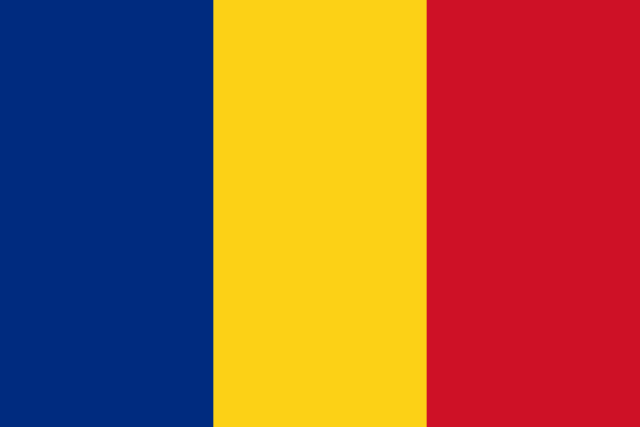
Romania
Europe

19,000,000
14:01 UTC+3
+40
Location
Geography
Economy
Main exports
Romania's leading export commodities and products.
Subscribe to Live Data for live spot prices
Live commodity prices on every nation's exports — $100 AUD/year.
Tap any export to learn more. Spot prices in USD only for Live Data subscribers.
Main imports
Romania's leading import commodities and products.
Tap any import to learn more.
Military
Historical Timeline
35000 BCE
Arrival of Early Modern Humans
Evidence from the Peștera cu Oase cave indicates the presence of some of the earliest modern humans in Europe. This marks the initial settlement of the region by anatomically modern ancestors.
106
Roman Conquest of Dacia
Emperor Trajan defeated King Decebalus, turning Dacia into a Roman province. This event initiated the Romanization process that influenced the Romanian language and culture.
1359
Establishment of the Principality of Moldavia
Bogdan I led a successful revolt against Hungarian authority to establish an independent Moldavian state. This solidified one of the two foundational Romanian principalities.
1600
First Union of Romanian Principalities
Michael the Brave achieved the first temporary unification of Wallachia, Moldavia, and Transylvania under his rule. Although short-lived, it became a powerful symbol for future national unity.
1859
Unification of Wallachia and Moldavia
Alexandru Ioan Cuza was elected as the ruler of both principalities, creating the United Principalities of Romania. This move effectively laid the foundation for the modern Romanian state.
1877
Proclamation of Romanian Independence
Romania officially declared its independence from the Ottoman Empire during the Romanian War of Independence. This status was formally recognized by the Great Powers at the Congress of Berlin.
1918
The Great Union of Romania
At the end of World War I, Transylvania, Bukovina, and Bessarabia united with the Kingdom of Romania. This event established the borders of Greater Romania.
1947
Proclamation of the People's Republic
Following Soviet pressure, King Michael I was forced to abdicate, and the monarchy was abolished. Romania became a communist state under the influence of the Soviet Union.
1989
The Romanian Revolution
A series of violent protests led to the overthrow of Nicolae Ceaușescu and the fall of the communist regime. This transition marked the beginning of democratization in the country.
2004
Accession to NATO
Romania officially joined the North Atlantic Treaty Organization. This integration anchored the country firmly within Western military and political structures.
2007
Accession to the European Union
Romania officially became a member state of the European Union. This transformed the nation's economy and accelerated legislative alignment with European standards.
2024
Full Schengen Area Accession
Romania joined the Schengen area with its air and maritime borders. This represented a major milestone in the country's full integration into the European common space.
National Holidays
These dates mark the beginning of the new calendar year and are official public holidays in Romania.
This holiday commemorates the resurrection of Jesus Christ and is the most significant religious celebration in Romania, involving both Easter Sunday and the following Monday.
International Workers' Day is celebrated to honor the contributions of workers and the labor movement.
This day honors Saint Andrew, the protector of Romania, and serves as a major religious and national holiday.
This is Romania's national day, commemorating the unification of Transylvania, Bessarabia, and Bukovina with the Romanian Kingdom in 1918.
These dates mark the celebration of the birth of Jesus Christ, observed as a major religious and cultural holiday across the country.
Language
Counting to 10
1
1
= 10 (n = 0)
World Dictionary
Discover and translate any word into all supported languages.
The multilingual Dictionary is a Nations Pro feature.
Upgrade to Pro