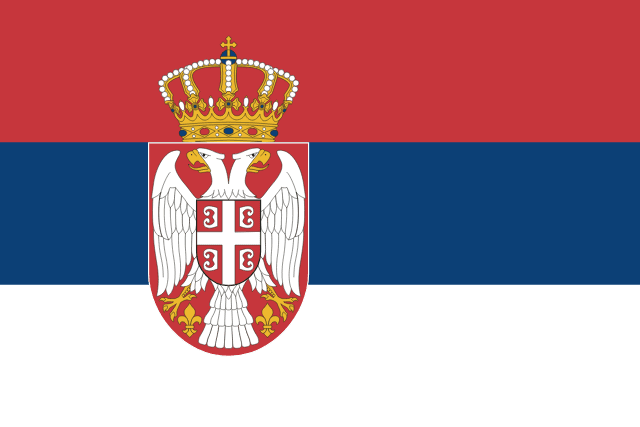

Serbia
Republic of Serbia
Europe
6,513,154
13:45 UTC+1
+381
.rs
Midzor
2,169 m · 7,116 ft
Iron Gate
35 m · 115 ft
1,386,741
Belgrade · 2026
1,386,741
Belgrade · 2026
Location
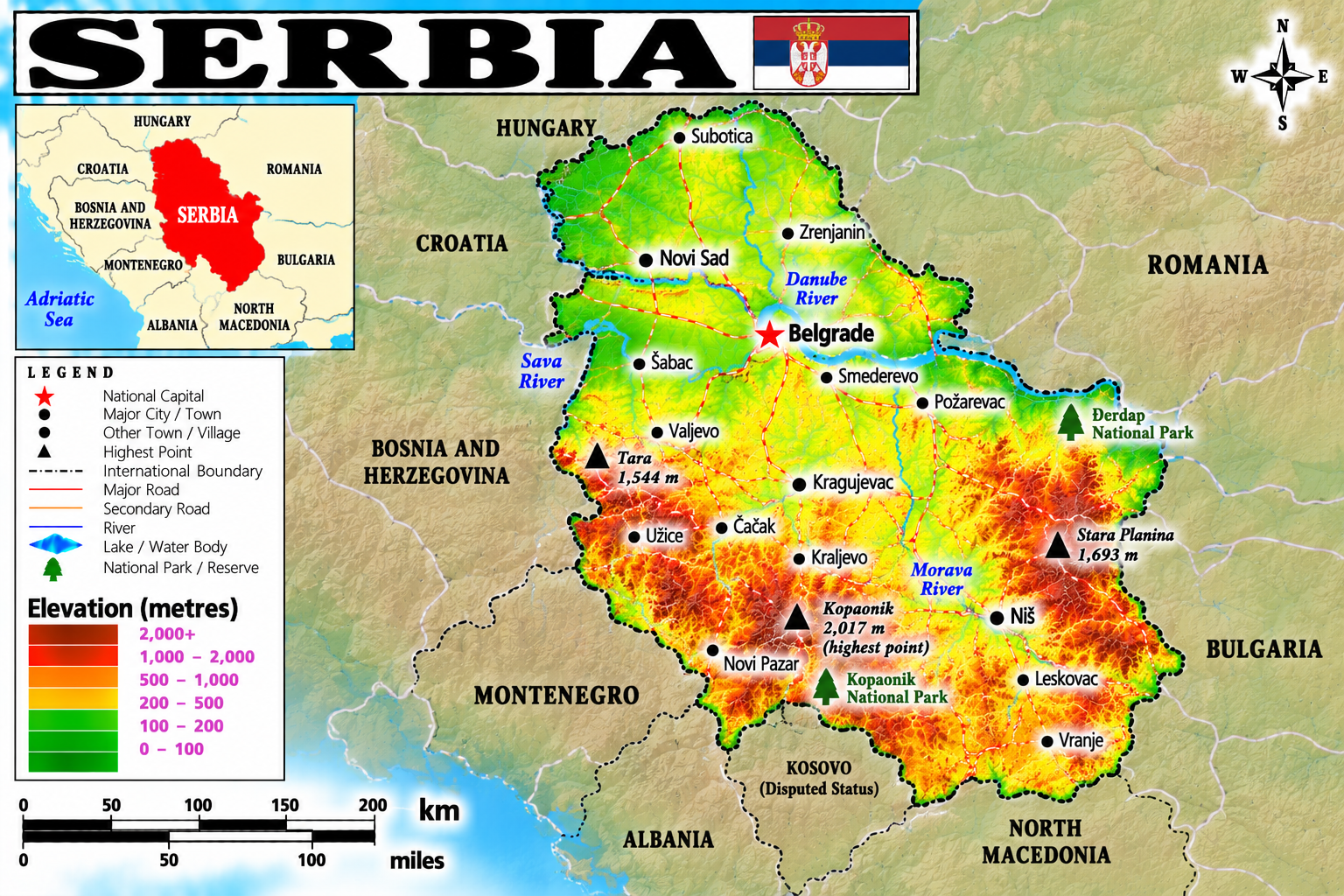
Serbia — Detailed Physical Map
The Danube, Sava and Morava rivers, Tara and Kopaonik parks, Stara Planina, Vojvodina's plains, major cities and the capital Belgrade
Tourist Attractions

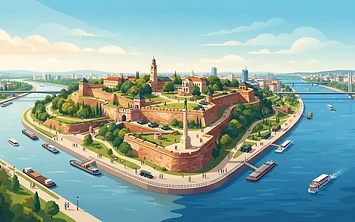
Located at the confluence of the Sava and Danube rivers, this iconic complex has served as a strategic military stronghold for centuries. It now functions as a sprawling park and museum area that offers panoramic views of the capital.
It is the most iconic landmark in Belgrade, blending ancient history with vibrant city life.

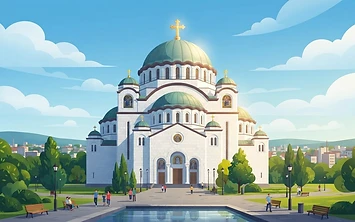
This monumental Orthodox church is one of the largest in the world and stands as a prominent symbol of the city's skyline. It was built on the site where the relics of Saint Sava were burned by the Ottomans in 1595.
The church's massive, gold-adorned interior is a breathtaking masterpiece of religious architecture.

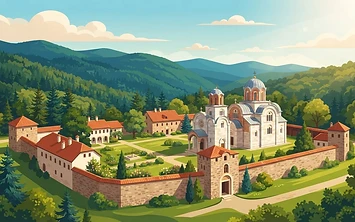
Founded in the 12th century by Stefan Nemanja, this UNESCO World Heritage site is a premier example of Raška architecture. It serves as the spiritual heart of the Serbian Orthodox Church and houses significant medieval frescoes.
It offers a profound glimpse into Serbia's medieval past and rich religious heritage.

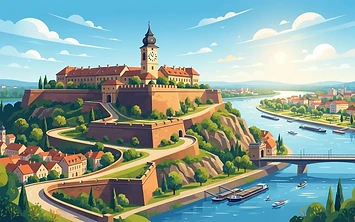
Known as the 'Gibraltar on the Danube,' this massive 17th-century fortress features a famous clock tower with hands that move in reverse. It is also the annual home of the world-renowned Exit music festival.
The fortress offers a unique mix of historical underground tunnels and a vibrant contemporary cultural scene.

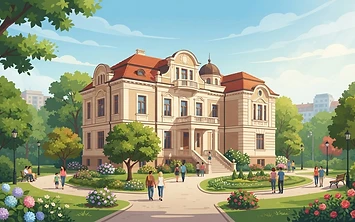
This museum is dedicated to the life and work of the world-famous inventor Nikola Tesla. It houses a vast collection of his personal belongings, original documents, and working models of his electrical inventions.
Visitors can witness live demonstrations of high-voltage electrical experiments that showcase Tesla's genius.

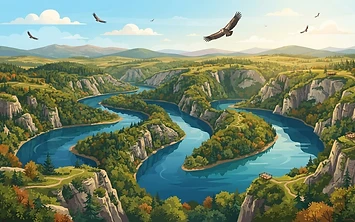
Famous for its spectacular winding river meanders, this reserve is a protected habitat for the rare Griffon Vulture. The area is a haven for nature lovers, offering dramatic canyon views and pristine wilderness.
The breathtaking, serpentine curves of the Uvac River canyon are among the most photogenic natural sights in the country.
Geography
Nature
Midzor
2,169 m / 7,116 ft
28.1% of land
≈ 24,829 km² of forest
FAO / World Bank, forest area (% of land area)
Explore the Nature Atlas2,850 km1,771 mi
Flows through ten countries and forms a significant portion of Serbia's northern border.
945 km587 mi
Joins the Danube river at the confluence located in the capital city of Belgrade.
346 km215 mi
Forms a natural border between Serbia and Bosnia and Herzegovina for most of its length.
253 km²98 sq mi · 92 m deep
Artificial reservoir created by the construction of the Iron Gate I hydroelectric power station.
16 km²6 sq mi · 35 m deep
High altitude plateau lake known for its unique floating peat islands.
5 km²2 sq mi · 4 m deep
Popular resort lake located near the city of Subotica in the northern province.
232 m761 ft
Located on the Stara Planina mountain, it is the tallest waterfall in Serbia.
71 m233 ft
Cascading waterfall found within the dense coniferous forests of Kopaonik National Park.
River lengths are whole-river figures, including any section beyond Serbia. Researched reference figures. Tap any name for where its name comes from and a Google Maps link.
Major Cities
- 1Capital
Beograd
1,681,1822026
MapServes as the vibrant capital of Serbia, featuring the historic Kalemegdan Fortress overlooking the confluence of the Danube and Sava.
- 2
Novi Sad
375,5602026
MapHosts the Petrovaradin Fortress and acts as a major cultural, educational, and economic center in the northern Vojvodina province.
- 3
Niš
246,7562026
MapRepresents one of the oldest cities in the Balkans, serving as the birthplace of Emperor Constantine the Great.
- 4
Beograd
181,2692026
MapRetains a distinct Austro-Hungarian architectural charm while serving as a historic district located along the Danube riverbanks.
- 5
Kragujevac
168,9882026
MapStands as the administrative center of the Sumadija region and a former hub for the Serbian automotive manufacturing industry.
- 6
Pančevo
113,9382026
MapOperates as a vital industrial center near Belgrade, recognized for its significant petrochemical and oil refinery facilities.
- 7
Čačak
103,1242026
MapActs as the central economic hub of the Moravica District, renowned for its fruit production and agricultural exports.
- 8
Zrenjanin
102,1712026
MapFunctions as the industrial heart of the Banat region, characterized by its historical architectural heritage and numerous bridges.
- 9
Valjevo
88,1662026
MapKnown for its rich history during the First Serbian Uprising and proximity to the scenic Gradac River canyon.
- 10
Loznica
84,3602026
MapCelebrates the legacy of linguistic reformer Vuk Stefanovic Karadzic through the ethnological park located in nearby Trsic village.
- 11
Sremska Mitrovica
78,0412026
MapIdentified as the site of ancient Sirmium, once a significant capital of the Roman Empire during the fourth century.
- 12
Stara Pazova
70,2222026
MapServes as a crucial logistics and transportation junction due to its strategic position between Belgrade and Novi Sad.
City populations are the latest official, UN or national-statistics estimates (2026–2026) compounded to 2026 at -0.4% a year (the nation's annual population growth rate); figures without a published update come from the open cities database (2020-era estimates) and are projected the same way.
Economy
Main exports
Serbia's leading export commodities and products.
Tap any export to learn more. Spot prices in USD only for Live Data subscribers.
Main imports
Serbia's leading import commodities and products.
Tap any import to learn more.
Military
Historical Timeline
6000 BCE
Starčevo Culture Settlements
The Starčevo culture marks one of the earliest Neolithic farming communities in the Balkans, established in the territory of modern-day Serbia. This culture represents a foundational period of human settlement and agricultural development in the region.
850
Establishment of the First Serbian State
Under Vlastimir, the Serbian tribes formed their first unified state known as the Principality of Serbia. This entity gained independence from the Byzantine Empire and became a significant power in the Balkans.
1217
Coronation of Stefan the First-Crowned
Stefan Nemanjić was crowned the first King of Serbia, formally elevating the state to a kingdom. This period marked the beginning of the Nemanjić dynasty's golden age of cultural and political expansion.
1389
Battle of Kosovo
The Serbian army fought the Ottoman Empire at the Field of Blackbirds in a battle that became a central pillar of Serbian national identity. Although the outcome was inconclusive, it signaled the beginning of the end for the Serbian Empire.
1804
First Serbian Uprising
Led by Karađorđe, the First Serbian Uprising began against Ottoman rule to regain national independence. This revolt marked the beginning of the Serbian Revolution and the creation of a modern sovereign state.
1914
Assassination in Sarajevo
Gavrilo Princip assassinated Archduke Franz Ferdinand of Austria, sparking the July Crisis that led to World War I. Serbia's subsequent conflict with the Austro-Hungarian Empire defined its role in the global war.
1945
Establishment of Socialist Yugoslavia
Following World War II, Serbia became one of the six constituent republics of the Socialist Federal Republic of Yugoslavia. Under Josip Broz Tito, the country underwent significant industrialization and socio-political transformation.
2006
Independence of Serbia
Following the dissolution of the State Union of Serbia and Montenegro, Serbia declared independence as a sovereign state. This event formally restored Serbian statehood for the first time since 1918.
2017
Election of First Female Prime Minister
Ana Brnabić was appointed Prime Minister of Serbia, becoming the first woman and the first openly gay person to hold the office. This represented a historic shift in national political leadership.
2022
General Elections and Political Consolidation
The 2022 general elections resulted in the continuation of the ruling coalition, solidifying the current political landscape. These elections saw high turnout and addressed ongoing debates regarding Serbia's foreign policy path.
2024
EXPO 2027 Preparations and National Infrastructure
The government launched large-scale national infrastructure projects focused on the upcoming EXPO 2027 in Belgrade. This initiative aimed to significantly modernize the national economy and transportation network.
2025
Strategic Energy and Economic Agreements
Serbia signed several major international agreements to secure long-term energy stability and economic cooperation. These deals represent a pivotal shift in the nation's efforts to modernize its energy grid and expand industrial capacity.
National Anthem
Боже правде
Jovan Đorđević
Davorin Jenko
2006
Боже правде, ти што спасе од пропасти досад нас, чуј и одсад наше гласе и од сад нам буди спас. Моћном руком води, брани будућности српске брод, Боже спаси, Боже храни, српске земље, српски род!
The anthem 'God of Justice' was originally written in 1872 as part of the play 'Marko Kraljević' by Jovan Đorđević. The music was composed by Davorin Jenko to serve as the song for the play's climax. It served as the national anthem of the Kingdom of Serbia and later the Kingdom of Yugoslavia until 1918. Following the dissolution of the State Union of Serbia and Montenegro, it was officially reinstated as the national anthem of Serbia in 2006. The lyrics underwent minor modifications to remove references to the Serbian monarch, ensuring the text is inclusive of the republican state. It holds significant cultural status as a symbol of Serbian national identity and historical continuity. The anthem is performed at all major state, diplomatic, and public sporting events.
National Holidays
This holiday marks the beginning of the new calendar year and is celebrated nationwide as a public holiday.
This day commemorates the birth of Jesus Christ according to the Julian calendar, which is the traditional date observed by the Serbian Orthodox Church.
This holiday commemorates the beginning of the First Serbian Uprising in 1804 and the adoption of the first Serbian Constitution in 1835.
This day is an international holiday celebrating the economic and social achievements of workers and the labor movement.
This holiday commemorates the signing of the armistice that ended the fighting in World War I in 1918.
Good News Today
Government Awards Cash Prizes to Athletes for International Medal Achievements
The Serbian government has officially awarded cash prizes to athletes who secured gold, silver, and bronze medals at recent European and world competitions. The awards recognize excellence in both individual and team sports, including boxing, athletics, and Paralympic shooting.
Fun Facts
Birthplace of Famous Inventors
Serbia is the birthplace of Nikola Tesla, the legendary electrical engineer and futurist who pioneered the development of modern AC electricity systems.
The First Vampire Myth
The word vampire is one of the few Serbian words accepted into international languages, originating from 18th-century folklore about Petar Blagojević.
Raspberry Production Giant
Serbia is consistently one of the world's largest exporters of raspberries, with the Arilje region producing some of the highest quality berries globally.
Danube Fortress History
The Golubac Fortress, situated at the entrance to the Iron Gates gorge, is one of the best-preserved medieval fortified cities along the Danube River.
Roman Emperor Vineyards
The town of Sremski Karlovci has a deep winemaking tradition dating back to Roman times, producing the unique Bermet dessert wine.
Uvac River Meanders
The Uvac Special Nature Reserve is famous for its breathtaking, deep river meanders and as a protected nesting site for the rare griffon vulture.
Guča Trumpet Festival
Every year, the small town of Guča hosts one of the world's largest and most energetic brass band festivals, drawing hundreds of thousands of visitors.
Plum Brandy Culture
Rakija, specifically made from plums (Šljivovica), is the national drink and holds a central place in Serbian social customs and home traditions.
Ancient Vinca Culture
The archaeological site of Vinča contains remnants of one of the most advanced Neolithic cultures in Europe, which thrived over 7,000 years ago.
Basketball Success Nation
Serbia has a massive sporting pedigree in basketball, having produced a high number of Olympic medalists and world-class players relative to its population size.
Chuckies Trivia Quiz
Chuckies Trivia Quiz
Fifteen questions on Serbia — five easy, five medium, five hard. How far can you get?
Sports & Live Events
Language
Counting to 10
1
1
= 10 (n = 0)
World Dictionary
Discover and translate any word into all supported languages.