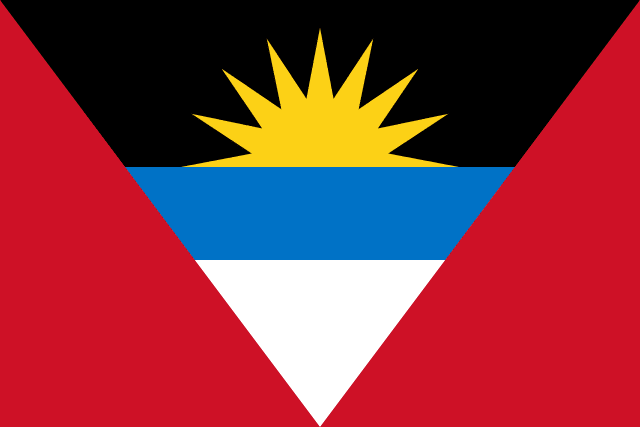
Antigua and Barbuda
North America

94,300
00:37 UTC-4
+1268
Location
Geography
Economy
Main exports
Antigua and Barbuda's leading export commodities and products.
Subscribe to Live Data for live spot prices
Live commodity prices on every nation's exports — $100 AUD/year.
Tap any export to learn more. Spot prices in USD only for Live Data subscribers.
Main imports
Antigua and Barbuda's leading import commodities and products.
Tap any import to learn more.
Military
Historical Timeline
2400 BCE
Initial Settlement by Siboney People
The first human inhabitants, the Siboney, arrived on the islands around 2400 BCE. They were hunter-gatherers who established some of the earliest known settlements in the region.
35
Arawak Settlement
The Arawak people migrated from South America and established agricultural communities on the islands around 35 CE. They developed sophisticated farming techniques and social structures.
1493
Christopher Columbus Sightings
Christopher Columbus sighted the islands during his second voyage in 1493. He named the larger island Antigua after the Church of Santa Maria la Antigua in Seville.
1632
English Colonization
English settlers from Saint Kitts established a permanent colony on Antigua in 1632. This marked the beginning of official British colonial rule.
1674
Establishment of the Sugar Industry
Christopher Codrington established the first large-scale sugar plantation on Antigua in 1674. This initiated the island's transition into a plantation economy dependent on enslaved labor.
1834
Abolition of Slavery
The British Parliament passed the Slavery Abolition Act, which went into effect on August 1, 1834. Antigua was the first Caribbean island to choose immediate full emancipation over the apprenticeship system.
1967
Associated Statehood Status
Antigua and Barbuda became an Associated State of the United Kingdom in 1967. This granted the islands full internal self-government while Britain remained responsible for defense and foreign affairs.
1981
Independence from Great Britain
Antigua and Barbuda achieved full independence from the United Kingdom on November 1, 1981. Vere Bird became the nation's first Prime Minister.
1995
Impact of Hurricane Luis
Hurricane Luis struck the islands in 1995, causing catastrophic damage to the infrastructure and tourism sector. The recovery process prompted significant economic reforms and changes in building codes.
2014
Gaston Browne Becomes Prime Minister
Gaston Browne led the Antigua and Barbuda Labour Party to victory in the 2014 general election. He became the youngest Prime Minister in the nation's history.
2017
Evacuation of Barbuda
Hurricane Irma devastated Barbuda in September 2017, forcing the complete evacuation of the island's population to Antigua. This event triggered significant debate regarding land rights and rebuilding efforts.
2023
General Election Victory
In the January 2023 general election, the Antigua and Barbuda Labour Party secured another term in government. Gaston Browne continued his tenure as Prime Minister.
National Holidays
This day marks the beginning of the new calendar year according to the Gregorian calendar.
This religious holiday commemorates the crucifixion of Jesus Christ and his death at Calvary.
Observed the day after Easter Sunday, this holiday commemorates the resurrection of Jesus Christ.
This day honors the economic and social contributions of workers to the nation.
This day commemorates Antigua and Barbuda's formal independence from the United Kingdom in 1981.
A Christian holiday celebrating the birth of Jesus Christ, widely observed as a national holiday.
Language
Counting to 10
1
1
= 10 (n = 0)
World Dictionary
Discover and translate any word into all supported languages.
The multilingual Dictionary is a Nations Pro feature.
Upgrade to Pro