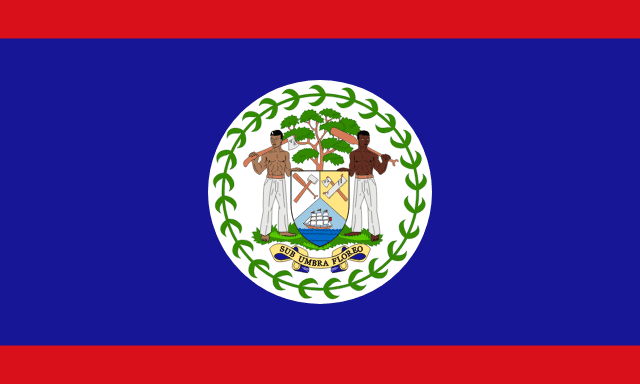
Belize
North America

420,000
05:35 UTC-6
+501
Location
Geography
Economy
Main exports
Belize's leading export commodities and products.
Subscribe to Live Data for live spot prices
Live commodity prices on every nation's exports — $100 AUD/year.
Tap any export to learn more. Spot prices in USD only for Live Data subscribers.
Main imports
Belize's leading import commodities and products.
Tap any import to learn more.
Military
Historical Timeline
2500 BCE
Early Maya Settlement
Archaeological evidence indicates that early Maya agricultural communities began establishing settlements in the region of modern-day Belize. This era marked the beginning of long-term human occupation by ancestors of the current Indigenous population.
1638
Establishment of British Logwood Camps
British settlers, known as Baymen, established camps along the Belize River to harvest logwood for the European textile industry. This settlement initiated the long-term British colonial presence in the territory.
1798
Battle of St. George's Caye
British settlers and their enslaved workers defeated a Spanish naval fleet in a decisive naval battle. This victory secured British control over the territory and effectively ended Spanish attempts to expel the settlers.
1840
Formal Colonial Administration
The settlement was formally renamed British Honduras and began transitioning toward a more structured colonial government. This period solidified the territory as a formal dependency of the British Empire.
1859
Anglo-Guatemalan Treaty
Britain and Guatemala signed a treaty defining the borders of British Honduras. The treaty remains a point of contention due to conflicting interpretations regarding compensation and territory.
1931
Hurricane of 1931
A devastating hurricane struck Belize City, causing thousands of deaths and widespread destruction. The disaster prompted major shifts in colonial administration and highlighted the urgent need for infrastructure development.
1964
Granting of Self-Government
British Honduras achieved internal self-government, with a new constitution providing for a ministerial system. This milestone marked a critical step toward full political sovereignty.
1973
Renaming to Belize
The territory officially changed its name from British Honduras to Belize. This shift represented a growing national identity and progress toward eventual independence.
1981
Independence from Great Britain
Belize achieved full independence from the United Kingdom on September 21. George Price became the first Prime Minister of the newly sovereign nation.
1991
Guatemalan Recognition of Sovereignty
Guatemala officially recognized the sovereignty and independence of Belize. This diplomatic breakthrough aimed to resolve long-standing territorial claims and improve regional relations.
2019
Referendum on ICJ Resolution
Belizean voters participated in a national referendum to decide whether to take the border dispute with Guatemala to the International Court of Justice. The 'Yes' vote paved the way for international legal arbitration to settle the claim.
2024
Ongoing ICJ Territorial Adjudication
Belize continues to engage in the International Court of Justice process regarding the maritime and land claim dispute with Guatemala. The nation remains committed to a peaceful, legal resolution of its sovereignty boundaries.
National Holidays
This day commemorates the death of Sir Henry Edward Ernest Victor Bliss, a major benefactor who left a significant portion of his estate to the people of Belize.
This holiday honors the contributions and achievements of workers and the labor movement throughout the country.
This day celebrates the 1798 victory of the Baymen over the Spanish fleet in the Battle of St. George's Caye, which helped secure Belize as a British territory.
This holiday marks the anniversary of Belize's formal independence from the United Kingdom, attained in 1981.
Also known as Dia de la Raza, this day celebrates the cultural heritage and arrival of diverse peoples in the Americas.
Language
Counting to 10
1
1
= 10 (n = 0)
World Dictionary
Discover and translate any word into all supported languages.
The multilingual Dictionary is a Nations Pro feature.
Upgrade to Pro