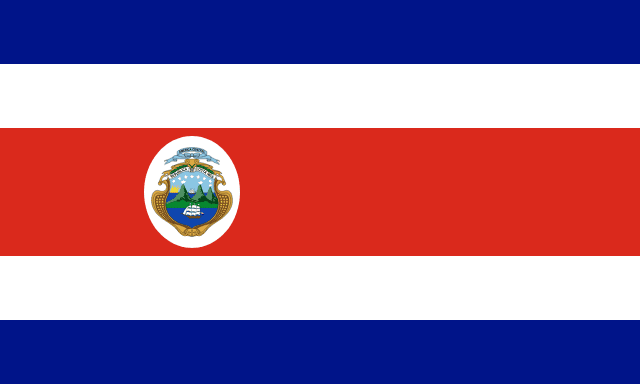

Costa Rica
Republic of Costa Rica
North America
5,217,651
21:11 UTC-6
+506
.cr
Cerro Chirripo
3,820 m · 12,533 ft
Caribbean Sea
0 m · 0 ft
354,201
San Jose · 2026
2,258,330
San Jose · 2026
Location
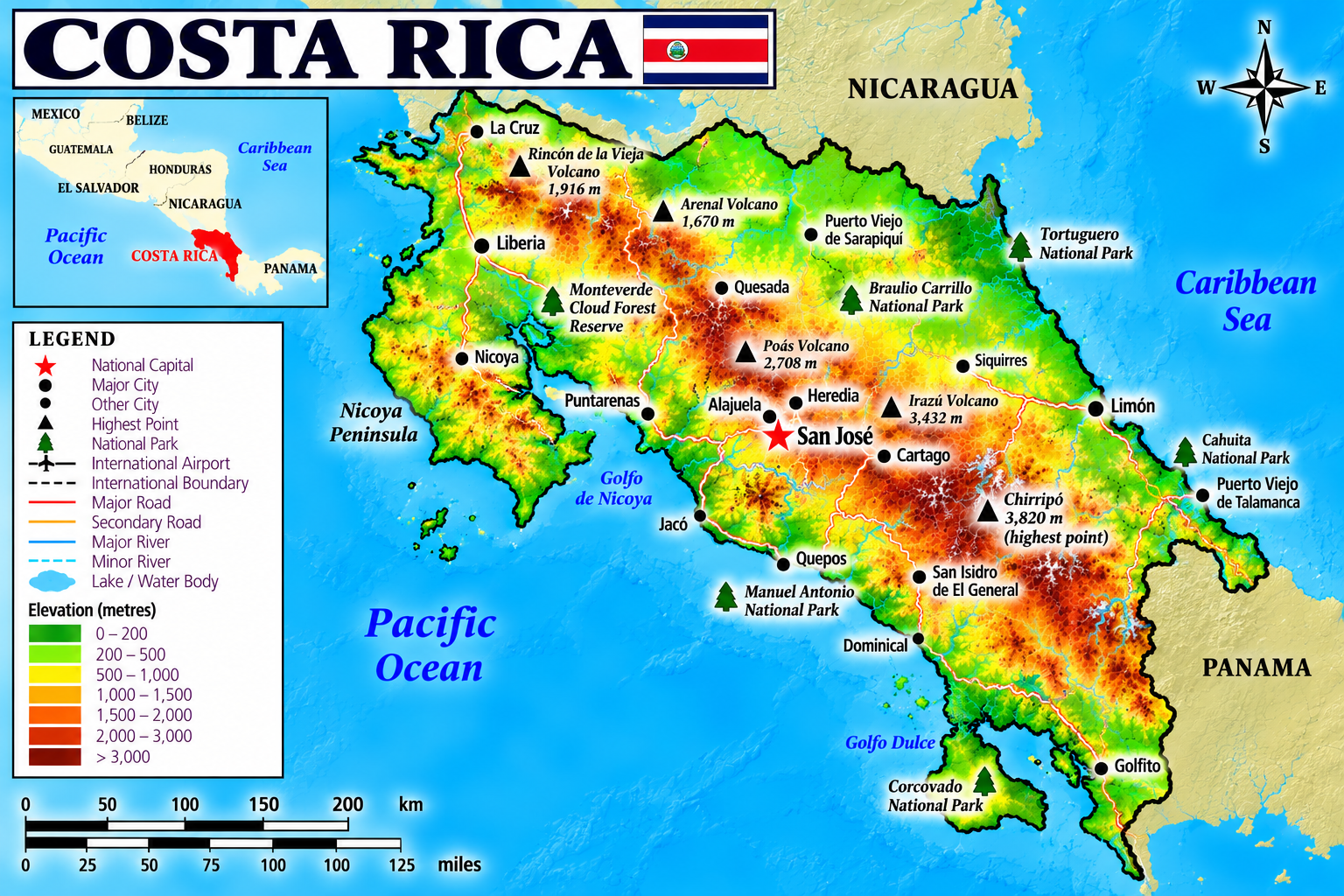
Costa Rica — Detailed Physical Map
Arenal and Poás volcanoes, Nicoya and Osa peninsulas, national parks, major cities and the capital San José
Tourist Attractions

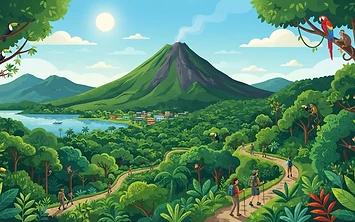
This iconic, near-perfect cone volcano is one of the most famous natural landmarks in the country. Visitors can explore well-maintained trails through the forest to discover diverse wildlife and enjoy panoramic views.
It is the most famous volcano in Costa Rica and offers spectacular scenery.

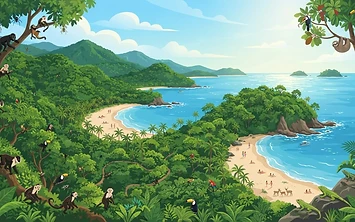
This popular national park is home to all four of Costa Rica’s monkey species and a wealth of other wildlife. It features lush jungle-clad hillsides that meet beautiful beaches.
You can see a wide variety of monkeys and tropical wildlife in a single visit.

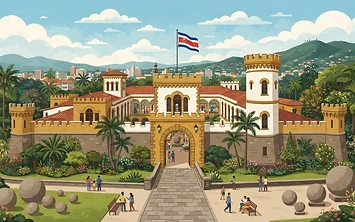
Housed in the historic Cuartel Bellavista, this is the oldest museum in the country. It features significant archaeological exhibits, including mysterious stone spheres and historical collections detailing the nation's past.
It is located in the historic building where the national army was abolished.

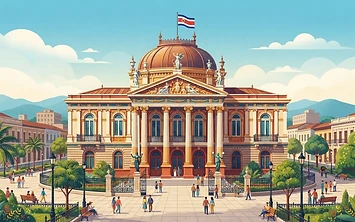
Constructed in 1897, this Italian Baroque theater is widely considered the most elegant building in the capital city. It serves as a premier cultural venue and a masterpiece of architecture.
It is the most elegant and architecturally significant building in San José.

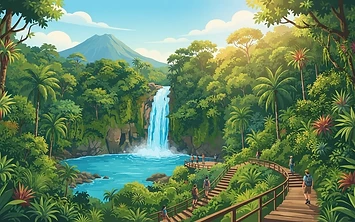
This river is famous for its striking electric blue waters, which are created by a unique natural chemical reaction. Trails through the park lead visitors to the stunning waterfall.
The water's vibrant, natural blue color is a rare and stunning sight.

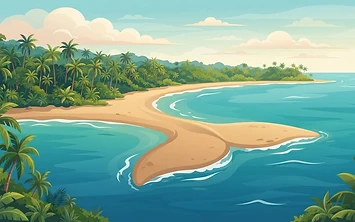
This unique natural sandbar formation is shaped exactly like a whale's tail and is best viewed during low tide. It is located within a protected marine park known for its coastal beauty.
The sandbar forms a perfect, natural whale-tail shape visible at low tide.
Geography
Nature
Cerro Chirripo
3,820 m / 12,533 ft
55.6% of land
≈ 28,412 km² of forest
FAO / World Bank, forest area (% of land area)
Explore the Nature Atlas160 km99 mi
It is the longest and largest river system located entirely within Costa Rica.
145 km90 mi
This river provides a significant portion of the hydroelectric power for the country.
108 km67 mi
Famous for world-class whitewater rafting passing through deep tropical rainforest canyons.
85 km²33 sq mi · 60 m deep
The largest lake in Costa Rica is a man-made reservoir created for hydroelectric energy.
2 km²1 sq mi · 14 m deep
Located near Arenal, this is the largest natural freshwater lake in the country.
61 m200 ft
Features two tiers falling into a large natural swimming pool surrounded by jungle.
75 m246 ft
Fed by the Tenorio River and located at the base of Chato Volcano.
River lengths are whole-river figures, including any section beyond Costa Rica. Researched reference figures. Tap any name for where its name comes from and a Google Maps link.
Major Cities
- 1Capital
San José
364,0622026
MapServes as the nation's capital and primary commercial hub located in the Central Valley.
- 2
Alajuela
340,4162026
MapHosts the country's primary international airport and commemorates the national hero Juan Santamaria.
- 3
Limón
124,7832026
MapHandles the majority of the country's maritime cargo exports through its vital Caribbean port infrastructure.
- 4
Alajuela
96,9062026
MapActs as an agricultural trade gateway renowned for its deep cultural roots and educational institutions.
- 5
Guanacaste
86,5642026
MapFunctions as the main transportation hub for the northern region and the gateway to major beach resorts.
- 6
Guanacaste
78,3772026
MapMaintains deep-seated traditions as the folklore capital of the Guanacaste province.
- 7
San José
53,1962026
MapOperates as a bustling agricultural trade center serving the southern mountainous region of the country.
- 8
Heredia
34,4472026
MapProvides a scenic climate for local commerce and serves as a residential suburb near Heredia.
- 9
Heredia
30,0342026
MapPreserves a traditional rural landscape while bordering the growing metropolitan sprawl of the Central Valley.
- 10
Heredia
15,0452026
MapOffers premier access to tropical rainforests and biodiversity research within the Caribbean lowlands.
- 11
Alajuela
13,9702026
MapFunctions as a major center for high-quality coffee production in the mountainous Tarrazu region.
- 12
Guanacaste
12,0912026
MapStands as a historical colonial town famous for its indigenous roots and status as a Blue Zone.
City populations are the latest official, UN or national-statistics estimates (2025–2026) compounded to 2026 at 0.9% a year (the nation's annual population growth rate); figures without a published update come from the open cities database (2020-era estimates) and are projected the same way.
Economy
Main exports
Costa Rica's leading export commodities and products.
Tap any export to learn more. Spot prices in USD only for Live Data subscribers.
Main imports
Costa Rica's leading import commodities and products.
Tap any import to learn more.
Military
Historical Timeline
8000 BCE
Arrival of Indigenous Peoples
The first human inhabitants, ancestors of various indigenous groups like the Diquis and Boruca, settled the region around 8,000 BCE. They developed complex agricultural societies and advanced stone-working traditions over millennia.
1502
Arrival of Christopher Columbus
Christopher Columbus arrived at the Caribbean coast of Costa Rica during his fourth and final voyage. This encounter initiated the period of Spanish exploration and eventual colonial influence in the region.
1821
Independence from Spain
Costa Rica gained independence from the Spanish Empire as part of a general movement across Central America. The country initially joined the short-lived Mexican Empire before becoming part of the Federal Republic of Central America.
1838
Sovereignty as a Nation
Following the dissolution of the Federal Republic of Central America, Costa Rica became a fully sovereign and independent nation. Braulio Carrillo Colina served as the head of state during this transition to formal independence.
1856
Campaign of 1856
Costa Rican forces defeated the filibuster army led by William Walker, who sought to establish a slave state in Central America. The conflict is considered a foundational moment for Costa Rican national identity.
1889
Establishment of Democratic Elections
The national elections of 1889 are considered the first truly free and democratic elections in Costa Rican history. This event solidified the practice of peaceful transitions of power through popular vote.
1948
Costa Rican Civil War
A 44-day civil war broke out following a disputed presidential election. The conflict resulted in a new constitution and the implementation of significant social reforms.
1949
Abolition of the Military
President José Figueres Ferrer officially abolished the Costa Rican army, reallocating the national budget toward education and healthcare. This constitutional change remains a pillar of the nation's peaceful governance.
2018
Election of Carlos Alvarado Quesada
Carlos Alvarado Quesada was elected president, representing the PAC party and emphasizing progressive policies. His administration focused on decarbonization and social equity during a period of economic transition.
2022
Election of Rodrigo Chaves Robles
Rodrigo Chaves Robles won the 2022 presidential election and took office as the 49th President of Costa Rica. His administration has focused on economic reform and streamlining government regulations.
2024
National Decarbonization Progress
Costa Rica continued its global leadership in environmental policy by surpassing 98 percent renewable energy generation for the national grid. The country maintains its commitment to achieving net-zero emissions by 2050.
2025
Implementation of National Digital Infrastructure Plan
The government launched a significant expansion of rural high-speed internet to bridge the digital divide. This initiative aims to stimulate economic growth and improve access to public services across all provinces.
National Anthem
Noble patria, tu hermosa bandera
José María Zeledón Brenes
Manuel María Gutiérrez
1853
Noble patria, tu hermosa bandera expresión de tu vida nos da. Bajo el límpido azul de tu cielo blanca y pura descansa la paz. En la lucha tenaz, de fecunda labor que enrojece del hombre la faz; conquistan sus hijos -labriegos sencillos- eterno prestigio, estima y honor, eterno prestigio, estima y honor. ¡Salve, oh tierra gentil! ¡Salve, oh madre de amor! Cuando alguno pretenda tu gloria manchar, verás a tu pueblo, valiente y viril, la tosca herramienta en arma trocar. Salve, oh patria, tu pródigo suelo dulce abrigo y sustento nos da. Bajo el límpido azul de tu cielo ¡vivan siempre el trabajo y la paz!
The music for the anthem was composed by Manuel María Gutiérrez in 1852 by order of President Juan Rafael Mora Porras to welcome foreign diplomats. For several decades, the anthem was played without lyrics, as the melody became recognized as the national symbol. In 1900, a national contest was held to select lyrics, resulting in the winning submission by José María Zeledón Brenes. The lyrics were officially adopted by the government in 1949, though they had been in use since the early 20th century. The text emphasizes themes of peace, agricultural labor, and the defense of sovereignty. It serves as a central element of Costa Rican national identity, traditionally performed at government ceremonies, school events, and public celebrations.
National Holidays
This day commemorates the death of national hero Juan Santamaría during the Battle of Rivas in 1856. He is celebrated for his sacrifice in helping to defeat the forces of filibuster William Walker.
Observed globally, this day honors the contributions of workers and the labor movement. In Costa Rica, it also traditionally coincides with the President's annual report to the Legislative Assembly.
This holiday celebrates the 1824 annexation of the Partido de Nicoya to Costa Rica from Nicaragua. It recognizes the cultural and historical integration of the Guanacaste province into the nation.
This day honors mothers and motherhood across the country. It is also a religious holiday commemorating the Assumption of the Virgin Mary.
This marks the anniversary of the 1821 declaration of independence for Central America from Spanish colonial rule. Celebrations typically include parades, processions with lanterns, and the singing of the national anthem.
Good News Today
Costa Rica moves 2,700 corals to deeper, cooler waters to escape El Niño heat
Scientists in Costa Rica have successfully relocated 2,700 corals to deeper, cooler waters in the Gulf of Nicoya to protect them from heat-induced bleaching. This proactive conservation effort aims to preserve the reef's health while ocean temperatures remain elevated due to El Niño.
Fun Facts
Global Biodiversity Hotspot
Despite covering only 0.03% of the earth's surface, Costa Rica is home to nearly 6% of the world's total biodiversity.
No Standing National Army
Costa Rica famously abolished its national army in 1948 and has redirected those funds toward education, healthcare, and environmental protection.
Mandatory Coffee Quality Laws
It is illegal to produce anything other than 100% Arabica coffee in Costa Rica, ensuring only the highest quality beans reach the market.
The Pura Vida Philosophy
The phrase 'Pura Vida' (Pure Life) is used everywhere as a greeting and a way of life, reflecting the optimistic national character.
Major Sea Turtle Sanctuary
Tortuguero National Park is one of the most important nesting sites for green sea turtles in the entire Western Hemisphere.
High Life Expectancy Zones
The Nicoya Peninsula is recognized as one of the world's five 'Blue Zones,' where people have a statistically higher likelihood of living past 100.
Top Global Banana Exporter
Costa Rica consistently ranks among the world's top exporters of high-quality bananas, which serve as a foundational pillar of their agricultural economy.
Massive Butterfly Population
The country is home to about 10% of the world's butterfly species, including the iconic iridescent blue morpho butterfly.
Pioneer of Ecotourism
Costa Rica was one of the first nations in the world to develop a national certification program for sustainable tourism and environmental stewardship.
Street Addresses Without Numbers
Costa Ricans traditionally give directions based on landmarks rather than street names or numbers, such as '100 meters north of the old church'.
Chuckies Trivia Quiz
Chuckies Trivia Quiz
Fifteen questions on Costa Rica — five easy, five medium, five hard. How far can you get?
Sports & Live Events
Language
Counting to 10
1
1
= 10 (n = 0)
World Dictionary
Discover and translate any word into all supported languages.