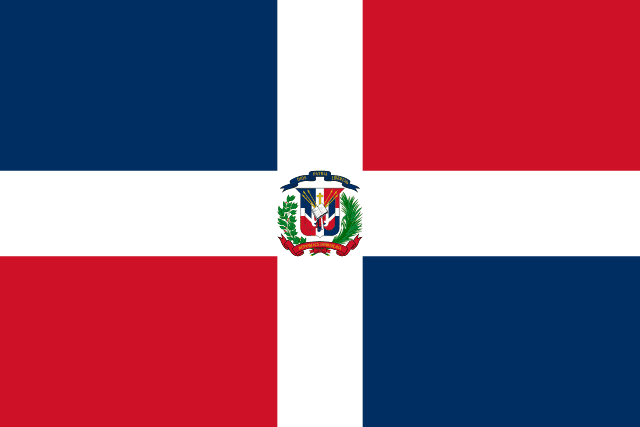

Dominican Republic
North America
11,697,353
22:13 UTC-4
+1809
.do
Pico Duarte
3,098 m · 10,164 ft
Lago Enriquillo
-46 m · -151 ft
3,312,987
Santo Domingo · 2026
3,312,987
Santo Domingo · 2026
Location
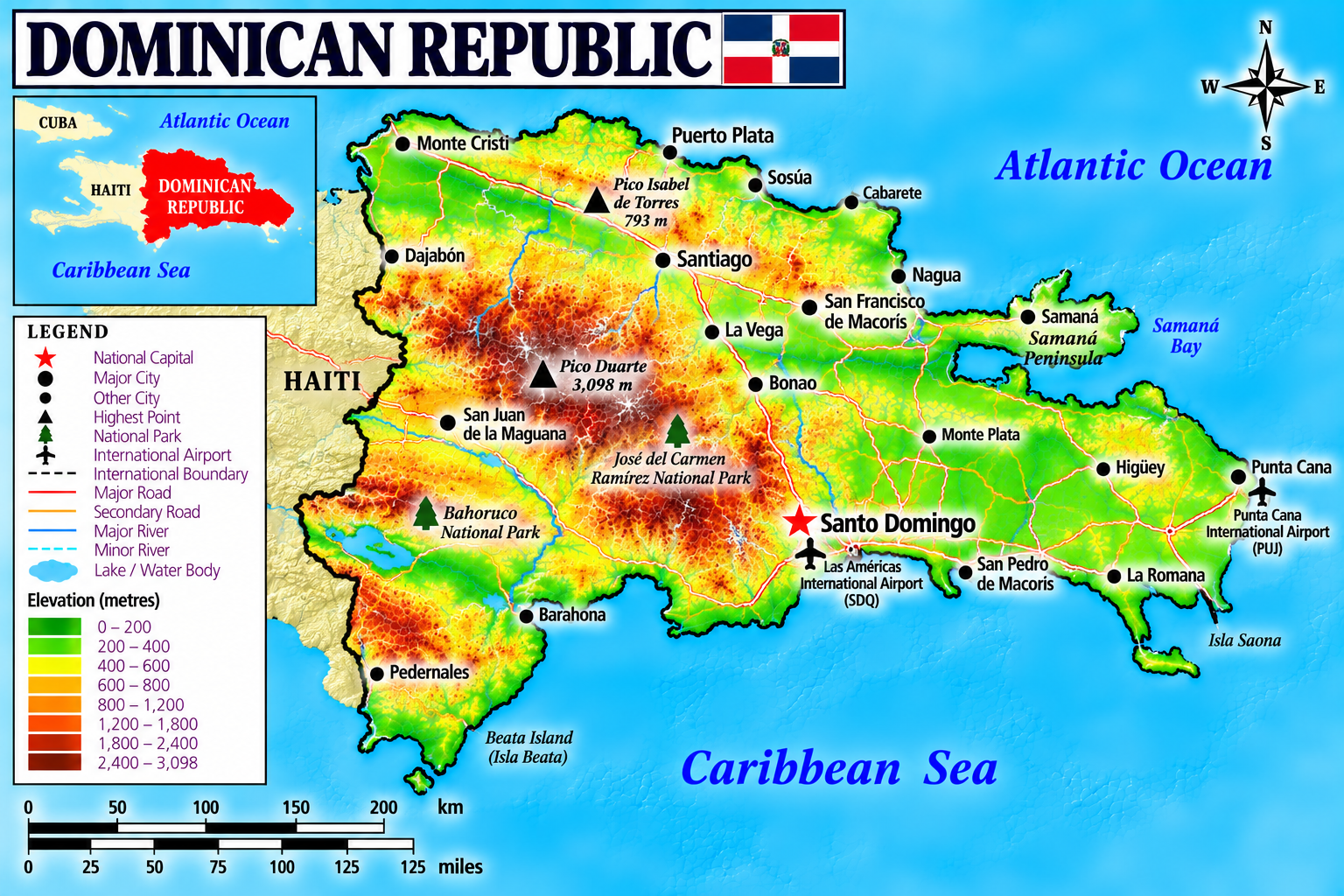
Dominican Republic — Detailed Physical Map
Pico Duarte and the Cordillera Central, Samaná Peninsula, national parks, major cities and the capital Santo Domingo
Tourist Attractions

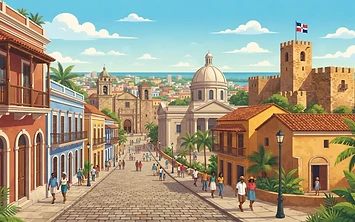
As the oldest permanent European settlement in the New World, this UNESCO World Heritage site features cobblestone streets and stunning Spanish colonial architecture.
Wander through the historic district to see the first cathedral in the Americas.


This meticulously designed replica of a 16th-century Mediterranean village sits on a cliff overlooking the Chavón River.
Explore the artisan boutiques, art galleries, and the impressive amphitheater.

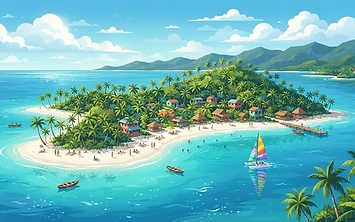
A small, picturesque island known for its pristine white-sand beaches and crystal-clear turquoise waters.
Enjoy a relaxing day lounging under the coconut trees in this tropical paradise.

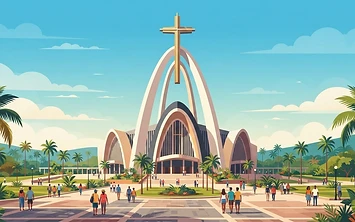
This modern, iconic cathedral is one of the most recognized religious sites in the Caribbean and a major pilgrimage destination.
Admire the unique architectural design and the religious museum located on-site.

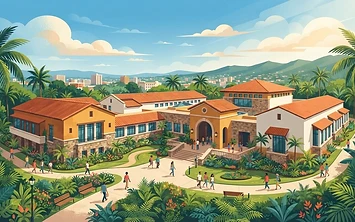
A premier cultural institution that celebrates Dominican history, art, and identity through extensive exhibitions.
Experience one of the best museums in the Caribbean for a deep dive into local heritage.

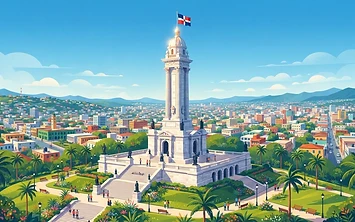
A towering marble monument dedicated to the heroes of the Dominican Restoration War, offering panoramic views of the city.
Visit the viewpoint for a spectacular perspective of the city and the surrounding mountains.
Geography
Nature
Pico Duarte
3,098 m / 10,164 ft
45.4% of land
≈ 22,097 km² of forest
FAO / World Bank, forest area (% of land area)
Explore the Nature Atlas296 km184 mi
Rises in the Cordillera Central and is the longest river in the country.
185 km115 mi
Flows through the Cibao Valley and empties into Samana Bay.
183 km114 mi
Provides essential irrigation for agriculture in the southern part of the nation.
375 km²145 sq mi
Hypersaline lake that sits below sea level.
5 km²2 sq mi
Located near the coast and contains a mix of fresh and salt water.
1 km²0 sq mi
Situated close to Lake Redonda in the Miches region.
83 m272 ft
One of the highest waterfalls in the Caribbean located in Constanza.
40 m131 ft
Features a large natural pool at the base popular for swimming.
River lengths are whole-river figures, including any section beyond Dominican Republic. Researched reference figures. Tap any name for where its name comes from and a Google Maps link.
Major Cities
- 1Capital
Ozama
3,706,0002026
MapFounded in 1496, this capital holds the distinction of being the first permanent European settlement in the Americas.
- 2
Ozama
842,5702026
MapHouses the Faro a Colon, a massive monument dedicated to Christopher Columbus that serves as his symbolic resting place.
- 3
Cibao Norte
817,1302026
MapActs as the country's main industrial hub, famously known for its thriving tobacco industry and large-scale cigar production.
- 4
Yuma
506,9852026
MapHosts the Basilica Cathedral of Our Lady of Altagracia, the most significant religious pilgrimage site in the nation.
- 5
Ozama
341,3042026
MapFunctions as a rapidly expanding residential suburb that provides essential housing for commuters working in Greater Santo Domingo.
- 6
Cibao Sur
334,8742026
MapRenowned for hosting the most traditional and vibrant annual Carnival celebrations throughout the entire Caribbean region.
- 7
Ozama
333,5352026
MapServes primarily as the location of the largest and most prominent penitentiary facility in the Dominican Republic.
- 8
Valdesia
316,3072026
MapServed as the historic site where the first constitution of the Dominican Republic was officially signed in 1844.
- 9
Higuamo
244,7512026
MapMaintains a storied reputation as a historic center for the sugar industry and a prolific producer of professional baseball players.
- 10
Cibao Nordeste
220,8892026
MapKnown as the capital of the Cibao Valley and serves as a major national hub for cacao production.
- 11
Cibao Norte
157,3522026
MapFamous for its Victorian architecture and the cable car ride reaching the summit of Mount Isabel de Torres.
- 12
Cibao Norte
134,2902026
MapCelebrated for its rich agricultural heritage, particularly in the cultivation of plantains, yuca, and various high-quality local vegetables.
City populations are the latest official, UN or national-statistics estimates (2026–2026) compounded to 2026 at 1.1% a year (the nation's annual population growth rate); figures without a published update come from the open cities database (2020-era estimates) and are projected the same way.
Economy
Main exports
Dominican Republic's leading export commodities and products.
Tap any export to learn more. Spot prices in USD only for Live Data subscribers.
Main imports
Dominican Republic's leading import commodities and products.
Tap any import to learn more.
Military
Historical Timeline
2500 BCE
Arrival of the Ciboney People
The earliest known inhabitants of the island of Hispaniola, the Ciboney, arrived around this time, marking the beginning of human occupation. These nomadic groups were eventually succeeded by the Taíno people.
1492
Arrival of Christopher Columbus
Christopher Columbus landed on the island of Hispaniola during his first voyage to the Americas. This event initiated European colonization and permanently altered the course of the island's history.
1821
Independence from Spain
The colony of Santo Domingo declared its independence from Spanish rule, briefly forming the Republic of Spanish Haiti. This independence was short-lived, as the territory was occupied by Haiti shortly thereafter.
1844
Dominican War of Independence
The Dominican Republic achieved independence from Haiti following a successful revolt led by the secret society La Trinitaria. This event established the Dominican Republic as a sovereign nation.
1916
United States Occupation
The United States military occupied the Dominican Republic to maintain order and protect American interests. The occupation lasted until 1924, resulting in significant administrative and infrastructure changes.
1930
Rise of Rafael Trujillo
Rafael Trujillo seized power in a military coup, establishing a brutal dictatorship that lasted for over three decades. His regime was characterized by tight control, economic restructuring, and widespread human rights abuses.
1961
Assassination of Rafael Trujillo
The long-standing dictator Rafael Trujillo was assassinated, ending his 31-year rule. This event triggered a transition toward democratic governance in the Dominican Republic.
1966
Election of Joaquin Balaguer
Joaquin Balaguer won the presidential election, ushering in a period of relative political stability under his leadership. His administration focused heavily on public works and economic development.
2012
Election of Danilo Medina
Danilo Medina was elected president, beginning a period that saw significant growth in the Dominican tourism and construction sectors. His tenure also involved major reforms to the national education system.
2020
Election of Luis Abinader
Luis Abinader was elected president, marking a major shift in the political landscape with the defeat of the long-dominant Dominican Liberation Party. His government prioritized anti-corruption initiatives and economic recovery post-pandemic.
2024
Re-election of Luis Abinader
President Luis Abinader was re-elected to a second consecutive term in office. This mandate allowed his administration to continue its focus on constitutional reforms and institutional strengthening.
2025
Implementation of Constitutional Reforms
The Dominican Republic successfully enacted a series of significant constitutional reforms initiated by the Abinader administration. These changes aimed to streamline government processes and strengthen the independence of the national judicial system.
National Anthem
Himno Nacional de la República Dominicana
Emilio Prud'Homme
José Reyes
1934
Quisqueyanos valientes, alcemos Nuestro canto con viva emoción, Y del mundo a la faz ostentemos Nuestro invicto glorioso pendón. ¡Salve el pueblo que intrépido y fuerte, A la guerra a morir se lanzó, Cuando en bélico reto de muerte De la patria el destino invocó! Ningún pueblo ser libre merece Si es esclavo, indolente y servil; Si en su pecho la llama no crece Que templó el heroísmo viril.
The music for the Dominican national anthem was composed in 1883 by José Reyes and first performed on August 17 of that year in the city of Santo Domingo. The lyrics were written by lawyer and educator Emilio Prud'Homme, who penned the verses to honor the Dominican War of Independence. Although the anthem was widely accepted by the public shortly after its composition, it was not officially adopted as the national anthem until 1934. The text has remained consistent since its creation, though its official recognition solidified its role as a symbol of Dominican sovereignty and national identity. It is played at all formal government functions and state ceremonies to instill national pride. Its lyrics evoke the struggle for independence from Haiti and the determination of the Dominican people to remain a free and sovereign nation.
National Holidays
This day commemorates the birth of Juan Pablo Duarte, one of the founding fathers of the Dominican Republic. He was the primary visionary behind the movement for independence from Haitian rule.
This is the most important national holiday, marking the anniversary of the Dominican Republic's declaration of independence from Haiti in 1844. It is celebrated with military parades and national festivities.
A Christian holiday observed as a day of solemn reflection to commemorate the crucifixion and death of Jesus Christ. It is a public holiday that encourages community traditions and religious observance.
A day dedicated to honoring the contributions and achievements of workers across the nation. It is celebrated annually to advocate for labor rights and commemorate historical worker struggles.
This day marks the beginning of the Dominican Restoration War in 1863, a struggle that sought to restore sovereignty after the country was annexed by Spain. It celebrates the re-establishment of the Republic as a free and independent nation.
This holiday commemorates the signing of the first Dominican Constitution in San Cristobal in 1844. It serves to celebrate the nation's legal foundations and democratic principles.
Good News Today
Dominican Republic receives support from BES Solution Fund for biodiversity
The Dominican Republic has become the 17th country to receive support from the BES Solution Fund to implement findings from its first-ever national ecosystem assessment. This initiative aims to strengthen biodiversity governance and integrate scientific and traditional knowledge into national planning and sustainable development.
Fun Facts
Baseball Talent Factory
The Dominican Republic produces more Major League Baseball players per capita than any other country in the world.
First City In Americas
Santo Domingo is the site of the first cathedral, the first university, and the first hospital built in the Americas.
Highest Peak In Caribbean
Pico Duarte stands at over 3,000 meters, making it the highest mountain peak in all of the Caribbean islands.
Home Of Amber Treasures
The country is world-famous for its high-quality amber, often containing perfectly preserved prehistoric insects from millions of years ago.
Merengue And Bachata Origin
Both the vibrant dance styles of Merengue and Bachata originated in the Dominican Republic and are deeply woven into the culture.
Stunning Punta Cana Beaches
Punta Cana boasts over 100 kilometers of coastline, featuring pristine white sand and brilliant turquoise Caribbean waters.
Exceptional Organic Cacao
The country is one of the world's leading exporters of high-quality organic cacao, used by premium chocolatiers globally.
Humpback Whale Sanctuary
Every year, thousands of humpback whales migrate to the Samana Bay to mate and give birth in the warm waters.
La Bandera Dominicana
The national dish, known as 'The Dominican Flag,' consists of white rice, red beans, and meat, mirroring the national colors.
Altos de Chavon Village
This is a meticulously crafted 16th-century Mediterranean-style village built entirely of stone on a cliff overlooking the Chavon River.
Chuckies Trivia Quiz
Chuckies Trivia Quiz
Fifteen questions on Dominican Republic — five easy, five medium, five hard. How far can you get?
Sports & Live Events
Language
Counting to 10
1
1
= 10 (n = 0)
World Dictionary
Discover and translate any word into all supported languages.