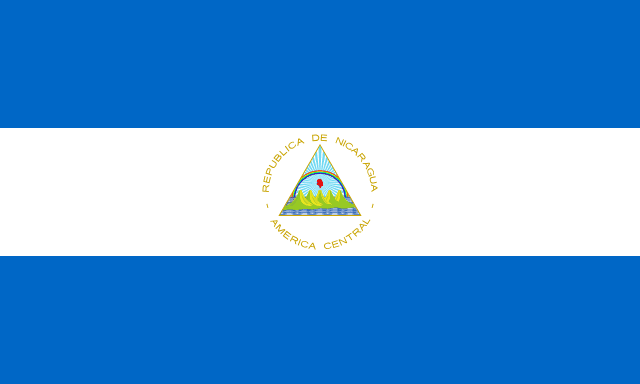
Nicaragua
North America

6,916,140
07:30 UTC-6
+505
Location
Geography
Economy
Main exports
Nicaragua's leading export commodities and products.
Subscribe to Live Data for live spot prices
Live commodity prices on every nation's exports — $100 AUD/year.
Tap any export to learn more. Spot prices in USD only for Live Data subscribers.
Main imports
Nicaragua's leading import commodities and products.
Tap any import to learn more.
Military
Historical Timeline
6000 BCE
Arrival of Paleo-Indian hunters and gatherers
Archaeological evidence suggests that the earliest human inhabitants arrived in the region of modern-day Nicaragua around this time. These nomadic groups established early settlements across the territory.
1522
Spanish expedition of Gil González Dávila
Gil González Dávila led the first Spanish expedition into the territory, encountering the powerful Nicarao people. This encounter initiated the period of European exploration and eventual colonization.
1524
Founding of Granada and León
Spanish conquistador Francisco Hernández de Córdoba founded the cities of Granada and León. These cities became the primary administrative and population centers for Spanish rule.
1821
Independence from the Spanish Empire
Nicaragua gained independence from Spain along with other Central American provinces. It initially joined the Mexican Empire before becoming part of the Federal Republic of Central America.
1838
Establishment of the Republic of Nicaragua
Nicaragua formally declared its complete independence as a sovereign republic after the collapse of the Federal Republic of Central America. This marked the beginning of its status as an individual nation-state.
1856
Battle of San Jacinto
Nicaraguan forces defeated a group of American mercenaries led by William Walker. This victory became a central symbol of national sovereignty and resistance against foreign intervention.
1912
United States military occupation begins
The United States intervened militarily to protect its interests and influence Nicaraguan politics. This occupation lasted, with a brief interruption, until 1933 and fueled widespread nationalist sentiment.
1934
Assassination of Augusto César Sandino
National Guard forces under Anastasio Somoza García assassinated the guerrilla leader Augusto César Sandino. His death solidified the rise of the Somoza family dictatorship.
1979
The Sandinista Revolution
The Sandinista National Liberation Front overthrew the Somoza regime, ending decades of dynastic rule. This event ushered in a period of radical social and political transformation.
1990
Violeta Chamorro wins presidential election
Violeta Chamorro defeated Daniel Ortega in democratic elections, marking the first peaceful transfer of power to an opposition party in decades. This ended the period of intense civil conflict.
2007
Return of Daniel Ortega to presidency
Daniel Ortega returned to the presidency, initiating a period of consolidation of power. His administration shifted the country's political orientation toward the left.
2018
Widespread social and political unrest
Massive protests erupted across the country against pension reforms and government policies, leading to significant civil unrest. The government response resulted in international condemnation and a shift in domestic political dynamics.
National Holidays
This date marks the beginning of the civil calendar year.
A Christian holiday commemorating the crucifixion of Jesus Christ and his death at Calvary.
A day dedicated to celebrating the achievements and contributions of workers and the labor movement.
Commemorates the 1979 victory of the Sandinista Revolution over the Somoza dictatorship.
Marks the anniversary of the 1856 battle where Nicaraguan forces defeated William Walker's filibusters.
Celebrates the anniversary of Nicaragua's independence from Spain in 1821.
Language
Counting to 10
1
1
= 10 (n = 0)
World Dictionary
Discover and translate any word into all supported languages.
The multilingual Dictionary is a Nations Pro feature.
Upgrade to Pro