
Panama
Republic of Panama
region.undefined
—
08:31 UTC-5
—
.pa
—
—
—
—
—
undefined · 2026
—
undefined · 2026
Location
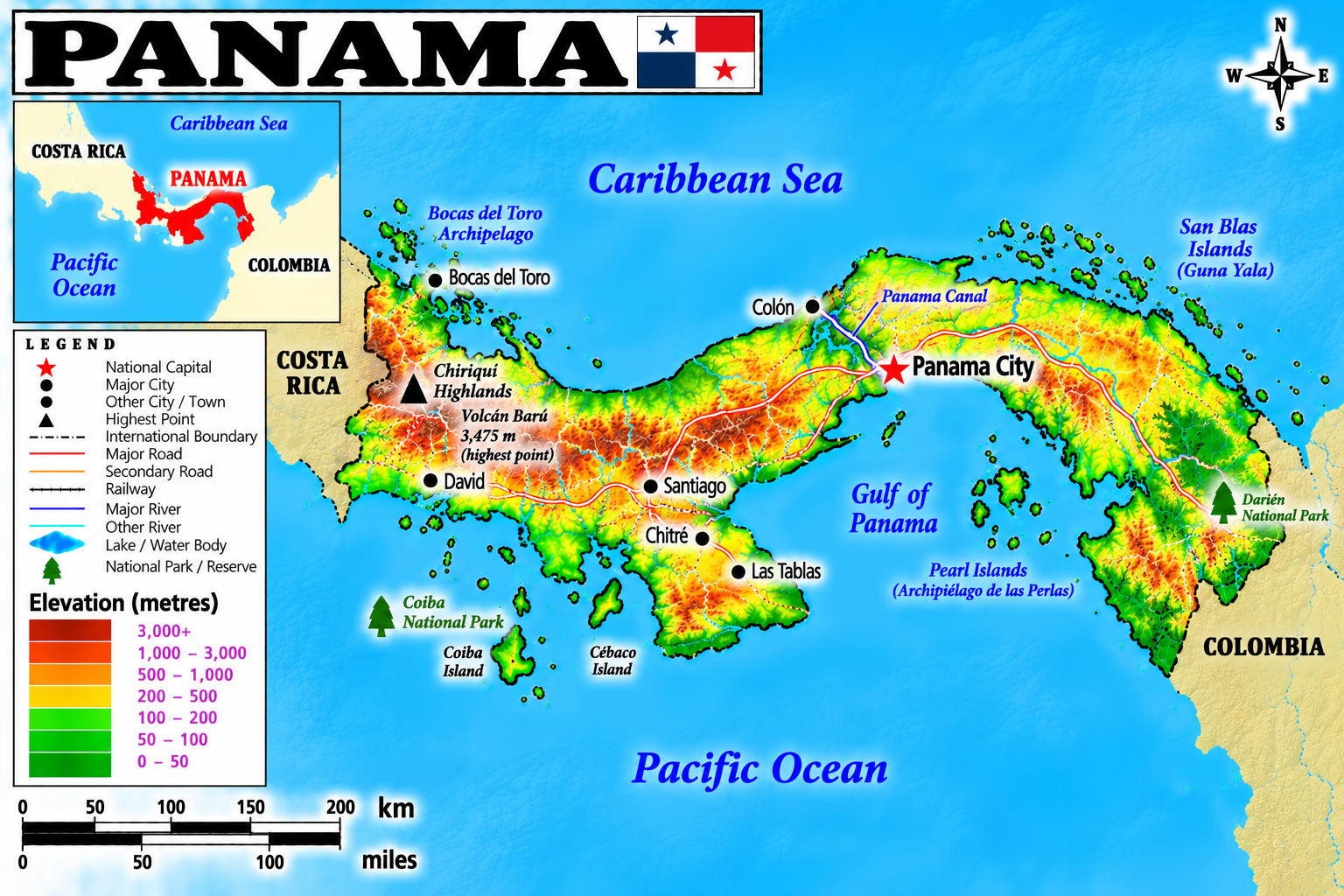
Panama — Detailed Physical Map
The Panama Canal, Volcán Barú and the Chiriqui Highlands, Bocas del Toro, San Blas Islands, Darién park, major cities and the capital Panama City
Tourist Attractions


A world-famous 20th-century engineering marvel that connects the Atlantic and Pacific Oceans. Visitors can watch massive ships transit the locks at the Miraflores Visitors Center.
Witnessing the incredible scale of global maritime trade in action is an unforgettable experience.


The historic district of Panama City, established in 1673, features a charming mix of Spanish colonial and neoclassical architecture. It is a vibrant neighborhood filled with plazas, cathedrals, and trendy restaurants.
Strolling through the narrow, historic streets offers a perfect blend of colonial history and modern urban culture.

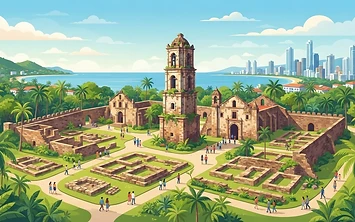
The archaeological site of the original Panama City, which was founded in 1519 and destroyed by pirates in 1671. It contains the ruins of cathedrals, residences, and a iconic stone bell tower.
Climbing the historic bell tower provides a unique perspective on the ruins of the city's earliest settlement.

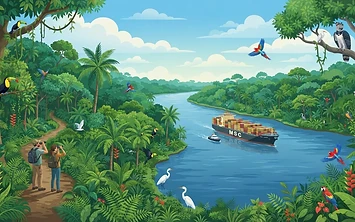
A lush, tropical rainforest located along the banks of the Panama Canal. It is world-renowned for its biodiversity and is considered one of the best locations for birdwatching.
The park offers an accessible and immersive jungle experience just a short distance from the capital.


A stunning collection of hundreds of islands known for their crystal-clear turquoise waters and white sand beaches. The region is home to the indigenous Guna people, who maintain their traditional culture.
The pristine, untouched beauty of these tropical islands offers a serene escape from the modern world.

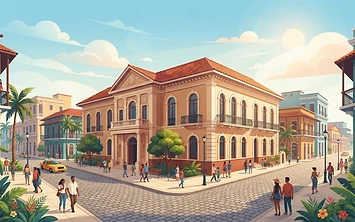
Located in the heart of Casco Antiguo, this museum chronicles the complex history and construction of the Panama Canal. It provides essential context for understanding the country's role as a global crossroads.
The exhibits offer a fascinating deep dive into the engineering and human stories behind the world's most famous waterway.
Geography
Nature
—
55.6% of land
FAO / World Bank, forest area (% of land area)
Explore the Nature AtlasMajor Cities
Economy
Military
Historical Timeline
National Anthem
Himno Istmeño
Jerónimo de la Ossa
Santos Jorge
1906
Alcanzamos por fin la victoria en el campo feliz de la unión; con ardientes fulgores de gloria se ilumina la nueva nación. Es preciso cubrir con un velo del pasado el calvario y la cruz; y que adorne el azul de tu cielo de concordia la espléndida luz. El progreso acaricia tus lares al compás de sublime canción; ves rugir a tus pies ambos mares que dan rumbo a tu noble misión.
The Himno Istmeño was composed in 1897 by Spanish-born musician Santos Jorge and written by Panamanian poet Jerónimo de la Ossa. The melody was originally intended as a school anthem, but it quickly gained popularity among the citizenry. Following Panama's separation from Colombia in 1903, the anthem was temporarily used in an official capacity. It was formally adopted as the national anthem through Law 39 of 1906. While the original version included lyrics that were later deemed politically sensitive due to references to the conflict with Colombia, the lyrics were officially revised in 1906 to reflect a more unified and independent national identity. Today, it stands as a central symbol of Panamanian sovereignty and is performed at all major civic and state events.
National Holidays
This day commemorates the 1964 riots in the Panama Canal Zone, which were a pivotal moment in the struggle for Panamanian sovereignty over the canal.
This date is observed globally to celebrate the social and economic achievements of the labor movement and workers' rights.
This holiday marks the official declaration of Panama's independence from the Spanish Empire in 1821.
This date commemorates Panama's separation from Colombia in 1903, which paved the way for the construction of the Panama Canal.
Good News Today
Fun Facts
Chuckies Trivia Quiz
Chuckies Trivia Quiz
Fifteen questions on Panama — five easy, five medium, five hard. How far can you get?
Sports & Live Events
Language
Counting to 10
1
1
= 10 (n = 0)
World Dictionary
Discover and translate any word into all supported languages.