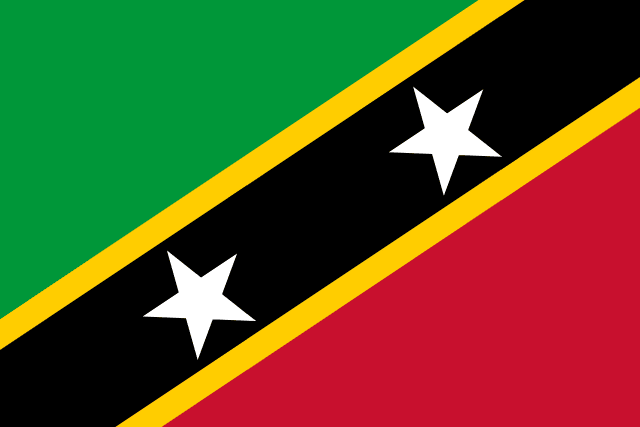
Saint Kitts and Nevis
North America

47,000
17:33 UTC-4
+1869
Location
Geography
Economy
Main exports
Saint Kitts and Nevis's leading export commodities and products.
Subscribe to Live Data for live spot prices
Live commodity prices on every nation's exports — $100 AUD/year.
Tap any export to learn more. Spot prices in USD only for Live Data subscribers.
Main imports
Saint Kitts and Nevis's leading import commodities and products.
Tap any import to learn more.
Military
Historical Timeline
1000 BCE
Arrival of the Ceramic Age Peoples
The first known inhabitants of the islands, the Saladoid people, arrived from South America. They established settlements and developed agricultural practices across the archipelago.
1493
European Contact by Christopher Columbus
Christopher Columbus sighted the islands during his second voyage to the Americas. He named the larger island Sant Jago, which later evolved into Saint Kitts.
1623
Establishment of the First English Settlement
Sir Thomas Warner founded the first permanent English colony in the Caribbean at Old Road Town on Saint Kitts. This marked the beginning of intensive European colonization of the region.
1626
The Kalinago Genocide
French and English settlers combined forces to massacre the native Kalinago people at Bloody Point. This event effectively ended indigenous control over the islands.
1713
Treaty of Utrecht
Following various colonial conflicts, the Treaty of Utrecht formally ceded the entirety of Saint Kitts to Great Britain. This ended decades of contested control between France and England.
1834
Abolition of Slavery
The British Slavery Abolition Act came into effect across the islands, formally ending the system of enslaved labor. Many formerly enslaved people remained tied to plantations through an apprenticeship system.
1871
Formation of the Leeward Islands Colony
The islands were incorporated into the Leeward Islands federal colony under British administration. This centralized governance remained in place until the mid-20th century.
1967
Status of Associated Statehood
Saint Kitts, Nevis, and Anguilla became an associated state of the United Kingdom. This granted the islands full internal self-government while Britain remained responsible for defense and foreign affairs.
1983
Independence from the United Kingdom
The Federation of Saint Kitts and Nevis gained full independence on September 19. The nation adopted a democratic constitution with the British monarch remaining as head of state.
1998
Nevis Secession Referendum
A referendum was held on the island of Nevis to determine if it should secede from the federation. The proposal failed to achieve the necessary two-thirds majority to proceed.
2005
Closure of the Sugar Industry
The government officially ended the state-run sugar industry after centuries of dominance. The economy subsequently shifted its primary focus toward tourism and offshore financial services.
2022
General Election and Leadership Change
The St. Kitts and Nevis Labour Party won a decisive victory in the general election. Terrance Drew was subsequently sworn in as the fourth Prime Minister of the nation.
National Holidays
This holiday marks the beginning of the new calendar year and is celebrated with festivities across the federation.
This day honors the individuals who have been designated as national heroes for their extraordinary contributions to the development of Saint Kitts and Nevis.
This date commemorates the attainment of full political independence from the United Kingdom in 1983.
This is a public holiday celebrating the birth of Jesus Christ, marked by religious observances and significant cultural festivities.
Celebrated the day after Christmas, this holiday is part of the festive season and is often associated with traditional street parades and celebrations.
Language
Counting to 10
1
1
= 10 (n = 0)
World Dictionary
Discover and translate any word into all supported languages.
The multilingual Dictionary is a Nations Pro feature.
Upgrade to Pro