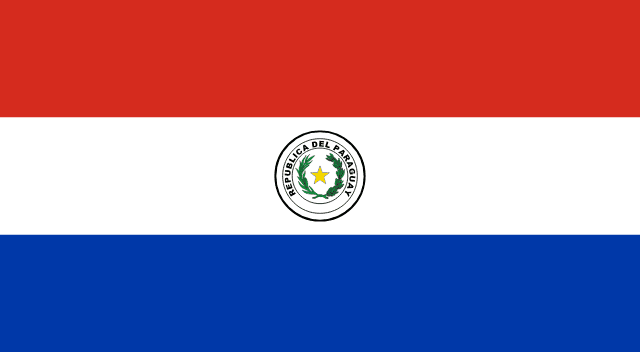

Paraguay
Republic of Paraguay
South America
7,130,555
00:49 UTC-3
+595
.py
Cerro Peron
842 m · 2,762 ft
Paraguay River
46 m · 151 ft
531,301
Asuncion · 2026
2,791,299
Asuncion · 2026
Location
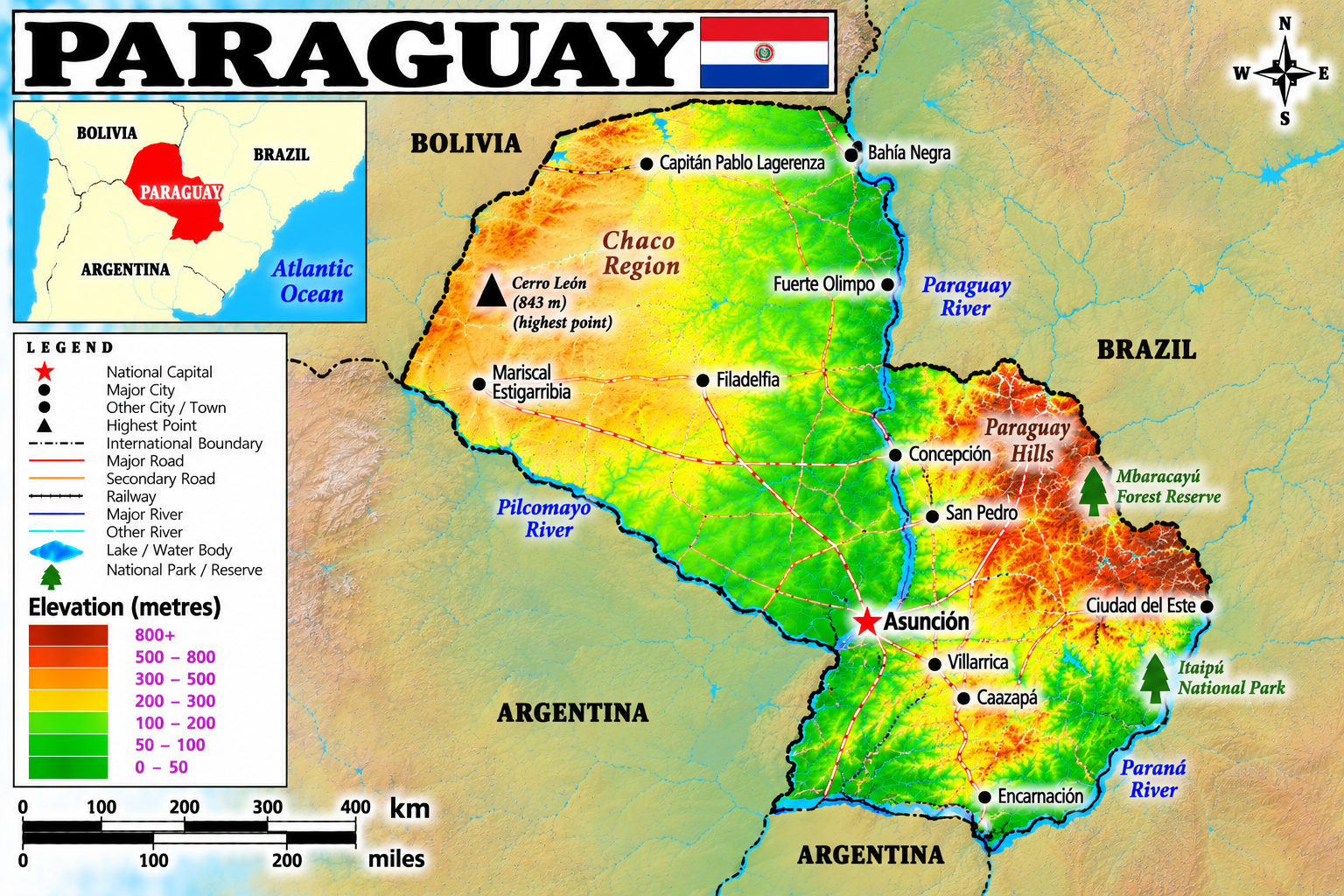
Paraguay — Detailed Physical Map
The Chaco Region, Cerro León, the Paraguay and Paraná rivers, Itaipú park, Paraguay Hills, major cities and the capital Asunción
Tourist Attractions
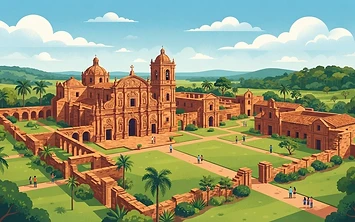
These UNESCO World Heritage sites are the best-preserved remnants of the 17th and 18th-century Jesuit missions in Paraguay. The complex features impressive carved sandstone churches, plazas, and living quarters that showcase the unique history of the Guaraní-Jesuit communities.
These ruins are the country's most significant historical centerpiece and a testament to colonial-era engineering.
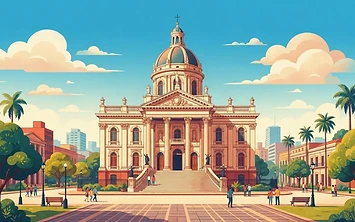
This opulent, cathedral-like chapel serves as the final resting place for many of Paraguay's most revered national figures. It is a powerful symbol of the country's history, resilience, and architectural heritage.
It is an essential stop to understand the historical tapestry and national identity of Paraguay.

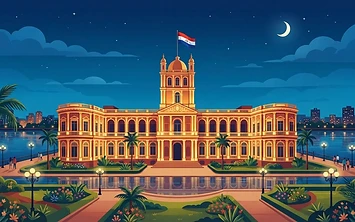
The official seat of the Paraguayan government, this striking neoclassical palace is one of the most beautiful and iconic buildings in the capital. It is particularly famous for its elegant design and its stunning appearance when illuminated at night.
It is the most recognizable architectural landmark in the country and the heart of its political life.

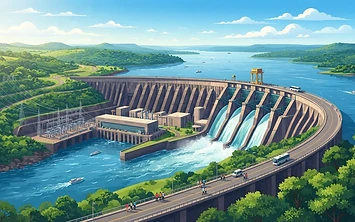
As one of the world's largest hydroelectric power plants, this massive engineering marvel spans the Paraná River on the border with Brazil. The site offers public guided tours that provide insight into the scale of its operations and its importance to the nation's energy supply.
Witnessing the sheer scale of this monumental dam is a unique experience for any visitor.


These powerful waterfalls drop approximately 45 meters into a lush canyon surrounded by dense forest trails. The park features well-maintained viewpoints that allow visitors to enjoy panoramic vistas of the three main cascades.
The falls offer a breathtaking natural spectacle and are one of the most impressive natural wonders in the region.

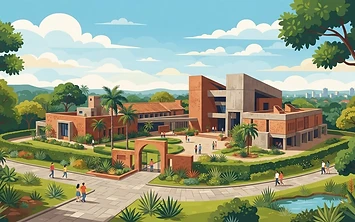
This cultural haven houses an extensive collection of Paraguayan art, ranging from ancient indigenous pottery to contemporary works. It provides a deep and meaningful look into the country's diverse artistic and cultural heritage.
It is the premier destination for understanding the depth and variety of Paraguayan artistic expression.
Geography
Nature
Cerro Peron
842 m / 2,762 ft
39.5% of land
≈ 160,667 km² of forest
FAO / World Bank, forest area (% of land area)
Explore the Nature Atlas4,880 km3,032 mi
Second longest river in South America after the Amazon.
2,695 km1,675 mi
Major tributary of the Parana River flowing through the center of the country.
2,500 km1,553 mi
Forms a significant portion of the border between Argentina and Paraguay.
90 km²35 sq mi · 3 m deep
Famous shallow lake located near the capital city of Asuncion.
1,100 km²425 sq mi
Central to a protected wetland system and a significant bird sanctuary.
40 m131 ft
Located near Ciudad del Este and features impressive cascades over basalt rock.
River lengths are whole-river figures, including any section beyond Paraguay. Researched reference figures. Tap any name for where its name comes from and a Google Maps link.
Major Cities
- 1Capital
Asunción
452,8652026
MapServes as the capital and primary center for government, culture, and business in Paraguay.
- 2
Alto Paraná
351,7172026
MapFunctions as a major commercial hub and the country's most significant gateway for international border trade.
- 3
Central
282,3482026
MapRenowned for its traditional gold and silver filigree jewelry craftsmanship and the headquarters of CONMEBOL.
- 4
Central
258,2482026
MapHouses a famous historic church and an eighteenth-century museum containing unique wooden carvings of religious saints.
- 5
Central
229,8562026
MapHosts the main campus of the National University of Asuncion and serves as a key suburban educational center.
- 6
Amambay
128,9872026
MapActs as a major commercial node situated on the border with Brazil, facilitating significant cross-border economic activity.
- 7
Central
128,1482026
MapFeatures a large dormant volcanic hill that now serves as a protected ecological and recreational landmark.
- 8
Central
109,6062026
MapOperates as a highly populated residential area strategically positioned on the main transit corridor near the capital.
- 9
Alto Paraná
98,1342026
MapIncludes the majestic Monday Falls, which are a major tourist attraction located near the Triple Frontier.
- 10
Central
89,7902026
MapHosts the prominent annual national agricultural and industrial fair that showcases the country's economic production.
- 11
Central
73,2572026
MapMaintains the national cultural tradition of producing intricate handmade lace known as ñandutí.
- 12
Caaguazú
71,7972026
MapActs as a vital transportation nexus connecting the eastern and central regions of the country.
City populations are the latest official, UN or national-statistics estimates (2026–2026) compounded to 2026 at 1.2% a year (the nation's annual population growth rate); figures without a published update come from the open cities database (2020-era estimates) and are projected the same way.
Economy
Main exports
Paraguay's leading export commodities and products.
Tap any export to learn more. Spot prices in USD only for Live Data subscribers.
Main imports
Paraguay's leading import commodities and products.
Tap any import to learn more.
Military
Historical Timeline
8000 BCE
Arrival of the Guaraní and hunter-gatherer groups
Indigenous peoples including the Guaraní began inhabiting the region between the Paraguay and Paraná rivers thousands of years ago. These groups established complex societies and linguistic foundations that persist in modern Paraguayan culture.
1537
Founding of Asunción
Juan de Salazar y Espinosa founded the settlement of Nuestra Señora Santa María de la Asunción on August 15. It became the primary center for the Spanish colonial administration in the Río de la Plata region.
1811
Paraguayan Independence
Following a bloodless coup in May, Paraguay declared its independence from Spanish colonial rule. This established the nation as one of the first republics in South America.
1844
Carlos Antonio López becomes President
Carlos Antonio López was inaugurated as the first constitutional president of the Republic of Paraguay. His administration focused on modernization, infrastructure development, and establishing diplomatic recognition.
1864
Outbreak of the Triple Alliance War
The conflict began between Paraguay and the combined forces of Brazil, Argentina, and Uruguay. It remains the deadliest interstate war in South American history and devastated the Paraguayan population.
1932
Chaco War against Bolivia
Paraguay fought a three-year war against Bolivia over control of the Chaco Boreal region. The conflict ended in 1935 with a treaty that granted Paraguay control over the majority of the disputed territory.
1954
Rise of Alfredo Stroessner
Alfredo Stroessner seized power in a military coup, beginning a dictatorial regime that would last for 35 years. His rule was characterized by intense political repression and anti-communist policies.
1989
End of the Stroessner dictatorship
A military coup led by General Andrés Rodríguez overthrew the regime of Alfredo Stroessner. This event paved the way for democratic transition and the restoration of civil liberties in Paraguay.
2008
Election of Fernando Lugo
Fernando Lugo won the presidential election, ending 61 years of continuous rule by the Colorado Party. His victory marked a significant democratic shift in the country's political history.
2016
Investment Grade Credit Rating Progress
Paraguay achieved significant macroeconomic stability, receiving its first investment-grade outlook from international rating agencies. This signaled a shift toward stronger integration into global financial markets.
2023
Election of Santiago Peña
Santiago Peña, representing the Colorado Party, won the general election in April. His term began in August, focusing on economic growth and strengthening the Paraguayan agricultural export sector.
2025
Completion of major hydroelectric infrastructure projects
Paraguay finalized significant upgrades to its electrical grid and cooperation agreements regarding binational hydroelectric dams. These developments aimed to improve national energy autonomy and economic competitiveness.
National Anthem
Himno Nacional Paraguayo
Francisco Acuña de Figueroa
Francisco José Debali
1846
A los pueblos de América infausto\nTres centurias un cetro oprimió,\nMas un día soberbia surgiendo\n¡Basta! dijo, y el yugo rompió.\n\nParaguayos, ¡República o muerte!\n¡Nuestro brío nos dio libertad!\nNi opresores, ni siervos alientan\nDonde reinan unión e igualdad.
The Paraguayan National Anthem was composed by Francisco José Debali and features lyrics by the Uruguayan poet Francisco Acuña de Figueroa. Acuña de Figueroa gifted the lyrics to the Paraguayan government in 1846 as a gesture of appreciation after he had also written the Uruguayan anthem. The music was composed by Debali, an immigrant from Hungary, who integrated patriotic themes into the melody. It was officially adopted by President Carlos Antonio López as the national anthem in 1846. The anthem underwent a significant revision in 1934 by Juan Manuel Frutos Pane, who corrected historical errors and improved the meter of the text. Today, it stands as a fundamental symbol of Paraguayan sovereignty, identity, and its historical struggle for independence from colonial rule.
National Holidays
This holiday marks the beginning of the new calendar year according to the Gregorian calendar.
This day commemorates the death of Marshal Francisco Solano López and honors those who died during the Triple Alliance War.
These dates commemorate the independence of Paraguay from Spanish colonial rule in 1811.
This holiday marks the signing of the protocol that ended the Chaco War between Paraguay and Bolivia in 1935.
This day celebrates the founding of the city of Asunción, the capital of Paraguay, in 1537.
This day honors the decisive victory of the Paraguayan army at the Battle of Boquerón during the Chaco War.
Good News Today
Paraguay Party In Singapore: Albirroja Seal Perfect Asian Tour With Victory Over Japan
The Paraguayan national football team concluded a successful Asian tour with a 2-1 victory against Japan in Singapore on November 17, 2026. The win followed a resounding 4-1 victory against Singapore earlier in the week, highlighting the team's strong performance.
Fun Facts
Unique Double-Sided National Flag
Paraguay is one of the few countries in the world with a national flag that features a different emblem on each side.
Tereré Is The National Drink
Tereré, an herbal infusion made with yerba mate and cold water, is the country's official national drink and part of its cultural identity.
Guaraní Language Is Widely Spoken
Paraguay is a rare South American nation where the majority of the non-indigenous population speaks the indigenous language, Guaraní, alongside Spanish.
The True Heart Of South America
Paraguay is often referred to as Corazón de Sudamérica because it is situated right in the geographic center of the continent.
Global Leader In Hydroelectric Export
The Itaipu Dam, shared with Brazil, generates massive amounts of electricity, making Paraguay one of the world's largest exporters of clean hydroelectric power.
The Native Bottle Dance Tradition
The Danza de la Botella is a traditional folk performance where dancers balance up to ten glass bottles on their heads while moving to music.
World-Class Beef Production Hub
Paraguay is home to a massive cattle industry and is consistently ranked among the world's top exporters of high-quality beef.
Home To The Gran Chaco
The Gran Chaco, a vast and semi-arid wilderness, covers more than half of the country and is a haven for unique biodiversity like the giant armadillo.
Ancient Jesuit Mission History
The Ruins of Jesuit Missions of La Santísima Trinidad de Paraná are a UNESCO World Heritage site showcasing 17th-century baroque architecture in the wilderness.
Savory Paraguayan Corn Bread
Sopa Paraguaya is a traditional savory corn cake that, despite its name meaning Paraguayan Soup, is actually a solid bread made with corn flour and cheese.
Chuckies Trivia Quiz
Chuckies Trivia Quiz
Fifteen questions on Paraguay — five easy, five medium, five hard. How far can you get?
Sports & Live Events
Language
Counting to 10
1
1
= 10 (n = 0)
World Dictionary
Discover and translate any word into all supported languages.