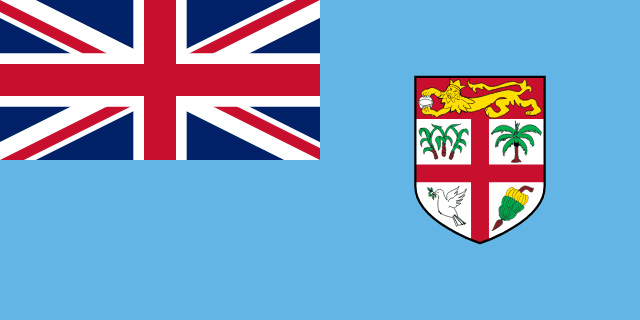

Fiji
Republic of Fiji
Oceania
939,658
09:22 UTC+12
+679
.fj
Mount Tomanivi
1,324 m · 4,344 ft
Pacific Ocean
0 m · 0 ft
96,721
Suva · 2026
207,251
Suva · 2026
Location
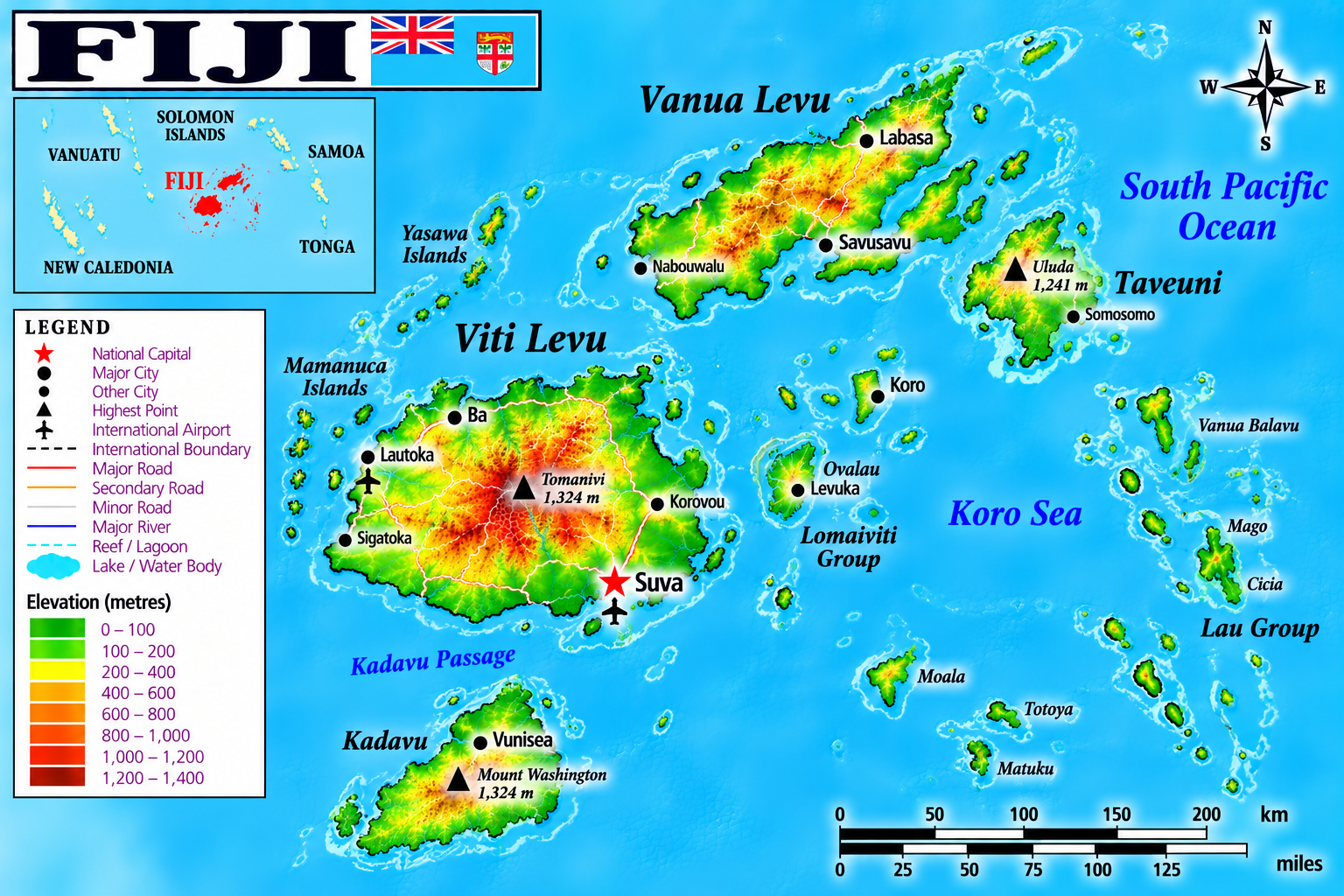
Fiji — Detailed Physical Map
Viti Levu and Vanua Levu, Tomanivi, the Mamanuca and Lau islands, Kadavu, towns and the capital Suva
Tourist Attractions

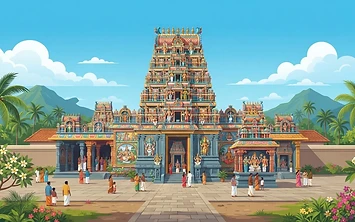
This vibrant, multi-colored Hindu temple is the largest of its kind in the Southern Hemisphere and serves as a striking architectural icon. It features intricate carvings and traditional Dravidian-style art that reflect the deep Indo-Fijian cultural influence in the region.
The temple's exterior is a stunning, photogenic masterpiece of bright colors and detailed craftsmanship.

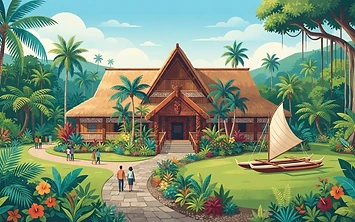
Located within the peaceful Thurston Gardens, this museum houses an extensive collection of artifacts spanning 3,500 years of Fijian history. It showcases everything from ancient Lapita pottery to traditional double-hulled sailing canoes known as drua.
The centerpiece is the Ratu Finau, a massive, authentic 1914 replica of a traditional Fijian ocean-going vessel.

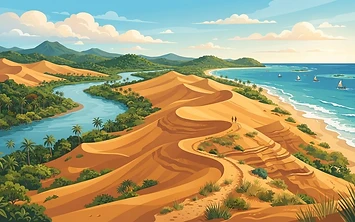
As Fiji's first national park, this site features massive, shifting sand dunes formed by the sediment of the Sigatoka River. It is both a natural wonder and an archaeological treasure, containing pottery fragments and human remains dating back over 3,000 years.
The dunes offer a unique landscape where you can walk through history while enjoying panoramic views of the coastline.

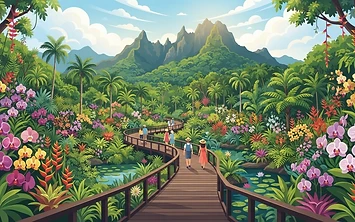
Nestled at the foothills of the Sabeto Mountains, this lush botanical garden was originally established by actor Raymond Burr. It is home to over 2,000 varieties of orchids and a vast collection of tropical plants set along serene jungle boardwalks.
The garden provides a tranquil, fragrant escape into a vibrant tropical oasis beneath the shadow of the 'Sleeping Giant' mountain.

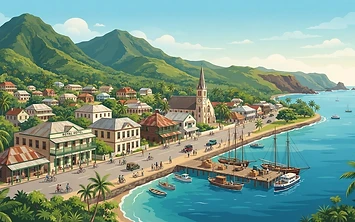
As Fiji's first capital and its only UNESCO World Heritage site, Levuka preserves the authentic atmosphere of a 19th-century colonial port. The town is characterized by its well-preserved wooden buildings and historic streetscapes that reflect its past as a bustling maritime hub.
Walking through the town feels like stepping back in time to the early colonial era of the South Pacific.

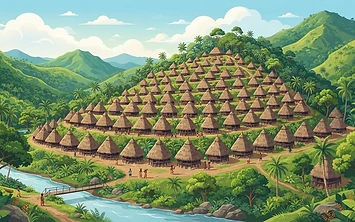
Navala is a visually arresting traditional settlement where hundreds of authentic thatched-roof bures are arranged in careful rows on a hillside. It remains one of the few places in Fiji where the traditional way of life is preserved in such a complete and picturesque setting.
The sight of the uniform, traditional bures set against the backdrop of the lush river valley is truly unforgettable.
Geography
Nature
Mount Tomanivi
1,324 m / 4,344 ft
62.6% of land
≈ 11,438 km² of forest
FAO / World Bank, forest area (% of land area)
Explore the Nature Atlas145 km90 mi
It is the largest and longest river in the country.
120 km75 mi
Jet boat tours are a popular way to experience this waterway.
65 km40 mi
The river flows through deep gorges and past several scenic waterfalls.
1 km²0 sq mi
This volcanic crater lake is famous for its rare tagimoucia flower.
0 km²0 sq mi
A small crater lake situated on the island of Lakeba.
24 m79 ft
These falls are located within Taveuni island's lush rainforest national park.
—
A scenic cascade found in the interior of Vanua Levu.
River lengths are whole-river figures, including any section beyond Fiji. Researched reference figures. Tap any name for where its name comes from and a Google Maps link.
Major Cities
- 1
Ba
111,7802026
MapActs as the primary gateway to Fiji, featuring the international airport and the vibrant Sri Siva Subramaniya Temple.
- 2Capital
Rewa
101,9052026
MapServes as the political and administrative capital of Fiji, hosting the government and major international organizations.
- 3
Ba
95,0542026
MapFunctions as a major industrial center nicknamed Sugar City due to its massive sugar mill and export operations.
- 4
Tailevu
68,9802026
MapProvides vital regional connectivity through its international airport serving the central division and the Rewa River.
- 5
Rewa
29,0322026
MapHosts significant industrial zones and residential neighborhoods located just on the western outskirts of the capital.
- 6
Macuata
25,4442026
MapStands as the commercial hub of Vanua Levu, heavily supported by the local sugar cane farming industry.
- 7
Naitasiri
19,4942026
MapDeveloped into a rapidly expanding residential and commercial corridor between Suva and Nausori.
- 8
Ba
13,7672026
MapCenters its local economy around intensive sugar cane cultivation and processing within the fertile river delta region.
- 9
Nadroga and Navosa
11,3772026
MapKnown as the Salad Bowl of Fiji, this town supports extensive agricultural production and the nearby sand dunes.
City populations are the latest official, UN or national-statistics estimates (2026–2026) compounded to 2026 at 0.5% a year (the nation's annual population growth rate); figures without a published update come from the open cities database (2020-era estimates) and are projected the same way.
Economy
Main exports
Fiji's leading export commodities and products.
Tap any export to learn more. Spot prices in USD only for Live Data subscribers.
Main imports
Fiji's leading import commodities and products.
Tap any import to learn more.
Military
Historical Timeline
1500 BCE
Arrival of the Lapita people
The ancestors of the iTaukei, the Lapita people, arrived in the Fiji islands around 1500 BCE. They established early settlements, characterized by their distinct pottery traditions.
1874
Deed of Cession
Ratu Seru Cakobau and other high chiefs signed the Deed of Cession, ceding Fiji to the United Kingdom. This officially established Fiji as a British crown colony.
1970
Independence from Britain
Fiji gained full independence from the United Kingdom on October 10, 1970. Ratu Sir Kamisese Mara became the nation's first Prime Minister.
1987
First military coups
Lieutenant Colonel Sitiveni Rabuka led two military coups in 1987, resulting in the declaration of Fiji as a republic. The events were driven by concerns over political dominance by the Indo-Fijian community.
1999
Election of Mahendra Chaudhry
Mahendra Chaudhry became Fiji's first Indo-Fijian Prime Minister following a landslide election victory. His term was short-lived, as he was ousted in a coup one year later.
2006
Military coup led by Frank Bainimarama
Commodore Frank Bainimarama led a military coup to overthrow the government of Laisenia Qarase. This led to a period of military rule followed by constitutional reform.
2014
Democratic elections under new constitution
Fiji held its first post-coup democratic elections under a new constitution that implemented a single national constituency system. Frank Bainimarama's party secured a decisive victory.
2018
Re-election of Frank Bainimarama
Frank Bainimarama was re-elected as Prime Minister in a closely contested general election. This solidified his leadership during a period of economic development and international engagement.
2022
Election of Sitiveni Rabuka
Following a general election, a coalition government was formed and Sitiveni Rabuka was elected as the Prime Minister. This marked a historic transition of power to a new administration.
2023
Introduction of the Great Council of Chiefs
The government officially reinstated the Great Council of Chiefs to provide advice on matters relating to the iTaukei people. This restored a traditional institution that had been suspended for over a decade.
2024
Fiji's 54th Independence Anniversary
Fiji celebrated its 54th anniversary of independence, reflecting on its progress in governance and economic stability. The national focus remained on sustainable development and climate resilience.
2025
Launch of national climate infrastructure projects
The Fijian government initiated major infrastructure projects aimed at climate adaptation and coastal protection. These efforts represent a key national priority for the current administration.
National Anthem
Meda Dau Doka
Michael Francis Alexander Prescott
Charles Austin Miles
1970
Meda dau doka ka vinakata na vanua, Kei na marau bibi ko ni na marautaka. Bale ga na matanitu ko ni sa doka, Ka mai tauyavu tikoga na kena i tavi. Chorus: Me lade na reki mai na veiyanuyanu, Me lade na reki mai na veiyanuyanu, E ra sautu na vanua na tiko sa marau, Me lade na reki mai na veiyanuyanu. E ra sautu na vanua na tiko sa marau, Me lade na reki mai na veiyanuyanu.
God Bless Fiji was adopted as the national anthem upon Fiji's independence from the United Kingdom in 1970. The music was originally composed by Charles Austin Miles for the hymn 'Dwelling in Beulah Land' in 1911. The lyrics were written by Michael Francis Alexander Prescott specifically for the new nation. The anthem emphasizes unity, national pride, and the prosperity of the islands. It replaced 'God Save the Queen', which served as the official anthem during the colonial period. The anthem is performed at all official government functions and sporting events to represent Fijian identity. Despite some discussions regarding the inclusion of other indigenous languages, the anthem remains a staple of Fijian national unity.
National Holidays
This day marks the beginning of the new calendar year according to the Gregorian calendar.
This day commemorates the birth of the Islamic prophet Muhammad, observed by the Muslim community in Fiji.
This day commemorates the crucifixion of Jesus Christ and his death at Calvary.
This holiday commemorates the adoption of the 2013 Constitution of the Republic of Fiji.
This day celebrates Fiji's independence from British colonial rule, which was attained on October 10, 1970.
Known as the Festival of Lights, this Hindu festival signifies the spiritual victory of light over darkness and good over evil.
This holiday commemorates the birth of Jesus Christ, celebrated by the Christian community in Fiji.
Good News Today
IHG Fiji raises funds for community initiatives
IHG Fiji successfully raised funds through various community-focused initiatives, including their annual Giving for Good month. The proceeds are supporting essential repairs at Sigatoka Hospital and providing aid to local soup kitchens and safe homes.
Fun Facts
Where The Day Begins First
The 180th meridian passes directly through the island of Taveuni, meaning you can technically stand with one foot in today and the other in yesterday.
The Ceremony Of Kava Root
Kava is a traditional ceremonial drink made from the crushed roots of the yaqona plant, known for its numbing, calming effect on the tongue and body.
Hundreds Of Tropical Islands
The Fijian archipelago consists of over 330 islands, though only about 110 of them are permanently inhabited by people.
Rugby Sevens National Passion
Rugby Sevens is the national sport of Fiji, and the entire country famously grinds to a halt whenever the national team plays in major tournaments.
Ancient Ritual Of Fire Walking
Originating from the island of Beqa, the traditional fire-walking ceremony involves walking across red-hot stones without sustaining any burns.
Soft Coral Capital World Record
Fiji is widely known as the Soft Coral Capital of the World, boasting an incredible array of vibrant underwater reefs and biodiversity.
Kokoda Seafood Ceviche Specialty
The national dish is Kokoda, a fresh raw fish salad marinated in lime juice and rich coconut cream, usually served inside a hollowed-out coconut.
Respectful Head Touching Traditions
In Fijian culture, the head is considered the most sacred part of the body, so touching someone's head is strictly considered a sign of disrespect.
The Rare Silktail Bird
Fiji is home to the Silktail, a unique and rare bird species found only on the island of Taveuni, known for its distinctive plumage.
Suluboy Professional Formal Wear
Men in Fiji often wear a 'sulu'—a skirt-like wrap—as part of their standard formal attire, which is widely accepted in business and government settings.
Chuckies Trivia Quiz
Chuckies Trivia Quiz
Fifteen questions on Fiji — five easy, five medium, five hard. How far can you get?
Sports & Live Events
Language
Counting to 10
1
1
= 10 (n = 0)
World Dictionary
Discover and translate any word into all supported languages.