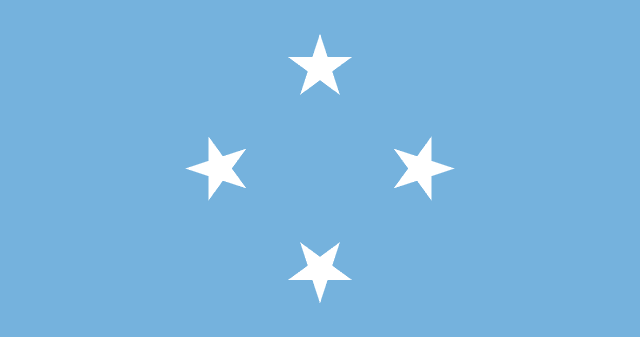

Micronesia
Federated States of Micronesia
Oceania
114,317
13:23 UTC+11
+691
.fm
Nahnalaud
782 m · 2,566 ft
Pacific Ocean
0 m · 0 ft
7,034
Palikir · 2026
30,577
Weno · 2026
Location
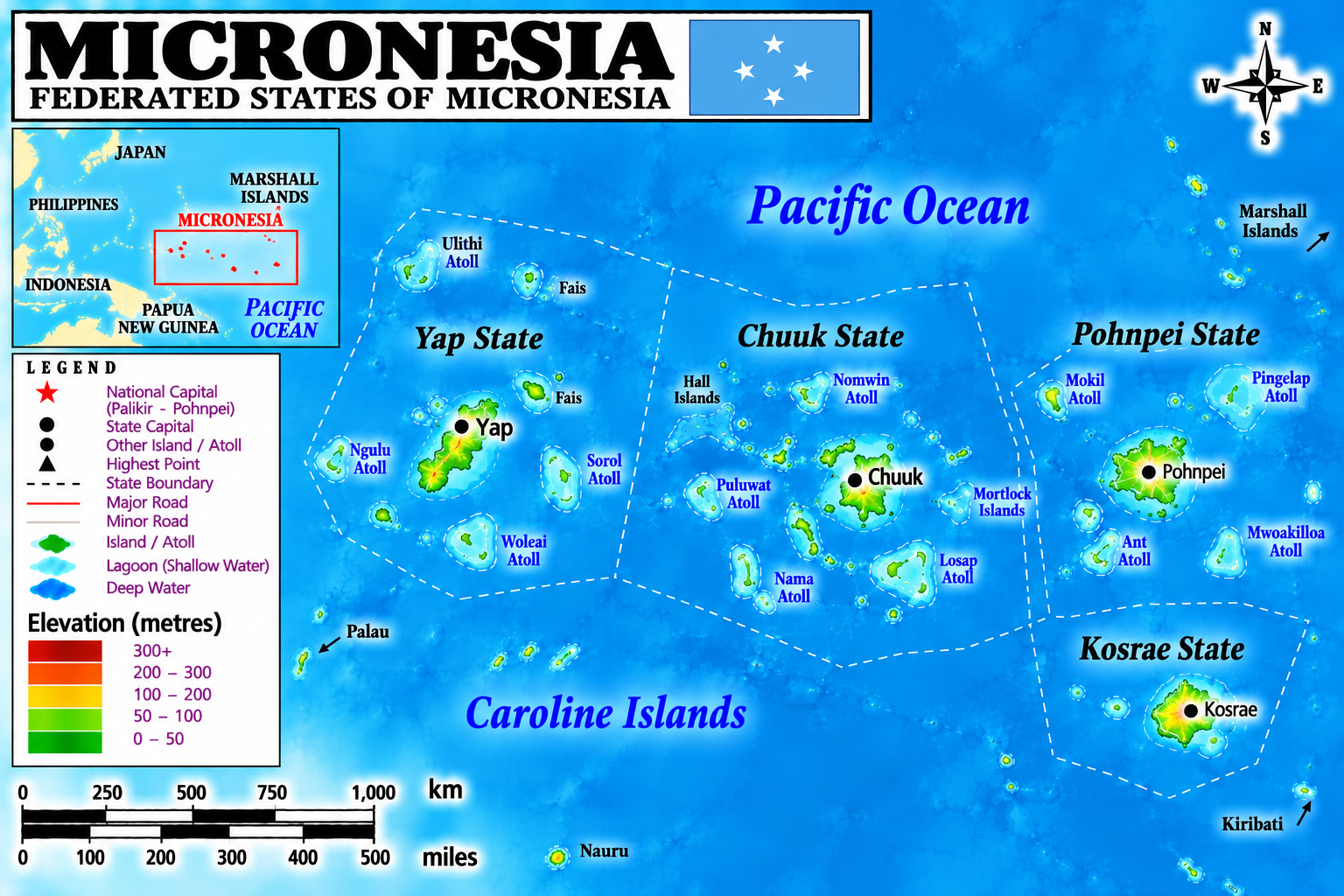
Micronesia — Detailed Physical Map
The Yap, Chuuk, Pohnpei and Kosrae states, their atolls and lagoons, reef boundaries and the capitals Palikir and Pohnpei
Tourist Attractions


An ancient city built on a series of artificial islets connected by a network of canals, dating back to the 12th century. It is a UNESCO World Heritage site known for its massive basalt stone structures.
Explore the mysterious, sprawling ruins of this ancient ceremonial center by boat.

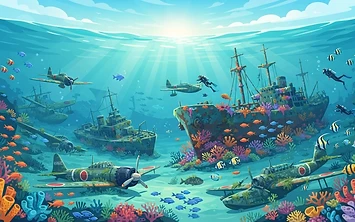
A world-renowned underwater site containing a vast collection of Japanese WWII shipwrecks and aircraft. It serves as a hauntingly beautiful, protected marine museum for divers.
Dive among the legendary, coral-encrusted shipwrecks of the Japanese Imperial Navy.


A prominent volcanic plug that serves as a dominant geographic landmark on the island of Pohnpei. The ridge offers historical significance as a site of past rebellions and wartime fortifications.
Hike to the summit for breathtaking panoramic views of the island and the Pacific Ocean.

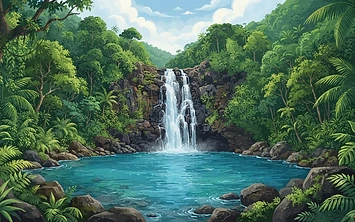
A majestic, 20-meter-high waterfall that cascades into a large, cool pool surrounded by lush rainforest. It is one of the most accessible and iconic natural wonders on the island.
Take a refreshing swim in the pristine freshwater pool at the base of the falls.

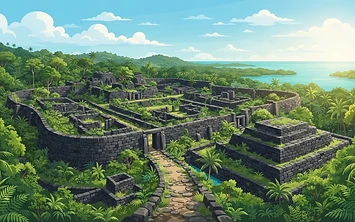
The remains of a sophisticated ancient city featuring impressive stone walls and royal compounds built from basalt. It provides a fascinating glimpse into the complex social hierarchy of early Kosraean society.
Walk through the well-preserved stone walls of this ancient royal capital.


A cultural center located in Colonia that showcases traditional Yapese architecture, crafts, and customs. It is dedicated to preserving the unique heritage of the island, including its famous stone money.
Experience authentic local traditions and learn about the unique history of Yapese stone currency.
Geography
Nature
Nahnalaud
782 m / 2,566 ft
91.0% of land
≈ 639 km² of forest
FAO / World Bank, forest area (% of land area)
Explore the Nature Atlas—
Flows through the landscape of the Pohnpei island volcanic terrain.
—
Marine lake located in the Rock Islands of Palau.
20 m66 ft
Spectacular cascade located in the Madolenihmw municipality on Pohnpei island.
15 m49 ft
Scenic site frequently visited by tourists hiking through the Pohnpei interior.
River lengths are whole-river figures, including any section beyond Micronesia. Researched reference figures. Tap any name for where its name comes from and a Google Maps link.
Major Cities
- 1
Chuuk
13,9432026
MapMaintains the status of the largest city in Chuuk State and serves as the economic center.
- 2Capital
Pohnpei
6,9852026
MapServes as the capital of the Federated States of Micronesia and houses the national government offices.
- 3
Pohnpei
6,7602026
MapActs as the primary commercial hub and largest urban center on the island of Pohnpei.
- 4
Yap
2,9872026
MapFunctions as the administrative center and main port for the state of Yap.
- 5
Kosrae
2,6542026
MapOperates as the administrative seat of Kosrae state and hosts the majority of government services.
City populations are the latest official, UN or national-statistics estimates (2026–2026) compounded to 2026 at 0.4% a year (the nation's annual population growth rate); figures without a published update come from the open cities database (2020-era estimates) and are projected the same way.
Economy
Main exports
Micronesia's leading export commodities and products.
Tap any export to learn more. Spot prices in USD only for Live Data subscribers.
Main imports
Micronesia's leading import commodities and products.
Tap any import to learn more.
Military
Historical Timeline
1500 BCE
Arrival of Austronesian Settlers
Austronesian navigators arrived in the islands of present-day Micronesia, marking the beginning of the region's long-term human habitation and ancestral lineage of the modern Micronesian peoples.
1521
Ferdinand Magellan's First European Contact
The expedition of Ferdinand Magellan made the first recorded European contact with the islands of Guam, leading to prolonged European interest in the region.
1885
German Colonial Acquisition
Germany formally asserted control over the Caroline and Marshall Islands, integrating them into its colonial empire through diplomatic efforts and treaties with Spain.
1914
Japanese Occupation During World War I
Japan seized control of the German-held islands in the Pacific, eventually receiving a League of Nations mandate to administer the territory.
1944
Battle of Peleliu
A major conflict occurred during the Pacific Theater of World War II as United States forces launched an amphibious assault to capture the strategically vital airstrip on Peleliu.
1947
Trust Territory of the Pacific Islands Established
The United Nations created the Trust Territory of the Pacific Islands, placing the region under the administrative authority of the United States.
1979
Ratification of the Constitution
The Federated States of Micronesia ratified its own constitution, establishing a framework for self-governance and moving toward full sovereignty.
1986
Compact of Free Association Signed
The Federated States of Micronesia officially entered into a Compact of Free Association with the United States, granting the nation sovereign independence while maintaining close economic and defense ties.
1991
Admission to the United Nations
The Federated States of Micronesia was formally admitted as a full member state of the United Nations, gaining international recognition as a sovereign nation.
2019
David Panuelo Takes Office
David Panuelo was inaugurated as the ninth president of the Federated States of Micronesia, overseeing a period of transition in diplomatic relations with regional powers.
2023
Election of Wesley Simina
Wesley Simina was elected by the Congress as the tenth president of the Federated States of Micronesia, marking a significant leadership transition for the nation.
2025
Renewal of Compact Financial Provisions
The Federated States of Micronesia and the United States finalized ongoing funding agreements under the Compact of Free Association, ensuring economic support for key national infrastructure projects.
National Anthem
Unknown
Traditional
1991
This is our own free land. This is our paradise. With hearts full of love, our island spirit flows. We stand together, one nation strong and true. Proud of our heritage, our future we pursue. The islands of the sea, our home so bright and clear. Peace and unity, for all to hold so dear.
The national anthem of the Federated States of Micronesia, titled 'Patriots of Micronesia', was officially adopted in 1991. The music is based on a traditional German melody, specifically the tune of 'Ich hatt' einen Kameraden', which was introduced to the islands during the German colonial period. Following the termination of the United Nations Trust Territory of the Pacific Islands status, the nation sought an anthem that reflected its newfound sovereignty and cultural identity. The lyrics were composed to celebrate the unity and unique island heritage of the four member states. It is played during formal state events, diplomatic ceremonies, and national celebrations. The anthem serves as a symbol of the collective progress and national pride of the Micronesian people since their independence.
National Holidays
This date commemorates the adoption of the Constitution of the Federated States of Micronesia in 1979. It celebrates the nation's formal establishment as a sovereign, self-governing state.
This day acknowledges Micronesia's membership in the United Nations and its commitment to international cooperation. It honors the country's transition from a United Nations Trust Territory to an independent nation.
This holiday marks the official independence of the Federated States of Micronesia from the United States-administered Trust Territory of the Pacific Islands in 1986. It celebrates the nation's full sovereignty and self-determination.
Good News Today
Renewable energy projects bring power to remote Micronesian islands
New renewable energy investments in Chuuk and Yap states are providing reliable electricity to remote communities through hybrid mini-grids and solar systems. These projects are improving access to essential services like healthcare and education while training locals in technical skills.
Fun Facts
Ancient Stone Money Tradition
The island of Yap uses massive, circular stone discs called Rai as currency, which are still used for important ceremonial exchanges today.
Massive Exclusive Economic Zone
Despite a small landmass, Micronesia controls a vast ocean territory of over 1 million square miles, one of the largest in the world.
Masterful Navigational Heritage
Traditional Micronesian navigators famously traversed thousands of miles of open ocean using only the stars, wave patterns, and wind directions.
Incredibly Diverse Island Habitats
The nation consists of 607 islands across four states, ranging from mountainous volcanic islands to low-lying coral atolls.
World Class Underwater Ruins
Chuuk Lagoon is home to one of the world's most spectacular underwater ship graveyards, featuring dozens of sunken vessels from World War II.
Ancient City of Nan Madol
Nan Madol is a prehistoric city built on top of a coral reef using massive basalt columns, often called the Venice of the Pacific.
Traditional Betel Nut Chewing
Chewing betel nut is a deep-rooted cultural tradition in Micronesia, often used to signify friendship and hospitality among islanders.
Abundance of Tropical Fruits
The islands grow some of the most vibrant varieties of breadfruit, taro, and bananas, which form the base of the local traditional diet.
Unique Traditional Grass Skirts
In many parts of Yap, women traditionally wear skirts woven from hibiscus fibers, which are considered highly valuable cultural artifacts.
Strategic Geographic Location
Micronesia sits in the Western Pacific and acts as a vital bridge between the cultures of Polynesia, Melanesia, and the Philippines.
Chuckies Trivia Quiz
Chuckies Trivia Quiz
Fifteen questions on Micronesia — five easy, five medium, five hard. How far can you get?
Sports & Live Events
Language
Counting to 10
1
1
= 10 (n = 0)
World Dictionary
Discover and translate any word into all supported languages.