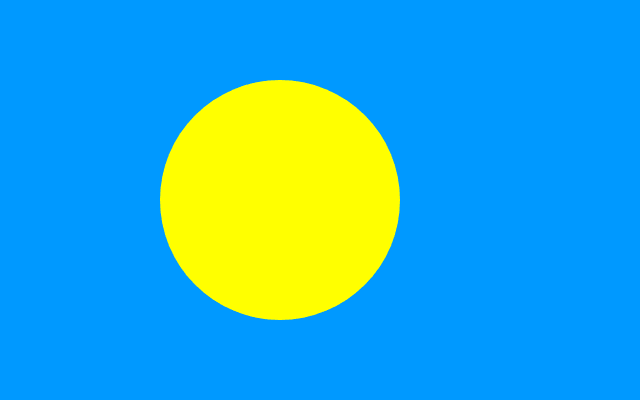
Palau
Oceania
18,000
20:00 UTC+9
+680
Location
Geography
Economy
Main exports
Palau's leading export commodities and products.
Subscribe to Live Data for live spot prices
Live commodity prices on every nation's exports — $100 AUD/year.
Tap any export to learn more. Spot prices in USD only for Live Data subscribers.
Main imports
Palau's leading import commodities and products.
Tap any import to learn more.
Military
Historical Timeline
1000 BCE
Arrival of Austronesian Settlers
Austronesian-speaking peoples arrived in the Palau archipelago, establishing the foundation of the Palauan indigenous population. Archaeological evidence indicates these early settlers practiced agriculture and maritime skills.
1783
Captain Henry Wilson and the Antelope
The British ship Antelope wrecked off the coast of Ulong, leading to the first significant contact between Palauans and Europeans. Captain Henry Wilson established friendly relations with the High Chief Ibedul of Koror.
1885
Spanish Colonization
Spain asserted sovereignty over the Caroline Islands, including Palau, following a dispute with Germany that was mediated by Pope Leo XIII. The Spanish administration established a limited presence focused on missionary work.
1899
German Imperial Administration
Following the Spanish-American War, Spain sold Palau and the rest of the Caroline Islands to the German Empire. Germany focused on economic exploitation, primarily through phosphate mining.
1914
Japanese Naval Occupation
At the start of World War I, Japan seized control of the German-held islands in Micronesia. This occupation was later formalized under a League of Nations mandate in 1920.
1944
Battle of Peleliu
United States forces launched an amphibious invasion of Peleliu during World War II, resulting in one of the fiercest and deadliest battles in the Pacific theater. The victory secured a strategic airfield for Allied operations.
1947
United Nations Trust Territory Status
Palau became part of the Trust Territory of the Pacific Islands administered by the United States under a United Nations mandate. This status placed the archipelago under international oversight for development and self-governance.
1981
Establishment of the Republic of Palau
Palau adopted its own constitution and became a self-governing republic. The constitution notably included a strong anti-nuclear provision that influenced future political negotiations with the United States.
1994
Independence and Compact of Free Association
Palau achieved full independence following the implementation of the Compact of Free Association with the United States. This agreement established a unique political and economic partnership between the two nations.
2009
Establishment of the Shark Sanctuary
Palau declared its exclusive economic zone as the world's first national shark sanctuary. This landmark environmental policy highlighted the nation's commitment to marine conservation.
2021
Full Diplomatic Ties with Taiwan
Palau reaffirmed its commitment to maintaining formal diplomatic relations with Taiwan despite increasing geopolitical pressures in the Pacific region. The relationship remains a central pillar of its foreign policy.
2024
Renewal of Compact of Free Association
The United States and Palau finalized the funding renewal for the Compact of Free Association. This agreement ensures ongoing economic support and security cooperation through 2043.
National Holidays
This day commemorates Palau's independence from the United Nations Trust Territory administered by the United States in 1994.
This holiday marks the anniversary of the adoption of Palau's Constitution in 1980.
This holiday honors the first President of Palau and celebrates the office of the presidency.
This day is dedicated to recognizing the youth of Palau and their future contributions to the nation.
This day honors the contributions and achievements of the Palauan labor force.
Adopted from American tradition, this day is observed as a time for national gratitude.
Language
Counting to 10
1
1
= 10 (n = 0)
World Dictionary
Discover and translate any word into all supported languages.
The multilingual Dictionary is a Nations Pro feature.
Upgrade to Pro