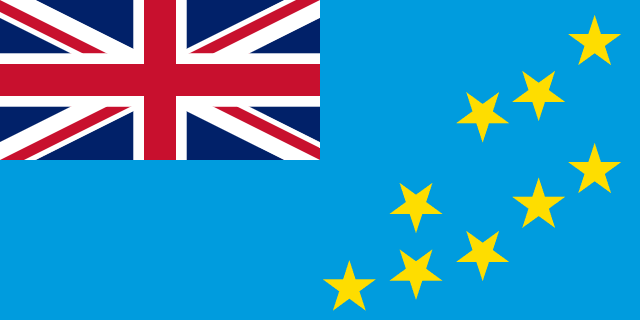

Tuvalu
Oceania
9,294
02:03 UTC+12
+688
.tv
Unnamed point on Niulakita
5 m · 16 ft
Pacific Ocean
0 m · 0 ft
7,083
Funafuti · 2026
7,083
Funafuti · 2026
Location
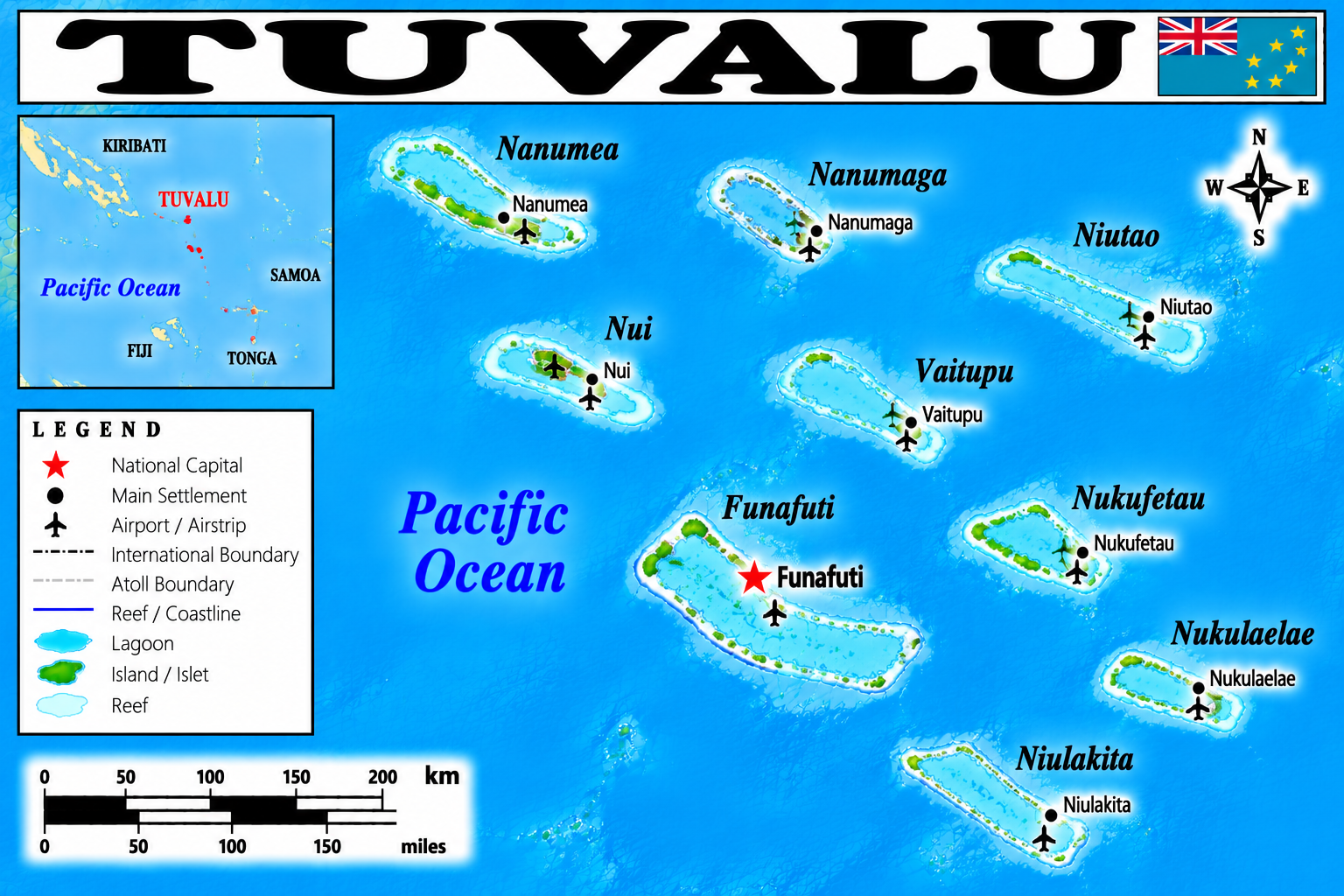
Tuvalu — Detailed Physical Map
The nine atolls from Nanumea to Niulakita, Funafuti and its airstrip, lagoons and reef outlines
Tourist Attractions
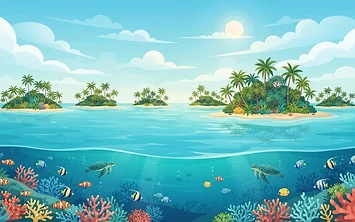
This protected marine park spans 33 square kilometers and includes six uninhabited islets within the Funafuti lagoon. It is a pristine habitat for tropical fish, sea turtles, and vibrant coral gardens.
It offers the best snorkeling and diving opportunities in the country.
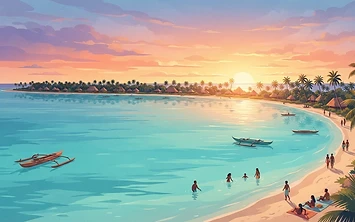
As one of the largest coral-lagoon systems in the Pacific, this massive turquoise expanse is the centerpiece of the capital atoll. It provides a calm, shallow environment perfect for swimming and watching sunsets.
The lagoon is an iconic natural wonder that defines the Tuvaluan landscape.

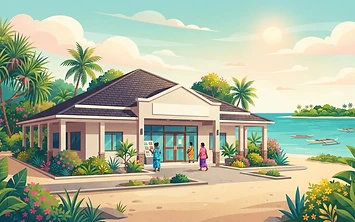
This unique institution is world-renowned among collectors for producing Tuvalu's distinctive and rare postage stamps. It serves as a cultural archive of the nation's history and identity through philately.
It is the perfect place to purchase unique, high-quality souvenirs that represent Tuvaluan culture.

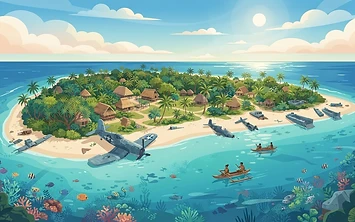
The northernmost atoll of Tuvalu is known for its deeply traditional way of life and significant World War II history. Visitors can explore various aircraft wrecks and relics left behind from the conflict.
It offers a rare combination of traditional island culture and fascinating WWII history.

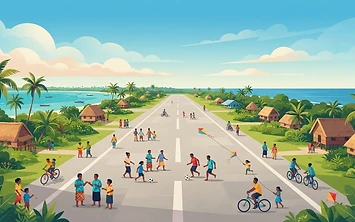
When not in use for flights, this central airstrip serves as the primary recreational space for the local community. It is a unique social hub where residents gather for sports and leisure activities.
It is a quintessential local experience to walk or play on the runway during off-hours.

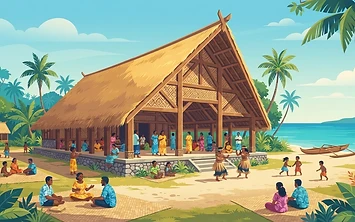
This traditional meeting house is a prime example of indigenous Tuvaluan architecture and serves as the heart of the local community. It is used for important gatherings, ceremonies, and storytelling.
The intricate wood carvings and traditional design provide a deep insight into Tuvaluan heritage.
Geography
Nature
Unnamed point on Niulakita
5 m / 16 ft
33.0% of land
≈ 9 km² of forest
FAO / World Bank, forest area (% of land area)
Explore the Nature Atlas2 km²1 sq mi
This shallow lagoon is surrounded by the coral atoll islands of Nanumea.
River lengths are whole-river figures, including any section beyond Tuvalu. Researched reference figures. Tap any name for where its name comes from and a Google Maps link.
Major Cities
- 1Capital
Funafuti
8,1652026
MapServes as the capital of Tuvalu and contains the country's only international airport and main government administrative offices.
City populations are the latest official, UN or national-statistics estimates (2026–2026) compounded to 2026 at -1.52% a year (the nation's annual population growth rate); figures without a published update come from the open cities database (2020-era estimates) and are projected the same way.
Economy
Main exports
Tuvalu's leading export commodities and products.
Tap any export to learn more. Spot prices in USD only for Live Data subscribers.
Main imports
Tuvalu's leading import commodities and products.
Tap any import to learn more.
Military
Historical Timeline
1
Settlement by Polynesian Navigators
Polynesian navigators arrived and settled the islands, establishing the foundations of Tuvaluan culture and social structures. Genetic and linguistic evidence indicates these early settlers originated from Samoa and Tonga.
1819
First European Sighting
Captain Arent Schuyler de Peyster of the ship Rebecca sighted the islands while sailing from Valparaíso to India. He named the group Ellice's Island after an English politician, which later became the official name for the territory.
1861
Arrival of Christianity
Elekana, a deacon from the Cook Islands, was shipwrecked on Nukulaelae and introduced the Christian faith to the islands. This event catalyzed a major shift in the traditional religious and social practices of the Tuvaluan people.
1892
British Protectorate Established
The Ellice Islands were declared a British protectorate by Captain Gibson of HMS Curacoa. This established formal colonial administrative control over the island group.
1916
Inclusion in the Gilbert and Ellice Islands Colony
The British government formally incorporated the Ellice Islands into the Gilbert and Ellice Islands Colony. This administrative arrangement lasted for several decades despite distinct cultural differences between the two ethnic groups.
1974
Referendum on Separation
A referendum was held in which the Ellice Islanders voted overwhelmingly to separate from the Gilbert Islands. This result paved the way for the eventual independence of the Tuvaluan people.
1978
Tuvalu Gains Full Independence
Tuvalu officially became an independent sovereign state within the Commonwealth on October 1. Toaripi Lauti served as the nation's first Prime Minister following this constitutional transition.
2000
United Nations Membership
Tuvalu was officially admitted as the 189th member of the United Nations. This milestone granted the small nation a formal platform to advocate for global environmental issues.
2017
Election of First Female Speaker
Otinielu Tausi stepped down and the parliament elected the first female Speaker of the House, Mrs. Feleti Teo, marking a significant step for gender representation in Tuvaluan politics.
2021
Launch of the Tuvalu Coastal Adaptation Project
The government ramped up major infrastructure projects to reclaim land and build sea walls against rising sea levels. This initiative represents a critical response to the existential threat posed by climate change.
2023
Falepili Union with Australia
Tuvalu and Australia signed the Falepili Union, a broad-ranging treaty covering security, migration, and climate change cooperation. The agreement provides a pathway for Tuvaluans to migrate to Australia in response to climate impacts.
2024
Election of Prime Minister Feleti Teo
Following a general election, the parliament unanimously elected Feleti Teo as the new Prime Minister. He is the first person in Tuvalu's history to be elected to the office without opposition.
National Anthem
Afaese Manoa
Afaese Manoa
1978
Tuvalu mo te Atua Ko te Fakavae sili Ko te ‵malu o te Atua Ki te pulega a tugā Fakavae tasi ki te Atua Kii te loto o Tuvalu Tuvalu, tuvalu Tuvalu mo te Atua
Tuvalu mo te Atua was composed by Afaese Manoa in 1978. It was adopted as the national anthem upon the nation's independence from the United Kingdom on October 1, 1978. The title translates to Tuvalu for the Almighty, reflecting the deep Christian faith prevalent in the country. The anthem is written in the Tuvaluan language, which serves as a central pillar of national identity. Unlike many other nations that adopted anthems with long colonial histories, Tuvalu's anthem was created specifically to mark the dawn of its sovereignty. The anthem is played at all significant national ceremonies and official government events. Its lyrics emphasize the relationship between the people of the islands and their religious devotion.
National Holidays
This holiday marks the beginning of the new calendar year and is celebrated with community gatherings and public events.
This day commemorates the partnership and shared values of the countries within the Commonwealth of Nations.
This date commemorates Tuvalu's formal independence from the United Kingdom in 1978. It is the nation's most significant holiday and is marked by parades, traditional dancing, and feasting.
Observed immediately following Independence Day, this public holiday provides an extra day of national celebration and reflection on the country's sovereignty.
This holiday is observed to mark the birthday of the British monarch's heir, reflecting Tuvalu's ongoing relationship with the Commonwealth monarchy.
A Christian holiday marking the birth of Jesus Christ, celebrated with church services and extensive family gatherings across the islands.
Good News Today
Tuvalu turns nappy waste into opportunity
Tuvalu has launched an innovative program that replaces disposable plastic nappies with compostable alternatives to reduce landfill waste. The initiative also creates local employment for women and produces nutrient-rich compost to improve the country's soil health.
Fun Facts
A Lucrative Internet Domain Legacy
Tuvalu earns a significant portion of its national revenue from the '.tv' top-level domain suffix used by global television and streaming platforms.
One of World's Smallest Nations
Spanning only 26 square kilometers, it is the fourth smallest country in the world, consisting of a chain of nine tiny low-lying coral atolls.
The Only Global Football Pitch
The country only has one official football field at the Tuvalu Sports Ground, which serves as the hub for all major sporting events.
Maximum Elevation of Five Meters
Tuvalu is extremely low-lying, with the highest point of the nation reaching just under five meters above sea level.
Minimal Road Traffic Environment
With only about 8 kilometers of paved road on the main island of Funafuti, traffic jams are practically non-existent.
A Unique Cultural Sharing Practice
The 'Fale-pili' tradition dictates a social obligation to help neighbors and share resources, which is central to maintaining harmony on the small islands.
Staple Diet of Coconut Pulaka
Traditional Tuvaluan cuisine relies heavily on local staples, with 'pulaka' (swamp taro) and coconut being the foundational ingredients for most meals.
The Runway as a Public Park
When flights are not landing, the international airport runway is legally used by the public as a park for walking, cycling, and socializing.
No Formal Military Defense Forces
Tuvalu maintains no standing army and relies on a small police force to handle all civil and maritime security duties.
The Traditional Fatele Dance
The 'Fatele' is a rhythmic traditional dance where the community sits in a circle and uses body percussion and song to build momentum and excitement.
Chuckies Trivia Quiz
Chuckies Trivia Quiz
Fifteen questions on Tuvalu — five easy, five medium, five hard. How far can you get?
Sports & Live Events
Language
Counting to 10
1
1
= 10 (n = 0)
World Dictionary
Discover and translate any word into all supported languages.