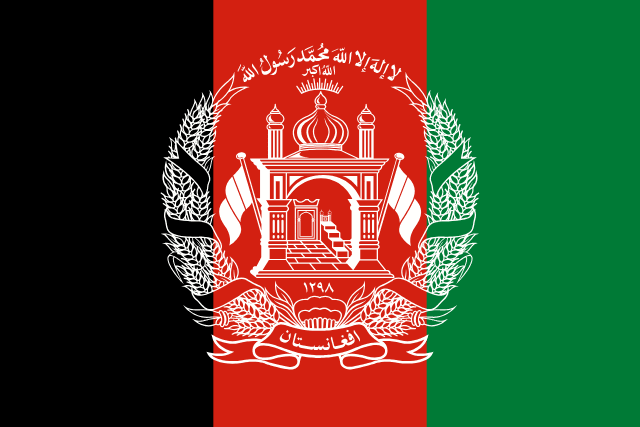

Afghanistan
Islamic Emirate of Afghanistan
Asia
44,821,133
06:44 UTC+4:30
+93
.af
Noshaq
7,485 m · 24,557 ft
Amu Darya
258 m · 846 ft
5,211,685
Kabul · 2026
5,211,685
Kabul · 2026
Location
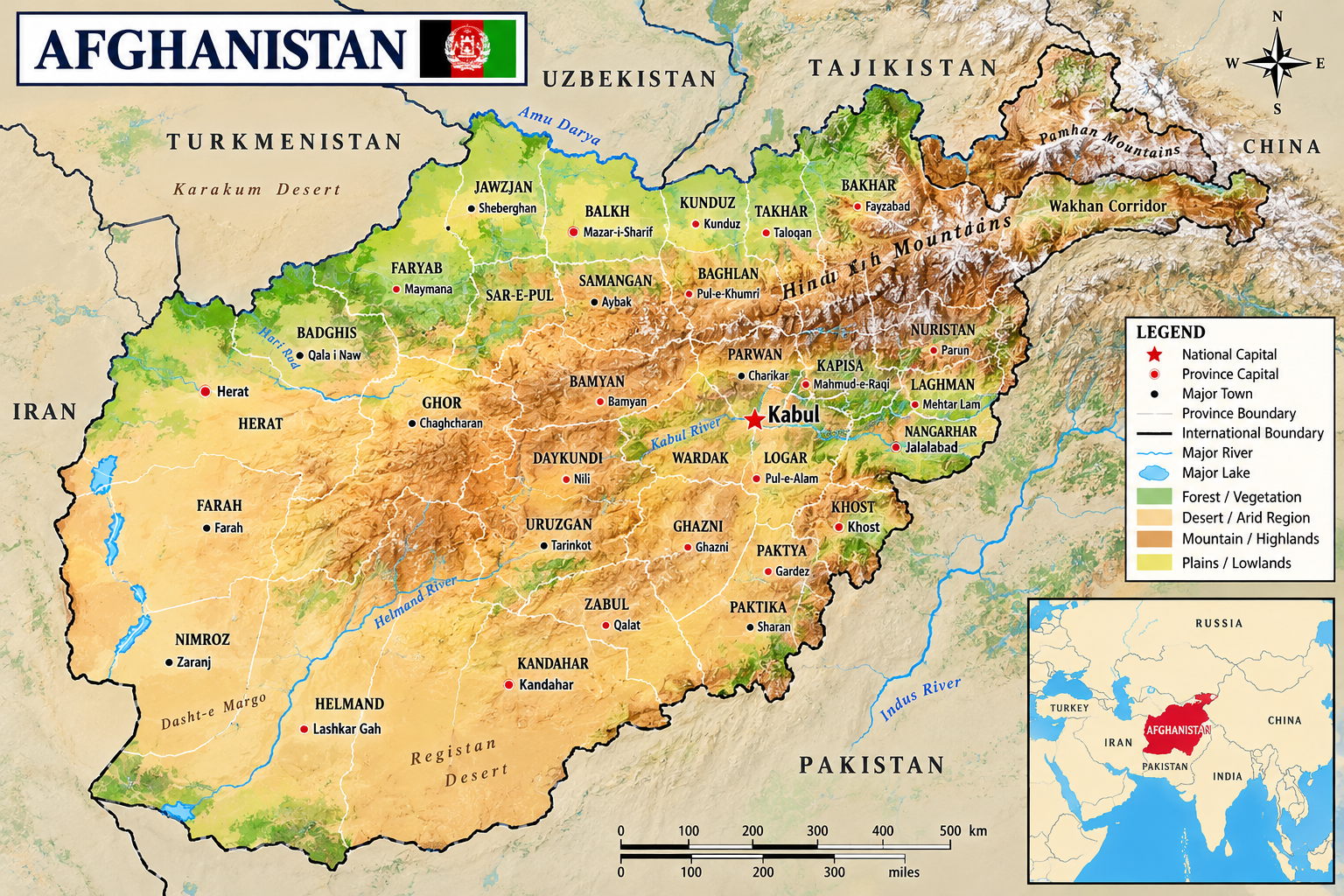
Afghanistan — Detailed Physical Map
Terrain, mountain ranges, rivers, deserts, province boundaries, capitals and major towns
Tourist Attractions
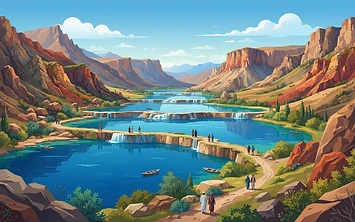
This stunning national park features a series of six deep blue lakes separated by natural travertine dams. It is widely considered one of the most beautiful natural wonders in the country.
The contrast between the vivid blue water and the surrounding rugged, arid cliffs is breathtaking.
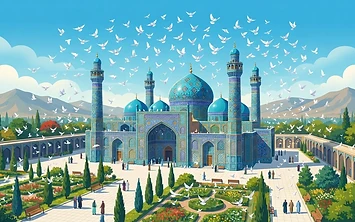
Also known as the Rawza Sharif, this magnificent mosque is famous for its intricate blue tile work and spiritual significance. It is surrounded by thousands of white doves that are a signature feature of the site.
The stunning blue-tiled architecture and the peaceful atmosphere created by the thousands of resident doves are unforgettable.

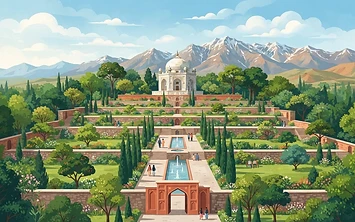
Established in the 16th century, this historic park contains the tomb of the Mughal Emperor Babur. It serves as a serene, terraced green space that has been a popular destination for centuries.
The beautifully restored terraced gardens offer a peaceful retreat and a glimpse into Mughal landscape design.

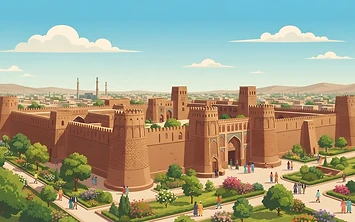
This massive fortress dates back to the time of Alexander the Great and was significantly expanded during the Timurid Empire. It now houses a museum showcasing historical artifacts and weapons.
The citadel provides a commanding view of the city and stands as a testament to over 2,000 years of regional history.

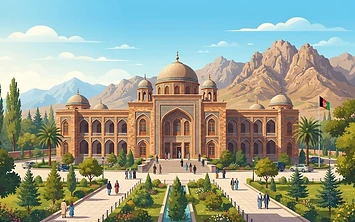
Located in the Darulaman area, this institution houses a vast collection of archaeological material recovered from across the country. It preserves the history of Afghanistan as a vital crossroads of the Silk Road.
The museum displays rare treasures including ancient Buddhist sculptures, ivory carvings, and the famous Rabatak Inscription.

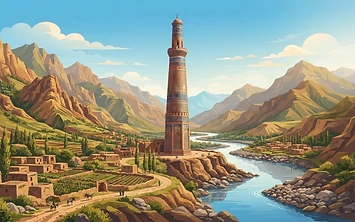
Standing 65 meters tall, this 12th-century UNESCO World Heritage site is a masterpiece of brickwork and geometric patterns. It is located in a remote, dramatic valley, reflecting the architectural prowess of the Ghurid dynasty.
Its remote, isolated location in the mountains adds a sense of mystery to this exceptionally tall and well-preserved ancient minaret.
Geography
Nature
Noshaq
7,485 m / 24,557 ft
1.9% of land
≈ 12,392 km² of forest
FAO / World Bank, forest area (% of land area)
Explore the Nature Atlas2,400 km1,491 mi
Forms a significant portion of the northern border with several Central Asian countries.
1,150 km715 mi
The longest river located entirely within the territory of Afghanistan.
700 km435 mi
Originates in the Sanglakh Range and flows eastward into the Indus River.
41 km²16 sq mi
A series of six deep blue travertine lakes separated by natural dams.
4,000 km²1,544 sq mi
A shallow wetland area dependent on the flow of the Helmand River.
38 km²15 sq mi
Located in the Wakhan Corridor on the border between Afghanistan and Tajikistan.
—
Travertine dams create unique tiered waterfalls throughout the national park.
River lengths are whole-river figures, including any section beyond Afghanistan. Researched reference figures. Tap any name for where its name comes from and a Google Maps link.
Major Cities
- 1Capital
Kābul
5,445,2832026
MapFunctions as the political, cultural, and economic center of Afghanistan.
- 2
Kandahār
748,0142026
MapServes as the historic birthplace of the Pashtun empire and a vital agricultural trade hub.
- 3
Herāt
687,4122026
MapHouses the majestic Great Mosque and remains a prominent historical center for Afghan art and architecture.
- 4
Balkh
579,9412026
MapContains the renowned Blue Mosque, a significant architectural landmark and pilgrimage site for many Afghans.
- 5
Kunduz
422,6902026
MapActs as a primary agricultural center in the northern region, particularly known for its extensive cotton production.
- 6
Nangarhār
325,4262026
MapHosts the famous Ghazi Amanullah Khan International Cricket Stadium and remains a key center for regional citrus production.
- 7
Takhār
290,9752026
MapFunctions as a major agricultural hub and the provincial capital of Takhar in northeastern Afghanistan.
- 8
Jowzjān
217,8932026
MapDominates the energy sector as a hub for Afghanistan's natural gas extraction and exploration activities.
- 9
Helmand
195,4792026
MapFeatures the remnants of the ancient Bost Fortress and serves as the capital of Helmand province.
- 10
Khōst
174,1982026
MapActs as a prominent economic gateway for cross-border trade with neighboring Pakistan in the southeastern region.
- 11
Farāh
144,0542026
MapServes as a vital trade gateway along the western border connecting Afghanistan with Iran.
- 12
Nīmrōz
33,8762026
MapProvides a critical transit point for international commerce due to its strategic position near the Iranian border.
City populations are the latest official, UN or national-statistics estimates (2025–2026) compounded to 2026 at 2.1% a year (the nation's annual population growth rate); figures without a published update come from the open cities database (2020-era estimates) and are projected the same way.
Economy
Main exports
Afghanistan's leading export commodities and products.
Tap any export to learn more. Spot prices in USD only for Live Data subscribers.
Main imports
Afghanistan's leading import commodities and products.
Tap any import to learn more.
Military
Historical Timeline
50000 BCE
Early Paleolithic Hunter-Gatherer Settlements
Archaeological evidence suggests that early hunter-gatherer populations inhabited the caves of the Hindu Kush mountains as early as 50,000 years ago. These groups are considered the ancestral foundations of the region's human population.
330 BCE
Alexander the Great Conquers Bactria
Alexander the Great invaded the region, integrating it into the Hellenistic world. This period saw the establishment of numerous cities and a profound exchange of Greek and local cultural traditions.
642
Introduction of Islam to Afghanistan
Arab forces brought the Islamic faith to the region during the Rashidun Caliphate. This transition eventually replaced existing Buddhist and Zoroastrian influences, fundamentally shaping the nation's culture and identity.
1747
Founding of the Durrani Empire
Ahmad Shah Durrani was elected as the leader of the Afghan tribes, establishing the foundation of the modern Afghan state. This marked the shift from fragmented rule to a unified Afghan monarchy.
1919
Afghan Independence from British Control
Following the Third Anglo-Afghan War, the Rawalpindi Agreement was signed, leading to full sovereignty. King Amanullah Khan gained the right to conduct independent foreign policy.
1978
Saur Revolution and Communist Takeover
The People's Democratic Party of Afghanistan seized power in a military coup, sparking significant civil unrest. This event served as the catalyst for the subsequent decades of intense conflict.
1979
Soviet Invasion of Afghanistan
The Soviet Union intervened militarily to support the communist government against mujahideen resistance forces. The ensuing ten-year conflict caused widespread destruction and displacement.
2001
Collapse of the Taliban Regime
Following the September 11 attacks, a US-led international coalition launched military operations that ousted the Taliban from power. This enabled the formation of a new transitional government.
2014
First Democratic Transfer of Power
Ashraf Ghani succeeded Hamid Karzai in the first peaceful, democratic transfer of power in the country's history. This period marked a critical test for the stability of the nascent democratic institutions.
2021
Taliban Return to Power
Following the withdrawal of international forces, the Taliban captured Kabul and declared the restoration of the Islamic Emirate. This led to a significant shift in internal political administration and international isolation.
2023
Economic Crisis and Humanitarian Emergency
Afghanistan faced a severe economic contraction characterized by international sanctions and widespread poverty. The situation necessitated large-scale humanitarian aid delivery managed by global organizations.
2025
Ongoing Policy Constraints and International Non-recognition
The de facto authorities continued to implement restrictive policies, including broad limitations on education and employment. As of 2025, no foreign government has formally granted the administration diplomatic recognition.
National Anthem
سرود ملی
Abdul Bari Jahani
Babrak Wassa
2006
دا وطن افغانستان دی دا عزت د هر افغان دی کور د سولی، کور د تورې هر بچی یی قهرمان دی دا وطن د ټولو کور دی د بلوچو، د ازبکو د پښتون او هزارو د ترکمنو، د تاجکو ور سره عرب، ګوجر دي پامیریان، نورستانیان براهوي دي، قزلباش دي هم ایماق، هم پشه ییان دا هیواد به تل ځلیږي لکه لمر پر شنه اسمان په سینه کې د اسیا به لکه زړه وی جاویدان نوم د حق مو دی رهبر وایو الله اکبر، وایو الله اکبر
The current Afghan national anthem was officially adopted in May 2006 by the Loya Jirga. Following the fall of the Taliban regime and the establishment of the Islamic Republic, the government sought a new anthem that represented the country's ethnic diversity. The lyrics were composed by poet Abdul Bari Jahani, while the orchestral score was created by composer Babrak Wassa. The anthem is unique because it explicitly lists many of the ethnic groups that constitute the nation, emphasizing unity and equality. It replaced the previous anthem used during the transitional government period. In 2021, following the return of the Taliban to power, the status and usage of this anthem became officially discouraged or restricted in favor of religious chants, though it remains a significant cultural document of the republican era.
National Holidays
This marks the Persian New Year and the first day of spring. It is a traditional celebration of renewal and the beginning of the solar Hijri calendar.
Also known as the Festival of Breaking the Fast, this holiday marks the end of the Islamic holy month of Ramadan. It is a significant religious celebration involving prayers, feasts, and charity.
Known as the Festival of Sacrifice, this holiday honors the willingness of Ibrahim to sacrifice his son as an act of obedience to God. It coincides with the conclusion of the Hajj pilgrimage to Mecca.
This date commemorates the 1919 signing of the Anglo-Afghan Treaty, which granted Afghanistan full independence from British influence. It is the country's national day and is marked by patriotic celebrations.
Known as Mawlid al-Nabi, this day celebrates the birth of the Islamic prophet Muhammad. It is observed through religious gatherings and community reflection.
Good News Today
Afghanistan Reaches Salt Self-Sufficiency with 12 Mining Projects
Afghanistan has achieved self-sufficiency in salt production following the activation of 12 new mining projects across five provinces. These projects have created approximately 5,400 direct and indirect employment opportunities for the local population.
Fun Facts
Home of the Hindu Kush
The massive Hindu Kush mountain range stretches across most of the country, containing some of the highest peaks in the world.
Ancient Lapis Lazuli Deposits
Afghanistan has been the world's primary source of the semi-precious blue stone lapis lazuli for over 6,000 years, supplying jewelry to ancient Egypt.
Buzkashi The National Sport
The traditional sport of Buzkashi involves horse-mounted players attempting to place a goat or calf carcass into a scoring circle.
Variety of Sweet Grapes
Afghanistan is world-renowned for its diverse grape production, with over 50 different varieties grown throughout the country.
First Oil Painted Murals
The caves of Bamiyan contain the world's earliest known examples of oil paintings, dating back to the 7th century AD.
Nowruz The Solar New Year
The country celebrates Nowruz, the Persian New Year, which marks the arrival of spring and is observed on the vernal equinox.
Intricate Handwoven Carpet Designs
Afghan carpets are globally famous for their intricate patterns and high-quality wool, often featuring tribal motifs passed down through generations.
The Pomegranate Capital
The Kandahar region is famous for producing some of the largest and sweetest pomegranates in the entire world.
Silk Road Historical Hub
Due to its central location, Afghanistan served as the primary crossroads for the ancient Silk Road, connecting China to the Mediterranean.
The Traditional Bolani Bread
Bolani is a popular flatbread stuffed with vegetables like leeks or pumpkin and fried until crispy, frequently enjoyed as a street snack.
Chuckies Trivia Quiz
Chuckies Trivia Quiz
Fifteen questions on Afghanistan — five easy, five medium, five hard. How far can you get?
Sports & Live Events
Language
Counting to 10
1
1
= 10 (n = 0)
World Dictionary
Discover and translate any word into all supported languages.